I’ve been dropping birthdays all over the place recently, and having to pass over some of them really bothers me, especially those of favorites like Carl Nielsen (June 9) and Edvard Grieg (June 15); but there are only so many hours in the day, and how much is one man expected to give, anyway?!!
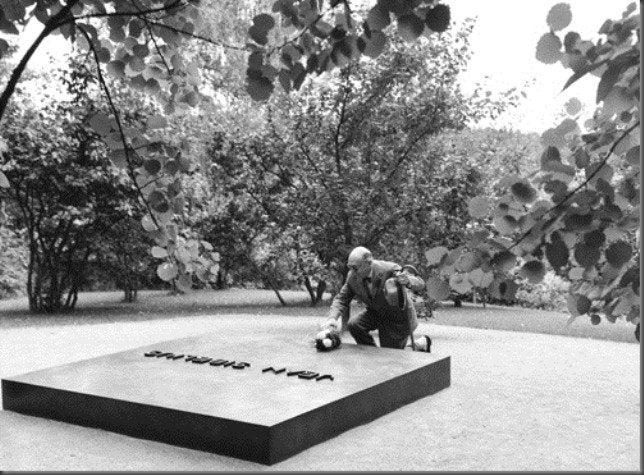
That said, one can’t draw breath on June 17 and not pay respect to the great Igor Stravinsky, who here pays it forward to Jean Sibelius, of all people. Such radically different composers! I happen to adore Sibelius, so all the more respect to Stravinsky – who I don’t think in reality was all that fond of the Finnish master’s music.
However, Stravinsky’s amanuensis Robert Craft did recall an appreciative remark made during a visit to Helsinki in 1961, in which Stravinsky praised Sibelius’ “Canzonetta” from the incidental music to “Kuolema” (“Death”). You know, the play written by Sibelius’ brother-in-law, Arvid Järnefelt, that also yielded the ubiquitous “Valse triste.”
Stravinsky commented, “I like that kind of northern Italianate melodism – Tchaikovsky had it too – which was a part, and an attractive part, of St. Petersburg culture.”
Sibelius’ original is scored for strings. Stravinsky’s version is for two clarinets, four horns, harp, and double bass.
Stravinsky won the Wihuir-Sibelius Prize in 1963. His arrangement of the “Canzonetta” was premiered on March 22, 1964, by the Finnish Broadcast Company.
Happy birthday, Igor Stravinsky, from Sibelius’ No. 1 fan.
I may have been told to clean out my locker at a certain classical music station in the Trenton-Princeton area, but happily there’s still room for me on the bench at KWAX, the radio station of the University of Oregon. So buy me some peanuts and Cracker Jack. I don’t care if I never go back!
This week on “The Lost Chord,” it’s the mother of all Father’s Day shows, as we pay tribute to Dad with an hour of music about sports.
I realize it’s possible that not all dads necessarily like sports. However, it’s been my experience that Sunday afternoons and Monday nights have always been off-limits, as far as the family television is concerned. For me personally, that meant that after Abbott and Costello or the Bowery Boys, it was football, golf, or “Wide World of Sports,” and that I never saw “MAS*H” during its first run.
Be that as it may, it’s All-Dads Eve, so we’re going to give him what he wants – an hour of rough-and-tumble, the thrill of victory, and the agony of defeat.
We’ll hear “Rugby” by Arthur Honegger, “Half-Time” by Bohuslav Martinu, “The Yale-Princeton Football Game” by Charles Ives, and highlights from the baseball opera “The Mighty Casey” by William Schuman.
Combine with a La-Z-Boy and a cold beer, and it’s a recipe for dad contentment. I hope you’ll join me for “Good Sports,” now in syndication on KWAX, the radio station of the University of Oregon!
See below for streaming information.
Keep in mind, KWAX is on the West Coast, so there’s a three-hour difference for the Trenton-Princeton area. Here are the respective air-times of my recorded shows (with East Coast conversions in parentheses):
PICTURE PERFECT, the movie music show – Friday on KWAX at 5:00 PACIFIC TIME (8:00 PM EDT)
THE LOST CHORD, unusual and neglected rep – Saturday on KWAX at 4:00 PACIFIC TIME (7:00 PM EDT)
Think you don’t know “The Barber of Seville?” Rossini’s comic opera is one of the most famous of all time. Even if you’ve never seen it, it’s been referenced and parodied in countless movies, cartoons, television shows, and commercials. I’ve included ten such examples at the bottom of this post.
You’ll have three chances to laugh, delight, and walk out humming its hit tunes, tonight, Sunday, and Tuesday at The Princeton Festival, now taking place on the grounds of Morven Museum & Garden, at 55 Stockton Street/Route 206.
The opera will be presented in an all-new production, stage-directed by James Marvel, with fun, Cubist set designs by Blair Mielnik suggesting the timeless, madcap nature of the story. Rossen Milanov will conduct the Princeton Symphony Orchestra.
Andrew Garland will portray the resourceful barber and jack-of-all-trades, Nicholas Nestorak the lovestruck and resolute Almaviva, and Kelly Guerra the beautiful and game Rosina, with Steven Condy providing the requisite impediment to young love as the slow-witted and lascivious Dr. Bartolo. Filling out the cast will be Festival veterans Eric Delagrange and Cody Müller, along with Kaitlyn Costello-Fain and the Festival Opera Chorus. Elaborate disguises, conspiracy, and close shaves inform the action, set to Rossini’s spritely and dynamic score.
Tonight’s presentation, under the festival pavilion, will begin at 7:00. The opera will be repeated on Sunday at 4 p.m. and Tuesday at 7 p.m. A pre-concert talk, “The Funny Thing About Figaro,” will be offered by Dr. Timothy Urban at Morven’s Stockton Education Center at 3:00, prior to the Sunday performance.
The Princeton Festival will continue through June 25. Yet to come: a program for string quartet and interpretive dance featuring the Attacca Quartet and members of American Repertory Ballet; a recital of songs by Black composers sung by Metropolitan Opera singer Will Liverman; a “Mazel Tov Cocktail Party” with klezmer clarinetist David Krakauer and friends; Vivaldi’s “The Four Seasons” performed by The Sebastians (across the street at Trinity Church Princeton); Andrew Lippa’s musical theater oratorio “I Am Harvey Milk;” and a vaudeville-inspired family concert including “Peter and the Wolf” with Michael Boudewyns of Really Inventive Stuff.
Ancillary events, including talks, a film screening, an art installation, Yoga in the Garden sessions, and kid-friendly activities, will also be offered.
The festival’s state-of-the-art pavilion is 11,000 square-feet, clear-span (no poles or obstructed views), and open-sided, allowing for easy access to refreshments, ample picnicking opportunities, a garden stroll, or the simple enjoyment of a late-spring/early-summer evening.
The Princeton Festival is the premier summer arts program of the Princeton Symphony Orchestra. For more information, tickets, and a complete schedule, visit princetonsymphony.org/festival.
Did you know:
Rossini’s “The Barber of Seville” (1816) is frequently confused with Mozart’s “The Marriage of Figaro” (1786). Both operas were based on comedies by the French playwright Pierre Beaumarchais, which were considered subversive, even politically incendiary, when they were written in the last quarter of the 18th century, a time of roiling social unrest, as they enact a kind of class warfare, with wily servants getting over on their aristocratic masters. “The Marriage of Figaro” was particularly edgy, facing challenges from censors and causing many a noble’s head to rest uneasily on his satin pillow. A third play, called “The Guilty Mother,” followed in 1791, by which time the Ancien Régime had already been abolished and the French Revolution was in full swing.
All the principal characters of Rossini’s opera appear in Mozart’s. Though Mozart’s was written first – 30 years earlier, in fact – it’s actually based on the second of Beaumarchais’ “Figaro” plays, so the action takes place later, AFTER that of “The Barber of Seville.” Got it?
Other operas to include characters from Beaumarchais’ trilogy include Jules Massenet’s “Chérubin,” Darius Milhaud’s “La mère coupable,” and John Corigliano’s “The Ghosts of Versailles.” There was also an earlier opera based on “The Barber of Seville,” from 1782, by Giovanni Paisiello.
But Rossini’s is far and away the most famous musical adaptation of Beaumarchais’ “Barber,” and now regarded as his quintessential work. It is quicksilver, farcical, and often very silly – the archetypal opera buffa.
It also contains some of the most recognizable and oft-referenced music in all of opera. Figaro’s “Largo al factotum” (Fi-ga-ro! Fi-ga-ro!), Rosina’s “Una voce poco fa,” and of course the overture are most frequently encountered. Here are ten instances of their use and abuse:
Even if you’re not appreciated by your former employer, Father knows best; and my old man says I’m better off at KWAX!
This week on “Picture Perfect,” with Father’s Day right around the corner, we’ll celebrate by listening to music for movie dads.
Vito Corleone may not exactly have been a model father, but he did adhere to a certain code of ethics. Besides, what father doesn’t love “The Godfather” (1972)? “The Godfather” was recognized with 11 Academy Award nominations – of which it won three, including Best Picture. However, the awards were not without controversy.
Of course, Brando sent Sacheen Littlefeather to the ceremony to decline his Oscar, in protest over Hollywood’s portrayal of Native Americans in television and film. Then there was the matter of the score, by Nino Rota. Rota was nominated, but the nomination was withdrawn when it was discovered that he had used one of the themes in a 1958 film, “Fortunella,” which starred Giulietta Masina and Alberto Sordi. In the end, the Academy turned around and gave Rota the award anyway, two years later, for “The Godfather Part II.”
“Field of Dreams” (1989) is one of those rare movies that has the ability to reduce manly men – even those without daddy issues – to a pool of tears. Phil Alden Robinson’s superior adaptation of W.P. Kinsella’s novel, “Shoeless Joe,” is a male wish-fulfillment fantasy, in which a man finds redemption, and a new understanding of his father, in the enchanted cornfields of America’s heartland. And it’s all brought about courtesy of America’s pastime, baseball. The evocative score is by James Horner, who rides on the shoulders of Aaron Copland. The composer seems particularly smitten with Copland’s “Our Town.”
William Powell plays Clarence Day, the irascible paterfamilias of an upper-class family of redheads, in the comedy “Life with Father” (1947), for which Max Steiner wrote the music.
And Gregory Peck plays one of his most memorable roles as defense attorney – and model father – Atticus Finch, in “To Kill a Mockingbird” (1962), based on Harper Lee’s beautiful “coming of age” novel. The book was awarded the Pulitzer Prize for Fiction in 1961. Peck won the Academy Award for Best Actor a year later. The score is one of the best-loved of Elmer Bernstein.
You can try to rank the music, but Father’s Day generally yields a tie. (Yes, it’s a pun. Dads love puns.) Spare a thought for dear old Dad, this Friday evening, on “Picture Perfect,” now in syndication on KWAX, the radio station of the University of Oregon!
See below for streaming information for both of my recorded shows.
Keep in mind, KWAX is on the West Coast, so there’s a three-hour difference for the Trenton-Princeton area. Here are the respective air-times of my shows (with East Coast conversions in parentheses):
PICTURE PERFECT, the movie music show – Friday on KWAX at 5:00 PACIFIC TIME (8:00 PM EDT)
THE LOST CHORD, unusual and neglected rep – Saturday on KWAX at 4:00 PACIFIC TIME (7:00 PM EDT)
When “Clash of the Titans” opened on June 12, 1981, it was opposite “Raiders of the Lost Ark.” Needless to say, on Friday night I was riding with Indiana Jones; but on Saturday, you can bet I was cozying up with Medusa.
This week on Roy’s Tie-Dye Sci-Fi Corner, we’ll dust off our Edith Hamilton to search vainly for Calibos and Bubo, on a quest to rescue Andromeda from… the Kraken?
Okay, so maybe it’s not scrupulously faithful to the classical myths. Who cares? It’s Ray Harryhausen!
“Clash of the Titans” would be the swan song of this special effects maestro. With classics like “Jason and the Argonauts,” “The Seventh Voyage of Sinbad,” and “Mighty Joe Young” adorning his buckler, Harryhausen had long since secured his place in the pantheon.
But when “Titans” opened, critics were divided: Gene & Roger loved it, but many were shockingly condescending, dismissing the film – some of them even the effects – as turgid and old-fashioned. In the wake of “Star Wars,” the all-knowing arbiters were now too-cool-for-school.
Nevermind the fact that George Lucas’ Industrial Light and Magic repeatedly tipped its hat to Harryhausen. Only the year before, in fact, in the “Star Wars” sequel “The Empire Strikes Back,” ILM served up a gloriously-retro Tauntaun and some hilariously-improbable Imperial Walkers. Where would Empire or Rebellion be without Harryhausen?
Even so, it is hard to deny that Harryhausen’s Dynamation process did start to seem a tad quaint alongside ILM’s “go motion” effects, especially when, only two weeks later, on June 26, 1981, ILM would challenge Harryhausen on his own turf with the fire-breathing antagonist of “Dragonslayer.” The wondrous creation that was Vermithrax Pejorative looked forward to “Jurassic Park” in 1993. So realistic was he, it’s conceivable he would have made Harryhausen himself blanch.
But realism was never the point of Harryhausen’s fantastic visions, and I feel sorry for anyone who can’t see what’s so special about his special effects. By what law should fantasy be photorealistic? Are not our dreams filled with the otherworldly and the uncanny? Must they conform to the logic of our waking hours?
Whatever the case, evidently by 1981, the time for this sort of magical storytelling had passed. Harryhausen and his longtime producer Charles Schneer had been hoping to mount a “Titans” follow-up, to be titled “Force of the Trojans,” but they couldn’t secure the funding. So it was that one of special effects’ most imaginative masters was driven to retirement at the age of 61.
That retirement would be a long one – Harryhausen died in 2013 at the age of 92 – but it was not inactive. He began his own foundation to promote stop motion animation, oversaw the restoration and completion of some of his earlier projects, and in general was lauded and paid tribute to by generations of younger filmmakers. He also turned up in a few cameos.
With “Clash of the Titans,” nobody can say he didn’t swing for the fences. For one thing, the cast was the starriest of any movie of his career, with supporting roles played by stage and screen legends Laurence Olivier, Claire Bloom, Maggie Smith, Ursula Andress, Siân Phillips, Flora Robson, and Burgess Meredith. Harry Hamlin, soon to attain fame with the success of TV’s “L.A. Law,” played Perseus. Did Hamlin possess the dash of Kerwyn Matthews? Ask your local cyclops.
More to the point, will Roy and I clash over “Clash of the Titans? Winged horses couldn’t keep us away! We’ll RELEASE THE KRAKEN in the comments section, when we livestream on Facebook, YouTube, etc., this Friday evening at 7:30 EDT!