Category: Daily Dispatch

  • Roy’s Sci-Fi Corner: Chitty Chitty Bang Bang

    Roy’s Sci-Fi Corner: Chitty Chitty Bang Bang

    At long last! The much-anticipated COVID EDITION of Roy’s Tie-Dye Sci-Fi Corner!

    Last night, Roy, looking pallid but sporting a Dr. Strange goatee, soldiered through for our belated discussion of “Chitty Chitty Bang Bang” (1968), originally scheduled for Thanksgiving weekend. I can’t say that his infirmity in any way effected the quality of the show (and you can take that as you will).

    Next time, we’ll tidy up to welcome Mrs. Peel and Mr. Steed in a conversation about “The Avengers” (1961-69) – NOT to be confused with Iron Man, Captain America, and the rest – speaking broadly about the spy-fi television series, but focusing particularly on the surreal holiday episode “Too Many Christmas Trees” (1965).

    So don your steel-rimmed bowlers and leather catsuits and meet us in the comments section when we livestream on Facebook, YouTube, etc., this Friday evening at 7:30 EST!

    https://www.facebook.com/roystiedyescificorner

    Get well soon, Roy!

  • Cosmic Classics NASA Inspired Music This Sunday

    Cosmic Classics NASA Inspired Music This Sunday

    This Sunday night on “The Lost Chord,” with the Artemis I Orion spacecraft and the James Webb Space Telescope keeping NASA very much in the news these days, we look to the heavens, with an hour of music inspired by the cosmos.

    When Spanish master Joaquin Rodrigo was in the United States in 1970 to attend the world premiere of his “Concierto Madrigal” at the Hollywood Bowl, he decided to make a side-trip to Houston, where he visited what is now the Johnson Space Center. There, NASA saw to it that the composer, blind since the age of three, was introduced to astronauts and permitted to handle moon rocks.

    The experience left him with a powerful impression, so that when he was commissioned by the Houston Symphony Orchestra several years later to write a piece of music to celebrate the American Bicentennial, his thoughts returned to his friends at NASA and the idea of space exploration. The result was something worlds away – if you’ll excuse the expression – from his popular works for guitar: the symphonic poem “A la busca del más allá” (“In search of the beyond”).

    Another Spaniard inspired by extraterrestrial concerns was Enrique Granados, very well-known for his music for the keyboard. Perhaps Granados’ most unusual work is a concerto of sorts for piano, with choruses and organ, “Cant de les estrilles” (“Song of the Stars”). This music was composed as a vehicle for Granados himself and dedicated to the long-lived pianist, Mieczyslaw Horszowski, who died as recently as 1993 – one month shy of his 101st birthday.

    “Song of the Stars” was given its first performance in 1911, on the same program as the premiere of Granados’ enduring piano suite “Goyescas.” However, the manuscript would remain unpublished. Granados died in 1916, only a few years later, on a return trip from the United States, when his ship was torpedoed by a German submarine while crossing the English Channel.

    The manuscript found its way to New York in the 1930s, brought there by the composer’s son, who was lured by businessman and conductor Nathaniel Shilkret with the promise of publication. Legal entanglements ensued, involving other members of the Granados family. A fire in the 1960s was feared to have destroyed the work, and efforts by the family to recover the piece with the assistance of José Iturbi and Alicia de Larrocha came to naught.

    In 1982, Granados’ daughter enlisted the American pianist Douglas Riva to act as the family representative. Finally, an agreement was negotiated with Shilkret’s grandson, and the work was performed again for the first time in nearly 100 years. The unattributed Catalan text is said to be a response to the poetry of Heinrich Heine, about love and the stars, from the perspective of the stars themselves.

    Finally, we’ll round out the hour with music by contemporary Finnish composer Kaija Saariaho. Saariaho evokes both the mythological and astrological in her work for orchestra, “Orion,” from 2002. The piece falls into three movements: “Memento mori,” “Winter Sky,” and “Hunter.” With spacecraft Orion just wrapping up its lunar mission, how appropriate is that?

    Pour yourself some cosmos; then look to the skies in wonder! I hope you’ll join me for “Creating Space,” this Sunday night at 10:00 EST, on WWFM – The Classical Network and wwfm.org.

  • Chitty Chitty Bang Bang Movie Review Delayed

    Chitty Chitty Bang Bang Movie Review Delayed

    Nine days after the originally-scheduled program, will we still be able to even remember the movie?

    We’ll finally get around to our multi-postponed Thanksgiving weekend discussion of “Chitty Chitty Bang Bang” (1968), the Child Catcher willing, on a special make-up edition of Roy’s Tie-Dye Sci-Fi Corner.

    With one host still recovering from COVID and the other with a head full of sawdust, what could possibly go wrong?

    By now, your kids will be all grown-up and gone to college. That should free you up to join us for our distinctive blend of mirth and dotage. Tune in to hear Roy sing the “Chitty Chitty Bang Bang” galop.

    “Oh you pretty Chitty Bang Bang,
    Chitty Chitty Bang Bang
    We love you.
    And in
    Chitty Chitty Bang Bang
    Chitty Chitty Bang Bang
    What we’ll do.”

    Sing along in the comments section, when we livestream on Facebook, YouTube, etc., at a special time, THIS SUNDAY EVENING AT 7:00 EST!

    https://www.facebook.com/roystiedyescificorner

  • Nino Rota Godfather Fellini Birthday

    Nino Rota Godfather Fellini Birthday

    An hour of music by Nino Rota is an offer you can’t refuse.

    Rota was born in Milan on this date in 1911. An extraordinarily prolific composer, he wrote some 150 film scores, from the 1930s until his death in Rome in 1979. That’s an average of three scores per year over a 46-year span. At the height of his productivity, from the late-40s to the mid-50s, he was writing up to ten scores a year, with a mindboggling 13 film scores to his credit in 1954.

    Yet somehow, in his spare time, he managed to write ten operas, five ballets, and dozens of other orchestral, choral, and chamber works, and incidental music for the stage. As if that weren’t enough, he also taught at the Liceo Musicale in Bari, Italy, of which he was the director for almost 30 years.

    This week on “Picture Perfect,” we remember him on his birthday, with some of his best-known film scores.

    For the 50th anniversary of its release, we’ll hear selections from Francis Ford Coppola’s “The Godfather” (1972) and what many regard as one of the greatest sequels ever made, “The Godfather Part II” (1974). Taken collectively, this is some of the best-known and best-loved movie music ever written.

    “The Godfather Part II” earned Rota his only Academy Award. But there was some controversy surrounding Rota’s contribution to its predecessor. His nomination for the original “The Godfather” was withdrawn at the eleventh hour, when it came to the Academy’s attention that the love theme had been used in a 1958 Italian comedy he had scored called “La Fortunella.” Puzzlingly, the music for the sequel went on to win the Oscar, although it featured the same theme that made the earlier score ineligible.

    It could be argued that Rota was so prolific that, as was the case with many of his Baroque forebears, a certain amount of recycling was inevitable. We’ll listen to a selection from Luchino Visconti’s “Rocco and His Brothers.” Hearing it directly on the heels of “The Godfather,” you may find it unexpectedly familiar.

    But lest we become too judgmental, remember Gioachino Rossini did much the same thing. And the Italian opera comparison is not inappropriate. Rota’s long-limbed melodies frequently evoke the heyday of Puccini and the Verismo School. This is most evident in his music written for another Visconti film, “The Leopard” (1963), after the poignant novel of Giuseppe di Lampedusa.

    At the same time, Rota was also clearly influenced by the commedia dell’arte, or perhaps simply the world of the circus, which made him the ideal composer for the films of Federico Fellini, in which the most poignant melodies might be swept away at any moment by off-the-rails funhouse music. There would be no Danny Elfman without Nino Rota!

    Rota’s association with Fellini began in 1952 with “The White Sheik.” It was the start of a working relationship that would span decades, until Rota’s death in 1979, and encompassed such classics as “La Strada” (1954), “Nights of Cabiria” (1957), “La Dolce Vita” (1960), and “8 ½” (1963). We’ll hear an impromptu suite made up of selections from all four. Such music could only be described as Felliniesque – or perhaps, more accurately, Fellini’s films should be described as Rotaesque.

    Leave the gun, take the cannoli. Nino Rota sucks down all the espresso on his birthday, on “Picture Perfect,” music for the movies, this Saturday evening at 6:00 EST, on WWFM – The Classical Network and wwfm.org.

  • Harry T. Burleigh: The Voice That Shaped Dvořák

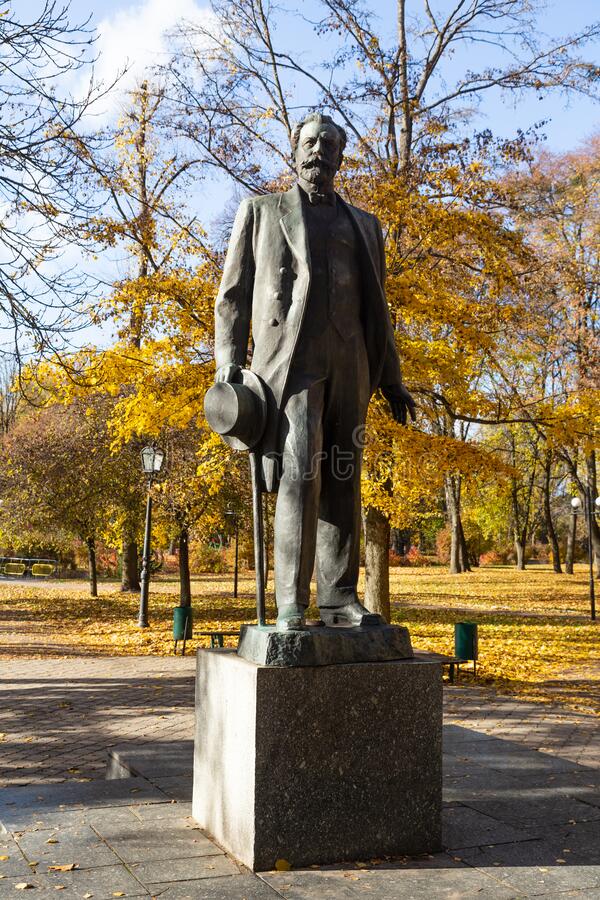
    Harry T. Burleigh: The Voice That Shaped Dvořák

    Harry T. Burleigh is one of the great unsung figures in American music – which is ironic, since it was his singing that changed the course of history.

    Burleigh was a student at the National Conservatory of Music in New York, where he studied with, among others, Rubin Goldmark, the conservative pedagogue who later gave lessons to Aaron Copland and George Gershwin.

    It just so happens that Burleigh’s attendance there coincided with the tenure of Antonin Dvořák as the conservatory’s director. Dvořák overheard the young man singing African American spirituals in a corridor adjacent to his office and was transfixed. This was his first exposure to the spiritual, and it had the force of an epiphany. Thereafter, Burleigh was a regular guest at the Dvořák home. He frequently sang for Dvořák and worked as his copyist beginning in 1893.

    Reflecting on his own debt to the folk idioms of his native land in the development of a Czech national sound, Dvořák was eager to share his impressions with American composers, and to encourage them to embrace this unique and neglected resource.

    “I am now satisfied that the future music of this country must be founded upon what are called Negro melodies,” he wrote. “This must be the real foundation of any serious and original school of composition to be developed in the United States. When I first came here last year I was impressed with this idea and it has developed into a settled conviction. These beautiful and varied themes are the product of the soil. They are American.”

    This was quite the pronouncement for 1893.

    Spirituals, of course, became an important part of the “New World” Symphony’s DNA. Since Dvořák’s masterwork was intended, in part, as instructional, leading American composers by example to a distinctly national sound, the significance of Burleigh’s influence becomes inescapable.

    Burleigh also served as a double-bassist and timpanist in the school’s orchestra, which Dvořák conducted. He was born in Stamford, CT, on this date in 1866.

    Happy birthday, Harry T. Burleigh, and thank you!


    More about Burleigh:

    “Goin’ Home”

    “Wade in de Water”

    Dvorak, Symphony No. 9 “From the New World”

    https://www.youtube.com/watch?v=oT8dqLoRIVU

Tag Cloud

Aaron Copland (93) Beethoven (95) Composer (114) Film Music (135) Film Score (143) Film Scores (255) Halloween (94) John Williams (194) KWAX (229) Leonard Bernstein (103) Marlboro Music Festival (125) Movie Music (150) Mozart (88) Opera (206) Philadelphia Orchestra (89) Picture Perfect (174) Princeton Symphony Orchestra (108) Radio (88) Ross Amico (244) Roy's Tie-Dye Sci-Fi Corner (290) The Classical Network (101) The Lost Chord (268) Vaughan Williams (103) WPRB (396) WWFM (881)

DON’T MISS A BEAT

Receive a weekly digest every Sunday at noon by signing up here


RECENT POSTS