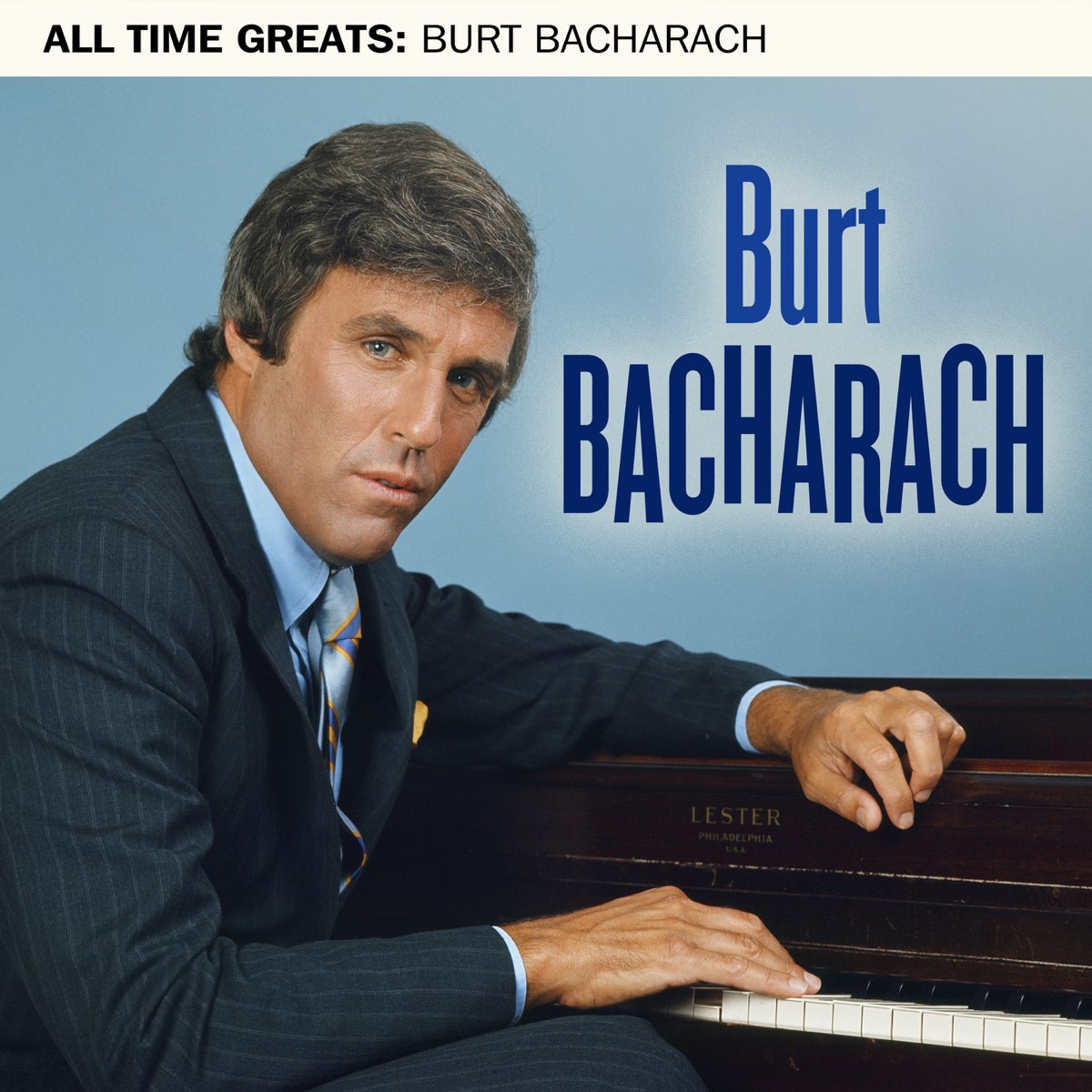
Earlier today, I posted that the late Burt Bacharach was a pupil of Darius Milhaud. He also studied with Henry Cowell and Bohuslav Martinu. For Milhaud, he wrote a Sonatina for Violin, Oboe and Piano. I don’t know that the work has ever been recorded. At any rate, I’ve never been able to locate a copy. Bacharach talks a bit more about it in this excerpt from an interview he gave with NPR back in 2014.
“Darius Milhaud taught me at the Music Academy of the West, and he’s this brilliant French composer, wonderful man. I’m taking this composition class with him where I’d written a piece, a sonatina, for violin, oboe and piano. You know, it was very extreme music that people were writing – we were all influenced by 12-tone music, Alban Berg.
“I had this one piece at the end of the semester that I got to play for Milhaud – not with violin, not with the oboe; I just had to just do it at the piano. I was very, very reluctant when it came to the second movement, because it was quite melodic instead of being harsh and dissonant [and] avant-garde. And he took me aside afterward, and maybe he sensed what I felt or maybe just his observation was: Never be ashamed of something that’s melodic, one could whistle. I said, ‘Wow.’ So that was a valuable lesson I learned from him. Never forgot that one. Never be afraid of something that you can whistle.”
Burt Bacharach, perhaps the least likely pupil of Darius Milhaud, has died. Bacharach, the award-winning composer of such indelible hits as “(There’s) Always Something There to Remind Me,” “Don’t Go Breakin’ My Heart,” “Alfie,” “Casino Royale” (1966), “I Say a Little Prayer,” “Raindrops Keep Fallin’ on My Head,” “Arthur’s Theme (Best That You Can Do),” “Heartlight,” “That’s What Friends Are For” and, yes, the theme to “The Blob” (1958), among many others, also studied with Henry Cowell and Bohuslav Martinu. Under Milhaud’s supervision, he composed a Sonatina for Violin, Oboe and Piano. Obviously, his destiny – and his fortune – lay elsewhere. Bacharach was 94 years-old. R.I.P.
Tired of the unrelenting grimness of American entertainment in the 21st century? So am I.
The last place I would have ever expected to find an antidote is South Korea – especially after the Academy Award winning nightmare that was “Parasite.” Nevertheless, that’s exactly what’s happened. “Extraordinary Attorney Woo” is the sunniest, sweetest, most humane television series I have encountered in a long, long, LONG while.
The premise has Woo Young-woo, a brilliant rookie attorney with autism spectrum disorder, enter a major firm in Seoul. Her forthright manner and character quirks are at first disconcerting to her colleagues and clients, but Attorney Woo always proves herself to be the smartest person in the room. She’s endearing in her guilelessness, funny and painful in her obliviousness to social cues, and loveable to her core. Furthermore, she is obsessed with whales, and prone to launch into spontaneous soliloquies about them. Every episode contains an “aha” moment, when suddenly she’s struck by a winning insight into a particularly sticky case. Her hair blows back from her face, the epiphany captured in euphoric slow-mo, as the camera glides over her shoulder to metaphoric visions of dolphins playing and whales breaching.
I’m not sure how the autism community has reacted to this show, but I think it’s great. It’s engagingly written, uniformly well-acted, and beautifully filmed, with lots of light and hope suffusing its world. All the characters are so well-drawn. I love how even the most Machiavellian among them have their redemptive moments.
If you liked the Tony Shalhoub series “Monk,” about the detective with obsessive compulsive disorder, I think you’ll enjoy this. But even more importantly, it will make you feel good about the world and good about people.
Given the premise, you might expect it to inspire some reflection on the challenges of living with autism. But the show is also revelatory in that it demonstrates that life, law, and love in Seoul function much the same as they do here. These people could be my neighbors. I WANT them to be my neighbors.
Why do I literally have to search halfway around the globe to find top-quality entertainment with some humanity? From South Korea, no less, which abuts an unstable nuclear power. What do we have to complain about here? We’re neighbors with Canada! And yet, you’d think from our entertainment that the U.S. is the most miserable hell hole on the face of the planet.
If there’s a lesson to be gleaned from Attorney Woo, it’s that the world offers many insights and rewards to those who are able to step outside and approach things from another perspective.
If you have access to Netflix, definitely check this one out. And if there is a choice between dubbed and subtitles, go with the subtitles. The voices and line deliveries are essential to the performances. Every episode is chock full of smiles and tears. But in a good way, not in a sardonic, ironic, bleak, nihilistic way. I’m generally not a “TV” guy, but I have to say, the 16 episodes of “Extraordinary Attorney Woo” is time well-spent. It’s easily the best thing I’ve seen in the past year.
The inspirational and touching score is by Noh Young-shim. Here’s the show’s opener.
PHOTO: The cast of refreshing “Woo,” enjoying some refreshment
Happy birthday to the Master, 91 years-old today. I wish I could forget the horrible movie, because John Williams truly is the Last Jedi. Is there any doubt? Here’s a taste of what we can expect this summer.
John Williams is a living reminder of when the movies still had magic and soul. I will be forever grateful for everything this man has contributed to our entertainment and dreams of a better world.
Thanks for everything, and a very happy birthday, Maestro!
It was announced yesterday that Gustavo Dudamel will be leaving the Los Angeles Philharmonic to take up the post of “music and artistic director” of the New York Philharmonic, beginning in 2026. The double-barrel title is bestowed in the same week as the announcement that Yannick Nézet-Séguin will now be “music and artistic director” of the Philadelphia Orchestra. Nézet-Séguin, who has been music director in Philly since 2012, renewed his contract through 2030.
Granted, both these gentlemen do a lot of heavy-lifting, more than justifying the compound-if-cumbersome descriptors. Dudamel, 42, has been a transformative force in L.A. He is, with the possible exception of Nézet-Séguin, our most visible and energetic young man of the podium. (Yannick, 47, is also music director of the Metropolitan Opera and his home orchestra, the Orchestre Métropolitain de Montréal.) I don’t know if the East Coast can handle the combined kinetic energy of Yannick and The Dude.
Dudamel carved out time for a whirlwind residency in Princeton in 2018. Although I got to meet him, our interview had to be conducted via email. Knowing Dudamel, he probably dashed off his responses in a limo on the way to the airport. You can learn more about The Dude and read our exchange at the link.