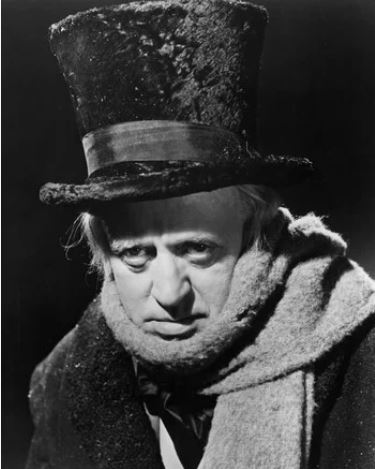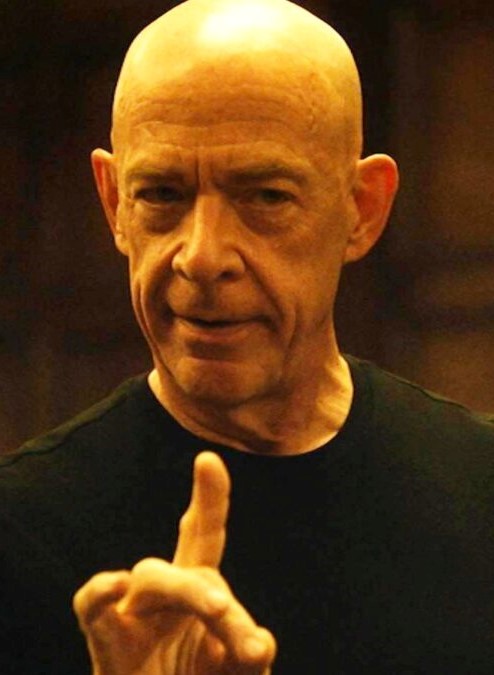
A great compliment from Vinny Foti regarding our show on Friday evening. Everything goes better with a cheesesteak and pierogies. Be sure to order out in advance of our discussion of “Night of the Living Dead” (1968), on the next @[100063986017424:2048:Roy’s Tie-Dye Sci-Fi Corner]. We livestream on Facebook, Twitter, and YouTube, this Friday at 7:30 pm EDT. Thank you, Vinny!
Category: Daily Dispatch
-

Romanian Classical Gems Unearthed
In this season when you can’t hear “Transylvania” without imagining a wolf howl, we’ll set aside creepy castles in the Carpathian Mountains for the more congenial sounds of Romania’s concert halls.
This Sunday night on “The Lost Chord,” we’ll look beyond George Enescu, Romania’s most celebrated musical polymath, to hear music by three of his compatriots, only one of whom managed to achieve recognition beyond the borders of his homeland.
George Stephănescu (1843-1925) was a seminal figure in the development of Romanian opera. He founded the nation’s first opera company in 1885. He is also credited with having composed the first Romanian symphony. Stephănescu conducted at the National Theater and taught at the Bucharest Academy of Music. His “National Overture” of 1876 reflects his patriotic concerns.
By contrast, György Ligeti (1923-2006) was destined to be a bit of an outlier. Born into a Jewish family in an ethnically Hungarian region of Transylvania, Ligeti went on to become one of the most important composers of his generation, but much of his music is in a style that would have been deemed “avant-garde.” However, he also had his playful side. In 1951, he wrote his “Concert românesc” (“Romanian Concerto”), a wholly accessible and little-known work based on actual Romanian folk tunes he had studied at the Folklore Institute in Bucharest. Despite this being one of his most overtly delightful pieces, the work was banned after a single rehearsal in Bucharest and not heard publicly until 1971. “Totalitarian regimes do not like dissonances,” he observed ruefully.
Finally, Paul Constantinescu (1909-1963) was part of a generation of Romanian composers that came of age in the shadow of Enescu. He composed in most musical forms: opera, ballet, oratorio, incidental music, symphonic, chamber and choral music, and music for film, yet he remains little-known in the West. His concertante output includes works for violin, cello, piano and harp, in addition to a concerto for string orchestra. We’ll hear Constantinescu’s Piano Concerto, from 1952.
Children of the night! What music they make.
Go batty for exhumed Romanian classics. The Count invites you to join him in his box, for “Romania Mania,” this Sunday night at 10:00 EDT, on WWFM – The Classical Network and wwfm.org.
-

Holst Vaughan Williams Music BFFs
BFFs of British music: Gustav Holst and Ralph Vaughan Williams in September 1921
-

Miss Marple Before Angela Lansbury
Before Angela Lansbury, there was Margaret Rutherford.
Rutherford played Miss Marple in a series of Agatha Christie adaptations scored by Ron Goodwin. Goodwin’s music for “Murder, She Said” (1961) will be among the selections on this week’s “Picture Perfect,” an hour of wry mysteries and thrillers featuring the sound of the harpsichord.
In the first of the Marple films, Rutherford’s amateur sleuth goes undercover as a domestic servant. Goodwin’s Miss Marple theme became a popular hit, which you may still recognize.
Bette Davis enjoyed something of a comeback following her turn in “Whatever Happened to Baby Jane?,” opposite Joan Crawford. The film singlehandedly defined a subgenre which has been variously described as “psycho-biddy,” “hag horror,” “hagsploitation,” and “grande dame guignol.” Camp and black comedy are essential elements. “Dead Ringer” (1964) was yet another “bad twin” film, with Davis’ delicious performance underscored by André Previn.
Sir Laurence Olivier and Michael Caine play a deadly game of cat and mouse, as a mystery writer plans to exact revenge on his wife’s lover, in a big screen adaptation of Anthony Shaffer’s play, “Sleuth” (1972). John Addison, who had previously harpsichorded his way to an Academy Award with his score for “Tom Jones,” wrote the impish music.
Finally, Barbara Harris plays a fake psychic and Bruce Dern her cab-driving, private investigator boyfriend, who become embroiled with serial kidnappers, in Alfred Hitchcock’s final film, “Family Plot” (1976). The composer was none other than John Williams, poised between his breakout success, “Jaws,” and “Star Wars,” which was to make him a household name. (Both “Jaws” and “Star Wars” were Academy Award winners for Best Original Score.)
Hitchcock was full of suggestions as to the music and how it should be conducted. The composer recollects that on one occasion, when trying to convey the tone he was looking for, Hitch remarked, “Mr. Williams, murder can be fun.”
We’ll keep our tongues firmly in cheek as the corpses pile up. It’s an hour of arch harpsichords this week, on “Picture Perfect,” music for the movies, this Saturday evening at 6:00 EDT, on WWFM – The Classical Network and wwfm.org.
-

“The Omen” Didn’t Scare Me
Granted, the film’s gruesome set-pieces are all pretty unforgettable. But I’m sorry, “The Omen” (1976) just didn’t scare me. Then again, my dad took me to the drive-in to see “The Omega Man” when I was five. So I was probably fairly well inured to stuff-and-nonsense like the son of Satan being born to a jackal. Atticus Finch and family terrorized by the Devil’s Rottweilers? A little silly, don’t you think? But Charlton Heston, the last man on earth, battling legions of plague-induced zombies? That sh** can happen!
Few would deny that the 1970s was a very strange decade. It was an era when audiences could accept supernatural Rottweilers doing the bidding of Satan, and a successful franchise spun out of “The Doberman Gang.”
One thing I think we can all agree on is that little kids are creepy. Also, David Warner looks sinister even when he’s supposed to be one of the good guys. (I was amused to learn that Warner held on to the film’s iconic severed head for years – until it was taken by his wife when they divorced.)
FUN FACT! Jerry Goldsmith’s Oscar-winning music can be used to underscore almost any situation.
Lawn crew pulls up at development [Cue “Ave Satani”]
Sniff carton to discover milk has turned [Cue “Ave Satani”]
Squirrel hangs upside down from tube feeder [Cue “Ave Satani”]
Try it!
Then check out our conversation about “The Omen” on last night’s Roy’s Tie-Dye Sci-Fi Corner.
Next week, we’ll be joined by Bill Scurato, managing director of Country Gate Players. Bill is presenting a Saturday night film series this month (with a 100th anniversary screening of F.W. Murnau’s “Nosferatu” tonight at 8:00) at Country Gate Playhouse in Belvidere, NJ.
On the 29th & 30th the players will present a “live experience” assimilating Ed Wood’s masterpiece of incompetence, “Plan 9 from Outer Space.” We’ll learn more about it, when we discuss one of the films shown at Country Gate this month, George A. Romero’s seminal zombie classic, “Night of the Living Dead” (1968).
So leave your brains in the comments section. Human flesh is on the menu, when we livestream on Facebook, next Friday evening at 7:30 EDT!
https://www.facebook.com/roystiedyescificorner
PHOTO: Rubber bands had to be put around the muzzles of the “Satanic” Rottweilers in order to make them look like they were snarling
Tag Cloud
Aaron Copland (93) Beethoven (95) Composer (114) Film Music (136) Film Score (143) Film Scores (255) Halloween (94) John Williams (195) KWAX (229) Leonard Bernstein (103) Marlboro Music Festival (125) Movie Music (151) Mozart (88) Opera (206) Philadelphia Orchestra (89) Picture Perfect (174) Princeton Symphony Orchestra (108) Radio (88) Ross Amico (244) Roy's Tie-Dye Sci-Fi Corner (290) The Classical Network (101) The Lost Chord (268) Vaughan Williams (103) WPRB (396) WWFM (881)