Category: Daily Dispatch

  • War of the Worlds & Martian Movie Music

    War of the Worlds & Martian Movie Music

    This week on “Picture Perfect,” with Halloween only days away, my thoughts turn to Grover’s Mill, the community located not far outside of Princeton, NJ, that became the focal point of Orson Welles’ notorious radio adaptation of H.G. Wells’ “The War of the Worlds.”

    On October 30, 1938, Welles’ Mercury Theatre presented the classic’s dramatization after the manner of “breaking news,” with simulated live reports interrupting a program of regularly scheduled dance music. What the alleged reports described was chilling – a Martian invasion of rural America by hostile aliens bearing fiery weapons and poisonous gas. The whole story was authenticated, in real time, by a “Professor Richard Pierson of Princeton Observatory.”

    Those who tuned in late or were only half-listening completely freaked out, and reacted in a manner unimaginable in an era of social media. Panicked mobs choked the streets, phone lines were jammed, and police flooded CBS Studios. Welles had dropped the biggest firecracker right in the middle of a United States already on edge, thanks to widespread access to radio reports of mounting tensions in Europe.

    You might say Welles’ (and Wells’) fame skyrocketed. Orson Welles would match his early notoriety a few years later with his Hollywood debut, as producer, director, co-writer, and star of “Citizen Kane,” which inflamed William Randolph Hearst, while H.G. Wells’ novel has remained his most popular, the work having been adapted to film several times.

    We’ll hear music from the classic 1953 version, produced by George Pal, with music by Leith Stevens; then the Steven Spielberg blockbuster, from 2005 (titled, simply, “War of the Worlds”), with music by John Williams.

    After that, we’ll take it to the Red Planet, when an American astronaut is stranded with his test monkey, in 1964’s “Robinson Crusoe on Mars,” with music by Van Cleave.

    Finally, we’ll turn to Edgar Rice Burroughs’ John Carter. Why Disney dropped “of Mars” from the title – something that would have actually elaborated on the subject matter, for uninitiated – is anybody’s guess. The belated 2012 adaptation was undertaken 100 years after the character was introduced.

    Unfortunately, the intervening decades robbed Burroughs’ creation of much of its freshness, with dozens, if not hundreds, of science fiction novels and movies having plundered the author’s pulp treasure trove. “John Carter” was less striking than it might have been, but the film was certainly not the train wreck the press made it out to be. Michael Giacchino’s score concludes the hour on a romantic note, a welcome relief after dodging so many Martian heat rays.

    I hope you’ll join me for this interplanetary exchange program (albeit not always a peaceful one), on “Picture Perfect,” music for the movies, this Saturday evening at 6:00 EDT, on WWFM – The Classical Network and wwfm.org.
  • Haunted Hill with Roy & Dracula Next!

    Haunted Hill with Roy & Dracula Next!

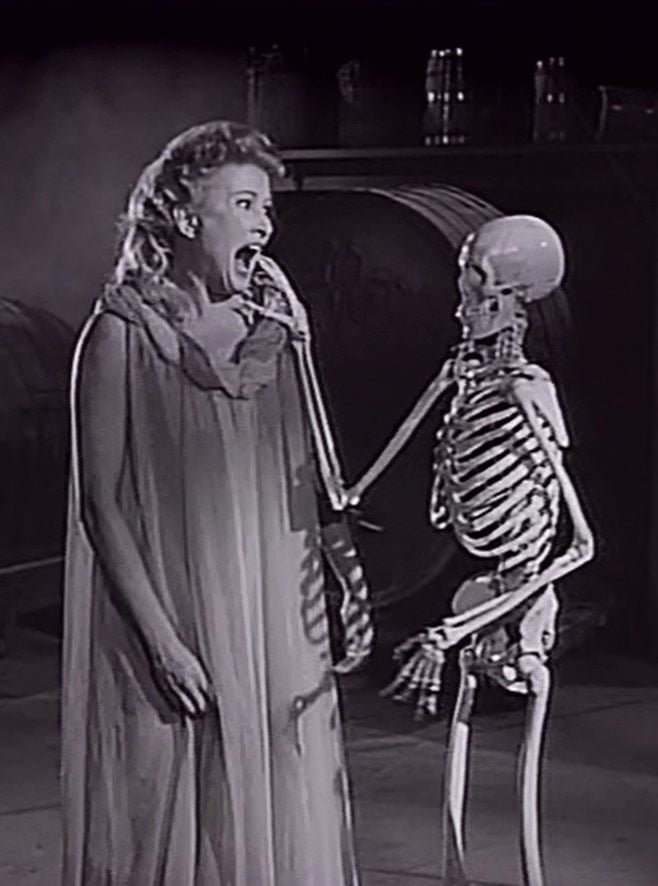
    Roy and I were locked in a Frank Lloyd Wright house with a gliding hag, a floating skeleton, and a roomful of captive Zoom followers for last night’s discussion of the William Castle-Vincent Price classic “House on Haunted Hill.” View the digression-rich conversation as we collect our $10,000 here:

    Then consider joining us next week, as we continue our countdown to Halloween and sink our fangs into “Dracula” (1979). Frank Langella brings his acclaimed Broadway characterization to the big screen, Sir Laurence Olivier is Van Helsing, and John Williams provides an overheated, romantic score.

    There will be plenty of “coffin” as we flap our wings for “Dracula,” on the next Roy’s Tie-Dye Sci-Fi Corner. Go bats in the comments section, when we livestream on Facebook, next Friday evening at 7:00 EDT!

    https://www.facebook.com/roystiedyescificorner

  • Franz Doppler Bicentennial: A Flute Celebration

    Franz Doppler Bicentennial: A Flute Celebration

    Here’s a bicentennial NOBODY is going to celebrate. Perhaps I should say, nobody who doesn’t play the flute. Today is the 200th anniversary of the birth of Franz Doppler.

    Doppler was a successful composer of operas and ballets – now never performed – but today he is remembered, as he should be, for his contributions to the flute. He was a popular virtuoso on the instrument, composing flute concertos and showpieces, and he gave instruction on the flute at the Vienna Conservatory.

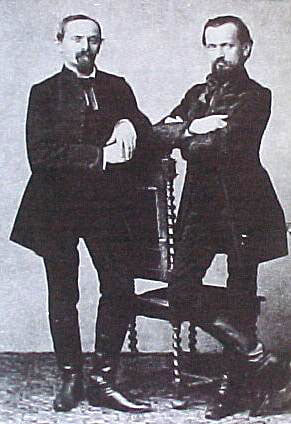
    With his brother, Karl, he formed a flute duo. Karl was also the composer of several operas. In addition, he served as music director at the Theater of Budapest and as conductor at the court chapel in Stuttgart. Franz served for a time as chief conductor of the Vienna Court Opera. Together, they helped found the Hungarian Philharmonic in 1853.

    An interesting footnote: As a student of Liszt, Franz Doppler was given the assignment to orchestrate six of Liszt’s “Hungarian Rhapsodies.” While Liszt’s mastery at the keyboard was unparalleled, he sometimes turned to others for assistance when orchestrating some of his earlier works, as he had a rather full plate at the time as Kapellmeister Extraordinaire at the Weimar Court. Liszt never charged any of his pupils. Furthermore, he made no secret of Doppler’s assistance. With characteristic generosity, even after Liszt went back and extensively revised the pieces for publication, he insisted on leaving Doppler’s name on the title page.

    A doff of the hat to Franz Doppler. Happy birthday!


    “Duettino on Hungarian Themes”

    Julius Baker and Jean-Pierre Rampal play Doppler on Dick Cavett!

    Doppler’s orchestration of Liszt’s “Hungarian Rhapsody No. 2”

    Liszt’s revision


    PHOTO: The hairiest flutists in Europe: Franz, right, with brother Karl

  • “Dementia” and George Antheil’s Surreal Score

    “Dementia” and George Antheil’s Surreal Score

    If you have a taste for surreal, low-budget horror in the vein of “Carnival of Souls,” you might be curious to watch “Dementia” (1955). The film contains no dialogue, so George Antheil’s music receives a real showcase. The film was banned by the New York State Film Board for being “inhuman, indecent, and the quintessence of gruesomeness.” Two years later, it was reissued – with narration by Ed McMahon! – as “Daughter of Horror.”

    That’s Marni Nixon’s voice on the soundtrack. Nixon, secret weapon of the glossy Hollywood musical, ghost-sang for leading ladies Deborah Kerr (“The King and I”), Natalie Wood (“West Side Story”), and Audrey Hepburn (“My Fair Lady”), among others. Her husband, Ernest Gold (Academy Award winning composer of “Exodus”) conducts.

    https://www.youtube.com/watch?v=fF3Xfyj2Dak

    The music from “Dementia” was issued in 2019, coupled with Gold’s Piano Concerto, on the Kritzerland label. I happen to own one of the 500 copies pressed. Of course, it still hasn’t sold out!

    http://kritzerland.com/dementia.htm

    FUN FACT: “Daughter of Horror” is the movie playing in the theater in “The Blob” when the Blob strikes!

    Antheil, born in Trenton, NJ, in 1900, certainly scored some crazy movies.

    In the past, I know I’ve shared my enthusiasm for Ben Hecht’s “Specter of the Rose” (1946), the ballet noir in which dancer Ivan Kirov (looking all the world like Steve Martin in “Dead Men Don’t Wear Plaid”) may or may not be murdering his wives. If you happened to miss the post, you’ll find my thoughts here:

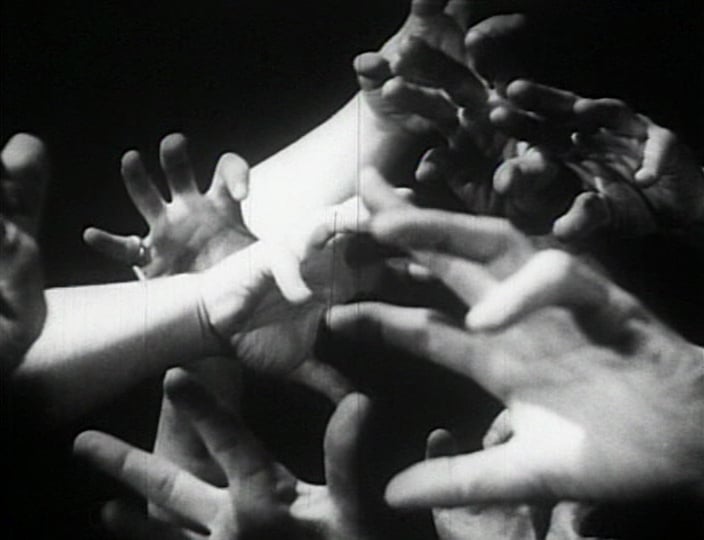
    Of course, Antheil’s most notorious hit was “Ballet Mécanique,” originally conceived as the soundtrack for a Dadaist experimental film by Fernand Léger. However, the two artists parted ways before the project could be brought to fruition, and “Ballet Mécanique” was introduced as an independent concert work.

    And what a concert work! Affronted by a battery of player pianos, airplane propellers, bells and sirens, the opening night audience lost their minds and rioted vigorously into the streets of Paris. Needless to say, Antheil’s reputation was made.

    Léger’s “Ballet Mécanique,” was united after the fact with Antheil’s music (which in concert runs a good ten or fifteen minutes longer than the film):

    Antheil is buried in Trenton’s Riverview Cemetery. I wrote about my visit there and my tour of the composer’s childhood haunts for an article for The Times of Trenton in 2013:

    https://www.nj.com/times-entertainment/2013/08/early_life_in_trenton_left_mar.html

  • Alexander Zemlinsky Vienna’s Musical Outlier

    Alexander Zemlinsky Vienna’s Musical Outlier

    Poor Alexander Zemlinsky. Unlucky in love with Alma Schindler, later the wife of Gustav Mahler (among others), and overshadowed professionally by his pupil (and one-time brother-in-law) Arnold Schoenberg. On the 150th anniversary of his birth, he remains fin de siècle Vienna’s great musical outlier.

    Zemlinsky is yet another very interesting composer whose profile has risen somewhat thanks to recordings. In particular, he received a boost during the compact disc era, a time when the market became oversaturated with endless duplications of the standard repertoire, and producers scrambled to exhume accessible music lurking at the fringes.

    In himself, Zemlinsky was a remarkable talent. He studied theory with Robert Fuchs and composition with Anton Bruckner. Early on, he received support from Johannes Brahms. Later, he met Schoenberg, to whom he gave lessons in counterpoint. He was the only formal teacher Schoenberg ever had. Interestingly, he was also mentor to Erich Wolfgang Korngold, who went from toast-of-Vienna musical wunderkind to seminal Hollywood film composer.

    Like just about everyone else, Zemlinsky became embroiled in a torrid love affair with Alma Schindler. He even proposed marriage. Alma seemed keen on the idea at first but was soon dissuaded by family and peers. Gustav Mahler became a champion of Zemlinsky’s music, despite the fact that both men happened to love the same woman.

    By his own assessment, Zemlinsky was not an attractive man, and perhaps there was something autobiographical in his decision to set Oscar Wilde’s short story “The Birthday of the Infanta” as an opera, which he titled “The Dwarf.” (SPOILER ALERT: The Dwarf is spurned and dies of a broken heart.)

    Zemlinsky is probably best known for his “Lyric Symphony,” for vocal soloists and orchestra, on texts of Rabindranath Tagore, and the large-scale symphonic poem “The Mermaid,” after Hans Christian Andersen.

    However, I have always been partial to this early Symphony in B-flat, written in the shadow of Brahms and Dvořák:

    The Clarinet Trio, Op. 3, frequently performed as a piano trio (with a viola taking the clarinet part)

    “The Mermaid”

    A recent performance of the “Lyric Symphony”:

    Happy sesquicentenary, Alexander Zemlinsky!


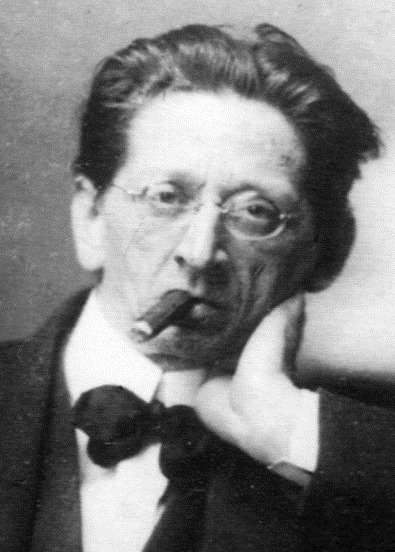
    PHOTO: Zemlinsky smokes the sourest cigar in the world

Tag Cloud

Aaron Copland (93) Beethoven (95) Composer (114) Film Music (136) Film Score (143) Film Scores (255) Halloween (94) John Williams (195) KWAX (229) Leonard Bernstein (103) Marlboro Music Festival (125) Movie Music (151) Mozart (88) Opera (207) Philadelphia Orchestra (89) Picture Perfect (174) Princeton Symphony Orchestra (108) Radio (88) Ross Amico (244) Roy's Tie-Dye Sci-Fi Corner (290) The Classical Network (101) The Lost Chord (268) Vaughan Williams (103) WPRB (396) WWFM (881)

DON’T MISS A BEAT

Receive a weekly digest every Sunday at noon by signing up here


RECENT POSTS