Category: Daily Dispatch

  • Lawyers in Film Music & Atticus Finch

    Lawyers in Film Music & Atticus Finch

    Atticus Finch may have been a model father, but he was also one of cinema’s most memorable attorneys. This week on “Picture Perfect,” a generous suite from Elmer Bernstein’s score for “To Kill a Mockingbird” (1962) will cap an hour of music from movies about lawyers, judges, and courtrooms.

    Ernest Gold, a composer best known for his Academy Award-winning work on “Exodus,” wrote the music for several courtroom dramas. We’ll begin with the theme to “The Young Philadelphians” (1959), a film starring Paul Newman as an ambitious young lawyer whose rise is complicated by various ethical and emotion hurdles.

    That will be followed, without break, by the theme to “Inherit the Wind” (1960), the big screen adaptation of a play by Jerome Lawrence and Robert Edwin Lee, inspired by the events of the Scopes Monkey Trial. The film features Spencer Tracy and Fredric March, as fictionalized versions of Clarence Darrow and William Jennings Bryan, respectively, Gene Kelly as an H.L. Mencken-like newspaper reporter, and Dick York, of “Bewitched” fame, as the small-town school teacher who introduces his students to the concept of evolution.

    Louis Calhern was nominated for an Academy Award for Best Actor for his turn as Supreme Court justice Oliver Wendell Holmes in “The Magnificent Yankee” (1950). Calhern had created the role of Holmes in the original Broadway production.” Emmet Lavery’s script was adapted from the historical novel, “Mr. Justice Holmes,” by Francis Biddle. The score is by Philadelphia-born David Raksin, best known for his music for “Laura.”

    As a collaborator of Virgil Thomson, Orson Welles, Marc Blitzstein, and David O. Selznick, among others, and as founding director of the drama department at Juilliard, John Houseman could already look back on a lifetime’s worth of achievements, when he won the Academy Award for Best Supporting Actor, at the age of 71, for his performance in “The Paper Chase” (1973). Houseman plays the formidable Professor Kingsfield, Timothy Bottoms a first-year student in one of his classes at Harvard Law, and Lindsay Wagner, Bottoms’ love interest – who happens to be Kingsfield’s daughter. The music is by John Williams, written two years before “Jaws” and four years before “Star Wars.” Williams has a more varied resume than many would suspect.

    Finally, just in time for Father’s Day, Gregory Peck assumes one of his most memorable roles, as defense attorney Atticus Finch, in “To Kill a Mockingbird,” based on Harper Lee’s beautiful coming-of-age novel. The book was awarded the Pulitzer Prize in 1961. Peck won the Academy Award for Best Actor in 1962. Elmer Bernstein wrote the music, one of his most moving scores.

    We’ll be laying down the law (with a nod to Dad for Father’s Day) this week, on “Picture Perfect,” music for the movies, this Saturday evening at 6:00 EDT, on WWFM – The Classical Network and wwfm.org.
  • Paul Lansky From Crummy Student to Composer

    Paul Lansky From Crummy Student to Composer

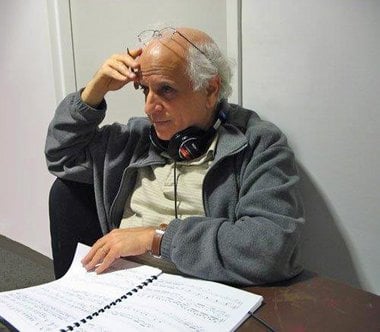
    “I was a crummy student. I never really did what my teachers told me.”

    That independent streak has served Paul Lansky well. Lansky was on the faculty of Princeton University from 1969 to 2014. He chaired the music department there for nine years, from 1991 to 2000.

    A French hornist who became a pioneering composer of computer music, he caught the ear of the experimental rock band Radiohead and formed a fruitful association with guitarist David Starobin. Starobin’s Bridge Records, Inc. continues to document Lansky’s post-electronic works for standard acoustic instruments.

    When he retired from Princeton after 45 years of service, it was never Lansky’s plan to stop composing. In fact, he remains as busy as ever, with the past few years being a remarkably fertile period.

    You can read more about him in this article I wrote in 2019, to preview a special tribute concert presented at Richardson Auditorium, in honor of the composer’s 75th birthday. It’s the first time I ever used the word “fart” in print.

    https://www.communitynews.org/princetoninfo/artsandentertainment/a-composer-celebrates-with-wit-and-human-touch/article_9d5126f9-b138-56ba-b139-9d4108840e67.html

    Happy birthday, Paul Lansky!


    While you’re at it, check out Paul’s new album, “Angles”:

    Paul Lansky: Angles (VOL. 17) <br> BRIDGE 9532

    Some selections:

    “Four’s Company” (2018): Vivaldiana

    “Angles” (2017): A Sad Song

    Also, some of his greatest hits:

    “Table’s Clear” (1990) for utensils, kids, and computer:

    “Threads” (2005) for percussion quartet:

    “Partly Pavane” from the “Semi-Suite” (2001) for guitar:

  • Stravinsky’s Savage Wit Composer Feuds and Fireworks

    Stravinsky’s Savage Wit Composer Feuds and Fireworks

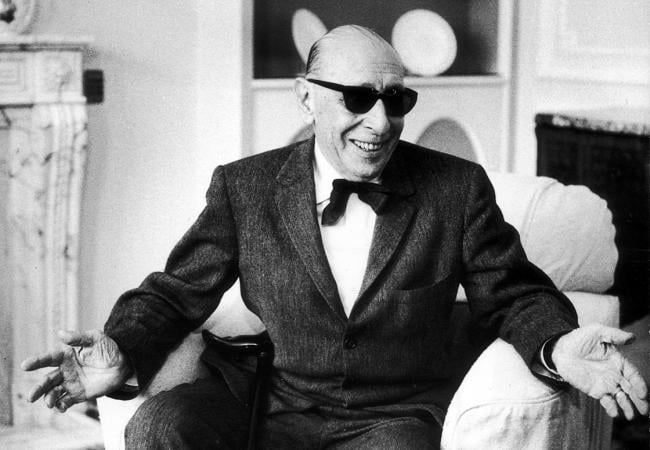
    I’m not sure Stravinsky ever had anything nice to say about anyone. I suppose when you’re lauded as the most important composer of the 20th century, you’ll do anything you can to hang on to the title. Also, a pithy putdown always makes for good copy.

    It’s interesting then to come across so many images of Stravinsky with other composers. What was there that they could possibly talk about? Other than Stravinsky, I mean?

    Perhaps it’s true that familiarity really does breed contempt. In the world of Igor Stravinsky, if you don’t have anything nice to say, say it!


    “Why is it that whenever I hear a piece of music I don’t like, it’s always by Villa-Lobos?”

    On Rachmaninoff: “He was a six-and-a-half-foot scowl.”

    On Boulez’s “Pli Selon Pli”: “Pretty monotonous and monotonously pretty.”

    On Britten’s “A Midsummer Night’s Dream”: “It’s a mistake to conclude each act with people going to sleep.”

    On Messiaen’s “Turangalîla Symphony”: “Little more can be required to write such things than a plentiful supply of ink.”

    On Handel’s “Theodora”: “It’s beautiful and boring. Too many pieces of music finish too long after the end.”

    On Eugene Ormandy: “The perfect conductor of Strauss waltzes.”


    In fairness, he sometimes got as good as he gave:

    Ernest Newman on Stravinsky: “His music used to be original. Now it’s aboriginal.”

    Britten on Stravinsky’s “The Rake’s Progress”: “I liked the opera very much. Everything but the music.”

    Prokofiev on Stravinsky: “Bach on the wrong notes.”


    At least two of Stravinsky’s works were first performed on this date:

    In 1908, “Feu d’artifice” (“Fireworks”) was composed to celebrate the marriage of Nadezhda Rimsky-Korsakov, the daughter of his famed teacher, to rival composer-classmate Maximilian Steinberg, which must have been a bitter pill.

    In 1957, “Agon” was given its first performance on a concert to celebrate Stravinsky’s 75th birthday. The first staged performance was held at the New York City Ballet, choreographed by George Balanchine, later in the year, on December 1, 1957.

    Happy birthday, Igor Stravinsky!


    PHOTO GALLERY: Puppet master Ego Stravinsky and his marionette theater (each labeled individually)

  • Francis Johnson America’s First Master of Music

    Francis Johnson America’s First Master of Music

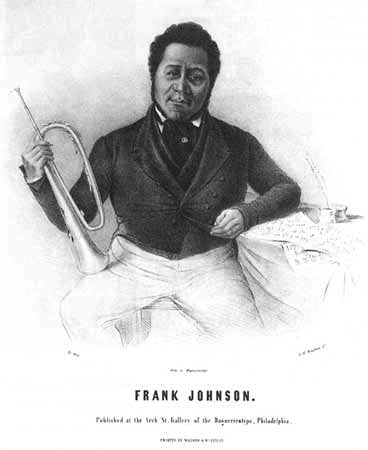
    A blue and gold marker erected before his home, at 65 South 4th Street in Philadelphia, describes him as “America’s first native-born master of music.” He was a prolific composer, “trumpeter of 1st Troop, City Cavalry, and Bandmaster, 128th Regiment, Pennsylvania Volunteer Infantry.” He was also the leader of America’s most popular band for more than twenty years. Over a century before Dorothy Maynor and Little Richard, Francis Johnson, born on this date in 1792, was presenting racially-integrated concerts.

    Johnson was the first African-American to have his works published as sheet music. He led the first American ensemble, an all-black brass band, in performance abroad. In 1837, he sailed to England to take part in the celebrations surrounding the coronation of Queen Victoria. In gratitude, the Queen presented him with a silver bugle. While there, he was exposed to the promenade concert – a style of informal, outdoor garden entertainment – which he brought back with him to the United States. He returned to Philadelphia in 1838, the year Pennsylvania Hall was burned to ground by an angry mob for hosting a convention of abolitionists.

    Indeed, it’s remarkable, in a climate of mounting racial tension and violence, with the Civil War still decades in the future, just how beautifully Johnson’s career flourished. In 1824, he was invited to perform for General Lafayette during Lafayette’s return to the United States. He also taught wealthy European-American students at a studio much-remarked upon for its extensive music library. Over the years, he also amassed an impressive array of instruments. His works were published in compilations alongside those of Beethoven, Brahms, Bellini, Donizetti, Weber, and Czerny.

    At the same time, he performed in Philadelphia’s black churches. His style of playing included rhythmic variations that deviated considerably from his written scores. In the 20th century, this might have been described as “jazzing,” but Johnson’s improvisions would have been worlds away from what we now recognize as jazz.

    He was also known to have delighted his audiences with certain extended techniques and programmatic elements. His “Bird Waltz” featured a chirrupy flute obbligato, his “New Railroad Gallop” emulated a train, and his “Philadelphia Fireman’s Quadrille” was punctuated by cries of “Fire! Fire!”

    Unfortunately, a lot of this music was not fully written-out, with prompts often indicated in his scores. When they were published, it was commonly in arrangements and as piano transcriptions made by other hands. Scholars have reconstructed his performance style to the best of their ability from surviving evidence, including newspaper accounts and other documents describing the effects heard on Johnson’s concerts. The music itself is fairly simple, often a framework to be adorned by improvisation and development.

    Johnson died in 1844 at the age of 51. At his funeral, Queen Victoria’s bugle lay atop his casket.

    Happy birthday, Francis Johnson.


    General Lafayette’s Grand March

    Philadelphia Firemen’s Cotillion

    Princeton Gallopade

    Dirge (played at Johnson’s funeral)

  • Ellington’s Grieg A Jazz “Grotesque”?

    Ellington’s Grieg A Jazz “Grotesque”?

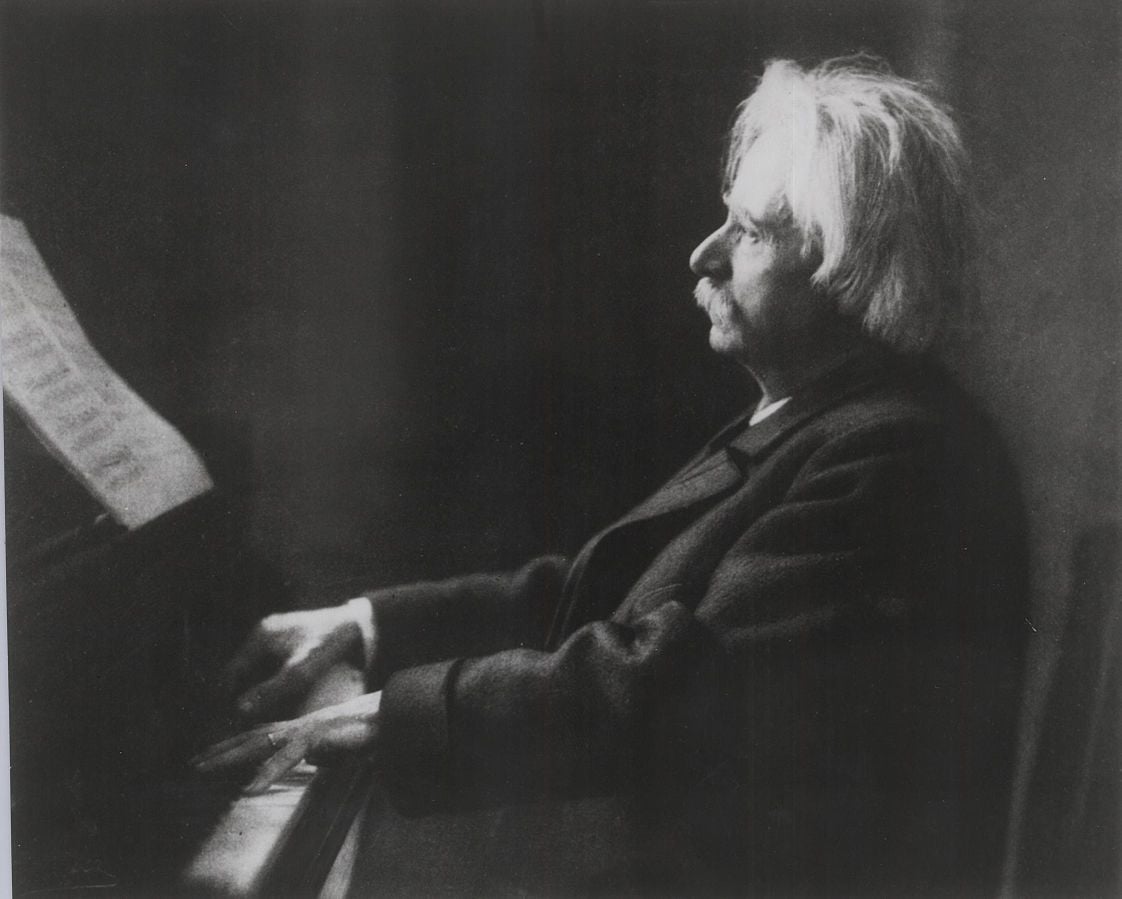
    Another tribute to Edvard Grieg on his birthday: Duke Ellington’s take on “Peer Gynt.” When the album came out in 1960, the Grieg Foundation was not flattered. The president of the organization found the arrangements to be ugly and uninspired and felt that Ellington and Billy Strayhorn had made Solveig “bray like a sow.” Critics in America, at best, expressed confusion. While conceding that the undertaking was a serious one, the results were deemed “grotesque” and even “contemptible.” The classical people weren’t happy. The jazz people weren’t happy. In the process, some reached past the Duke to take a slap at Grieg for his “lightweight” originals. Ouch! Tough crowd!

    More about it here:

    https://quod.lib.umich.edu/m/mp/9460447.0005.205/–duke-ellington-billy-strayhorn-and-the-adventures-of-peer?rgn=main;view=fulltext

    Fiedler conducting the original suites:

Tag Cloud

Aaron Copland (93) Beethoven (95) Composer (114) Film Music (136) Film Score (143) Film Scores (255) Halloween (94) John Williams (195) KWAX (229) Leonard Bernstein (103) Marlboro Music Festival (125) Movie Music (151) Mozart (88) Opera (208) Philadelphia Orchestra (89) Picture Perfect (174) Princeton Symphony Orchestra (108) Radio (88) Ross Amico (244) Roy's Tie-Dye Sci-Fi Corner (290) The Classical Network (101) The Lost Chord (268) Vaughan Williams (103) WPRB (396) WWFM (881)

DON’T MISS A BEAT

Receive a weekly digest every Sunday at noon by signing up here


RECENT POSTS