Category: Daily Dispatch

  • Vaughan Williams’ Lark Ascending at 100

    Vaughan Williams’ Lark Ascending at 100

    In December, I noted the date on which Vaughan Williams’ “Lark” first ascended 100 years before. That was in the version for violin and piano. Today marks the centennial of the first time it was heard in its definitive form for violin and orchestra.

    Though written in 1914, it wasn’t played publicly until December 15, 1920 – as stated, on violin and piano – in the unassuming venue of Shirehampton Public Hall in Bristol. Marie Hall was the esteemed violinist. The pianist was Geoffrey Mendham.

    Hall – who made the first recording of the Elgar Violin Concerto, with the composer conducting – was also the soloist at the premiere of the orchestral version, which received greater notice, when it was unveiled at the Queen’s Hall, London, 100 YEARS AGO TODAY. The British Symphony Orchestra was conducted on that occasion by Adrian Boult.

    The score, which bears an inscription from a poem of George Meredith, is the quintessence of the composer’s elegiac pastoralism. Thanks in part to frequent radio airplay, the music’s popularity increases annually, with “The Lark Ascending” consistently ranked among top listener favorites. At the same time, it has been embraced by more and more violinists.

    Vaughan Williams described his leisurely, contemplative, frankly gorgeous violin rhapsody as “a romance.” It now soars as some of his best-known music.

    Hark, hark, the Lark.

    He rises and begins to round,
    He drops the silver chain of sound,
    Of many links without a break,
    In chirrup, whistle, slur and shake.
    For singing till his heaven fills,
    ‘Tis love of earth that he instils,
    And ever winging up and up,
    Our valley is his golden cup
    And he the wine which overflows
    to lift us with him as he goes.
    Till lost on his aerial rings
    In light, and then the fancy sings.


    Marie Hall plays the Elgar Violin Concerto, heavily-abridged, in 1916:

  • Flag Day Sousa vs Dvořák’s Lost Anthem

    Flag Day Sousa vs Dvořák’s Lost Anthem

    For Flag Day, two works inspired by Old Glory – one, one of the most famous pieces of American music ever, and the other, virtually forgotten:

    On Christmas Day, 1896, John Philip Sousa received the bolt of inspiration that would become “The Stars and Stripes Forever.” He knocked off his quintessential march in a New York hotel room in a matter of hours. Sousa’s magnum opus was first performed in Philadelphia on May 14, 1897.

    Though the piece was enthusiastically received, it wasn’t until the Spanish-American War in 1898 that sales went through the roof. This was precipitated in part by the composer having organized a spectacle involving hundreds of performers, complete with flag-bearing soldiers and a ravishing beauty decked out in red, white and blue. With a dash of canny showmanship, “The Stars and Stripes Forever” surfed a wave of wartime patriotism to world-wide and lasting renown.

    The same year, the respected Czech composer Antonin Dvořák put the finishing touches on his cantata “The American Flag.” The work had been planned to celebrate the composer’s arrival in the U.S., in 1892, to take up the directorship of the National Conservatory of Music in New York. But the text, by Joseph Rodman Drake, arrived too late, and the cantata didn’t receive its first performance until 1894. Though he submitted the vocal score for publication in 1895, Dvořák did not consider the work complete until three years later.

    Scored for tenor, baritone, chorus and orchestra, the cantata falls into eight sections:

    I. The Colors of the Flag
    II. First Hymn to the Eagle
    III. Second Hymn to the Eagle
    IV. Orchestral Interlude: March
    V. First Address to the Flag (The Foot-Soldier)
    VI. Second Address to the Flag (The Cavalryman)
    VII. Third Address to the Flag (The Sailor)
    VIII. Apotheosis (Prophetic)

    Part of the reason the work remains such an obscurity is likely the fact that it doesn’t sound particularly American. This is not the Dvořák of the “New World Symphony” or the “American” String Quartet.

    It was Henry T. “Harry” Burleigh, the composer’s African-American assistant at the conservatory, who introduced Dvořák to the Negro spiritual. Travels to the Midwest would get him thinking about Native American folk music. Dvořák was thrilled to learn of these untapped musical resources. He set about exhorting his American colleagues, who had been churning out largely forgettable scores on European models, to embrace these overlooked treasures and, in doing so, forge a distinctive national sound.

    Mindful of their invaluable contributions, Dvořák lobbied to waive tuition to the conservatory for talented African American and Indigenous composers who could not afford the fee. His perceptivity, his enthusiastic support for, and his elevation of sounds that really were in the American ear all along earn Dvořák his place as the honorary Grandfather of American Art Music.

    Here is his neglected cantata, “The American Flag”:

    https://www.youtube.com/watch?v=BGl8E7C-VeA

    John Philip Sousa conducts “The Stars and Stripes Forever”:

    BONUS! The “Stars and Stripes Ballet,” after Sousa, by Philadelphia-born arranger Hershy Kay:

    Happy Flag Day!

  • Indiana Jones’ Princeton University Connection

    Indiana Jones’ Princeton University Connection

    Did you know Indiana Jones was born in Princeton, NJ? Supposedly on July 1, 1899. According to his fictional biography, he lived here until 1908, at which time his father, Henry Jones, Sr. – a professor of medieval studies at Princeton University – embarked on a lecture tour.

    The Joneses returned to Princeton in time for Indy to attend Princeton High School. However, he never did graduate. While on spring break during his senior year, he fell in with Poncho Villa, while visiting the Southwest, then got caught up in World War I.

    Indy himself is supposed to have taught at Princeton University in 1933. However, his longtime employer, and the one we see in the movies, is Marshall College, a fictional institution, in Bedford, Connecticut.

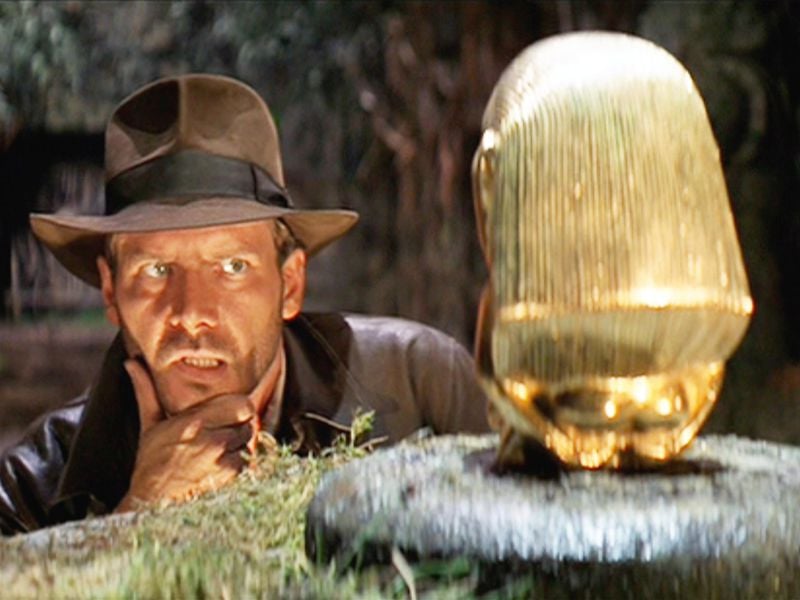
    40 years after the release of “Raiders of the Lost Ark (on June 12, 1981), and all this is news to me. Then, I was never a follower of “The Young Indiana Jones Chronicles” television show or the spin-off novels or video games.

    The period during which the Joneses lived in Utah, in 1912, portrayed in the opening sequence of “Indiana Jones and the Last Crusade,” coincides with Henry Jones Sr.’s Princeton sabbatical. Henry Jones taught at Princeton from 1899 until at least 1938.

    At some point, Oxford-graduate Marcus Brody, Indy’s boss at Marshall, also took courses at Princeton.

    Needless to say, as a “Raiders” fan and now a Princetonian, I find this newly-acquired Indy lore fascinating.

    https://indianajones.fandom.com/wiki/Princeton

    https://indianajones.fandom.com/wiki/Princeton_University

    In real life, William Hootkins, the actor who played Major Eaton in “Raiders” (and memorably uttered the line “TOP… MEN”) graduated from Princeton in 1970. I wrote a post about it in 2019.


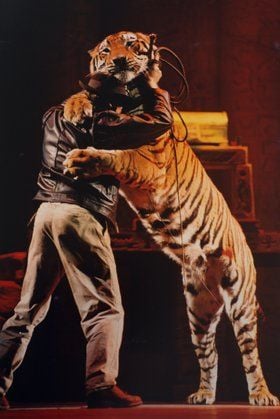
    PHOTO: Indiana Jones and the Princeton Tiger?

  • Bulgarian Music This Sunday on WWFM

    Bulgarian Music This Sunday on WWFM

    This Sunday night on “The Lost Chord,” it’s “take 2” for a Bulgarian travelogue, postponed from April because of a technical glitch.

    Despite his Mexican-sounding first name and Swiss birth, Pancho Vladigerov was a seminal figure in Bulgarian music. He was the country’s first major composer to harness Bulgarian folk traditions to classical forms.

    Fairly well known in Central Europe during the 1920s, when he was an associate of the theatrical impresario Max Reinhardt, Vladigerov had many of his works published by Universal Edition and recorded by Deutsche Grammophon. He was a composer of opera, ballet, symphonic music, five piano concertos, two violin concertos, chamber music, songs, choral works, and piano pieces.

    Tonight, we’ll hear a generous selection from Vladigerov’s “Bulgarian Dances” of 1931.

    Also on the program will be American composer Derek Bermel’s affectionate souvenir of his studies in the region, “Thracian Echoes” of 2002. Bermel served as artist-in-residence at Princeton’s Institute for Advanced Study from 2009 to 2013. His “Thracian Echoes” was performed locally by the Princeton Symphony Orchestra in 2011.

    There will be no balking in the Balkans. Skim the cream of Bulgarian music, on “Bulgar Wheat,” this Sunday night at 10:00 EDT, on WWFM – The Classical Network and wwfm.org.

  • Indiana Jones 40th Anniversary

    Indiana Jones 40th Anniversary

    Indiana Jones first cracked his whip on the big screen on June 12, 1981. George Lucas and Steven Spielberg’s smart homage to cinematic serials of yore, “Raiders of the Lost Ark,” took off like a shot to become the year’s highest-grossing film and a cultural phenomenon.

    This week on “Picture Perfect,” as we anticipate the release of “Indy 5” in 2022, we’ll celebrate four decades of fedoras and five o’clock shadows. Tune in for selections from John Williams’ classic scores for the series, including “Raiders of the Lost Ark” (1981), “Indiana Jones and the Temple of Doom” (1984), “Indiana Jones and the Last Crusade” (1989), and “Indiana Jones and the Kingdom of the Crystal Skull” (2008).

    Remember, it’s not the years – it’s the mileage. Join me for a highly subjective hour of music and reflections on the Indiana Jones series, to mark the 40th anniversary of “Raiders of the Lost Ark,” on “Picture Perfect,” music for the movies, this Saturday evening at 6:00 EDT, on WWFM – The Classical Network and wwfm.org!

Tag Cloud

Aaron Copland (93) Beethoven (95) Composer (114) Film Music (136) Film Score (143) Film Scores (255) Halloween (94) John Williams (195) KWAX (229) Leonard Bernstein (103) Marlboro Music Festival (125) Movie Music (151) Mozart (88) Opera (208) Philadelphia Orchestra (89) Picture Perfect (174) Princeton Symphony Orchestra (108) Radio (88) Ross Amico (244) Roy's Tie-Dye Sci-Fi Corner (290) The Classical Network (101) The Lost Chord (268) Vaughan Williams (103) WPRB (396) WWFM (881)

DON’T MISS A BEAT

Receive a weekly digest every Sunday at noon by signing up here


RECENT POSTS