
Only yesterday, I was enjoying BBC Radio 3’s programming of wall-to-wall women composers, for International Women’s Day (after first attending a Ruth Gipps video conference in honor of her centenary), and now this comes my way from two different sources – a rediscovered piece by American composer Florence Price. If you haven’t heard it yet, I’m sharing it here.
Category: Daily Dispatch
-
Hovhaness Rubaiyat Fairbanks & York
Here with a Loaf of Bread, beneath the Bough,
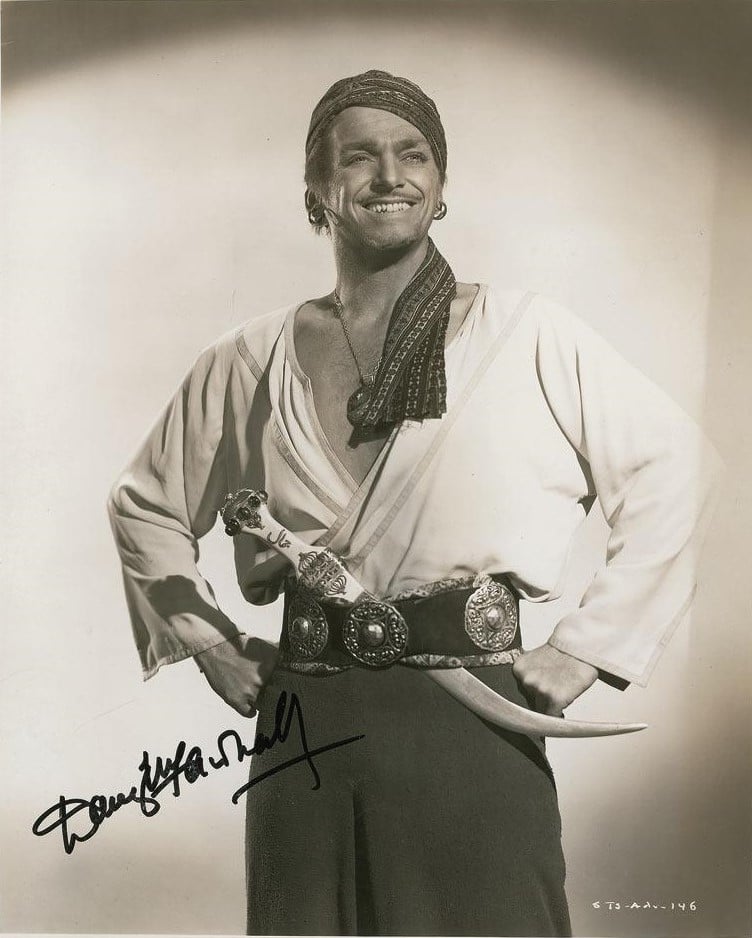
A Jug of Wine, an Accordion… and Douglas Fairbanks, Jr.Today is the 110th birthday of Armenian-American composer Alan Hovhaness.
In theory, Hovhaness, with his marked affection for the East, should have been the ideal composer to set “The Rubaiyat of Omar Khayyam.” What is striking is how unconventional his approach turned out to be. Is there a less likely instrument to bring to life the hedonistic fatalism of the medieval Persian master than the accordion?
A recording of the work was issued on a Columbia LP, with Fairbanks as the narrator. To me, Fairbanks’ theatricality is a huge asset, conjuring memories of his turn as Sinbad the Sailor.
Unfortunately, to date, the performance has not been reissued on CD. Presumably the masters languish in the Sony vaults. O that they could be licensed to another label, even to be pressed-on-demand at http://www.arkivmusic.com (which has already made available Kostelanetz’s recording of “Floating World – Ukiyo”). The Bird is on the Wing!
Lo! Someone has posted the audio on YouTube:
Fortunately, there is another fine recording with Michael York, the Seattle Symphony and accordionist Diane Schmidt.
An amusing anecdote: York appeared in Philadelphia a number of years back, in a touring revival of Lerner & Loewe’s “Camelot.” Following one of the performances, I walked around to the stage door, where there was a line of people waiting with memorabilia from “Cabaret” and “Logan’s Run.” Eventually, York emerged and politely signed everything, though you could tell he was a little fatigued after a long evening.
When he got to me, I handed him the CD booklet, and his eyes lit up. “Oh!” he exclaimed. “I would be DELIGHTED to sign this.”
That’s my Michael York story. Here’s a link to York’s mellifluous, though more subdued reading:
Come, fill the Cup, and in the Fire of Spring
The Winter Garment of Repentance fling:
The Bird of Time has but a little way
To fly – and Lo! the Bird is on the Wing.Happy birthday, Alan Hovhaness!
PHOTOS (clockwise from left): Doug Fairbanks; Omar Khayyam; the composer and Andre Kostelanetz; and Michael York
-

Ravel’s Triumph Over Adversity
That which does not kill us makes us stronger. Or, as the French would have it, “Qui vivra verra.” He who lives shall see.
It’s healthy to be challenged sometimes, even if you’re a master like Maurice Ravel. This Sunday night on “The Lost Chord,” for Ravel’s birthday, we’ll enjoy two of the composer’s harder-won works.
Beethoven once remarked, in regard to his string trios, that writing for three instruments is more difficult than writing for four, as in a string quartet. How much more difficult still it must have been for Ravel to compose his Sonata for Violin and Cello.
In 1920, Henri Prunière, editor of “La Revue musicale,” commissioned a number of prominent musicians to contribute works to the memory of Claude Debussy. Ravel’s participation amounted to a single movement for violin and cello. Later, during the summer of 1921, while on vacation in the Basque region (Ravel was of Basque descent), he decided to expand the piece into four movements. The portion dedicated to Debussy now serves as the work’s opener.
Ravel became totally immersed in the project, but the going was not at all easy. At one point, he complained, “This rascal of a duo makes me extremely ill.” By January of 1922, he was still grappling with the scherzo, which he finally tossed out and replaced, completing the work the following month.
In the end, he understood the significance of the piece in relation to his artistic development. Working from a limited palette of two stringed instruments had required him to focus on the essentials. Gone was the cushion of harmonic luxuriousness. The interplay of melody, rhythm, and counterpoint were of even greater importance.
These restrictions caused him to explore a leaner, more Classical sound, but the intensity of completing the assignment did not come without cost. So drained was he by the austere exercise that he produced only one other, minor work over the next two years.
As a younger composer, at the turn of the century, Ravel was eager to win the Prix de Rome. The prize, awarded to worthy young artists in several disciplines, would mean a year of subsidized study at Rome’s Villa Medici. It would also entitle Ravel to a five-year pension. Applicants were required to submit a fugue, as proof of their compositional skill, and then those candidates selected by the Paris Conservatory were requested to write a dramatic cantata on a text chosen by the judges.
Ravel was 26 when he came to compete for the prize, already with a number of impressive works in his portfolio, including the sublime “Pavane for a Dead Princess.” Even so, powerful factions at the conservatory were aligned against him. Three times he submitted music to the panel of judges, and three times he was denied. In exasperation, he decided to take off for year to regroup, but when he returned for a final attempt, he was informed he was now too old, despite the fact that he was still well shy of the cut-off age of 30.
The music Ravel composed for these applications is now almost totally forgotten. We’ll hear the last of these cantatas, “Alyssa,” written in 1903, based on an Irish legend, replete with sprites and fairies.
Conservatory politics may have robbed him of a chance to study in Rome, but Ravel would have the last laugh. His opponents couldn’t keep him from becoming one of France’s most beloved composers. I hope you’ll join me for “All’s Ravel That Ends Well,” this Sunday night at 10:00 EST, on WWFM – The Classical Network and wwfm.org.
-
Shakespeare Italian Style on Film
William Shakespeare certainly has legs. As England’s greatest playwright, his works have been performed, more or less continuously, for 400 years. He’s trod the boards of the Globe, and he’s circumnavigated the globe. This week on “Picture Perfect,” the Bard gets the “the boot,” with film adaptations scored by composers from the Italian Peninsula.
Just about everyone knows about Orson Welles’ difficulties in Hollywood after skewering William Randolph Hearst in “Citizen Kane.” For flying too close to the sun, all at once cinema’s boy wonder was persona non grata. As a result, Welles spent the bulk of his career trying to secure his own funding and devise creative solutions when the money ran out.
There is plenty of ingenuity on display in Welles’ “Othello” (1949). The film was shot on and off in Italy and Tunisia over a period of three years, as Welles periodically halted production to earn yet another paycheck by acting in somebody else’s picture. When at a point the costumes were repossessed, Welles pivoted by staging a key sequence in a Turkish bath, with the actors clad only in towels.
For the music, Welles employed Angelo Francesco Lavagnino, a classically-trained musician who turned to film in the 1950s. He was soon to become one of the best-known Italian film composers of the era. Lavagnino would be engaged by Welles for several other projects, including a television movie of “The Merchant of Venice.”
Lavagnino received very little or even no payment for his work with Welles, though he was honored to collaborate with the legendary director. For his part, Welles was only too happy to work with Lavagnino, whose music he admired, certainly. But there was an additional incentive in that, in Italy, it was the practice that record companies would pay for everything – orchestration, copying parts, and recording – since they kept the rights.
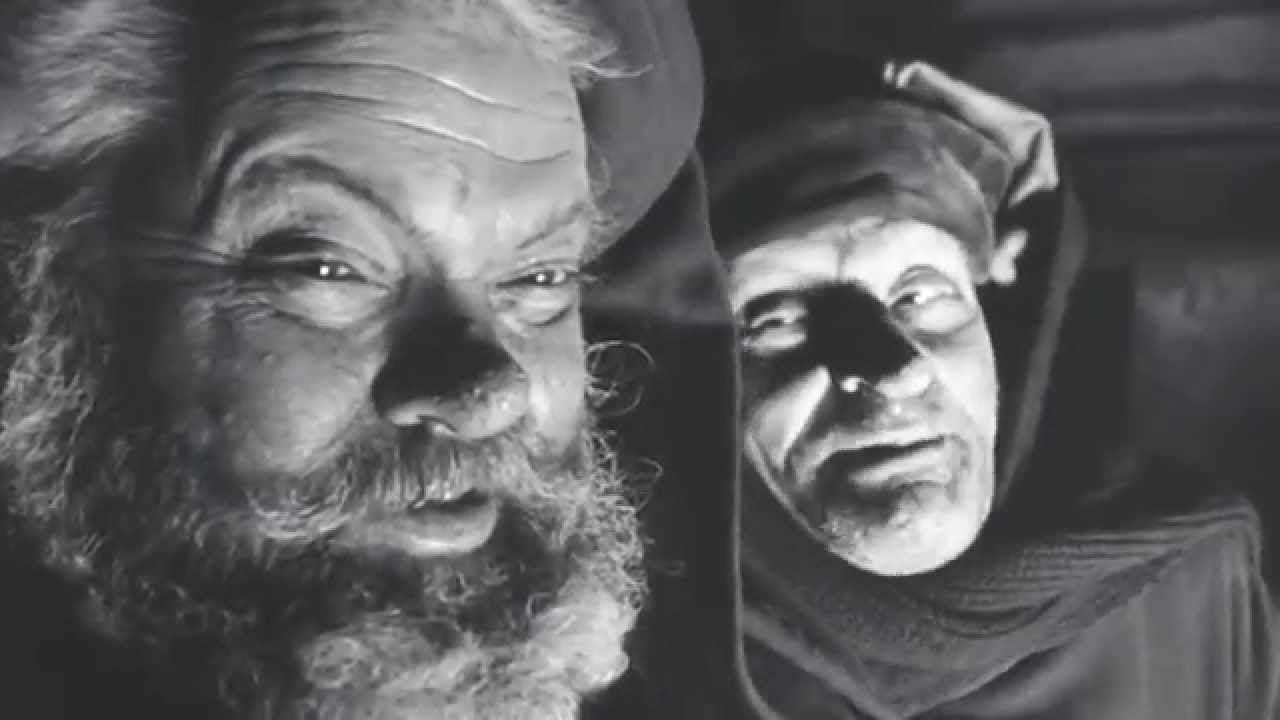
“Chimes at Midnight” (1965), Welles’ compilation of the Falstaff plays, this time a Spanish-Swiss production, was also scored by Lavignino. Welles’ performance in the picture is considered to be one of his finest. Also in the cast were John Gielgud, Jeanne Moreau, and Margaret Rutherford. Vincent Canby of the New York Times wrote that “Chimes at Midnight” “… may be the greatest Shakespearean film ever made, bar none.” Lavagnino modeled much of his score on Early Music, since Welles had used a lot of it on the temp track.
Much less frugal was Franco Zeffirelli, who enjoyed notable success adapting the Bard, both for film and the operatic stage. He directed a lively version of “The Taming of the Shrew,” with Elizabeth Taylor and Richard Burton, and an inexorable one of Verdi’s “Otello,” with Placido Domingo recreating one of his most celebrated roles.
Ennio Morricone was Zeffirelli’s composer of choice for “Hamlet” (1990). The film featured a venerable supporting cast, with Glenn Close, Ian Holm, Helena Bonham Carter, Alan Bates and Paul Scofield, and Mel Gibson did a surprisingly respectable job as the lead. At the time, Gibson was known for his action roles.
Zeffirelli’s biggest success with Shakespeare came with “Romeo and Juliet” (1968). Much was made of the fact that the film’s leads, Leonard Whiting and Olivia Hussey, were closer than usual to the age of the characters in the play. “Romeo” became one of the great date movies and retains its broad appeal. The score, by Nino Rota, spawned a popular hit, “A Time for Us.”
All the world’s a stage! I hope you’ll join me for “Shakespeare Italian-Style,” on “Picture Perfect,” music for the movies, this Saturday evening at 6:00 EST, on WWFM – The Classical Network and wwfm.org.
-
Star Trek Apollo Makeup Michael Forest
With “Star Trek,” Roy’s always in his element. I, on the other, hand need to get to the bottom of Apollo’s chest make-up.
Here’s the video of last night’s show, in which we discuss the classic “Trek” episode, “Who Mourns for Adonais?” Michael Forest, who memorably assumed the role of the mercurial Apollo, will be Roy’s guest tomorrow night at 7:00 EST.
Our conversation is like nectar and ambrosia, and our laurels are always hardy, on Roy’s Tie-Dye Sci-Fi Corner. Watch the video, and tune in on Sunday for Roy’s chat with Michael Forest!
Tag Cloud
Aaron Copland (93) Beethoven (95) Composer (114) Film Music (136) Film Score (143) Film Scores (255) Halloween (94) John Williams (195) KWAX (229) Leonard Bernstein (103) Marlboro Music Festival (125) Movie Music (151) Mozart (88) Opera (208) Philadelphia Orchestra (89) Picture Perfect (174) Princeton Symphony Orchestra (108) Radio (88) Ross Amico (244) Roy's Tie-Dye Sci-Fi Corner (290) The Classical Network (101) The Lost Chord (268) Vaughan Williams (103) WPRB (396) WWFM (881)