Category: Daily Dispatch

  • Handel’s Enduring Appeal: A Modern Renaissance

    Handel’s Enduring Appeal: A Modern Renaissance

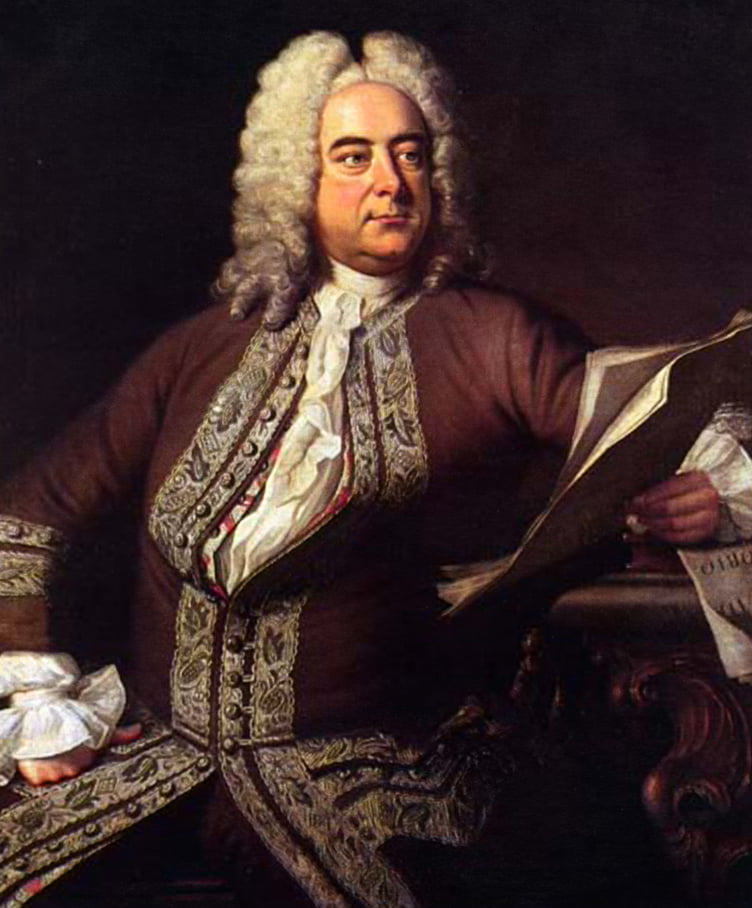
    Is it just me, or has the standard of Handel performance gotten so much better in recent decades? I guess you really don’t hit your stride as a composer until after the first 300 years.

    For as much as I hold a nostalgic affection for Hamilton Harty’s ponderous take on the “Water Music” – a concert staple for over half a century – a modern orchestra gives little indication of just how thrilling Handel can be. At its best, his vocal stuff, in particular, can be sublime.

    I didn’t always feel this way. When I attended a performance of “Ariodante” in Philadelphia, back in the 1989, even with the dream pairing of Benita Valente and Tatiana Troyanos, I was afraid I was going to give up the ghost. When it really doesn’t connect, three or four hours of Baroque opera can easily start to feel like too much of a good thing. My girlfriend at the time wanted to leave after the second act, but I insisted we stick it out. I was eager to witness the climactic swordfight, described in the synopsis – which, in the end, amounted to a single, slow-motion riposte. The weak pay-off earned me an evil glare.

    The experience had the effect of putting me off Handel opera in much the same way that downing a bottle of Inver House whiskey in my teens put me off Scotch. Just as I later discovered, to my surprise and delight, how much I truly appreciate a fine single malt, when I had occasion to reacquaint myself with “Ariodante” at the Princeton Festival in 2010, I was astonished to find that I actually liked Handel opera after all.

    A few years ago, when I wandered into a library book sale, I discovered that someone had dumped their entire collection of Handel operas and oratorios. I don’t know how many there were to begin with, but I walked out with everything that was left. Who knows if I’ll ever get through all of them before I die, but I am very happy to have them.

    That said, I do find Handel’s operas work best when encountered live, in performance – whether seen in person or on screen – which is the opposite of what I would say about most of the operas I prefer. The images that are formed in my mind by the music far surpass anything that can be realized on a stage. When attending opera, it is the experience of the orchestra, the voices, and the sense of “theater” I enjoy. But the visuals are too mundane for my grandiose vision.

    I also tend to get annoyed at modern stagings, with concepts that too often seem forced and undercut the vitality of the music. Again, Handel is different. David McVicar’s production of “Agrippina” must be one of the best things in the Met’s current repertoire.

    Of course, there is always the possibility that it is not so much Handel who has changed – despite a pronounced shift toward “authentic” performance practice over the past 40 years or so. It could be that even a paragon such as myself, sprung fully-formed from the head of Zeus, might have evolved. I’m reminded of the famous Twain observation that, when he was 14, his father was so ignorant he could hardly stand it; but when he was 21, he was astonished by how much the old man had learned.

    I’ve come a long way since my friends and I spent an ouzo-soaked 24 hours celebrating Handel’s tercentenary back in 1985. Everything old is new again. Handel grows wiser with the years, but also more thrilling.

    Happy birthday, G.F.H.


    Amanda Forsythe and Apollo’s Fire, with an aria from “Giulio Cesare”

    Danielle de Niese with the same aria, staged:

    Of course, there’s always Thomas Beecham to prove me wrong:
  • Lowell Liebermann at 60 A Composer Celebrated

    Lowell Liebermann at 60 A Composer Celebrated

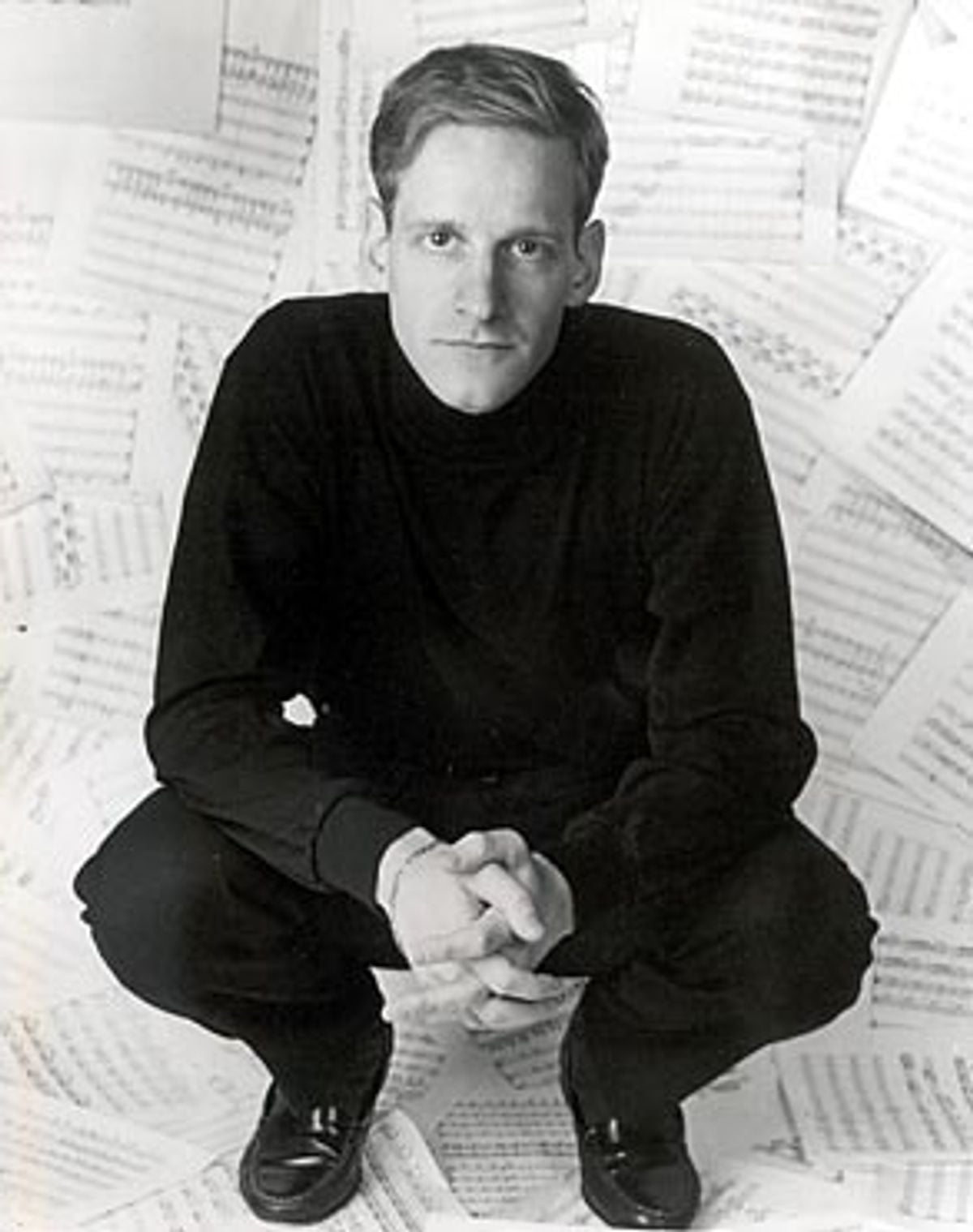
    Composer Lowell Liebermann is 60.

    I’m sure it will surprise no one to learn that, back in the days when I ran a book shop in Philadelphia, I amassed a veritable trove of music inventory. Since a lot of my business was conducted online, I had musicians contacting me from all over the word. One of these was Lowell Liebermann. When, in the course of our correspondence, I asked if he was any relation to the composer, he quipped, “If you mean Rolf Liebermann, no.”

    If you don’t get the joke, Rolf Liebermann wrote this:

    Years later, I interviewed Liebermann for the Trenton Times. His Flute Concerto (1992) was twice performed by the Princeton Symphony Orchestra – once by Eugenia Zukerman, in 2012, and later by Met principal flute (and former Princeton principal) Chelsea Knox, in 2019. In fact, the concerto may be Liebermann’s most frequently-played orchestral work. Here’s Zukerman’s world premiere recording of the piece (written for James Galway), with the Dallas Symphony Orchestra:

    His Flute Sonata (1987) is, if anything, even more popular, if only because a flutist need only collaborate with a pianist. There are 11 recordings of it in the current catalogue. Here’s one I like with principal flutist of the Philadelphia Orchestra, Jeffrey Khaner. The work falls into two movements, so let it play to the next screen.

    Liebermann’s “Gargoyles” is a popular showpiece for pianists. Here it is, performed by Yuja Wang.

    I also had the privilege to hear Liebermann’s opera, “The Picture of Dorian Gray,” in 2007. The world premiere was conducted in Monte Carlo in 1996, by Benjamin Britten champion Steuart Bedford (who died last week at the age of 81). I heard it at the Kimmel Center for the Performing Arts in Philly, in a version for chamber orchestra, with Center City Opera Theater, who did a bang-up job with it. Here’s just a taste, in a semi-staged performance, with the Boston Modern Orchestra Project (BMOP) and Odyssey Opera.

    Liebermann serves on the composition faculty of Mannes College The New School of Music and is director of the Mannes American Composers Ensemble.

    Happy birthday, Lowell Liebermann!


    My interview with Liebermann in The Times of Trenton

    https://www.nj.com/times-entertainment/2012/03/lowell_liebermanns_flute_conce.html

    PHOTO: Liebermann scores in 2002

  • Andromeda Strain Discussion & The Assassination Bureau

    It’s probably wise not follow our recommendations on matters ranging from vulture hygiene to Sterno consumption, but if you can get past all that, you might find an agreeable time-burner in last night’s discussion of “The Andromeda Strain.”

    Guest Rob Kash and I may have had a bit of a dust-up over a supposed familial connection between Leslie and Trevor Howard, and I may have lost my cool over no one having heard of “Brief Encounter,” but it all ended happily, with an orange hand puppet more abhorrent than any contagion.

    Roy and I will be back to light a fuse under Oliver Reed (who I’m sure knew a thing or two about the taste of Sterno), Diana Rigg, and Telly Savalas, with an appreciation of “The Assassination Bureau” (1969), on the next Roy’s Tie-Dye Sci-Fi Corner, this Friday night at 7:00 EST!

    https://www.facebook.com/roystiedyescificorner

  • Wittgenstein’s Lost Chord Left-Hand Legacy

    Wittgenstein’s Lost Chord Left-Hand Legacy

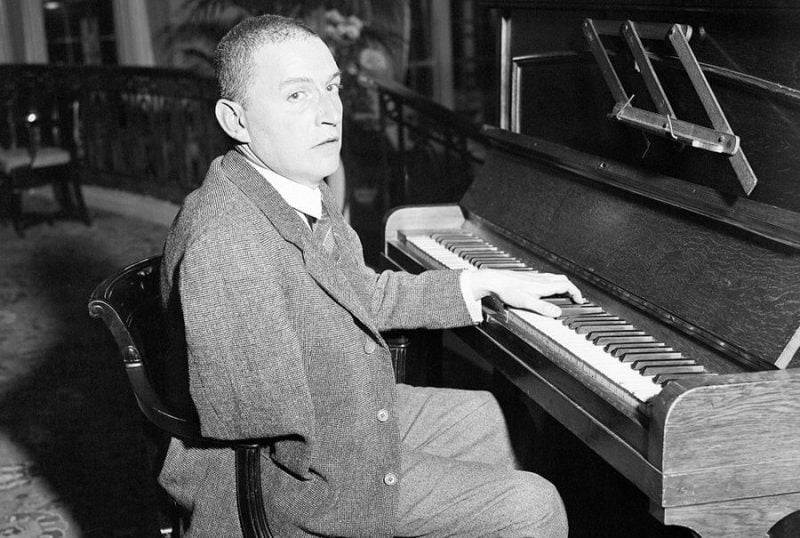
    Concert pianist Paul Wittgenstein lost his right arm during the First World War. Rather than abandon his career, he commissioned works for the left hand from some of the great composers of his day, including Benjamin Britten, Sergei Prokofiev, Richard Strauss, and of course Maurice Ravel.

    This Sunday night on “The Lost Chord,” we’ll highlight two of Wittgenstein’s lesser-known commissions.

    In 1922, Wittgenstein approached Paul Hindemith – at 27, a rising star of German modernism, indeed the radical avant-garde – to produce his “Klaviermusik mit Orchester.”

    Wittgenstein’s reaction to the piece is unknown, although we can easily surmise. He never played the work in public. Furthermore, since he had secured exclusive performance rights, he wouldn’t allow anyone else to play it, either.

    Following the pianist’s death in 1961, his widow relocated to a farmhouse in Bucks County, Pennsylvania, where for decades she kept all of her husband’s belongings in a single room. When the estate was finally catalogued in 2002, a copy of the Hindemith concerto was discovered among Wittgenstein’s effects, along with other scores, correspondence, and items of interest, including locks of both Beethoven’s and Brahms’ hair.

    It was Leon Fleisher who gave the belated premiere of the concerto, some 80 years after it was written, with the Berlin Philharmonic, conducted by Sir Simon Rattle. I was present at the U.S. East Coast premiere, with Fleisher and the Curtis Symphony Orchestra, conducted by Christoph Eschenbach. Listen carefully to see if you can hear me applauding, in a recording made at Philadelphia’s Verizon Hall, at the Kimmel Center for the Performing Arts, on April 27, 2008.

    As a rule, Wittgenstein gravitated toward composers of a more Romantic bent. Erich Wolfgang Korngold was one of music’s most astounding prodigies, a Viennese wunderkind and celebrated opera composer, who later achieved world fame in Hollywood. There, he produced over a dozen classic scores, for films like “Captain Blood,” “The Adventures of Robin Hood,” and “The Sea Hawk.”

    His greatest operatic success was “Die tote Stadt,” given its debut in 1920. Korngold was 23 years-old. In 1922, he became the first composer approached by Wittgenstein for a left-hand piano concerto. (It was the same year, by the way, that Wittgenstein enlisted Hindemith.) The result was the Piano Concerto in C-sharp. Tonight, Marc-André Hamelin will be the soloist, an outstanding virtuoso figuratively playing with one hand tied behind his back.

    Interestingly, Wittgenstein much preferred this piece to Ravel’s Concerto for the Left Hand. It was the Ravel, commissioned in 1929, that would secure his place in music history, but he must have felt Korngold’s Romanticism and sense of struggle played more to his strengths. For whatever reason, Korngold became a Wittgenstein favorite. In the few minutes remaining at the end of the hour, Leon Fleisher will return to the keyboard for a performance of the “Lied,” the ardent slow movement of Korngold’s Suite for Two Violins, Cello and Piano Left-Hand.

    I hope you’ll join me for “What’s Left?” – rarely-heard commissions by Paul Wittgenstein – on “The Lost Chord,” this Sunday night at 10:00 EST, on WWFM – The Classical Network and wwfm.org.

  • Andromeda Strain Still Scares 50 Years Later

    Andromeda Strain Still Scares 50 Years Later

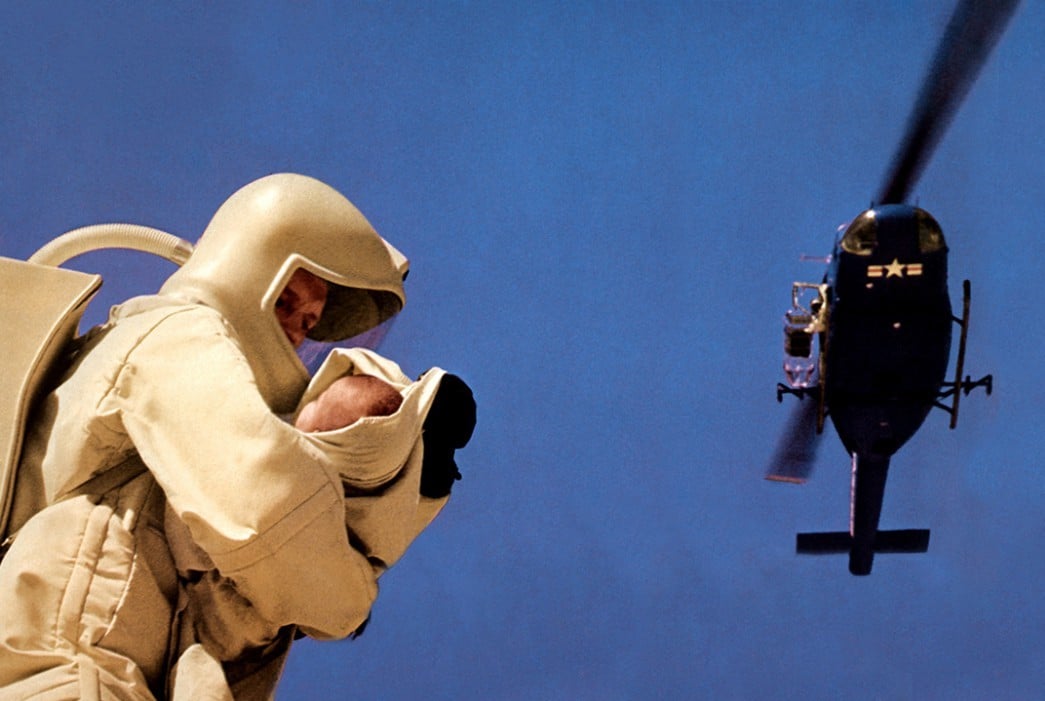
    Is Robert Wise’s adaptation of Michael Crichton’s seminal techno-thriller “The Andromeda Strain” (1971) the most suspenseful boring science lesson ever? Hold my beer.

    Roy and I will be joined by Rob Kash for the next Roy’s Tie Dye Sci Fi Corner and a three-way discussion of this sci-fi classic, 50 years-old and still terrifyingly fresh.

    Surely, if there’s anything more dangerous than a virus from outer space, it’s man: his ignorance, negligence, skepticism, bureaucracy, opportunism, and stubborn inability – or unwillingness – to think ahead. Interestingly, though all of these things are touched upon in “The Andromeda Strain,” it isn’t really what the story’s about. This is not an entertainment predicated on low-hanging fruit.

    Rather, the focus is on the nuts and bolts of research against the clock, exhaustive analysis, the methodical process of arriving at knowledge and solutions, to meet the challenges of containment, immunity, and eradication. You know, SCIENCE. How very quaint.

    The craftsmanship and restraint are impressive. Douglas Trumbull’s low-key, wholly believable special effects are entirely at the service of the story, while Gil Mellé’s insidious electronic score rachets up the psychological tension. There are no big-name actors, no histrionics, no inflated conflicts; just a good, solid, frighteningly believable story, absorbingly told.

    Half a century later, in the middle of a pandemic, “The Andromeda Strain” is, if anything, more relevant, even as it’s unlikely a film like this would ever be released today. It’s too deliberate and thoughtful an enterprise for a world fueled by sound bites, outlandish conspiracy theories, and opinions at the expense of fact.

    Unnervingly, 50 years on, things have gotten a whole lot worse. But those issues can be addressed at another time. In “The Andromeda Strain,” contagion is conflict enough.

    For now, better start slamming the Sterno. It will be like we’re dodging automated lasers on our race to disable an atomic bomb, metaphorically speaking, on the next Roy’s Tie-Dye Sci-Fi Corner. Cry your lungs out in the comments section, when we livestream on Facebook, this Sunday night at 7:00 EST!

    https://www.facebook.com/roystiedyescificorner

Tag Cloud

Aaron Copland (93) Beethoven (95) Composer (114) Film Music (136) Film Score (143) Film Scores (255) Halloween (94) John Williams (195) KWAX (229) Leonard Bernstein (103) Marlboro Music Festival (125) Movie Music (151) Mozart (88) Opera (208) Philadelphia Orchestra (89) Picture Perfect (174) Princeton Symphony Orchestra (108) Radio (88) Ross Amico (244) Roy's Tie-Dye Sci-Fi Corner (290) The Classical Network (101) The Lost Chord (268) Vaughan Williams (103) WPRB (396) WWFM (881)

DON’T MISS A BEAT

Receive a weekly digest every Sunday at noon by signing up here


RECENT POSTS