Category: Daily Dispatch

  • Constant Lambert: English Music’s Versatile Genius

    Constant Lambert: English Music’s Versatile Genius

    As composer, conductor, critic, brilliant conversationalist, and connoisseur of European culture, Constant Lambert proved himself to be one of the most versatile figures in English music.

    This Sunday night on “The Lost Chord,” we’ll benefit from but one facet of this multitalented individual.

    Lambert, born in 1905, emerged from an introverted childhood, marred by illness, and blossomed into a preternaturally-gifted musician. At 13, he was writing orchestral works. At 20, he composed a ballet, “Romeo and Juliet,” for Serge Diaghilev and the Ballets Russes.

    He gained further notoriety as a reciter of Edith Sitwell’s patter verses for William Walton’s “Façade” (which was dedicated to him). His piano concerto with voice and orchestra, “The Rio Grande,” unashamedly incorporated jazz elements, at a time when it could still provoke scandal. He also directed the first recording of Peter Warlock’s “The Curlew.”

    His book, “Music, Ho!,” written at the age of 28, offers concise and witty commentary on the “decline” of modern music. In it, he favors jazz and popular idioms, praises the music Liszt and Sibelius, savages Stravinsky and Les Six, lauds the Marx Brothers, and pokes holes in what he perceives as an artificial “symphonic folk” tradition.

    In 1931, he was appointed music director of the Vic-Wells Ballet, soon to become the Sadler’s Wells. While he achieved great acclaim in this capacity, his responsibilities cut into his activities as a composer. Instead, he became largely occupied with the arranging of others’ music. An exception, his gloomy and sardonic choral work, “Summer’s Last Will and Testament,” was coolly received, following as it did so closely on the death of George V. Lambert took the failure to heart, and began to have serious doubts about his talent.

    Further, the outbreak of war, alcoholism, and undiagnosed diabetes all took their toll on his vitality and creativity. A long-held fear of doctors, stemming from his childhood experiences, only hastened his decline. Lambert died on August 21, 1951, two days shy of his 46th birthday.

    At Sadler’s Wells, he was integral to the planning of each new production, in many cases providing arrangements of lesser-known works by worthy composers. He also became something of an artistic mentor to dancers Margot Fonteyn and Robert Helpmann. In the case of Fonteyn, their relationship developed beyond teacher-pupil. In defiance of his personal demons and deteriorating health, Lambert’s conducting – like his celebrated conversation – remained buoyant and inspired.

    We’ll sample vintage recordings of ballet music after Tchaikovsky, Meyerbeer, Boyce, and Rossini. Lambert is the only constant, on “Lambent Lambert,” this Sunday night at 10:00 EST, on WWFM – The Classical Network and wwfm.org.


    “Music Ho!,” thanks to Project Gutenberg:

    https://gutenberg.ca/ebooks/lambert-music/lambert-music-00-h.html


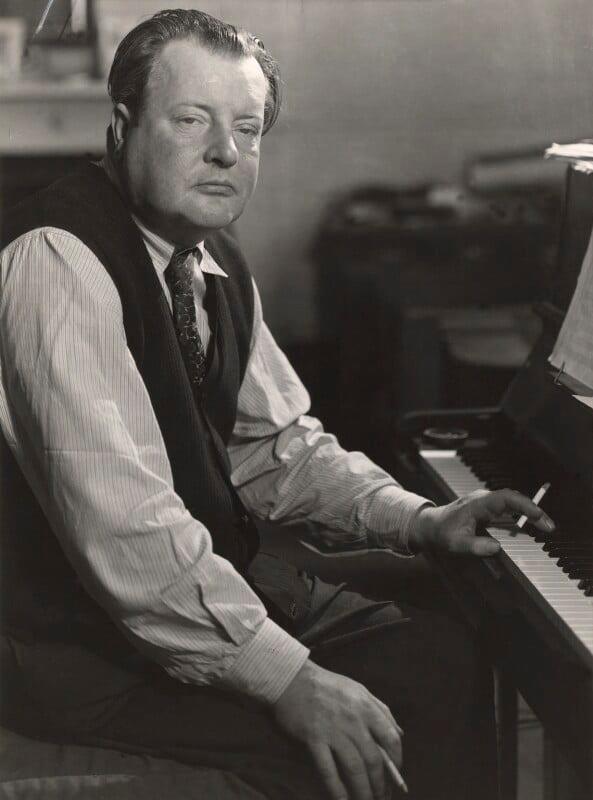
    PHOTO: I only just noticed that Lambert has two cigarettes going at the same time!

  • Marx Brothers Tea Ritz & Maurice Chevalier

    Marx Brothers Tea Ritz & Maurice Chevalier

    Whenever I stumble across anything of interest, rather than bookmark it, I have a habit of simply leaving the screen open. This is why I always wind up with literally hundreds of tabs crowning multiple browser windows. This morning, I thought I’d distill a few of these to provide a touch of pre-Covid fantasy about taking your “sugar” to Sunday tea at the Ritz.

    The song, “When I Take My Sugar to Tea,” was written by Sammy Fain, Irving Kahal & Pierre Norman. Though it was destined to become a popular standard, it was actually introduced in knockabout fashion by Chico Marx in “Monkey Business” (1931), as part of a piano medley that also features the pizzicato from Delibes’ ballet “Sylvia.”

    This is from a 20-minute montage of Chico performances from all the Marx Brothers movies, which you are welcome to view in its entirety, but I’ve cued the link to start at the relevant clip.

    Here’s the actual song, with vocals by Nat King Cole.

    Interestingly, “Monkey Business” is also the film in which the Marxes, who play stowaways, attempt to slip off a boat by using a passport allegedly stolen from Maurice Chevalier. (Chevalier does not appear in the film.) Each brother, in turn, does his Chevalier impression for an increasingly exasperated customs official. Naturally, this involves multiple, ludicrous renditions of “You Brought a New Kind of Love to Me.” Chevalier introduced the song the year before in the film “The Big Pond.” “You Brought a New Kind of Love” was also composed by the team of Fain, Kahal & Norman.

    The Marxist take on Chevalier:

    Chevalier sings it:

    Though it’s my practice always to start the day with tea, by now I’m well on to my java jive. With a debonair doff of a dapper boater, I wish you all a sweet, caffeinated Sunday.

  • Maugham’s Hollywood: Music from His Film Adaptations

    Maugham’s Hollywood: Music from His Film Adaptations

    W. Somerset Maugham is said to have been the highest paid writer of the 1930s.

    This week on “Picture Perfect,” we’ll have music from four Maugham adaptations, including the 1946 version of “Of Human Bondage” (with music by Erich Wolfgang Korngold), the 1946 version of “The Razor’s Edge” (with music by Alfred Newman), and two versions of “The Painted Veil – one from 2006 (with music by Alexandre Desplat) and one from 1957 (released as “The Seventh Sin,” with music by Miklós Rózsa).

    As a former medical student who experienced World War I, first as an ambulance driver and then in the British Secret Intelligence Service, Maugham was involved with adventures all over Europe and Asia, which he then turned to the service of his fiction.

    In 1938, he remarked, “Fact and fiction are so intermingled in my work that now, looking back on it, I can hardly distinguish one from the other.”

    Maugham also worked in Hollywood for a time, writing scripts and making a pretty penny from film adaptations of his books.

    Maugham’s the word this week, on “Picture Perfect,” music for the movies, this Saturday evening at 6:00 EST, on WWFM – The Classical Network and wwfm.org.


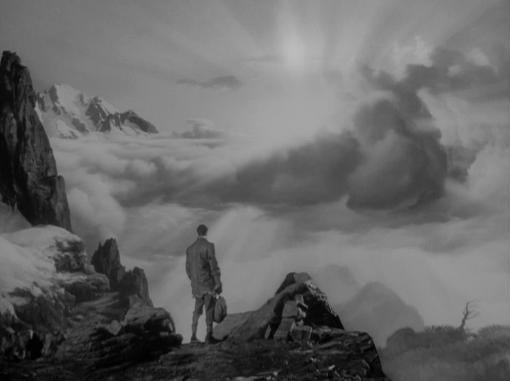
    PHOTO: Tyrone Power sees the light in “The Razor’s Edge”

  • Black Composers Reissue: Still, Kay & More

    Black Composers Reissue: Still, Kay & More

    As someone with an insatiable appetite for American symphonies composed during the first half of the 20th century, I try not to miss a performance, or even a radio broadcast, of music by Roy Harris, William Schuman, or Aaron Copland. But for as much as I adore those composers, the American symphonies that delight me the most, off the top of my head, are Charles Ives’ 2nd, Howard Hanson’s 2nd (the “Romantic”), and William Grant Still’s 1st (the “Afro-American”).

    Still’s symphony, the first by a Black American to be performed by a major orchestra, serves as a kind of capstone to my four-part survey of Columbia Records’ landmark Black Composer Series. This was put together for “The Lost Chord” and originally broadcast on WWFM The Classical Network to mark the belated reissue of the series – after 40 years! – as a 10-CD boxed set by Sony Classical.

    The “Afro-American Symphony” is one of the few pieces in this set, which originally appeared on vinyl between 1974 and 1978, that is heard with any frequency. It serves as a portrait of the artist as a young man, drawing on spirituals, blues, and banjo riffs redolent of the composer’s boyhood in Little Rock, Arkansas. (He was born in Woodville, Mississippi.) More enterprising music directors should give it a shot. It’s the kind of work that goes straight to the heart and gets lodged in the head. Audiences will love it.

    Hear it on the final program in my survey, which also includes “Markings,” by Ulysses Kay. Kay composed his piece in 1966 to the memory of Dag Hammerskjöld, secretary general of the United Nations. Called “the greatest statesman of our century” by John F. Kennedy, Hammarskjöld was awarded a posthumous Nobel Peace Prize, after he was killed in a plane crash en route to ceasefire negotiations during the Congo Crisis of 1961.

    The series concludes on an “up” note, with a lively “Danse Nègre,” from the “African Suite” of 1898, by Afro-English composer Samuel Coleridge-Taylor.

    Enjoy the fourth and final installment of “Black to the Future” – celebrating the reissue of Columbia Records’ forward-looking Black Composers Series – by following the link and clicking on “listen”:

    https://www.wwfm.org/post/lost-chord-february-24-black-future-part-iv

    In case you missed it, here’s Part One, with music by Chevalier de Saint-Georges, Olly Wilson, and Fela Sowande:

    https://www.wwfm.org/post/lost-chord-february-3-black-future

    Part Two, with works by George Walker and José Maurício Nunes Garcia:

    https://www.wwfm.org/post/lost-chord-black-future-part-ii

    And Part Three, with works by José Silvestre de los Dolores White y Lafitte (José White), David Baker, and Roque Cordero:

    https://www.wwfm.org/post/lost-chord-february-17-black-future-part-iii

    On a related note, Michael Kownacky will introduce Still’s “Troubled Island,” the first opera by an African-American composer to be staged by a major company – the New York City Opera, in 1949 – on a double-bill with Paul Moravec’s “Sanctuary Road,” this week on the Sunday Opera at 3:00 EST, on WWFM – The Classical Network and wwfm.org.


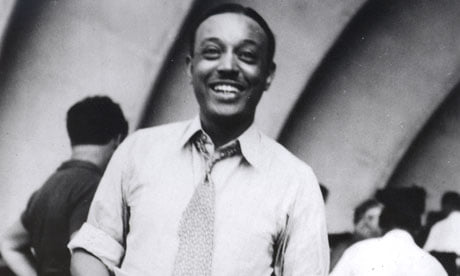
    PHOTO: William Grant Still at the Hollywood Bowl

  • Star Trek Apollo Interview on Roy’s Tie-Dye Sci-Fi

    As always, the journey is the destination, on “Roy’s Tie-Dye Sci-Fi Corner.” So if in the course of our discussion about “The Golden Voyage of Sinbad,” you happen to be lured down a blind alley by our ruminations on Doctor Who, Merv Griffin, Kiss, Oliver Reed, and Toonses the Cat, just go with it.

    We’ll be taking be off tomorrow to gather our strength, in advance of next Friday, when we’ll be storming Olympus, with a conversation about the original “Star Trek” second season episode “Who Mourns for Adonais?” This will serve as preamble to Sunday, March 7, when Roy’s special guest will be Michael Forest, who played Apollo in the episode. Forest will share some personal reminiscences of classic “Trek” and talk some more about his career.

    Pick up your toga from the drycleaners and leave your sacrifices in the comments section. We’ll be racing Apollo’s sun chariot, on the next Roy’s Tie-Dye Sci-Fi Corner, livestreamed on Facebook, next Friday and Sunday (March 7) at 7 pm EST!

    https://www.facebook.com/roystiedyescificorner

Tag Cloud

Aaron Copland (93) Beethoven (95) Composer (114) Film Music (136) Film Score (143) Film Scores (255) Halloween (94) John Williams (195) KWAX (229) Leonard Bernstein (103) Marlboro Music Festival (125) Movie Music (151) Mozart (88) Opera (208) Philadelphia Orchestra (89) Picture Perfect (174) Princeton Symphony Orchestra (108) Radio (88) Ross Amico (244) Roy's Tie-Dye Sci-Fi Corner (290) The Classical Network (101) The Lost Chord (268) Vaughan Williams (103) WPRB (396) WWFM (881)

DON’T MISS A BEAT

Receive a weekly digest every Sunday at noon by signing up here


RECENT POSTS