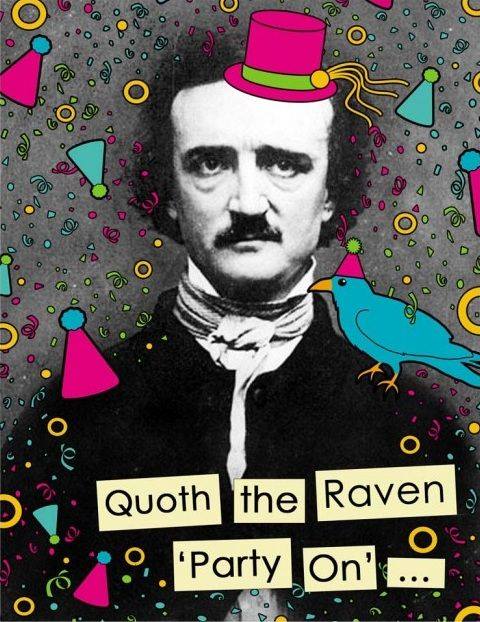
Poe’s classic story, “The Masque of the Red Death,” has particular resonance in this time of COVID, with the seemingly blithe indifference of a decadent ruler to the sufferings of his people. Instead, Prince Prospero invites those loyal to him to party on the brink of disaster, with inevitably horrifying consequences. The hour of reckoning arrives as the ebony clock strikes twelve.
The story, first published in 1842, has inspired a number of pieces of music over the years, but this one is new to me. Christopher Rouse was composer-in-residence with the New York Philharmonic when he wrote “Prospero’s Rooms” in 2011. Rouse was the recipient of the Pulitzer Prize for Music for his Trombone Concerto in 1993. He died in 2015 at the age of 70.
Rouse talks about the story and his music:
My favorite setting of the piece is still the “Conte fantastique” (“Fantastic Tale”) by Debussy associate André Caplet:
Ten months and counting. Coronavirus concerns continue to keep me off-campus.
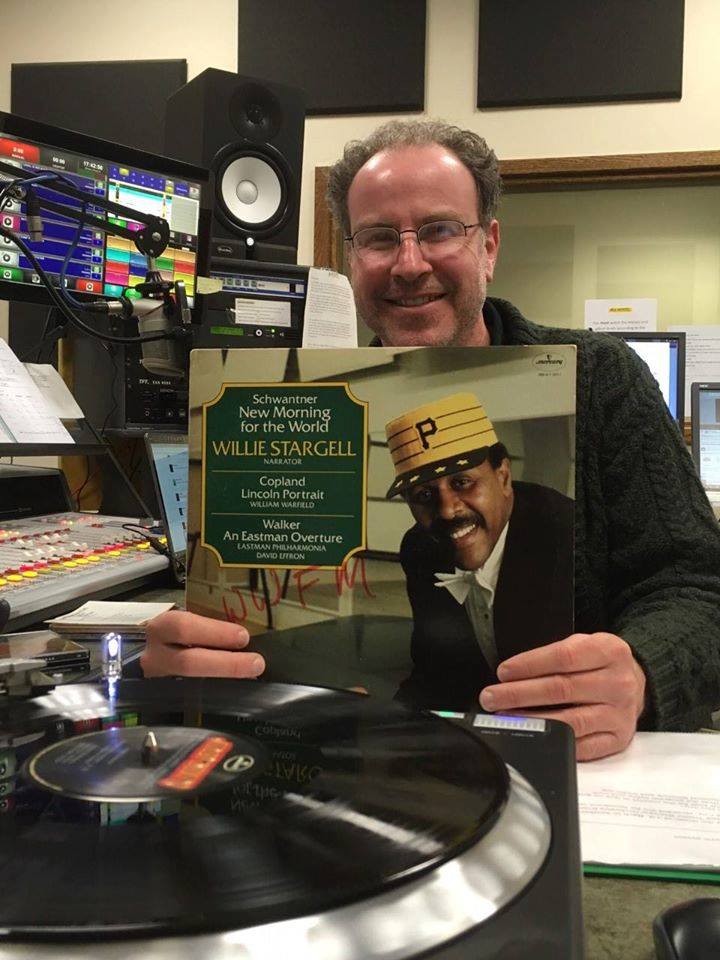
If I were in a studio today, I would be spinning this out-of-print treasure – the world premiere recording of Joseph Schwantner’s “New Morning for the World: Daybreak of Freedom” – alongside other noteworthy, neglected music, for MLK Day.
The text, compiled from speeches and writings of Dr. Martin Luther King Jr., is read by Willie Stargell. Stargell introduced the piece with the Eastman Philharmonia conducted by David Effron, on January 15, 1983 (King’s birthday), at the Kennedy Center in Washington, DC. This was followed by performances in Philadelphia, New York, Pittsburgh, and Rochester (home of the Eastman School of Music). Since then, the work has received hundreds of performances throughout the United States.
At the time of its premiere, Stargell was still first basemen and team captain of the Pittsburgh Pirates. You can read more about him here:
Schwantner was honored with a Pulitzer Prize for Music in 1979 for “Aftertones of Infinity.” Inexplicably, this performance of “New Morning for the World” has never appeared on compact disc. Since I won’t be able to share it with you on the air today, here it is, posted on YouTube:
I know I made the observation before, but it bears repeating: that Stargell would have been subjected to such discrimination and harassment in the still-recent past demonstrates how short history is, and how pertinent was King’s life’s work.
Tolerance, respect, kindness, and basic human decency never go out of fashion. Points can be made without violence, and just because someone disagrees with a certain perspective doesn’t automatically make him a moron, or Satan. That’s not to say there isn’t right and wrong, or that there isn’t evil in the world. Take a stand. Have the courage to speak. But also have the patience to listen. Then pause to consider.
Mobs and movements tend to do something to people. They can attract attention, they can inspire, and they can even spur change. But they also have a dangerous tendency to create straw men and to dehumanize. In my experience, most people, when encountered one on one, are fundamentally decent and want to do right by one another, regardless of how they vote.
There are plenty of “broken” people, to be certain. But fear and ignorance (not to be confused with stupidity), along with a propensity to view oneself as better or more worthy than somebody else, are at the root of so many of the world’s problems.
The most basic attitude adjustment can mean so much. And I offer this as a highly-flawed human being, who doesn’t always practice what he preaches. We can always do more, all of us. And we should always strive to be better.
This Sunday night on “The Lost Chord,” join me for Leopold Stokowski’s rarely-heard recording of Aram Khachaturian’s Symphony No. 2.
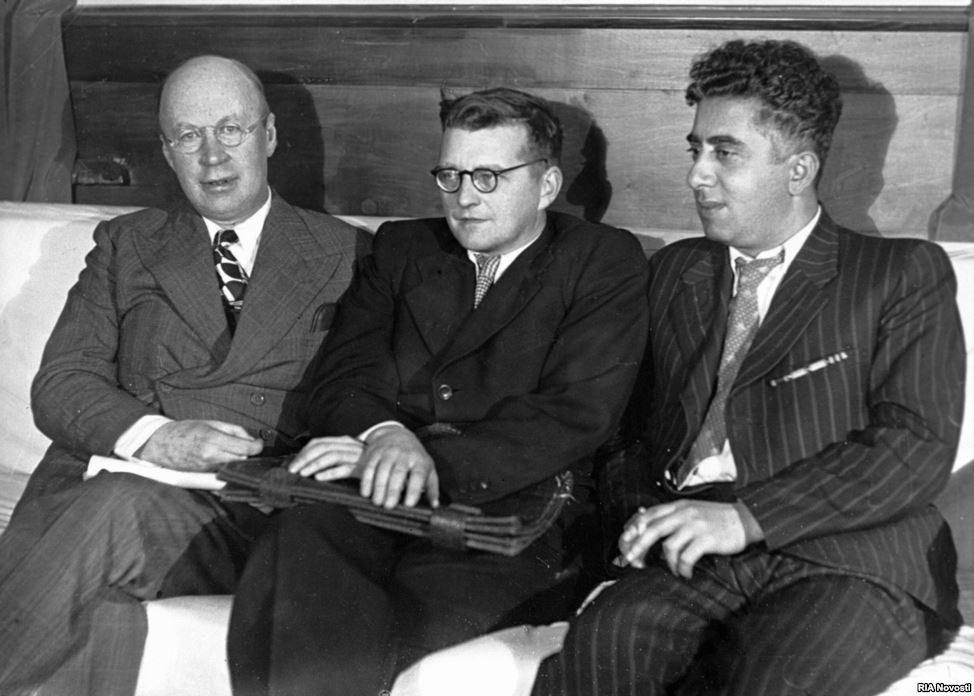
Khachaturian composed the work in 1943, the height of World War II, while holed up at a Composers Union retreat with Shostakovich, Prokofiev, Miaskovsky, and Glière. He described the piece as “a requiem of protest against war and violence.” Its nickname, “The Bell,” alludes to a kind of alarm that opens and closes the work. Overall, the tone is one of unshakable resolve in the face of tragedy.
Stokowski’s recording, long unavailable, was originally issued on United Artists Records in the late 1950s. It reappeared briefly on compact disc, on the EMI label, in 1994, and again in 2009, as part of a 10-disc box set of entrancing Stokowski performances.
Alas, the master tapes have not weathered the years well, so there are moments of distortion, but the power of the work under Stokowski’s direction transcends any technical limitations.
To round out the hour, we’ll hear Russian-born pianist Nadia Reisenberg in a selection from her 1947 Carnegie Hall recital, Khachaturian’s most famous piano piece, the “Toccata.” Reisenberg studied at Philadelphia’s Curtis Institute of Music under Josef Hoffman.
I hope you’ll join me for music by Khachaturian other than the “Sabre Dance.” That’s “Khach as Catch Can,” this Sunday at 10:00 EST, on WWFM – The Classical Network and wwfm.org.
“Sabre Dance” at the Bolshoi, with Khachaturian conducting:
Khachaturian singing about the glories of Armenian wine!
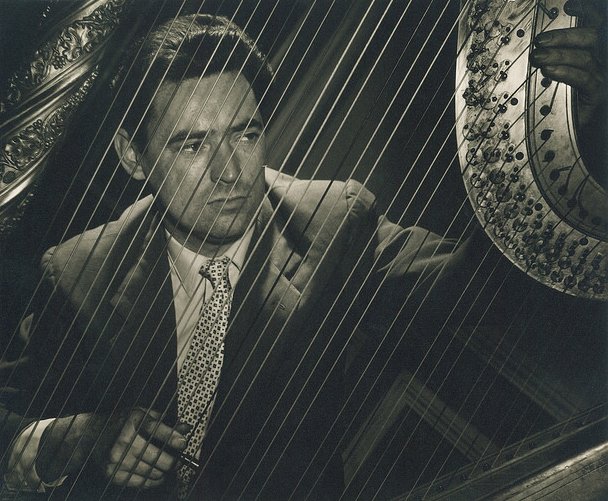
Alas, Osian Ellis now plays his instrument on another plane.
The Welsh harpist, principal of the London Symphony Orchestra and founding member of the Melos Ensemble, has died at the age of 92.
Ellis was a superstar in his field. Many works were written for him by major composers – he was a frequent collaborator of Benjamin Britten, for one – and he contributed a number of pieces to the harp literature himself, including arrangements of music from his native land. His performances and recordings have enriched and enchanted listeners for over 60 years.
R.I.P.
Fauré, Impromptu
Ravel, Introduction and Allegro
Britten, Suite for Harp (composed for Ellis)
William Mathias, Harp Concerto (composed for Ellis)
A jug of Wine, a Loaf of Bread—and Thou
Beside me singing in the Wilderness.
Well, we’ve got the wilderness anyway.
Grab your quill and laudanum. This week on “Picture Perfect,” the focus will be on poets in the movies.
We’ll hear music from “Dead Poets Society” (1989), Peter Weir’s beautiful-but-vacuous take on the transformative power of poetry, its “Goodbye, Mr. Chips” story arc made all the more poignant (and less cheap) by the passing of its beloved star, Robin Williams. Maurice Jarre, a long, long way from his Oscar-winning work on “Lawrence of Arabia,” wrote the music, which blends dulcimer and bagpipes (!) with electronics.
At least “Dead Poets Society” found a place in the hearts of the public. “Lady Caroline Lamb” (1973) did not. Sarah Miles plays Byron’s jilted lover, the wife of future prime minister William Lamb. Despite an impressive cast, which includes Jon Finch, Laurence Olivier, Ralph Richardson, and Richard Chamberlain (as Lord Byron, no less), and direction by venerable playwright and screenwriter Robert Bolt (“A Man for All Seasons”), the film received mixed reviews and tanked at the box office. The always fine Richard Rodney Bennett provided the atmospheric score.
“Il Postino” (1994) tells the story of a simple postman whose prosaic life is transformed through the power of metaphor. His model is the exiled Chilean poet Pablo Neruda, played by Philippe Noiret. The film’s writer and star, Massimo Troisi, died of a heart attack twelve hours after shooting was completed, having postponed surgery until he finished work. He was 41 years-old. Argentinian-Italian composer Luis Bacalov’s bandoneon-tinged score was honored with an Academy Award for Best Music.
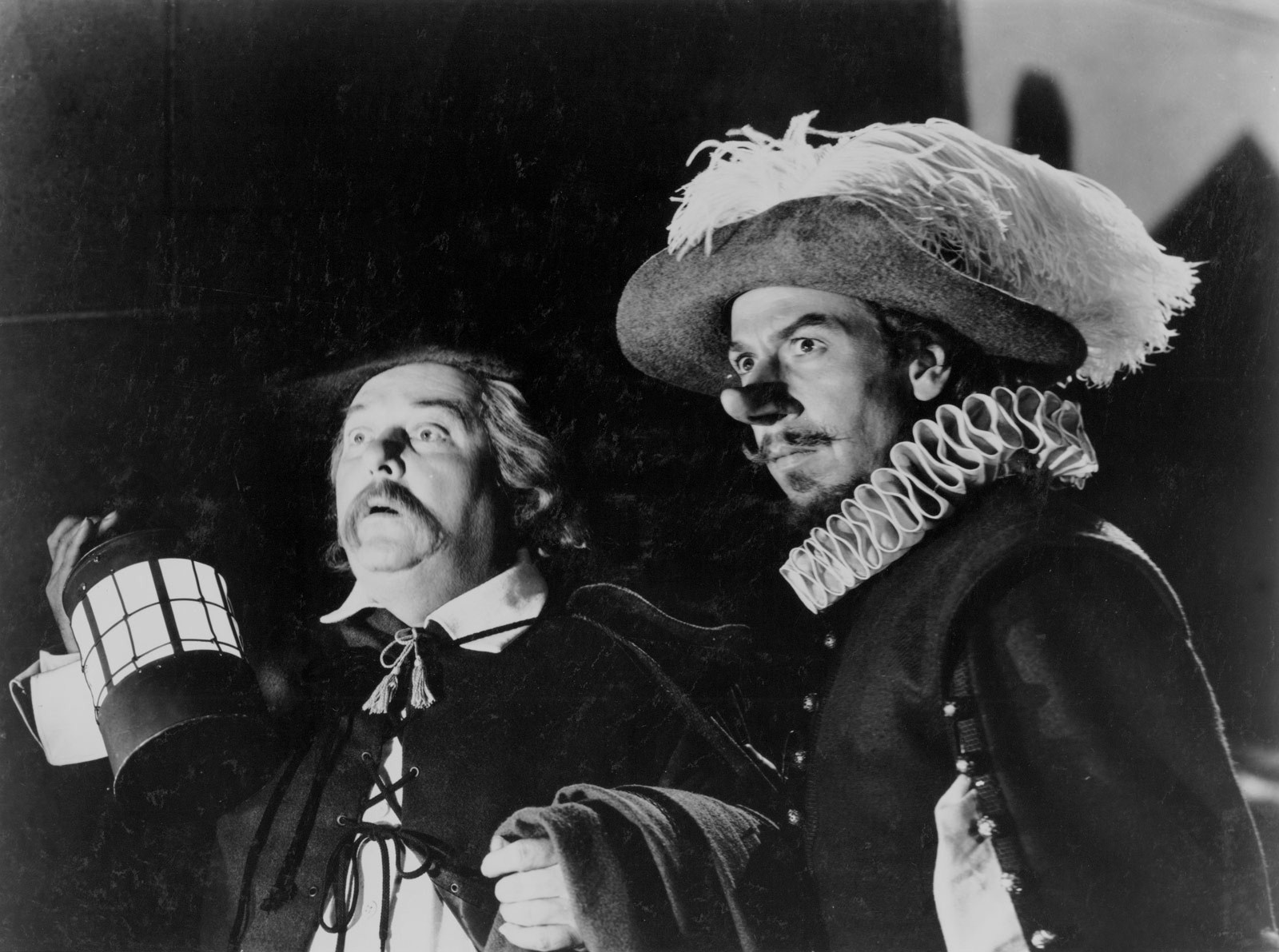
Finally, we put a point on things with the rapier wit of “Cyrano de Bergerac” (1950). José Ferrer struts his stuff as the warrior-poet with the prominent proboscis, who never wants for words, save in the presence of his beautiful cousin Roxane. Ferrer elocuted – and fenced – his way to an Academy Award for Best Actor. The score is one of Dimitri Tiomkin’s finest, and we’ll hear a recording taken from the film’s original elements, under the crisp direction of the composer.
It could be verse. Poetry warms the soul this week. It’s poetry in motion, on “Picture Perfect,” music for the movies, this Saturday evening at 6:00 EST, on WWFM – The Classical Network and wwfm.org.