Category: Daily Dispatch

  • Sibelius & the Kalevala Finnish Epic

    Sibelius & the Kalevala Finnish Epic

    EIGHT DAYS OF SIBELIUS – DAY 3

    No celebration of Sibelius would be complete without a post dedicated to the influence of the “Kalevala.” This disparate collection of long narrative poems, frequently referred to as the Finnish national epic, tells of the creation of the Earth, the loves, antagonisms, and retaliations of its peoples, and the forging, theft, and attempted recovery of a mysterious talisman called the Sampo.

    Its fantastic and heroic tales informed the work of Finland’s greatest artists at a time when the country began its surge toward independence, after 700 years of Swedish rule, and another century as a duchy of the Russian Empire. The “Kalevala” resonated with Finns to an extent it may be difficult for foreigners to comprehend. It has inspired holidays, the naming of cities, and innumerable paintings, books, and pieces of music.

    Sibelius, fiercely patriotic, was “Kalevala”-crazy. A significant portion of his output was influenced by this fount of Finnish lore – “Four Legends from the Kalevala,” “Kullervo,” “Pohjola’s Daughter,” “Tapiola,” “The Origin of Fire,” and “Kyllikki,” to name a few. Some of the symphonic poems had their roots in a projected opera, “The Building of the Boat,” which was never completed.

    I’ve done several radio shows, over the years, programmed around themes from the “Kalevala.” This one, “Epic Finnish,” last aired on January 6, 2019, on “The Lost Chord,” on WWFM – The Classical Network.

    https://www.wwfm.org/post/lost-chord-january-6-epic-finnish

    The playlist includes “Aino” by Sibelius champion Robert Kajanus, the “Kalevala Suite” by Uuno Klami, and a Sibelius rarity, “A Song for Lemminkäinen.”

    I am also appending, as an added bonus, Leonard Bernstein and the New York Philharmonic in Sibelius’ “Pohjola’s Daughter.” I’m a little mixed on Bernstein’s recordings of the symphonies, but here I think he really excels. The performance is a wonder. Steadfast old Väinämöinen, the wizard, attempts to woo the Daughter of the North, whom he espies seated atop a rainbow, weaving a cloth of gold. She agrees to marry him only if he is able to complete a series of impossible tasks. (My favorite is tying an egg into invisible knots!) Unfortunately, Väinämöinen, always unlucky in love, wounds himself grievously with an axe while attempting to construct a boat from fragments of her distaff.

    In addition, I know I posted the link recently, on Eugene Ormandy’s birthday, but here it is again. This is, quite simply, one of my favorite Sibelius recordings of all time. Ormandy conducts the Philadelphia Orchestra in “Four Legends from the Kalevala.” Its four movements evoke the swashbuckling Lemminkäinen and his adventures among the maidens of Saari; the Swan of Tuonela gliding through the realm of the dead; the resurrection of Lemminkäinen, treacherously slain; and finally, Lemminkäinen’s homeward journey.

    As an encore, Ormandy raises a ruckus, in an even more hair-raising rendition of the finale, from 1940.

    https://www.youtube.com/watch?v=FzQMyCsB8eQ


    “The Defense of the Sampo” (1896), by Akseli Gallén-Kallela. Väinämöinen the wizard faces off against the evil witch Louhi.

  • Sibelius Champion Kajanus Birthday

    Sibelius Champion Kajanus Birthday

    EIGHT DAYS OF SIBELIUS – DAY 2

    Yesterday, I mentioned Robert Kajanus’ recording of Sibelius’ Symphony No. 3, a performance that fatefully brought me together with the composer’s grandson. Now, only six days in advance of Sibelius’ birthday, December 8, it happens to be the anniversary of the birth of Kajanus, his good friend and first devoted champion.

    It was Kajanus who set down the first recording of Sibelius’ Third Symphony in 1932. It was he who commissioned the symphonic poem “En Saga.” “Pohjola’s Daughter” was also dedicated to him. In 1900, he toured with the Helsinki Orchestra (a group he founded), presenting programs that both he and Sibelius conducted. These concerts included performances of a number of Sibelius’ works heard for the first time outside of Finland.

    Later, Kajanus made premiere recordings of Sibelius’ Symphonies Nos. 1, 2, 3 & 5, and the composer’s crowning symphonic poem, “Tapiola.” The plan had been to record all the symphonies. Unfortunately, Kajanus died, in 1933, before he could complete the cycle.

    Kajanus himself was a composer. Here’s a recording of his Sinfonietta, dedicated to Sibelius:

    By coincidence, today is also the birthday of Sir John Barbirolli, the conductor Ralph Vaughan Williams memorably dubbed “Glorious John.” Barbirolli was another inspired interpreter of the music of Sibelius, with his recording of the composer’s Symphony No. 2 with the Royal Philharmonic one of the best I have ever heard. In fact, I am posting links to both the Kajanus and Barbirolli recordings of Sibelius’ most frequently-performed symphony, below. They are very different interpretations, both superb in their own ways.

    Kajanus, brisk, thrilling, and authoritative:

    Barbirolli, passionate and big-hearted:

    Happy birthday, Robert Kajanus and Sir John Barbirolli!


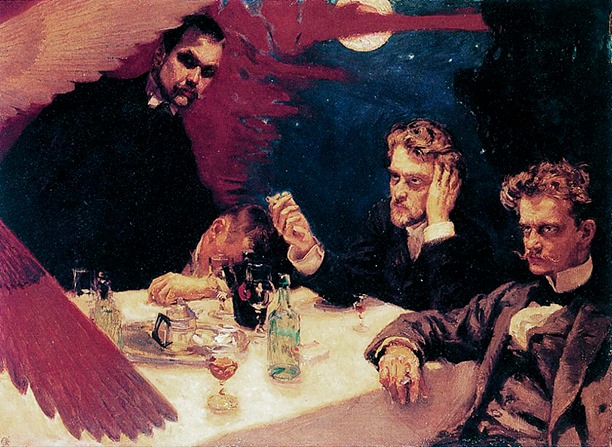
    Of course, Sibelius was fond of his drink, a weakness apparently shared by his friends and associates of “the Symposion.” In Akseli Gallén-Kallela’s painting “Kajustaflan,” we find pictured (from left to right) the artist, composer Oskar Merikanto (blacked out), Kajanus, and Sibelius.

    More about the Symposium, with the original version of Gallén’s painting – if possible, even more sordid – here:

    http://www.sibelius.fi/english/elamankaari/sib_symbosion.htm

  • Juri Seo Featured Composer on Datebook

    Juri Seo Featured Composer on Datebook

    Princeton’s Juri Seo makes today’s “Composer’s Datebook.” Listen to the two-minute segment here:

    https://www.yourclassical.org/programs/composers-datebook/episodes/2020/12/02

    Then find out more, at her website:

    https://www.juriseomusic.com/

  • Sibelius Birthday Memories

    Sibelius Birthday Memories

    EIGHT DAYS OF SIBELIUS, in anticipation of the composer’s birthday anniversary on December 8:

    One day, back in the late ‘90s, when I was still an antiquarian bookseller with a weekend full of radio obligations, a stranger wandered into my shop and stood transfixed. Robert Kajanus’ world premiere recording of Sibelius’ Symphony No. 3, set down in 1932, was emanating from the mantle speakers. The man turned to me and remarked upon the quality of the performance. I told him it was Kajanus, which he acknowledged with a nod. Then he introduced himself by saying the music was composed by his grandfather. This is how, by purest chance, I struck up a friendship with Anssi Blomstedt, a documentary filmmaker, then living in Philadelphia, and the youngest grandchild of Jean Sibelius.

    Not long after, I made some phone calls and was able to get Anssi into a rehearsal of Simon Rattle conducting the Philadelphia Orchestra in Sibelius’ Symphony No. 5. The ebullient Rattle was overjoyed to meet him. The encounter happened to coincide with an interview Rattle was doing backstage with somebody from Vanity Fair, I think, and somewhere there is a photograph of the future Sir Simon planting a kiss on Anssi’s forehead.

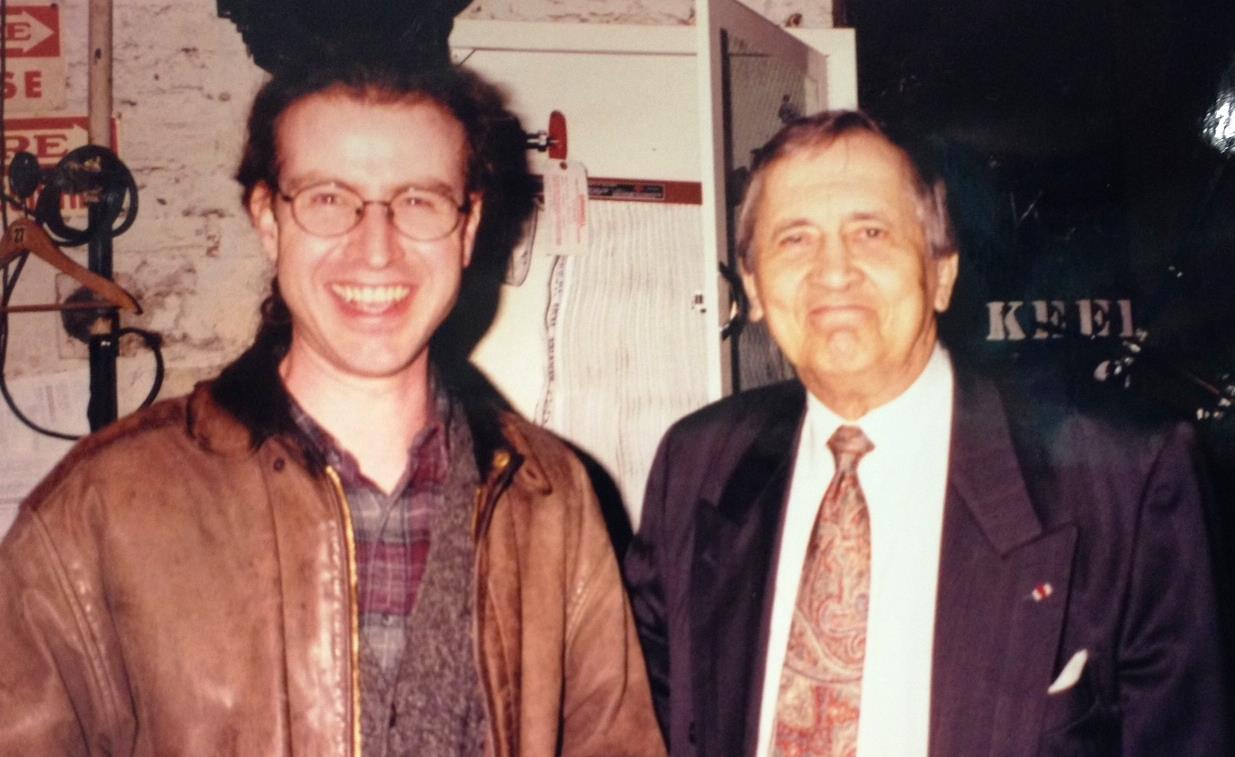
    One good turn deserves another, and it was through Anssi that I actually got to meet Einojuhani Rautavaara, back in the year 2000. At the time, Rautavaara was Finland’s most revered living composer. As a young man, he had actually worked as Sibelius’ chauffeur! Now he was in Philadelphia for the first performance of his own Symphony No. 8, subtitled “The Journey.” Anssi took me backstage at the Academy of Music to introduce us. The venerable composer was friendly and obviously amenable to a photograph (taken by Anssi, and posted here, in all its pre-digital glory).

    Rautavaara was also kind enough to sign my Naxos CD of his Symphony No. 3, the Piano Concerto No. 1, and the Concerto for Birds and Orchestra, known as “Cantus Arcticus.” I wonder what he thought of this peculiar, 33-year-old, American fan.

    It was through Anssi that I also acquired an autographed photo of Sibelius, which he brought back from the composer’s home, Ainola, in Järvenpää, Finland, located 23 miles north of Helsinki. I have yet to come across it since my move to Princeton, but it is around here somewhere! Sometime this week, I’ll try to post a photo of the Sibelius letter I acquired earlier, as a bookseller, which I had framed with a photo of the composer enjoying a good cigar. (The letter is a note of thanks for a box of cigars, one of Sibelius’ notable weaknesses.)

    Later, Anssi lived for a time in Easton, PA, another amazing coincidence, since Easton happens to be my hometown. He then moved back to Finland, so it’s been a number of years since we’ve seen one another. I’m thinking today might be a good time to try to reestablish contact.


    Sibelius’ Symphony No. 3, conducted by Robert Kajanus:

    Probably Einojuhani Rautavaara’s most frequently-heard work, the “Cantus Arcticus,” with bird songs recorded by the composer in the bogs of Liminka, near the Arctic Circle:

    https://www.youtube.com/watch?v=CmL8oKuefOQ

  • Twain’s Take on Music & Opera

    Twain’s Take on Music & Opera

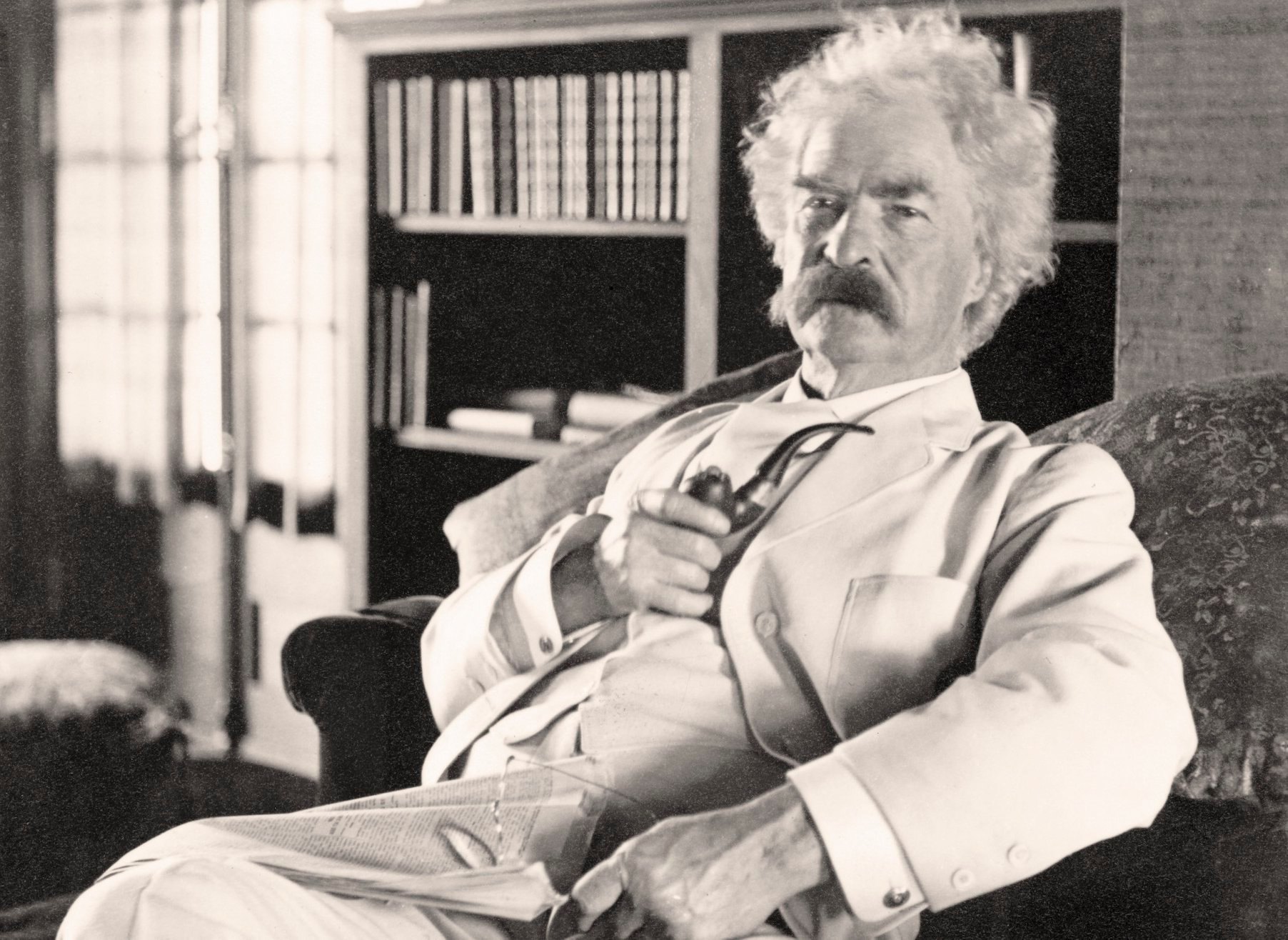
    When I was in my late teens and early 20s, no writer enthralled me more than Mark Twain. His observations could be so contemporary, so scathing, and so hilarious.

    As with much else, Twain had a lot to say about music. He was not a big fan of classical music, least of all opera. Or so he maintained. Everyone loves a good bon mot, so we all remember the withering zingers.

    But taken collectively, Twain’s reactions are more of a mixed bag. He likes the stuff he knows and enjoys Wagner in moderation. At the very least, he concedes that he wants to like “the higher music,” but would like to do so without expending the time, the effort, and the attention it would take to make it more rewarding, or at the very least comprehensible. Somehow, he just never caught the spark that for me flared into a wildfire. Perhaps if at the time the ability to hear the music had been more accessible.

    I gather, more than anything, it’s the phonies that he found repellent, and justifiably so. He singles out those who make a big display of themselves, humming along to ensure everyone around them recognizes their authority and absorption. It’s worth noting that this was at a time when going to the opera was more of a rarified experience, for many financially prohibitive, and perceived as a social gathering of the upper classes.

    Twain’s experiences with music were in the days before records, before classical radio, even before supertitles at the opera. He refers to melodies he knows from having encountered them on a hand-organ or a music box as the extent of his music education. These, he confesses, he finds delightful when heard in the opera house. So it seems the potential was there. What he lacked was regular exposure, without the annoyance and affectations of other people – a few more positive experiences. What he might have thought in this more democratic age of cell phone disruptions is anyone’s guess.

    Twain on opera:
    http://www.twainquotes.com/Opera.html

    Of course, he could be just as irreverent about the banjo:

    Mark Twain on the ‘glory-beaming banjo’

    It’s okay, Sam. You may hate classical music, but we still love you. Happy birthday.

Tag Cloud

Aaron Copland (93) Beethoven (95) Composer (114) Film Music (136) Film Score (143) Film Scores (255) Halloween (94) John Williams (195) KWAX (229) Leonard Bernstein (103) Marlboro Music Festival (125) Movie Music (151) Mozart (88) Opera (208) Philadelphia Orchestra (89) Picture Perfect (174) Princeton Symphony Orchestra (108) Radio (88) Ross Amico (244) Roy's Tie-Dye Sci-Fi Corner (290) The Classical Network (101) The Lost Chord (268) Vaughan Williams (103) WPRB (396) WWFM (881)

DON’T MISS A BEAT

Receive a weekly digest every Sunday at noon by signing up here


RECENT POSTS