Category: Daily Dispatch

  • Stravinsky’s Pulcinella Turns 100

    Stravinsky’s Pulcinella Turns 100

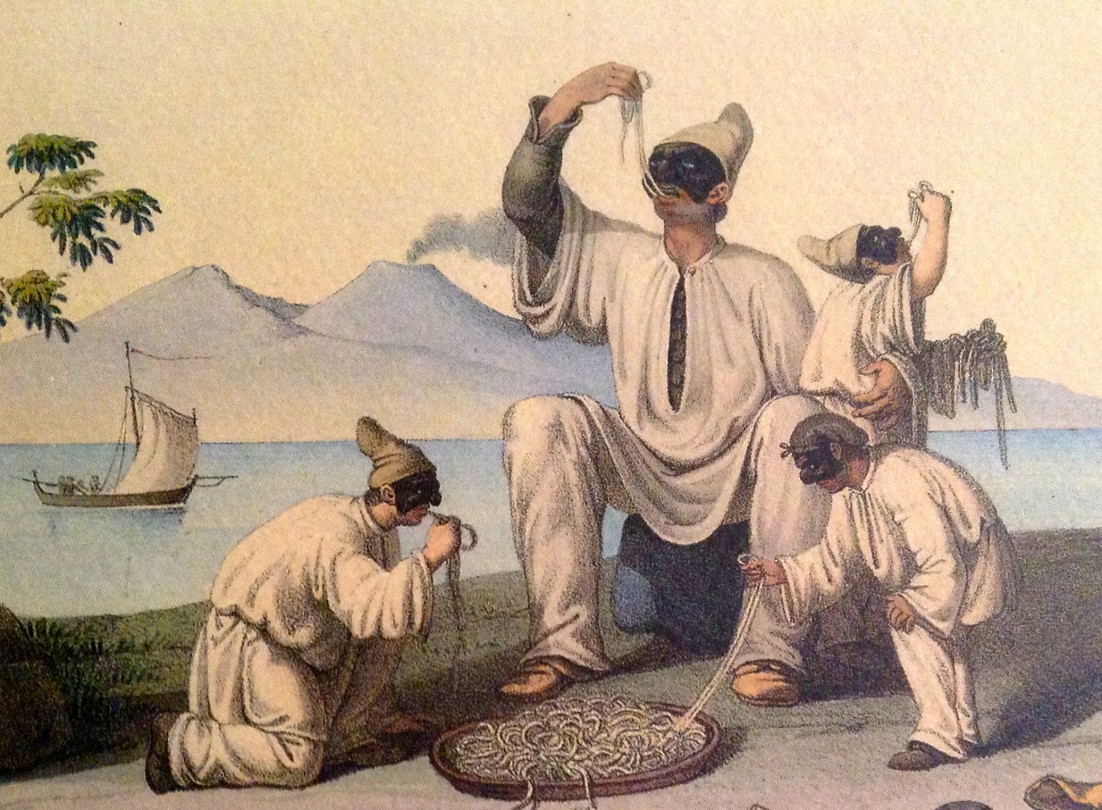
    Stravinsky’s commedia dell’arte scamp is 100 years-old.

    “Pulcinella” was given its first performance on this date in 1920. The ballet was commissioned by Sergei Diaghilev and given its premiere, at the Paris Opera, by the Ballets Russes. Leonide Massine provided both the libretto and the choreography. The sets were designed by Pablo Picasso.

    For years, it was thought that the raw material for Stravinsky’s score, based on manuscripts of the 18th century, derived from the quill of Giovanni Pergolesi. However, over time, scholarship has revealed that many of the original pieces were actually the work of Pergolesi contemporaries, composers such as Domenico Gallo and Unico Wilhelm von Wassenaer.

    The idea of arranging Pergolesi’s music was the idea of conductor Ernest Ansermet, who conducted the ballet’s premiere. Stravinsky was resistant at first, but closer acquaintance with the original scores unlocked their possibilities. Stravinsky’s arrangements honored the spirit of the past, but also imbued it with a modern sensibility, employing a distinctly 20th century syntax. It is one of the composer’s most playful, exuberant scores.

    “‘Pulcinella’ was… the epiphany through which the whole of my late work became possible,” he later wrote. “It was a backward look, of course—the first of many love affairs in that direction—but it was a look in the mirror, too.”

    It would be the first of Stravinsky’s innumerable interactions with historical music and forms and the birth of a style that would soon be identified as “neoclassical.”

    The popular suite, shorn of the complete ballet vocal music, was giving its first performance in Boston, two years later, with Pierre Monteux conducting.

    “Pergolesi” themes also inform the spin-off chamber works “Suite d’après des thèmes, fragments et morceaux de Giambattista Pergolesi,” for violin and piano (1925), and the “Suite Italienne,” for cello or violin and piano (1932-33). Any way you slice it, the music is a delight.


    “Pulcinella” (complete):

    http://www.youtube.com/watch?v=lD6dRSKLjlU&t=0m7s

    The suite, part of a complete concert performed (without conductor) by the Orpheus Chamber Orchestra:

    http://www.youtube.com/watch?v=H5ZpCA4pRtM&t=8m24s

    Cellist Heinrich Schiff and the “Suite Italienne”:
  • Jane Austen Film Scores Picture Perfect

    Jane Austen Film Scores Picture Perfect

    It is a truth universally acknowledged that a radio host in possession of a weekly film music show must be in want of a good theme. This week on “Picture Perfect,” we eschew the usual fare of Vikings, pirates, and dinosaurs, to enter the world of Jane Austen.

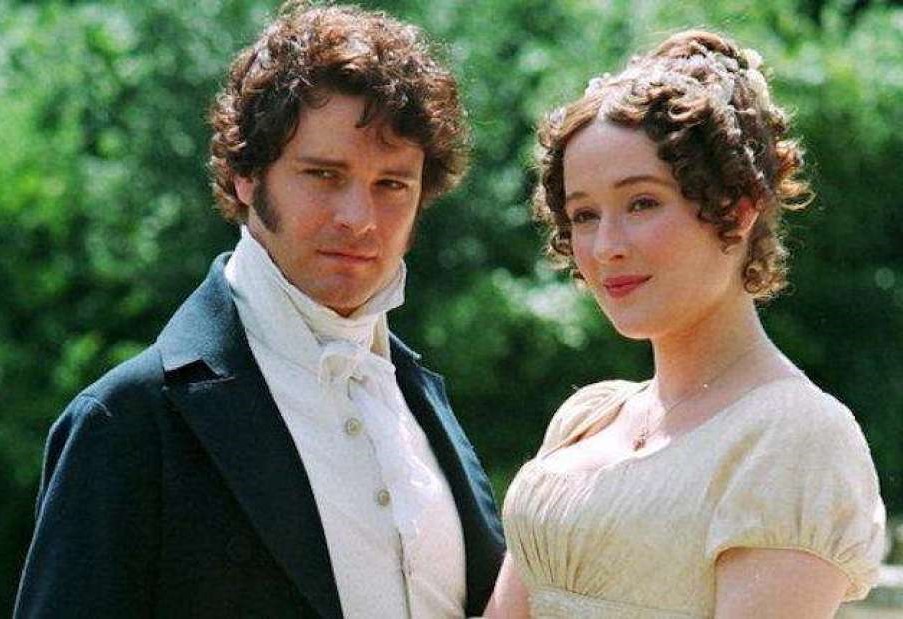
    We’ll hear Rachel Portman’s Academy Award winning score for “Emma” (1996), Patrick Doyle’s music for “Sense and Sensibility” (1995), and selections from two versions of “Pride and Prejudice,” with music by Carl Davis (1995) and Dario Marianelli (2005).

    Not only do Austen adaptations sport amazing casts, the scores attract some of classical music’s star performers. Listen in for contributions by soprano Jane Eaglen, pianist Jean-Yves Thibaudet, and fortepianist Melvyn Tan.

    A large income is the best recipe for happiness I ever heard of – at least according to “Mansfield Park.” The next best is a playlist assembled from Jane Austen movies. Join me this Friday evening at 6:00 EDT, on WWFM – The Classical Network and wwfm.org.

  • Mr Darcy Hottest Reads at WWFM Friday

    Mr Darcy Hottest Reads at WWFM Friday

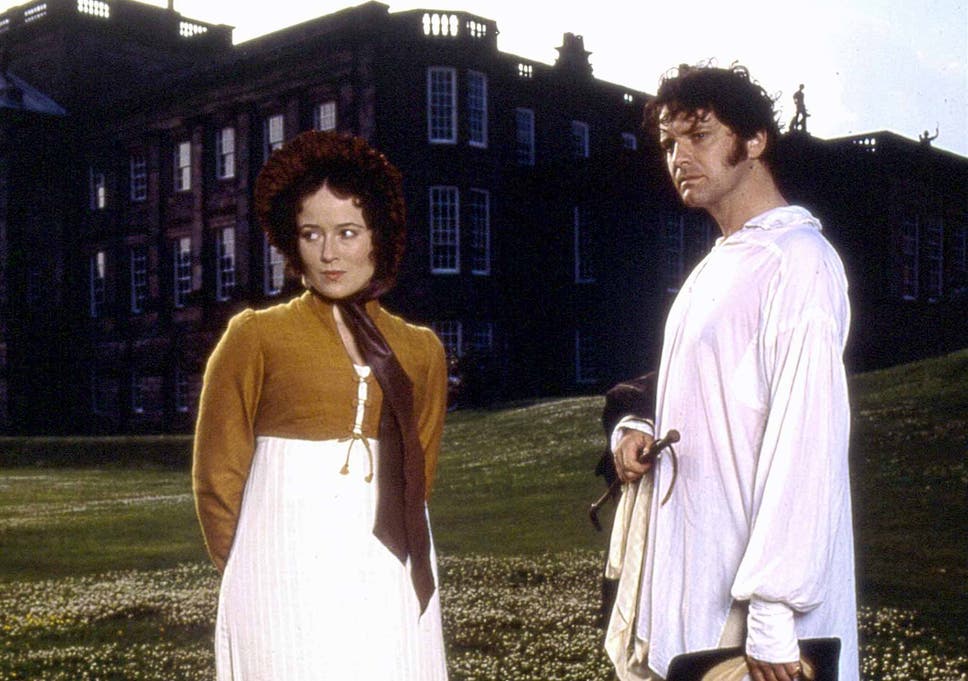
    Mr. Darcy beats the heat. It’s an all-Jane Austen “Picture Perfect,” this Friday at 6:00 EDT, on WWFM – The Classical Network and wwfm.org.

  • Klemperer’s Opera Scandal A 1912 Love Triangle

    Klemperer’s Opera Scandal A 1912 Love Triangle

    In 1912, the conductor Otto Klemperer eloped with soprano Elisabeth Schumann, after the two fell in love while rehearsing at the Hamburg Opera. Inconveniently, Schumann happened already to be married.

    Klemperer returned to the Opera to conduct Wagner’s “Lohengrin.” Following the performance, the hall resounded with applause, when all at once Klemperer caught the lash of a horsewhip brandished by Schumann’s apoplectic husband. Klemperer was taken off-guard, but quickly recovered. According to soprano Lotte Lehmann, he clambered out of the pit “like a huge black spider.” (Klemperer stood 6-foot-6.) When the two men were finally pried apart, Klemperer collected himself and turned to address the audience. “This man has attacked me because his wife loves me,” he said. “Good evening!”

    It’s one of the many great stories recounted in this documentary.

    https://www.youtube.com/watch?v=Mqz-qUiCgbQ

    Happy birthday, Otto Klemperer.

  • Bard Music Festival Discovering Neglected Gems

    Bard Music Festival Discovering Neglected Gems

    Eureka!

    I feel like a classical music prospector who’s struck the motherlode of unusual and neglected repertoire!

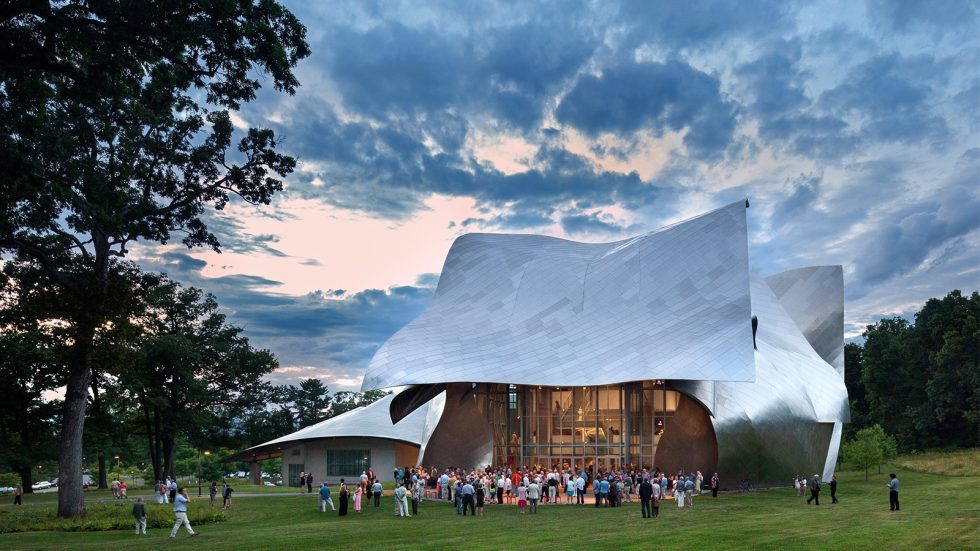
    The Bard Music Festival, held each summer at Bard College in sylvan upstate New York, is the crown jewel of Bard SummerScape, a broader celebration of the arts. The festival’s primary focus is on a specific composer and his or her world. So even if the star attraction is, say, Rimsky-Korsakov, Sibelius, or Carlos Chávez, a significant amount of the programming is devoted to that composer’s contemporaries, influences, and successors.

    No word yet on whether or not the Bard Music Festival will decide to move ahead with this summer’s projected celebration of Nadia Boulanger. But judging from the facts that just about every other music festival in North America has already cancelled, and that Bard College is located just two hours north of New York City, I’m not holding my breath (except around other people, especially at the grocery store).

    In the meantime, Bard is finding ways to connect with audiences beyond its idyllic campus, and I am pumped to have tapped into this treasure trove of past Bard performances, especially of the operas (read on).

    Traditionally, musicians of the American Symphony Orchestra have formed the core of the Bard Festival Orchestra (Leon Botstein, the president of Bard College, serves as artistic director of both), though in recent years, a number of the concerts have also been performed by Bard’s resident orchestra, The Orchestra NOW.

    Some of ASO’s contributions, Bard-related and otherwise, can now be streamed from the orchestra’s website:

    ASO Online

    In addition, every week, the Fisher Center at Bard is sharing a page of content based on the outstanding work the festival has done in reviving the neglected output of a number of deserving composers. This week, the focus is on Sergei Taneyev:

    https://fishercenter.bard.edu/upstreaming/

    Nadia Boulanger is the first woman to be selected as the focal point of Bard proper (though Grazyna Bacewicz was the subject of a satellite festival in San Francisco, Bard Music West, last year, and works by women composers – including Nadia’s sister, Lili – have been included as a matter of course in regular Bard programming). Boulanger’s influence, as one of the great pedagogues of the 20th century, was enormous. She was particularly influential in the artistic development of innumerable American composers. So when the festival does come to pass, the repertoire should be notably diverse and, as always, fascinating.

    For more information, visit https://fishercenter.bard.edu/bmf/

Tag Cloud

Aaron Copland (93) Beethoven (95) Composer (114) Film Music (137) Film Score (143) Film Scores (255) Halloween (94) John Williams (195) KWAX (229) Leonard Bernstein (103) Marlboro Music Festival (125) Movie Music (152) Mozart (88) Opera (208) Philadelphia Orchestra (89) Picture Perfect (174) Princeton Symphony Orchestra (108) Radio (88) Ross Amico (244) Roy's Tie-Dye Sci-Fi Corner (290) The Classical Network (101) The Lost Chord (268) Vaughan Williams (103) WPRB (396) WWFM (881)

DON’T MISS A BEAT

Receive a weekly digest every Sunday at noon by signing up here


RECENT POSTS