Category: Daily Dispatch

  • Grieg’s Inspiring Circle of Composer Friends

    Grieg’s Inspiring Circle of Composer Friends

    Edvard Grieg was a gentle, generous soul. But he was also something of a rebel-artist who established a personal and national identity outside the dominant Austro-German tradition. As Norway’s most important composer, he provided inspiration not only to Scandinavians, but to artists all over Europe and the United States.

    His personality and achievements engendered much affection and loyalty. Tchaikovsky dedicated his “Hamlet Fantasy Overture” to him. Liszt performed his piano concerto. Antonin Dvořák was a friend, and Frederick Delius worshiped him.

    This Sunday night on “The Lost Chord,” we’ll hear works dedicated to Grieg by some of his composer friends and admirers.

    The American composer Edward MacDowell never actually met Grieg, though they shared a certain musical affinity. He contacted the Norwegian to ask permission to dedicate to him his Piano Sonata No. 3, which he subtitled the “Norse.” Grieg was full of compliments about the piece, and he enthusiastically accepted. The two men enjoyed an admiring, though unfortunately short-lived correspondence, since both were already nearing the end of their lives. MacDowell died in 1908, at the age of 47; he was already in the throes of the illness that would claim him at the time Grieg passed in 1907, at the age of 64.

    Though Julius Röntgen was born in Leipzig, by his early 20s he had settled in Amsterdam. He went on to become one of the most important figures in Dutch music, establishing the city’s music conservatory and participating in the founding of the Concertgebouw. Röntgen was successful in becoming a good friend not only of Johannes Brahms (no mean feat), but also Grieg, whom he visited in Norway 14 times. The result was a number of works he composed on Norwegian themes. Röntgen dedicated his suite “Aus Jotunheim,” inspired by a hike he had taken with the composer through the Norwegian mountains, to Grieg and his wife, Nina, on the occasion of their 25th wedding anniversary.

    Finally, Grieg encountered the tireless Australian pianist Percy Grainger only toward the end of his life, but he was convinced he had found his ideal interpreter. He invited Grainger to perform his Piano Concerto in A Minor under his own direction. Sadly, Grieg died before it could come to pass. Nevertheless, Grainger continued to champion Grieg’s music for the rest of his life. Also, he dedicated a number of folk-inspired works to the memory of the Norwegian master. We’ll hear two historical recordings: one of Grainger playing music of Grieg and then another of the pianist playing one of his own such works.

    I hope you’ll join me in celebrating Edvard Grieg with music written for him by composer friends and admirers. That’s “Griegarious,” this Sunday night at 10:00 EDT, on WWFM – The Classical Network and wwfm.org.


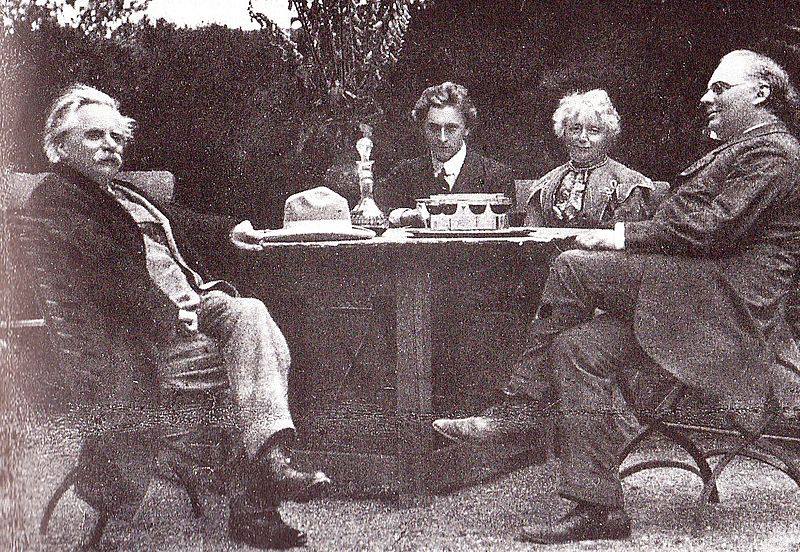
    PHOTO: (left to right) Grieg, Grainger, Nina Grieg & Röntgen at Grieg’s home, Troldhaugen, in 1907
  • Gianni Schicchi From Opera Hero to Hellbound?

    Gianni Schicchi From Opera Hero to Hellbound?

    Here’s Gianni Schicchi as you’ve never seen him before.

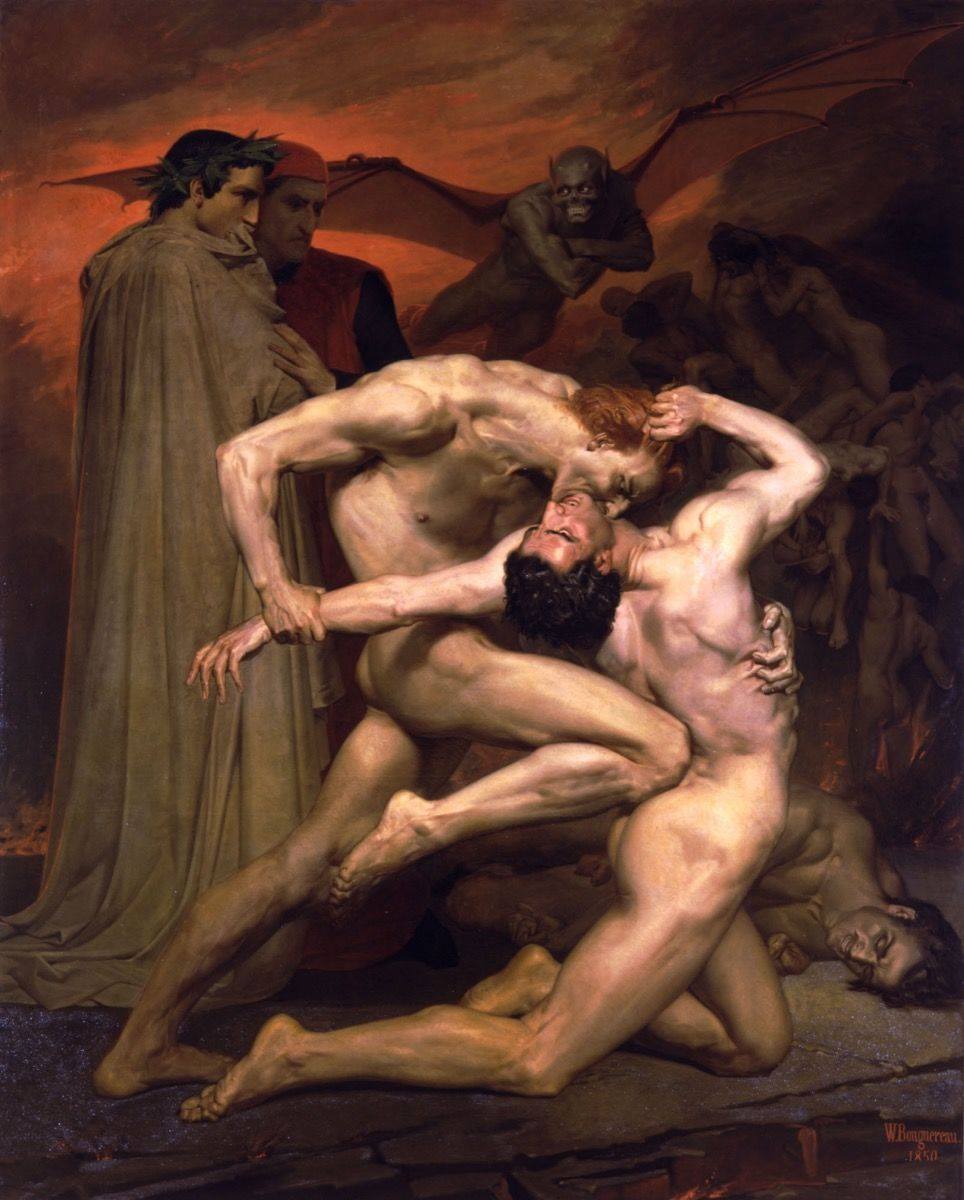
    (Under)worlds away from Giacomo Puccini’s quick-witted, charming scapegrace, the Schicchi of Dante’s “Inferno” is condemned to hell for the very reason we cheer him in the opera – for impersonating Buoso Donati, in whose guise he alters Donati’s will, much to his own advantage.

    Of course, Dante’s wife happened to be a descendant of Donati, so you might say he had something of an axe to grind. Also, the celebrated poet being of noble ancestry, he would have had been predisposed to finding the peasant Schicchi’s behavior reprehensible.

    What would Lauretta think of her “babbino caro” now?


    Schicchi exhibiting some downright vampiric tendencies in William-Adolphe Bouguereau’s “Dante and Virgil,” 1850

  • Vivaldi’s Four Seasons Electric Guitar Orchestra

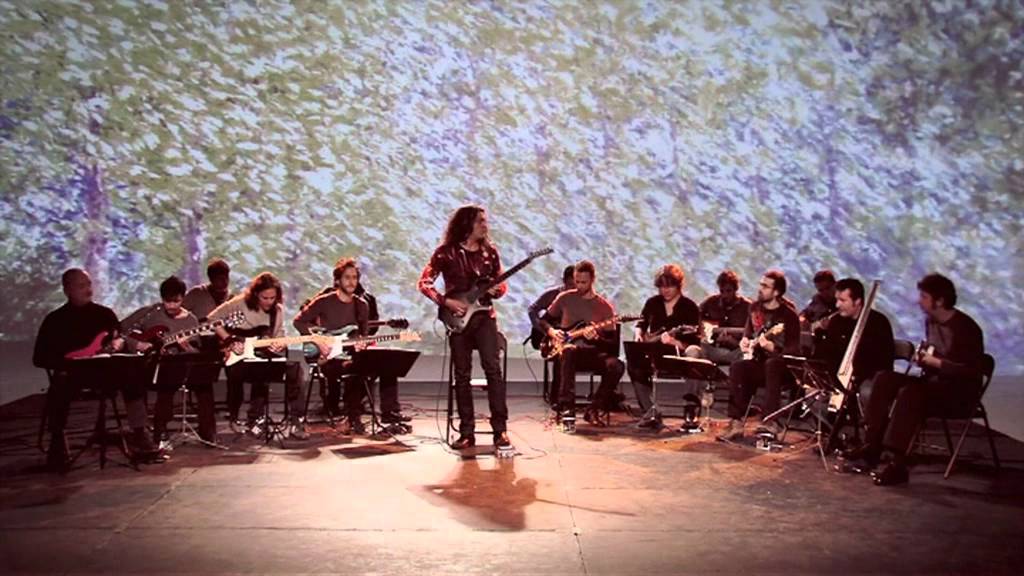
    Vivaldi’s Four Seasons Electric Guitar Orchestra

    Enliven the first Saturday of spring with Antonio Vivaldi’s “The Four Seasons,” as rendered by the electric guitar orchestra Sinfonity. And yes, they do the whole bloomin’ thing!

  • Fantasy Film Scores Lord of the Rings & More

    Fantasy Film Scores Lord of the Rings & More

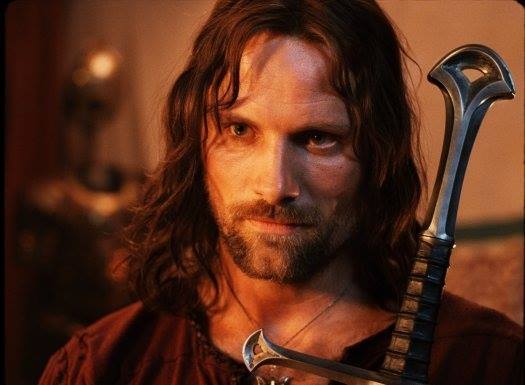
    ‘Ey! Ring of Power? Balrogs? Fuggedaboutit! I know a guy…

    17 years before “Green Book,” Viggo Mortensen played another public relations specialist with an aversion to bath water in “The Fellowship of the Ring.”

    This week on “Picture Perfect,” we’ll hear music from the first of Peter Jackson’s “The Lord of the Rings” adaptations as part of an hour of music from movies built around fantasy quests.

    For decades, “The Lord of the Rings” had been a kind of Holy Grail for genre fans, and anticipation ran high in regard to when exactly there would be a decent live action adaptation of J.R.R. Tolkien’s magnum opus. Alas, either filmmakers couldn’t acquire the rights, or they were hampered by technological limitations. Though the realization of Tolkien’s richly-imagined world of hobbits, orcs and balrogs eluded many, fantasy films of a derivative nature were thick on the ground. Some were good, some not so good. But many of them had outstanding scores.

    “The Dark Crystal” (1982), though produced by Jim Henson and company, was a long way from Big Bird and Ernie & Burt, with some pretty dark scenes. The score by Trevor Jones is first rate, given the full romantic treatment and recorded by the London Symphony Orchestra, augmented by Fairlight and Synclavier synthesizers, as well as the occasional period instrument.

    “Willow” (1988) allegedly grew out of George Lucas’ desire to film “The Hobbit.” Rather than fork over a sizeable portion of his earnings to the Tolkien estate, he opted instead to take the “Star Wars” approach of synthesizing archetypal images, from the Old Testament through Ray Harryhausen films, to create his own original story. Except the influences weren’t so cleverly assimilated this time. Composer James Horner followed suit, with a score rich in allusions to Schumann, Wagner, Grieg, Tchaikovsky, Rachmaninoff and especially Prokofiev.

    The first feature-length adaptation of “The Lord of the Rings” (1978) was literally rendered in animation. The film manages only to cover the first book-and-a-half of the trilogy, and the last half hour or so is probably incomprehensible to anyone who hasn’t read it. It had been director Ralph Bakshi’s plan to divide the trilogy into two parts – already a concession to the studio – but the first film’s modest performance meant there was no funding for a second.

    Two-time Academy Award winner Leonard Rosenman was engaged to write the score. Rosenman was responsible for composing the music for the James Dean classics “East of Eden” and “Rebel Without a Cause.” Bakshi had originally wanted to use Led Zepplin songs. He later expressed his dislike for Rosenman’s score, which he found to be too conventional – somewhat ironic in that Rosenman, a pupil of Arnold Schoenberg, Roger Sessions and Luigi Dallapiccola, was known for writing some of the most challenging scores in film history, including the uncompromising music for “Fantastic Voyage.”

    It would be over two decades before another feature film based upon Tolkien’s source material was mounted. Peter Jackson’s “The Fellowship of the Ring” (2001) is brimful of state-of-the-art special effects, so much so that a great many important details from Tolkien’s novel are lost in the shuffle. Still, Jacksons’ trilogy went on to garner 30 Academy Award nominations, of which it won 17. Howard Shore’s music was recognized with Oscars for the first and third installments. The third, “The Return of the King,” inexplicably went on to become one of the most decorated films of all time.

    Prophecies must be fulfilled, order restored, and the land made whole! We’re on a quest for fantasy music, on “Picture Perfect” – music for the movies – this Friday evening at 6:00 EDT, on WWFM – The Classical Network and wwfm.org.

  • Bach Membership Success! WWFM Celebrates

    Bach Membership Success! WWFM Celebrates

    We made it!

    Thanks to all 500 of you who came through for us (and counting), we were finally able to crack open the elusive Bach Pot and tally in the additional $17,740 in challenge money. THANK YOU for making this Bach membership opportunity a success. Now we can turn our focus back to the music. Which means plenty of Vaughan Williams and Sibelius ahead, of course. ; )

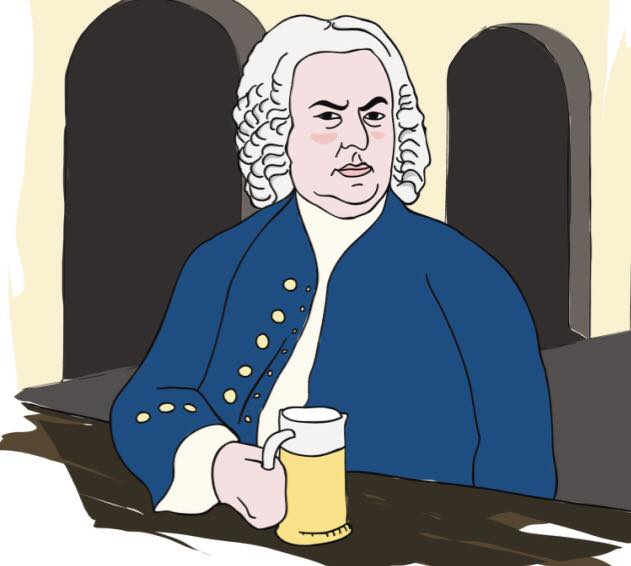
    You done good. Now join me, won’t you, for a nice, tall tankard of Bach bock.

    Here’s to Johann Sebastian, WWFM – The Classical Network, and wwfm.org!

Tag Cloud

Aaron Copland (93) Beethoven (95) Composer (114) Film Music (137) Film Score (143) Film Scores (255) Halloween (94) John Williams (195) KWAX (229) Leonard Bernstein (103) Marlboro Music Festival (125) Movie Music (152) Mozart (88) Opera (208) Philadelphia Orchestra (89) Picture Perfect (174) Princeton Symphony Orchestra (108) Radio (88) Ross Amico (244) Roy's Tie-Dye Sci-Fi Corner (290) The Classical Network (101) The Lost Chord (268) Vaughan Williams (103) WPRB (396) WWFM (881)

DON’T MISS A BEAT

Receive a weekly digest every Sunday at noon by signing up here


RECENT POSTS