Category: Daily Dispatch

  • The Dark Allure of Bluebeard’s Tale

    The Dark Allure of Bluebeard’s Tale

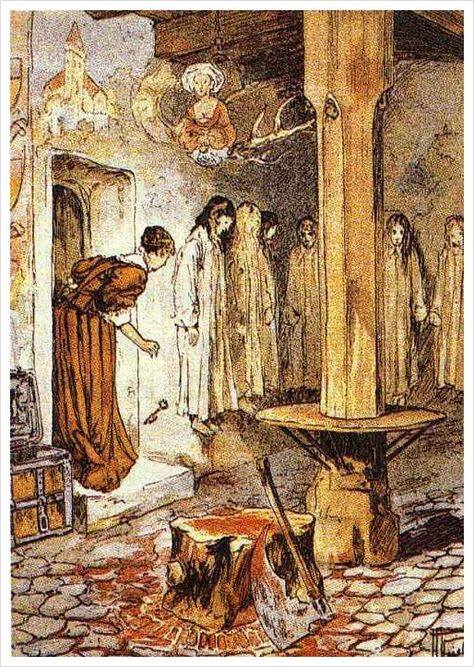
    Do you know the tale of Bluebeard?

    Hot on the heels of yesterday’s “Picture Perfect” featuring Gothic romances, my mind is full of this disturbing fairy story, which, like any myth worth its salt, embeds itself in the recesses of the unconscious, only to color and confirm certain anxieties or perceived truths about the wider world.

    The best known version of the story is the one by Charles Perrault, set down in the 17th century. Perrault’s popular retellings of Little Red Riding Hood, Cinderella, The Sleeping Beauty, and Puss in Boots served to codify these timeless folk tales for the modern age.

    Bluebeard as an archetype informs the characterizations of so many of the tortured antiheroes of the Gothic novel – the mysterious and brooding nobleman who lives in a dank castle of many chambers that surely contain their share of skeletons, be they literal or figurative.

    Sometimes Bluebeard really is the menace of Perrault, the volatile madman who lives in a house full of corpses. At others (as in “Jane Eyre”), he is a tragic hero who harbors a guilty secret that cuts him off from all happiness, love, and normalcy. Only gradually do the heavy doors grind open on rusty hinges to reveal their truths. The chambers are like the dark corners of his psyche, vulnerabilities he holds close, to the point of near-destruction and sometimes beyond. Only understanding and acceptance have the power to alter his world.

    That said, sometimes Bluebeard really is a murderous creep who’s all about control and over-the-top cruelty.

    And what about his bride, named Judith in Béla Bartók’s opera, “Bluebeard’s Castle?” Is her curiosity a liberating force or a destructive one? The parable of fatal curiosity extends back through the Biblical stories of Lot’s wife and Eve and the Classical myths of Pandora, Orpheus and Psyche.

    The tale positively drips with allegory. If there is anything that is clear about the Bluebeard story, it’s that it would take two very special people to make this unusual relationship work. There’s no way any outside observer would ever, ever, EVER understand.

    Bartók’s “Bluebeard’s Castle” will be heard worldwide as part of a double-bill – with Tchaikovsky’s “Iolanta,” a happier tale extolling the virtues of faith (in this case literally blind) – on The Metropolitan Opera’s weekly radio broadcast, which will commence today at 12:30 p.m. EST. If you’re interested, Google yourself an affiliate.


    Illustration from “Bluebeard” (1887) by Hermann Vogel
  • Happy 87th Birthday John Williams Tune In!

    Happy 87th Birthday John Williams Tune In!

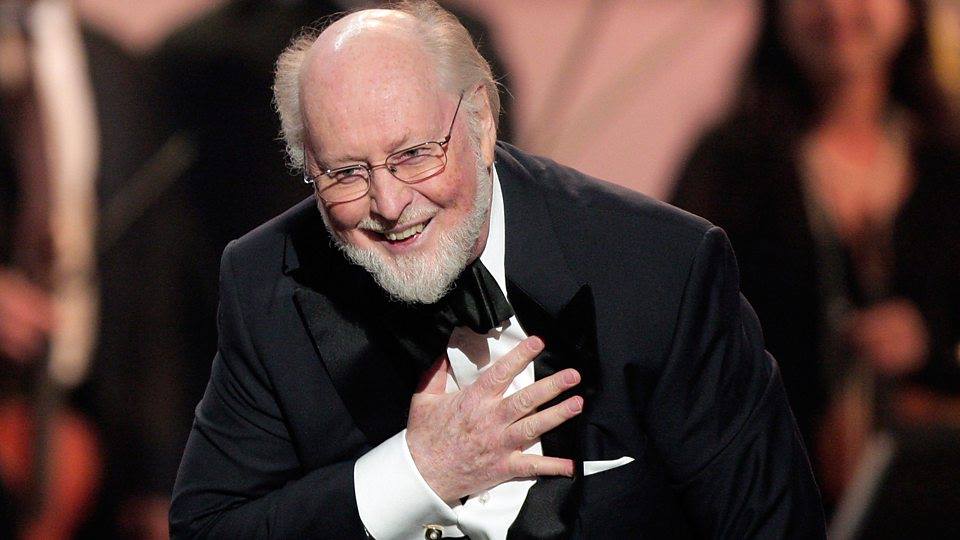
    Happy birthday, John Williams!

    Williams is 87 today. We’ll hear a suite from his lovely and rarely-heard score to “Jane Eyre” on “Picture Perfect” tonight at 6:00 EST, part of an anti-Valentine’s program devoted to doomed love and Gothic romances.

    But tune in a little earlier – between 4 and 6 – to enjoy a few additional Williams surprises. I’ll have something for you in each of my three hours on the air, from 4 to 7 p.m. EST, on WWFM – The Classical Network and wwfm.org.

  • Gothic Romance Movie Music for Valentine’s Day

    Gothic Romance Movie Music for Valentine’s Day

    Windswept moors. Destructive passions. Byronic guilt.

    The term “Gothic romance” doesn’t necessarily denote a love story. In 19th century literary tradition, “romance” was often suggestive of the mysterious, the adventurous, the sensational – a kind of pleasing terror, often touched by elements of horror.

    This week on “Picture Perfect, I strike my annual blow against Valentine’s Day with music from movies featuring creepy old houses, ghosts, malevolent housekeepers, and madwomen in the attic.

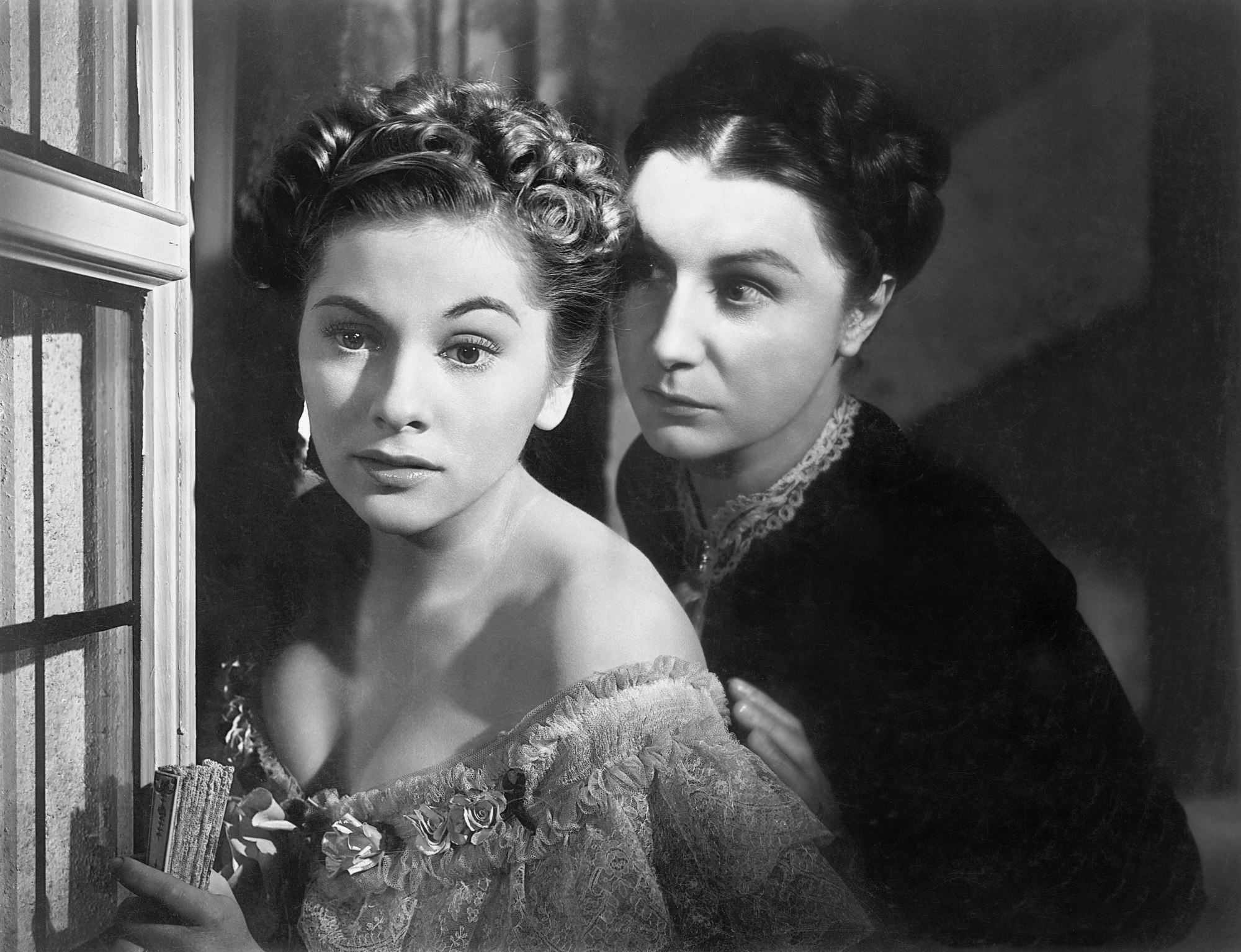
    Alfred Hitchcock’s “Rebecca” (1940), based on the Gothic novel of Daphne DuMaurier, is a clear throwback to the works of the Brontë sisters. Laurence Olivier and Joan Fontaine star, but Judith Anderson steals the show as the ice-cold Mrs. Danvers. The film was the recipient of an Academy Award for Best Picture, the only Hitchcock film to be so honored. Franz Waxman’s opulent and atmospheric score flares at its operatic climax.

    Collectively, the Brontë sisters were responsible for some of the most tortured romances in English literature. Charlotte Brontë’s “Jane Eyre,” a work which clearly anticipates “Rebecca,” was adapted most famously in 1940, again with Joan Fontaine, and featuring Orson Welles as Rochester. Three decades later, a television version of “Jane Eyre” (1971) appeared, with Susannah York and George C. Scott. The music for the latter was by an up-and-coming composer, only a few years away from superstardom: John Williams.

    “Uncle Silas” (1947) is a Gothic that sidesteps the love story altogether. Forced to live under the guardianship of a sinister uncle and a malevolent French governess, its heroine is thrust into an atmosphere of insinuating menace. Sheridan LeFanu’s “old dark house” thriller was made into a film by Gainsborough Studios, released in the United States as “The Inheritance.” A young Jean Simmons plays the imperiled heiress. The music was by Alan Rawsthorne, a distinguished concert composer, who nonetheless managed to compose 27 film scores. Bernard Herrmann considered the score for “Uncle Silas” to be one of the finest ever written.

    Finally, we’ll hear music from a beloved adaptation of Emily Brontë’s tale of star-crossed love, “Wuthering Heights” (1939). Merle Oberon is Cathy and Laurence Olivier is Heathcliff. Alfred Newman’s music yearns and sobs right along with us.

    I hope you’ll join me for an hour of gloom and doom for Valentine’s Day – Gothic romances on “Picture Perfect,” this Friday evening at 6:00 EST, on WWFM – The Classical Network and wwfm.org.


    BONUS: Today is “Jane Eyre” composer John Williams’ 87th birthday! Tune in early to enjoy some of his other film and concert works between 4 and 6 p.m.

  • Dreamscapes Where I Wander

    Dreamscapes Where I Wander

    You’ll find me here, if only in my dreams…

  • Haydn & Heiden at Marlboro

    Haydn & Heiden at Marlboro

    Stereophonic homophones dominate this week’s “Music from Marlboro.” Worlds collide through the juxtaposition of music by Haydn and Heiden.

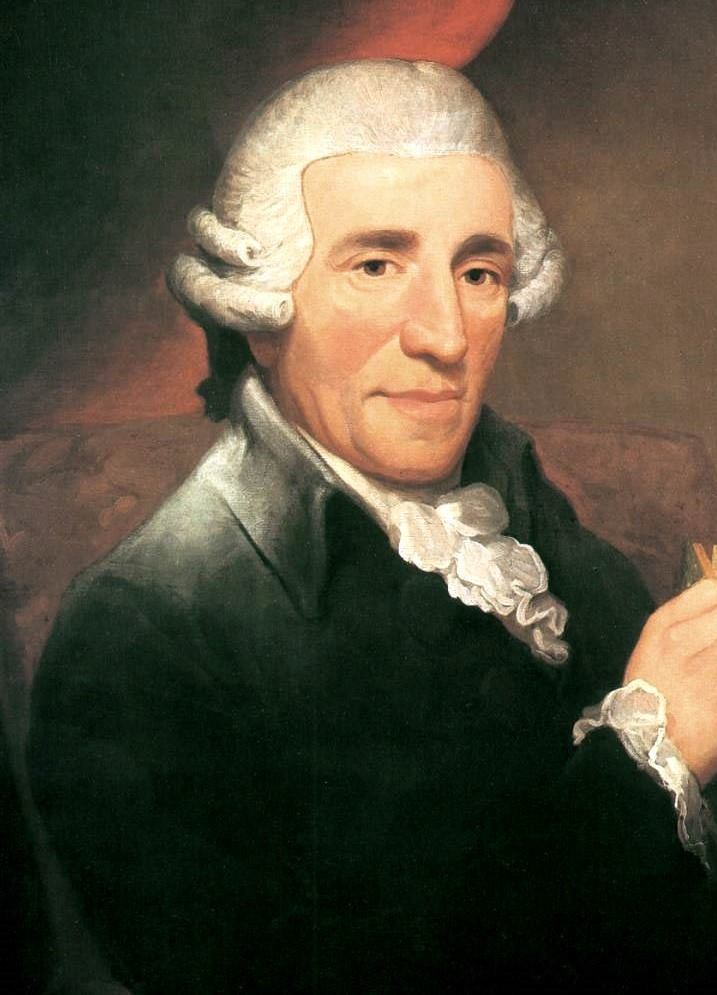
    Franz Joseph Haydn, of course, requires little introduction. For a quarter century, he was music director at the remote estate of Esterháza, where he essentially created the modern symphony and legitimized the string quartet. He established the piano trio as an accepted combination and standardized sonata form. His music was written for the delectation of Prince Nikolaus Esterházy and his associates. Even so, by the time of his death in 1809, at the age of 77, he had become one of the most celebrated composers in Europe.

    Bernhard HEIDEN was a Hindemith pupil, who fled fascism in Germany to settle in the American Midwest. There, he conducted the Detroit Chamber Orchestra and taught at the Art Center Music School. Later, he joined the faculty of the Indiana University School of Music. To him, it was more important to reach performers than an audience, for the practical reason that audiences change and performers need to believe in the music in order to be able to sell it. He composed prolifically right up until his death in 2000 at the age of 89.

    On this evening’s program, we’ll hear a serenade and two divertimentos (“divertimenti” for those who prefer the Italian). What’s the difference? There’s a lot of blurring of boundaries between these 18th century categories – divertimento, serenade, cassation, notturno. Basically it’s all entertainment music, at least as it was originally intended. No weighty arguments, profound introspection, or showy virtuosity of the type one might expect from a symphony, concerto, or string quartet.

    The cassation was often a piece designed for outdoor performance, a loosey-goosey assemblage of undemanding, blissfully short movements one might listen to while eating cucumber sandwiches or admiring a sculpted hedge.

    The interchangeability of the terms led Haydn to give his Divertmento in F the alternate title of “Cassation.” What’s in a name? We’ll hear it performed at the 1981 Marlboro Music Festival by violinists Lucy Chapman (Stoltzman) and Carmit Zori, violists Thomas Turner and Toby Hoffman, cellist Gary Hoffman, double bassist Carolyn Davis, oboists Elaine Douvas and John Ferrillo, hornists Robin Graham and Stewart Rose, and bassoonist Stefanie Przybylska.

    A serenade, too, was originally a light, tuneful diversion, often intended as “occasional” music (that is to say, music written for a specific occasion) or in someone’s honor. I guess somebody forgot to tell Heiden. Though his style is generally identified as neoclassical, it is neoclassicism in the mold of Hindemith. The structure is there, but I can’t say that his serenade of 1955 is all that buoyant, and the tunes are secondary. It does score points, however, for its unusual instrumentation.

    It was performed at the 1984 Marlboro Music Festival by bassoonist Nancy Goeres, violinist Saschko Gawriloff, violist Ah Ling Neu, and cellist Grace Bahng.

    We’ll round out the hour with a refreshing after dinner mint in the form of the Divertimento in F Major (K. 213) by Wolfgang Amadeus Mozart. It was performed at Marlboro in 1990 by oboists Rudolf Vrbsky and Alex Klein, bassoonists Clelia Goldings and Matthew Carr, and hornists Christine Chapman and Chris Komer.

    Forget your cares! Join me for an hour of diverting music on the next “Music from Marlboro,” this Wednesday evening at 6:00 EST, on WWFM – The Classical Network and wwfm.org.

    Marlboro School of Music and Festival: Official Page


    DUELING PORTRAITS: Haydn & Heiden

Tag Cloud

Aaron Copland (93) Beethoven (95) Composer (114) Film Music (137) Film Score (143) Film Scores (255) Halloween (94) John Williams (195) KWAX (229) Leonard Bernstein (103) Marlboro Music Festival (125) Movie Music (152) Mozart (88) Opera (208) Philadelphia Orchestra (89) Picture Perfect (174) Princeton Symphony Orchestra (108) Radio (88) Ross Amico (244) Roy's Tie-Dye Sci-Fi Corner (290) The Classical Network (101) The Lost Chord (268) Vaughan Williams (103) WPRB (396) WWFM (881)

DON’T MISS A BEAT

Receive a weekly digest every Sunday at noon by signing up here


RECENT POSTS