Category: Daily Dispatch

  • Vienna Philharmonic New Year 2019

    Vienna Philharmonic New Year 2019

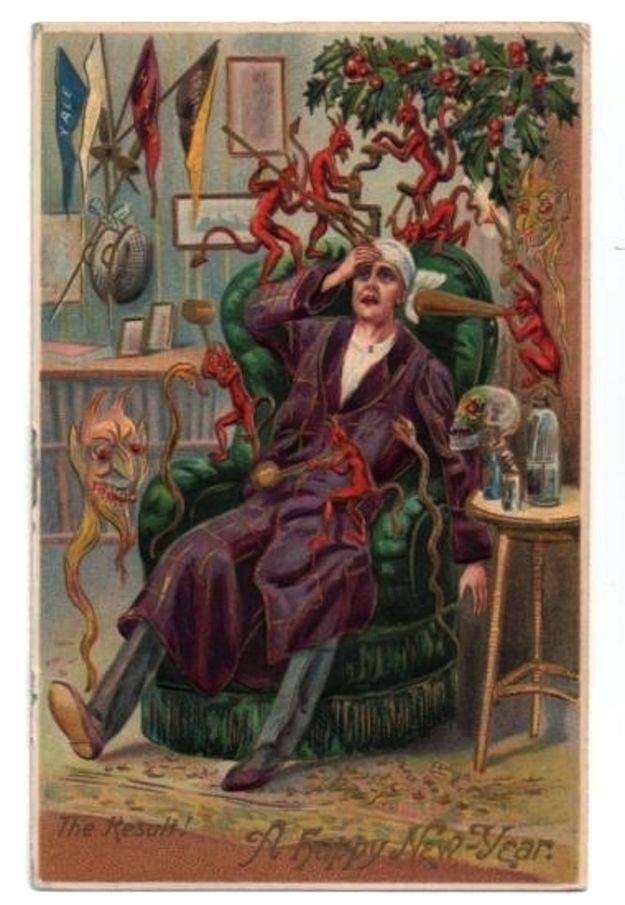
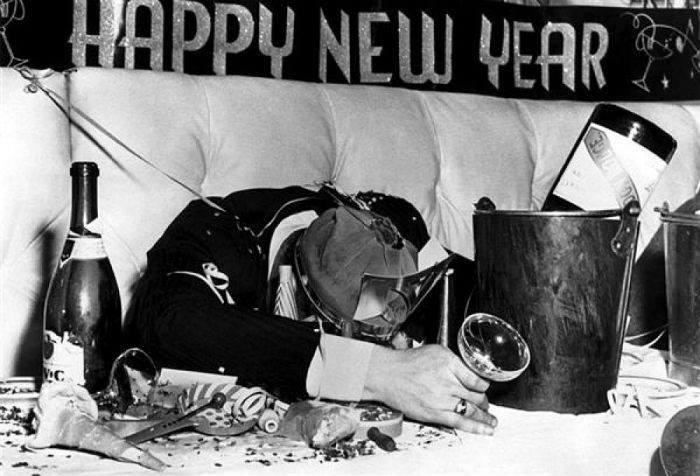
    2019 can’t be any worse, can it? CAN IT??? Happy New Year.

    If you’re experiencing a Strauss deficiency, “New Year’s Day from Vienna 2019,” with Christian Thielemann leading the Vienna Philharmonic, will commence at 11 a.m. EST, on WWFM – The Classical Network and wwfm.org.

  • New Year’s Eve Music for the Melancholy Soul

    New Year’s Eve Music for the Melancholy Soul

    For anyone sober enough to actually ponder the text, “Auld Lang Syne” must be the most melancholy song on the planet. And for everyone else to be singing it on New Year’s Eve – good Lord, which way is the nearest bridge?

    If New Year’s is not a difficult time for you, take a moment today to count your blessings. For the rest of us, it is my hope that the playlist this afternoon will operate on two levels: not only as a festive celebration of the turn of the year, but also a reminder of the consolation and hope that music can provide.

    I’ll be keeping it light with a potpourri of nimble dances, euphonious British Light Music, and rib-tickling selections from music-oriented comedy albums, with perhaps just a few highlights from the world of operetta, provided that sentiment won’t weigh too heavily on the heart.

    I can’t promise that the New Year holiday will be a happy one, but I will do my best to serve up some great musical hors d’oeuvres. We’ll be laughing on the outside, crying on the inside, this Monday from 4 to 7 p.m. EST, on WWFM – The Classical Network and wwfm.org.


    Remember: Your year-end contribution will still count toward 2018 through 11:59 tonight! If you appreciate all that we do at The Classical Network, and the music is an indispensable part of your life, please consider visiting our website now and clicking on “donate.” Thank you for your continued support of The Classical Network! And for what it’s worth, Happy New Year.

  • Reznicek Beyond Donna Diana A Lost Composer

    Reznicek Beyond Donna Diana A Lost Composer

    It’s always sobering to read back over biographies and histories of composers who have devoted their entire lives to music – and who actually made a pretty good living at it – only to be remembered in the present by but a single work, often a short one, and perhaps not really representative of the whole.

    Such is the case with Emil Nikolaus von Reznicek, author of that sparkling pops favorite, the “Donna Diana Overture” – five minutes of high spirited fun. But what about his five symphonies, his ample orchestral music, the violin concerto, his ballet, his chamber music, and his at least 12 operas?

    Reznicek liked to have fun, all right, though his sense of humor more often than not tipped over into the sardonic. While his works were often favorably received by audiences, those in the musical establishment were frequently offended by the composer’s transparent sarcasm. It’s not for nothing that his Second Symphony was subtitled the “Ironic.”

    Further controversy touched his personal life when he became involved with an unhappily married woman, who divorced her husband and became Reznicek’s second wife. There was a scene in his opera, “Till Eulenspiegel,” that was deemed in some circles anti-Semitic, though he himself was married to a Jew. He was helped in his career by his friend, Richard Strauss, with whom, however, he shared an ambivalent relationship. With the rise of the Nazis, Reznicek determined not to become involved in the Party, yet he remained in Berlin.

    He died there, of typhoid fever, after the city’s infrastructure was destroyed by the Soviets in 1945. His daughter was released by her Soviet captors when it was learned that her father was the composer of the “Donna Diana Overture,” the favorite piece of the Russian commanding officer.

    When thinking about what to program in anticipation of the New Year, my own ambivalence toward the impending celebrations has found a perfect match in Reznicek’s Symphony No. 5, written in 1924, which he subtitled “Dance Symphony.” Everyone dances on New Year’s Eve, right? Well, Reznicek offers up in the work’s four movements a polonaise, a csardas, a ländler, and a tarantella. However, if as you’re merrily tapping your toes something begins to strike you as a little askew, it’s because Reznicek conceived the piece as a “dance of death.” Rachmaninoff would have loved that idea. Whatever it is, it’s a corker.

    In the time remaining, we’ll hear some contemporaneous historic recordings of Reznicek himself conducting, including a vintage performance of his “Donna Diana Overture.” All of these have been issued on cpo.de – classic production osnabrück (or CPO, for short), a German record label that has done much to explore the forgotten byways of classical music, in general, and Reznicek’s output in particular.

    I hope you’ll join me for “Emil With Dancing” (say it aloud to better understand the pun), “The Lost Chord” New Year’s celebration, this Sunday night at 10:00 EST, on WWFM – The Classical Network and wwfm.org.
  • Pablo Casals Bach Cello Suites Birthday

    Pablo Casals Bach Cello Suites Birthday

    It’s Pablo Casals’ birthday. Enjoy a beautiful Saturday morning with his pioneering traversal of the Bach cello suites, still sounding great after 80 years.

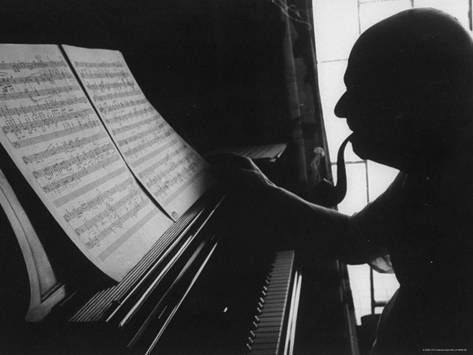
    It’s hard to believe that these cornerstones of the cello repertoire were once commonly regarded as little more than etudes. The truth is, before the 20th century they were not widely known, much less understood. It is Casals who is credited with having rehabilitated them, following his discovery of the music in a Catalan bookshop at the age of 13. He cherished the suites for the rest of his life, not only playing them in public but delving into them privately every morning after a walk and a smoke. There must have been something to it: Casals died in 1973, two months shy of his 97th birthday.

    He was the first cellist to record all six suites, already 60 by the time he first played Bach before a microphone.

  • Toy Movie Music Citizen Kane to Toy Story

    Toy Movie Music Citizen Kane to Toy Story

    With the grand cacophony of Christmas still fresh in everyone’s ears, I thought it only appropriate this week on “Picture Perfect” to focus on music from movies about toys.

    Without giving anything away, in the unlikely event you don’t already know the story’s big pay-off, “Citizen Kane” (1941) is a film flanked by toys. There’s even a snow globe in the film’s opening montage. A certain memory of Kane’s childhood provides a poignant glimpse of the larger-than-life newspaper magnate’s lost innocence. “Kane” is often cited as one of the greatest films ever made. Orson Welles triumphed in his debut as writer-director-star, even if, ultimately, his creation proved to be a bottle rocket that blew up in his face. The film also marked the Hollywood debut of composer Bernard Herrmann.

    I’m not sure that “Pee-Wee’s Big Adventure” (1985) could be described as the “Citizen Kane” of the ‘80s, exactly, but this endearingly goofy sojourn into the surreal does revolve around the recovery of a lost toy, as Pee-Wee, the eternal boy, determines to make his way to “the basement of the Alamo” in an attempt to reclaim his stolen bike. The feature was director Tim Burton’s first. It was also his first collaboration with Danny Elfman, who is obviously a big fan of Nino Rota.

    The husband-and-wife team of Charles and Ray Eames are better known for their contributions to architecture, industrial design, and manufacturing, but they also made short films. “Toccata for Toy Trains” (1957) was inspired by the Eames’ passion for vintage toys. The score was provided by their go-to composer, Elmer Bernstein.

    Finally, in acknowledgement of the greatest toy series of our day, we’ll conclude with music from “Toy Story” (1995), the first full-length computer animated feature. The quality of the film propelled it beyond mere novelty status into the realm of instant classic, and the beloved “Toy Story” franchise has raked in hundreds of millions of dollars. Early on, it was decided by the filmmakers that they did not want “Toy Story” to be a musical, but that songs could be used to underline its emotional content. Randy Newman has provided the music for all the “Toy Story” films so far. He was recognized with an Academy Award for his work on “Toy Story 3,” for the song, “We Belong Together.”

    Keep popping those aspirin. It’s “Toys Everywhere” this week, on “Picture Perfect,” music for the movies, this Friday evening at 6:00 EST, on WWFM – The Classical Network and wwfm.org.

Tag Cloud

Aaron Copland (93) Beethoven (95) Composer (114) Film Music (137) Film Score (143) Film Scores (255) Halloween (94) John Williams (195) KWAX (229) Leonard Bernstein (103) Marlboro Music Festival (125) Movie Music (152) Mozart (88) Opera (208) Philadelphia Orchestra (89) Picture Perfect (174) Princeton Symphony Orchestra (108) Radio (88) Ross Amico (244) Roy's Tie-Dye Sci-Fi Corner (290) The Classical Network (101) The Lost Chord (268) Vaughan Williams (103) WPRB (396) WWFM (881)

DON’T MISS A BEAT

Receive a weekly digest every Sunday at noon by signing up here


RECENT POSTS