Category: Daily Dispatch

  • John Joubert Remembered on WWFM

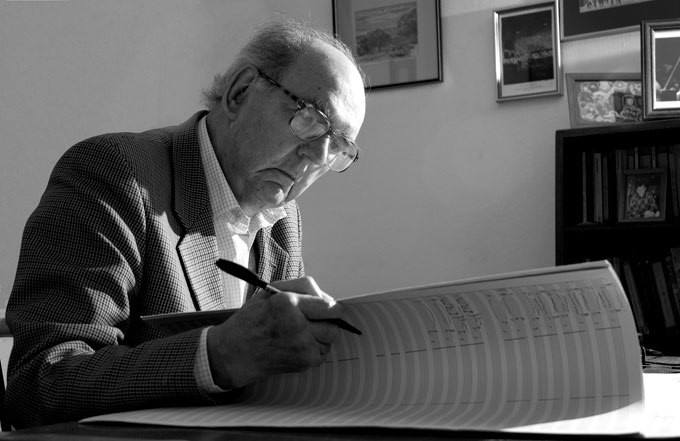
    John Joubert Remembered on WWFM

    South African-born British composer John Joubert died on Monday at the age of 91. We’ll lead off the 5:00 hour (EST) remembering him with a performance of his Symphony No. 1 of 1955.

    We’ll also hear some “Variations on a Theme of Handel” (from “Messiah”) by the Argentinean composer Luis Gianneo, whose birthday it is today, and one of Handel’s own concerti grossi.

    Don’t forget, coming up at 6:00, it’s another “Music from Marlboro” – chamber music by György Ligeti and Ernő Dohnányi, from the legendary Marlboro Music Festival.

    It’s all yet to come, between now and 7:00 EST, on WWFM – The Classical Network and wwfm.org.

  • Hungary’s Forgotten Composers: Dohnányi & Ligeti

    Hungary’s Forgotten Composers: Dohnányi & Ligeti

    When it comes to the whole Hungarian nationalist movement, Béla Bartók and Zoltán Kodály would get all the glory. Sure, they did a lot of the legwork, heading out into the field in a race against time to document authentic folk traditions before they were swept away by industrialization. But as director of the Budapest Academy of Music and music director of the Budapest Philharmonic Orchestra, Ernő Dohnányi (1877-1960) would exert as much influence over his country’s musical development as that of his folk music mad friends and contemporaries.

    On the next “Music from Marlboro,” we’ll give Dohnányi his due. We’ll also hear music by György Ligeti, a composer who survived several totalitarian regimes to become one of the leading composers of the second half of the 20th century.

    Dohnányi himself would become the target of character assassination campaigns following World War II. Painted as a Nazi sympathizer by his enemies, he would be investigated and cleared by the U.S. Military Government several times. He has since been defended as a forgotten hero of Holocaust resistance. It was through Dohnányi’s administrations that countless Jewish musicians survived. Also, between the wars, he went to bat for Kodály, a leftist, by refusing to fire him from the Budapest Academy. As a result, Dohnányi too lost his position, although he was later reinstated. Nevertheless, he continued to be eyed with suspicion, and his reputation never fully recovered.

    Equally fatal is the fact that much of his music bears a more cosmopolitan stamp than that of the more blatantly “Hungarian” output of his peers. His composition teacher, the German-born Hans von Koessler (known in Hungary as János Koessler) was a cousin of Max Reger. Of course, Koessler also taught Bartók and Kodály. But Dohnányi was perfectly happy nestled in the world of Brahms. For his international career, he adopted the name Ernst von Dohnányi.

    Dohnányi’s Piano Quintet in C minor, completed in June of 1895, one month before his 18th birthday, earned Brahms’ stamp of approval. We’ll hear it performed at the 1977 Marlboro Music Festival, by pianist Stephanie Brown, violinists Joseph Genualdi and Mayuki Fukuhara, violist Philipp Naegele, and cellist Lisa Lancaster.

    György Ligeti (1923-2006) was born in Transylvania. If anything, his hardships proved even more severe: most of his family was wiped out in the Holocaust, he was conscripted into a forced labor brigade, and he lived for a time under strict communist rule. He survived the violent Soviet putdown of the Hungarian Revolution, and finally escaped with his on-again/off-again wife in a pair of mail sacks, leaping off a night train and crawling for miles through the mud to find safety in Vienna.

    Ligeti was that rare bird: an avant-garde composer whose music could actually inspire affection. He rocketed to broader fame when some of his works were used, without permission, in Stanley Kubrick’s “2001: A Space Odyssey.”

    The first of Ligeti’s three string quartets, subtitled “Métamorphoses nocturnes,” was written in 1953-54, prior to his flight from Hungary. The work was heavily influenced by Bartók; the composer György Kurtág memorably described it as “Bartók’s seventh string quartet.” Ligeti himself characterized that phase of his career as “prehistoric.” Although performances of Bartók’s quartets were banned under the communist regime, Ligeti was familiar with them through the study of their scores.

    Ligeti’s quartet is cast in one continuous movement, but subdivided into seventeen contrasting sections. We’ll hear it performed at the 1996 Marlboro Music Festival by violinists Soovin Kim and Catherine Cho, violist Kirsten Johnson, and cellist Siegfried Palm.

    That’s two contrasting works by Hungarian composers buffeted by war and politics, on the next “Music from Marlboro,” this Wednesday evening at 6:00 EST, on WWFM – The Classical Network.

    Marlboro School of Music and Festival: Official Page


    “I am in a prison: one wall is the avant-garde, the other wall is the past, and I want to escape.” – György Ligeti
  • Renaissance Riddles and Musical Games on WWFM

    Renaissance Riddles and Musical Games on WWFM

    Looking for a little diversion?

    On today’s Noontime Concert on The Classical Network, the ensemble Pomerium will present “Musical Games, Puzzles, and Riddles of the Renaissance: A Century of Musical Ingenuity, 1410-1510.” The program was designed to complement an exhibit of Renaissance playing cards mounted at The Met Cloisters in early 2016.

    Pomerium was founded in New York by Alexander Blachly in 1972. The group has fostered the careers of such outstanding early music performers as Julianne Baird, Drew Minter, and members of Anonymous 4.

    This concert was presented at St. Bartholomew’s Church, 50th Street and Park Avenue, in Midtown Manhattan, where free concerts are held every Thursday at 1:15 p.m.

    Its broadcast is made possible in part by Gotham Early Music Scene, or GEMS. GEMS is a non-profit corporation that supports and promotes artists and organizations in New York City devoted to early music – music of the Middle Ages, Renaissance, Baroque, and early Classical periods. For more information and GEMS’ events calendar, look online at gemsny.org.

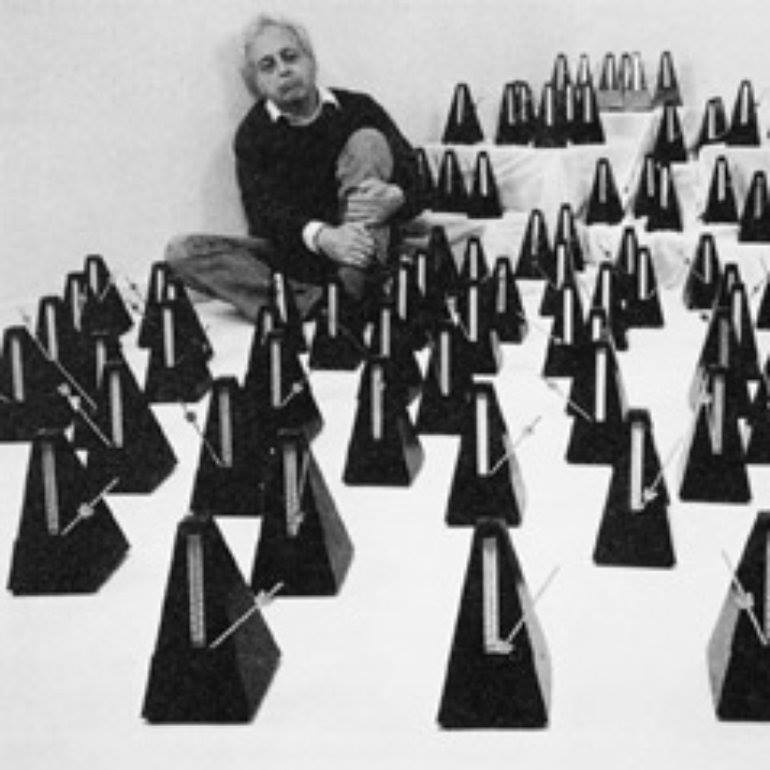
    Following the Pomerium concert, we’ll continue with an afternoon of musical diversions and cryptograms, shuffling works about games (Stravinsky’s “Jeu de Cartes” – “A Card Game”) with some actual musical puzzles and codes (Elgar’s “Enigma Variations”). Among these will be “32 Cryptograms for Derek Jarman,” a nod to Philadelphia composer Robert Moran, on his birthday.

    Here’s hoping you’re game for an afternoon of great music, from 12 to 4 p.m. EST, on WWFM – The Classical Network and wwfm.org.


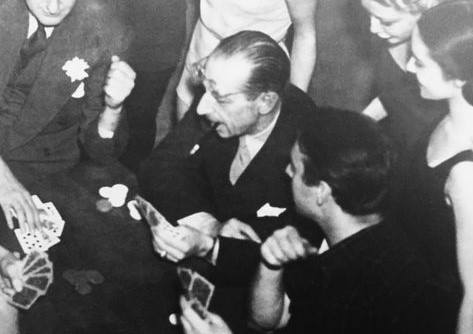
    PHOTO: Stravinsky the card sharp

  • Orthodox Christmas Gogol Tchaikovsky Rimsky-Korsakov

    Orthodox Christmas Gogol Tchaikovsky Rimsky-Korsakov

    Here we go again! Just as we in the West conclude the Twelve Days of Christmas, adherents of the Eastern Orthodox Church today commence their celebrations of Orthodox Christmas. Chalk it up to the old Julian calendar.

    Ukrainian Christmas Eve can be a solemn occasion, marked by fasts and sacred services. Meatless dishes are served for the Holy Night supper. But there are also carols. And the caroling is no simple singing of Christmas songs. Similar to mumming traditions of the British Isles, there is also a little play involved, with ritualistic dancing and the participation of a live goat. As in the West, pre-Christian symbols and rituals are embraced in the celebration of Christmas, to lend cheer to the shortest days and hope for a fertile spring.

    Nikolai Gogol’s “Christmas Eve,” from his collection of stories, “Evenings on a Farm Near Dikanka,” emerges from these folk traditions. Part fairy tale and part farce, Gogol’s story features such incidentals as the theft of the moon, amorous peasants secreting themselves in burlap sacks, and a ride through the air on the Devil’s back to collect the Tsarina’s slippers.

    “Christmas Eve” drew musical responses from both Peter Ilych Tchaikovsky and Nikolai Rimsky-Korsakov. The two composers shared a complicated rivalry. In public, each was supportive of the other, while in private they were nagged by suspicion and envy. Tchaikovsky felt sufficiently threatened to swear his publisher to secrecy about his use of the then newly-minted celesta in “The Nutcracker,” lest Rimsky steal his thunder. Equally intimidated by Tchaikovsky, Rimsky held off on adapting “Christmas Eve” until 1895. Tchaikovsky had set his version ten years before, a revision of an even earlier opera, “Vakula the Smith,” written in 1871. By the time Rimsky’s “Christmas Eve” received its premiere, Tchaikovsky had been safely in the grave for two years.

    We’ll hear selections from both composer’s operas today on The Classical Network, alongside observances of the birthdays of composers William Hurlstone, Ulysses Kay, and Francis Poulenc; conductors David Porcelijn and Gunter Wand; pianist Clara Haskil; violinist and conductor Iona Brown; and choral director Robert DeCormier.

    Z Rizdvom Khrystovym! Good triumphs over evil, but the devil gets his due, from 4 to 7 p.m. EST, on WWFM – The Classical Network and wwfm.org.


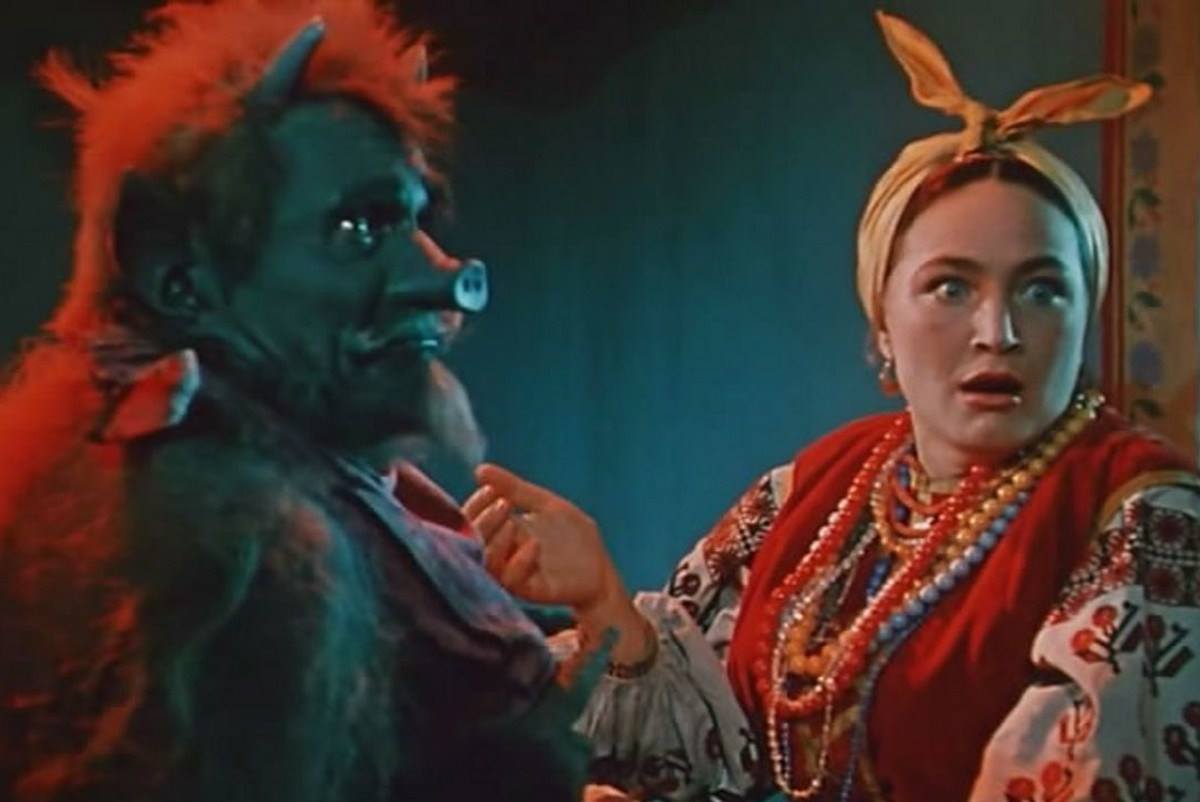
    An animated version of Gogol’s tale, incorporating some of Rimsky’s music:

    https://www.wilderutopia.com/performance/literary/nikolai-gogol-witches-and-devils-on-christmas-eve/

    A fun live-action version from 1961:

    https://www.youtube.com/watch?v=9MFoyMwfnlc

    A 1913 silent version (but you’ll have to provide your own soundtrack):

Tag Cloud

Aaron Copland (93) Beethoven (95) Composer (114) Film Music (137) Film Score (143) Film Scores (255) Halloween (94) John Williams (195) KWAX (229) Leonard Bernstein (103) Marlboro Music Festival (125) Movie Music (152) Mozart (88) Opera (208) Philadelphia Orchestra (89) Picture Perfect (174) Princeton Symphony Orchestra (108) Radio (88) Ross Amico (244) Roy's Tie-Dye Sci-Fi Corner (290) The Classical Network (101) The Lost Chord (268) Vaughan Williams (103) WPRB (396) WWFM (881)

DON’T MISS A BEAT

Receive a weekly digest every Sunday at noon by signing up here


RECENT POSTS