Category: Daily Dispatch

  • Pioneer Songs Trenton Performance Saturday

    Pioneer Songs Trenton Performance Saturday

    My article previewing Saturday’s performance of Eric Houghton’s “Pioneer Songs” runs for a second time, in a somewhat expanded form, in this week’s U.S. 1 Newspaper – PrincetonInfo, out today.

    Among other things, you’ll find some interesting info (if I do say so myself) on the history and architecture of the Trenton War Memorial that had to be cut in order for the piece to be able to fit into the Trenton Downtowner last week.

    Houghton’s historical oratorio is an epic meditation on the courage and resilience of those Americans who blazed the western frontier. The work will be presented in its entirety at Patriots Theater at the War Memorial in Trenton this Saturday at 7:30 p.m. The cycle of fifteen symphonic songs, for vocal soloists, choir, and narrator, celebrates the first successful passage of wagon trains to California in the 1840s.

    Ruth Ochs will conduct the Westminster Community Orchestra and a hundred voice choir, including the Westminster Community Chorus, prepared by Sinhaeng Lee, and the Ewing-based Glassbrook Vocal Ensemble, directed by Chaequan Anderson.

    Houghton, a resident of Ewing, has been on the faculty of Westminster Conservatory of Music for 34 years. Ochs is in her fourteenth year as conductor of the Westminster Community Orchestra.

    Here’s the article as it now appears online:

    https://princetoninfo.com/pioneer-songs-arrive-in-the-capital-city/

    You’ll find more information on the music and Saturday’s performance at pioneersongs.com.


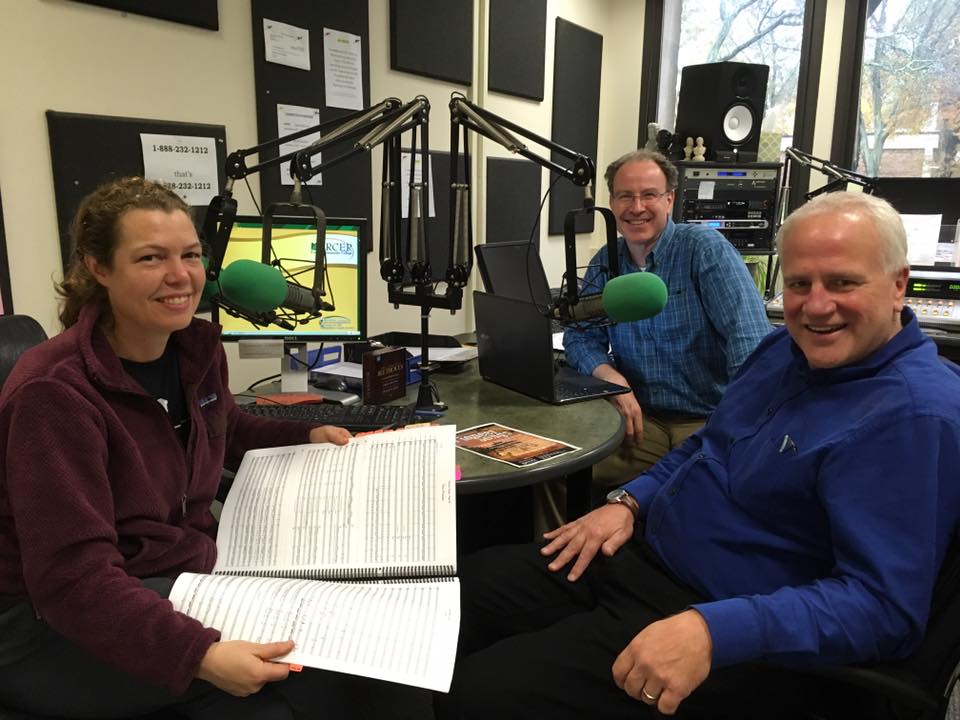
    PHOTO: Ochs and Houghton flank yours truly, during an on-air conversation that took place yesterday afternoon at WWFM – The Classical Network.


  • Enescu’s Delightful “Dixtuor” at Marlboro

    Enescu’s Delightful “Dixtuor” at Marlboro

    George… GEORGE! Do you want your face to stay that way?

    If George Enescu is itching for a fight, it’s nowhere in evidence in his delightful “Dixtuor.” The work – scored for ten wind instruments, as its title suggests – can be heard on this evening’s “Music from Marlboro” broadcast.

    We’ll enjoy a 1978 performance by a “who’s who” of fabulous Marlboro wind players, including flutists Carol Wincenc and Julia Bogorad, oboist Rudolph Vrbsky, English hornist Gerard Reuter, clarinetists David Krakauer and Yehuda Hanani, bassoonists Kim Walker and Alexander Heller, and French hornists David Jolley and Meir Rimon, all under the direction of Marlboro co-founder Marcel Moyse.

    Perhaps Enescu is miffed that Marlboro musicians have elected to play Béla Bartók’s String Quartet No. 4 as the centerpiece of their upcoming tour. The first of this year’s Marlboro tours will take place from November 11 to November 18, with stops within our listening area – in New York City, at Weill Recital Hall in Carnegie Hall, on November 12, and in Philadelphia, at the American Philosophical Society, on November 14, presented by the Philadelphia Chamber Music Society. The tour will also feature two works by Antonín Dvořák: his Piano Trio in F minor, Op. 65, and the Miniatures, Op. 75a. Learn more and find a complete schedule at marlboromusic.org.

    Tonight’s broadcast will open with a 2016 performance of Bartók’s quartet, played by violinists Robyn Bollinger and Soovin Kim, violist Hwayoon Lee, and cellist Tony Rymer.

    It’s understandable that Enescu might be a little jealous. The quartet, composed in Budapest in 1928, when Bartók was in his mid-40s and at the height of his mastery, displays a striking, five movement, “arched” structure, and is full of unusual sonorities – rhythmic sforzandi (notes played with strong, sudden emphasis), passages performed on muted strings, passages performed without vibrato (the rapid oscillation on a sustained tone used for added warmth and expressivity), glissandi (sliding from note to note), and snap pizzicati (plucked strings slapping back against the instruments’ fingerboards).

    By contrast, Enescu’s “Dixtuor,” written in 1906, when the composer was in his mid-20s, is a much more relaxed-sounding work. However, its seemingly laid-back, almost rhapsodic disposition and seductive veneer disguise a carefully thought-out classical structure that makes it a kind of spiritual descendant of the 18th century divertimento. I think you’ll find it the perfect balm for the end of a long work day.

    Who needs anger management, when you’ve got access to great music-making from the legendary Marlboro Music School and Festival? Music hath charms to soothe the savage breast, this Wednesday evening at 6:00 EST, on WWFM – The Classical Network and wwfm.org.

    Marlboro School of Music and Festival: Official Page

  • Election Day Music on The Classical Network

    Election Day Music on The Classical Network

    Election Day. I found these Uncle Sam clothespins for you to wear in the voting booth. Just like Grandma used to make.

    Once you’ve completed your civic duty, I hope you’ll join me on The Classical Network for today’s Noontime Concert, a recital with commentary by harpsichordist Dylan Sauerwald. Sauerwald will present “Clashing Influences: Vienna in the Late 17th Century,” with works by Johann Caspar Kerll and Georg Muffat. The program, part of the free midday concert series presented by Gotham Early Music Scene (or GEMS), was recorded at Saint Bartholomew’s Church, 50th Street and Park Avenue, in New York City. The concerts are held every Thursday at 1:15 p.m. This 45-minute broadcast recital will commence this afternoon at 12.

    Interestingly, the music was written at a time when Columbia (then Columbina) was but a glint in Samuel Sewall’s eye. Sewall, of Salem witch trials notoriety, was the creator of one of the most enduring symbols of our future republic.

    Later in the afternoon, I’ll be joined by Eric Houghton and Ruth Ochs of the Westminster Conservatory of Music. Houghton’s “Pioneer Songs” will be performed at Patriots Theater at the War Memorial in Trenton this Saturday at 7:30 p.m. The cycle of fifteen symphonic songs, for vocal soloists, choir, and narrator, celebrates the first successful passage of wagon trains to California in the 1840s. Ochs will conduct the performance, which will feature the Westminster Community Orchestra, the Westminster Community Chorus, and the Glassbrook Vocal Ensemble. Our interview will take place at 3 p.m.

    Along the way, we’ll also hear Roy Harris’ Symphony No. 9, dedicated to the city of Philadelphia. Harris was himself a product of the prairies. He was born in a log cabin in Lincoln County, OK, on Lincoln’s birthday, February 12, 1898. Though he was celebrated in the 1930s and ‘40s as one of our great American symphonists, by 1962, the year of his Ninth Symphony, his reputation had plummeted. Harris’ music is a fascinating blend of the old and new. I always think of him as an American Sibelius. His symphonies are tied closely to the land and to the American character of his prime – confident, morally certain, and totally devoid of irony. Each movement of the Ninth sports an epigraph from the U.S. Constitution; the last is lent further gravitas through the inclusion of subtitles drawn from Whitman.

    I can’t promise it will be an all-American afternoon, but I can guarantee that we’ll be united in music, today from 12 to 4 p.m. EST, on WWFM – The Classical Network and wwfm.org.

  • Central Jersey Autumn Colors and Music

    Central Jersey Autumn Colors and Music

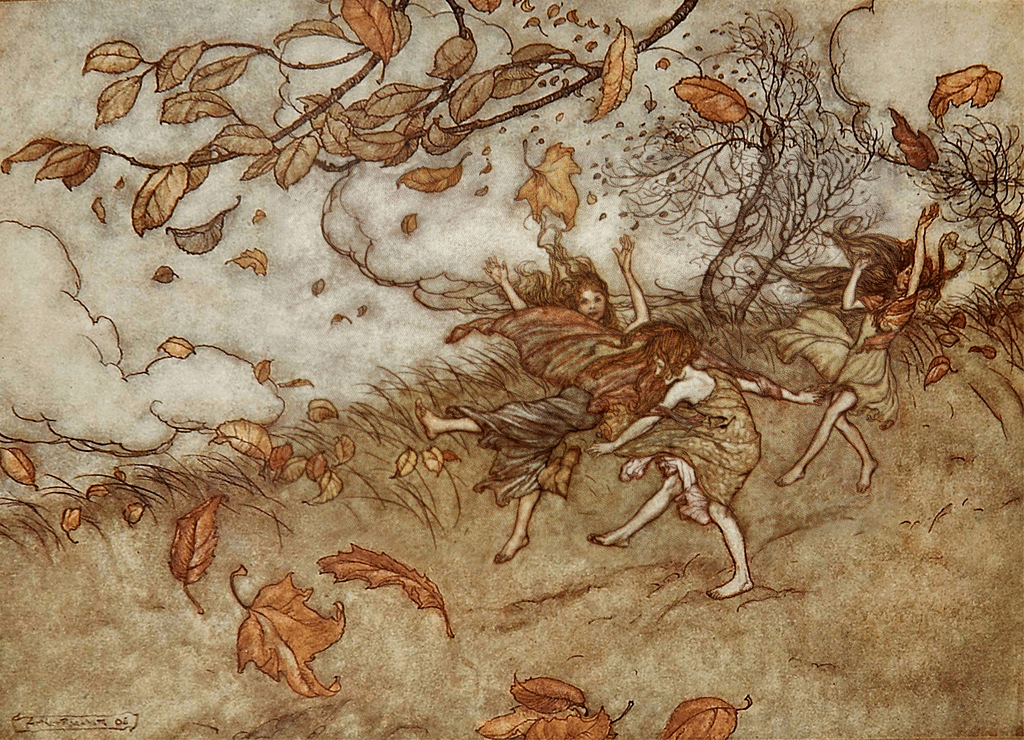
    In recent years, I’ve noticed that autumn doesn’t really arrive at full force in Central Jersey until right around the turn of November. True to form, Saturday was a gloriously moody day, a kaleidoscope of sunshine and clouds that set off the luminous foliage to its best advantage.

    Of course, it was also probably the windiest day of the season. There was a price to pay for the mesmerizing whirl of fallen leaves, in that now a lot of the trees stand in varying degrees of undress. Also, may I just say, the clean-up crews are a little to vigilant with their leaf-blowers – which I think should be banned, in any case – so that all too often the lawns and streets are left as barren presentiments of bleak winter. I want to crunch through shriveled leaves, dammit, and collect the damp ones that still cling to life and color.

    Be that as it may, now that we’ve more or less put away the Hallowe’en decorations for another year, it’s time to fully embrace the season in music, so expect a fair amount of autumnal color to dress up my playlists over the coming week.

    Alongside the usual birthday celebrations, I’ll be itching for a leaf battle, between 4 and 7 p.m. EST, on WWFM – The Classical Network and wwfm.org.

  • Autumn Music From Scandinavia Langgaard Rautavaara

    Autumn Music From Scandinavia Langgaard Rautavaara

    Did you remember to turn your clocks back? As the sun begins to set earlier, those of us in the Northern Hemisphere can feel a spiritual kinship with the Scandinavians.

    This Sunday night on “The Lost Chord,” it’s autumn in the North countries, as well as in the Nordic soul. We’ll test your limits, not only for lengthening shadows, but also for gratuitous vowels, with music by Danish composer Rued Langgaard and Finnish master Einojuhani Rautavaara.

    Langgaard lived from 1893 to 1952. Despite a promising start – born to musical parents, a prodigious childhood, meetings with major conductors, and a symphony performed by the Berlin Philharmonic – his personal and creative eccentricities worked against him.

    Perpetually out of step with the times, and particularly with the musical tastes of his countrymen, performances of his works were scarce. He found himself ignored by the musical establishment, with the result that his music really only started to be recognized in the 1960s – 16 years after the composer’s death.

    Langgaard was 46 by the time he managed to obtain a permanent job, as an organist at the cathedral in Ribe. It was the oldest town in Denmark, and situated far, far from Copenhagen, the center of Danish musical life. He would die in Ribe at the age of 59.

    He wrote 16 symphonies. The fourth of those bears the subtitle “Fall of the Leaf.” Beyond a simple evocation of autumnal nature, complete with thunderstorms, wind and rain, the symphony is one of moods related to, or symbolized, by autumn. The composer originally called the work “Nature and Thoughts.”

    Rautavaara, Finland’s grand old man of music, died in July at the age of 87. He studied at the Sibelius Academy in Helsinki, under Aare Merikanto, before receiving a scholarship to attend the Juilliard School. Among his teachers in the United States were Vincent Persichetti, Roger Sessions and Aaron Copland. He himself taught for extended periods at the Sibelius Academy.

    As a composer, he wrote eight symphonies, 14 concertos, and nine operas, as well as choral, chamber and instrumental music. His most famous piece is probably his “Cantus Arcticus,” for taped bird song and orchestra.

    Early on, Rautavaara experimented with serialism (though he was never a strictly serial composer), but in the 1960s, he left all that behind. His mature style is frequently one of austere beauty, marked by lyricism and even luminosity. His later works often bear something of a mystical stamp.

    We’ll be listening to music composed in 1999, titled “Autumn Gardens,” Rautavaara’s meditation on beauty in nature and the transience of life. If I were to introduce anyone to the music of Rautavaara, this may very well be the piece I would select. It’s gorgeous and moving.

    I hope you’ll join me for “Fall of the Leif,” autumnal meditations from the North, this Sunday night at 10:00 EST, on WWFM – The Classical Network and wwfm.org.

Tag Cloud

Aaron Copland (93) Beethoven (95) Composer (114) Film Music (137) Film Score (143) Film Scores (255) Halloween (94) John Williams (195) KWAX (229) Leonard Bernstein (103) Marlboro Music Festival (125) Movie Music (152) Mozart (88) Opera (208) Philadelphia Orchestra (89) Picture Perfect (174) Princeton Symphony Orchestra (108) Radio (88) Ross Amico (244) Roy's Tie-Dye Sci-Fi Corner (290) The Classical Network (101) The Lost Chord (268) Vaughan Williams (103) WPRB (396) WWFM (881)

DON’T MISS A BEAT

Receive a weekly digest every Sunday at noon by signing up here


RECENT POSTS