Category: Daily Dispatch

  • Arabian Nights Cinematic Delights

    Arabian Nights Cinematic Delights

    Open sesame! It’s an Aladdin’s Cave of cinematic delights.

    This week on “Picture Perfect,” the focus is on tales from “The Arabian Nights.”

    These traditional folk stories from the Orient have come down to us filtered through the sensibilities of Western translators. Further translation was required to get the stories from page to screen; so it’s hardly surprising to find Sinbad, for instance, fighting a giant walrus at the North Pole.

    The film versions are often showcases for the work of production designers and special effects artists, but composers have certainly gotten in on the act with appropriately imaginative scores.

    Bernard Herrmann lent plenty of color and wit to the skeleton duel in “The Seventh Voyage of Sinbad” (1958) by employing a battery of castanets, xylophone and brass. Stop motion artist Ray Harryhausen was responsible for the memorable effects. “Sinbad” proved to be a dry run for the climax of “Jason and the Argonauts,” in which Harryhausen outdid himself by animating not one, but seven skeletons, and again, Herrmann supplied the music.

    Harryhausen animated two further Sinbad adventures – “The Golden Voyage of Sinbad” (1974), and “Sinbad and the Eye of the Tiger” (1977). Over the course of the three “Sinbad” films, audiences were treated to fantastic encounters with, in addition to the skeleton, a Cyclops, a roc, a dragon, a statue of the goddess Kali, a centaur, a giant walrus, and a saber-tooth tiger, among others.

    “Sinbad and the Eye of the Tiger” was scored by Roy Budd. Budd’s reputation was largely that of a jazz musician and composer. He wrote scores for over 50 films, including “Get Carter” and “The Wild Geese,” before his early death of a brain hemorrhage at the age of 46, in 1993.

    Walt Disney created a modern classic in “Aladdin” (1992). The music was by Alan Menken, with lyrics by Howard Ashman and Tim Rice. “Aladdin” won Academy Awards for Best Original Score and Best Original Song (“A Whole New World”). Menken has a whole shelf full of Oscars for his work for Disney. Need I say, Robin Williams was the voice of the manic, freewheeling Genie?

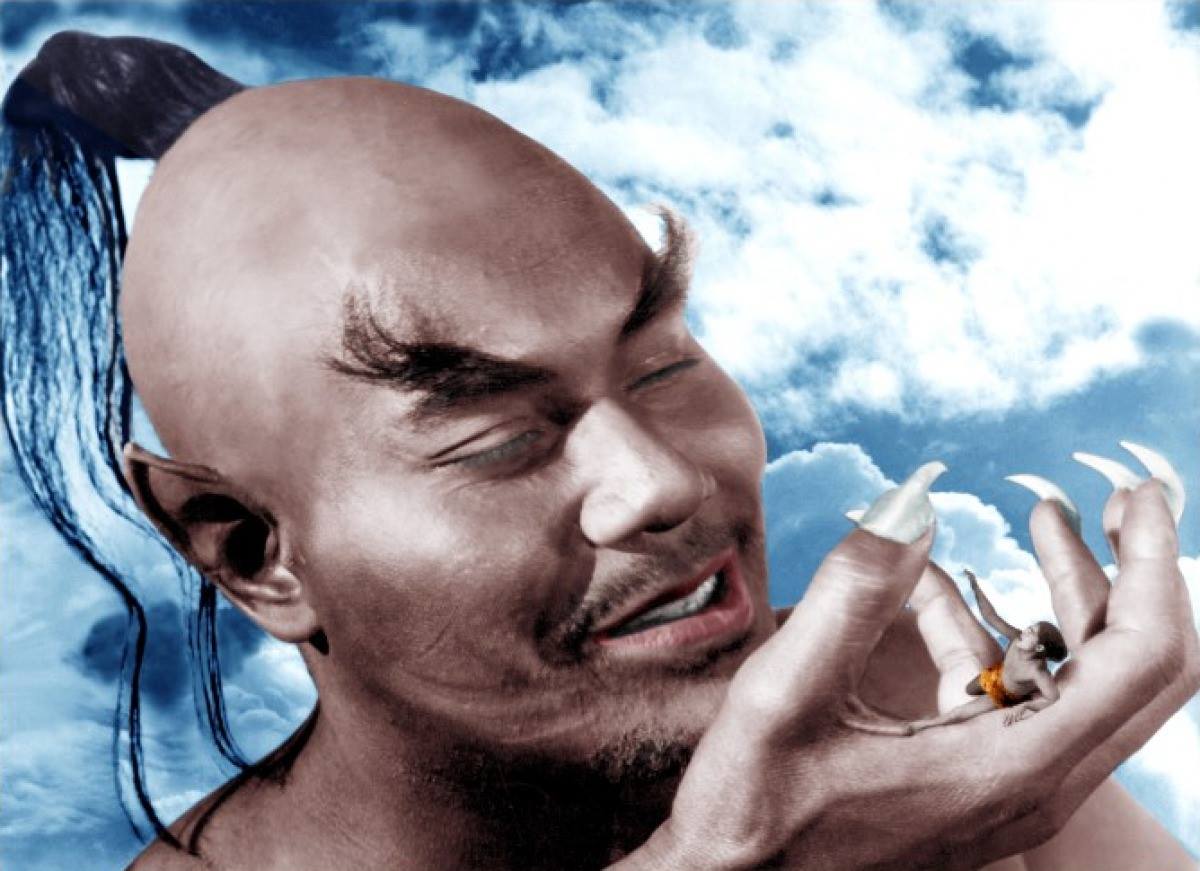
    Rex Ingram’s Genie steals the show in “The Thief of Bagdad” (1940). Ingram emerges from his magic lamp and looms over a cowering Sabu, whom he addresses as “Little Master of the Universe.” The beach resounds with his maniacal laughter. There had been an earlier, justly celebrated, silent version of “Thief,” with Douglas Fairbanks. The remake splits the thief and the prince into two separate characters. Sabu plays the incorrigible Abu (the thief), and Conrad Veidt is his nemesis, the treacherous vizier Jaffar.

    The score is by three-time Academy Award winner Miklós Rózsa. Rózsa was in London, in the employ of Alexander Korda, when the lavish Technicolor production was moved to Hollywood on account of the Blitz. Rózsa would go on to become one of Hollywood’s greatest composers. His music for “Ben-Hur” alone has earned him a place in the film music pantheon. He never wrote a more charming score, however, than he did for this.

    I hope you’ll join me for an hour of cinematic enchantments. It’s “A Thousand and One Nights at the Movies,” on “Picture Perfect,” this Friday evening at 6:00 EDT, on WWFM – The Classical Network and wwfm.org.
  • Aretha Franklin & Blues Brothers Reunion R.I.P.

    Aretha Franklin & Blues Brothers Reunion R.I.P.

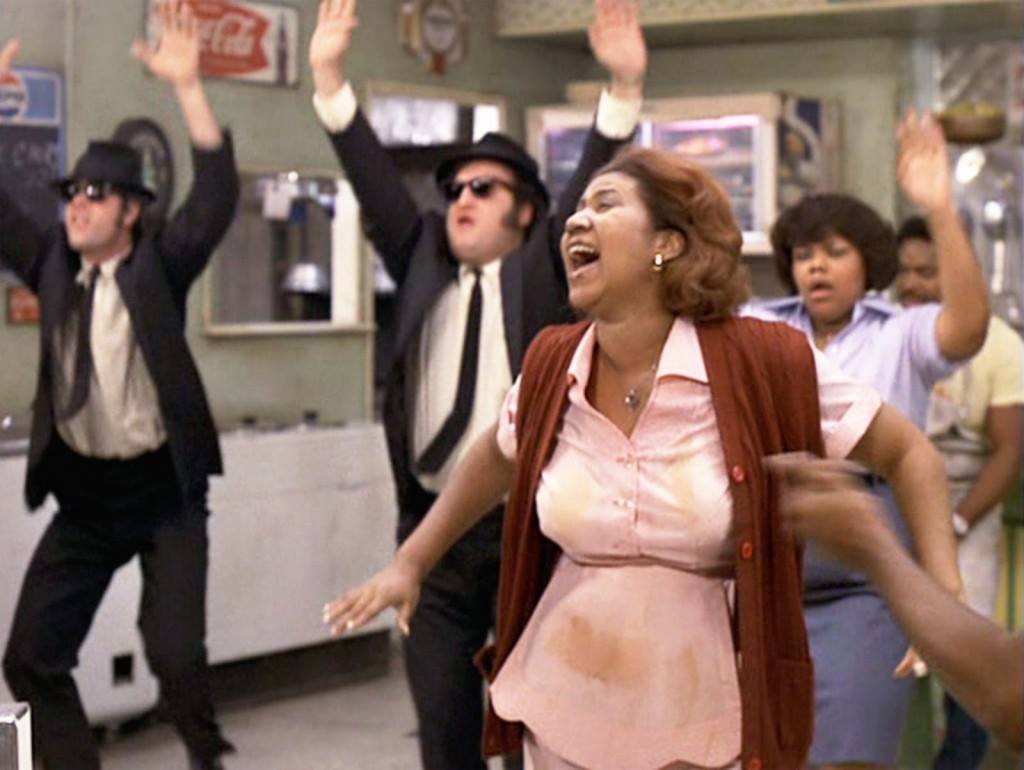
    Aretha Franklin is reunited with Jake Blues. R.I.P., the Queen of Soul.

  • Rachmaninoff’s Lost Symphonic Dances Rediscovered

    Rachmaninoff’s Lost Symphonic Dances Rediscovered

    On September 4, Marston Records will release a newly rediscovered document of Sergei Rachmaninoff performing his “Symphonic Dances.”

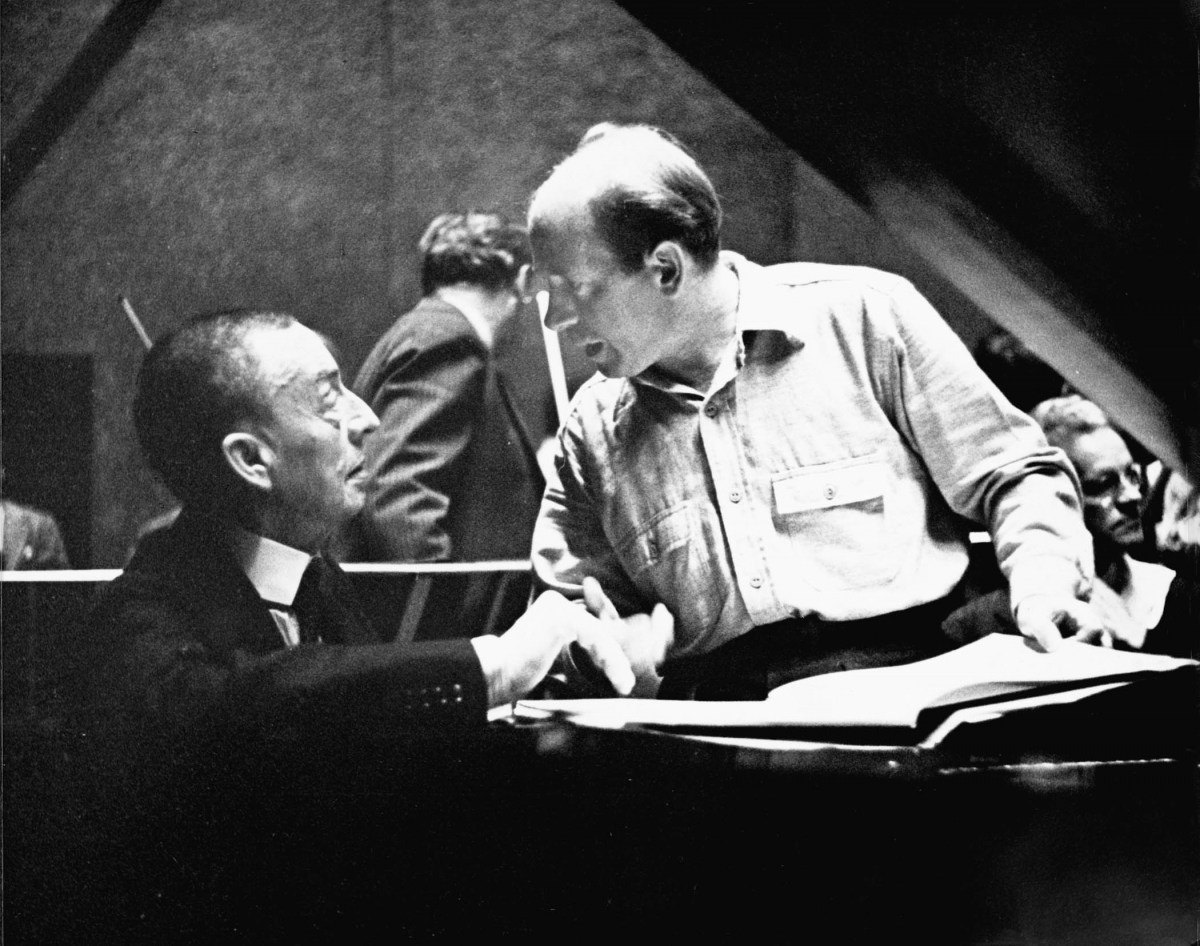
    The work is heard in a reduction for solo piano, with the composer himself going over the score with Eugene Ormandy, who conducted its premiere with the Philadelphia Orchestra. The recording includes audio of the pianist speaking and singing his instructions. The Marston release will also feature a meticulously edited version, with Rachmaninoff playing through 2/3 of the score without interruption.

    Any unknown audio of Rachmaninoff at the keyboard is a major discovery, and to hear him play, as might a fly on the wall, outside of a commercial setting, is extremely rare. The bonus material will include every known non-commercial recording ever made of the legendary pianist.

    The remarkable Ward Marston, blind from birth, lives outside Philadelphia with his seeing eye dog, Vinnie, and a collection of over 30,000 records. He is one of the industry’s most revered audio engineers. His remasterings of the great performers of the past have been acclaimed as revelatory and even miraculous.

    The liner notes of the Rachmaninoff release are by musicologist Richard Taruskin, also at the forefront of his field. Taruskin, particularly renowned for his knowledge and insights into Russian music, is a visiting scholar this week at the 29th Annual Bard Music Festival: Rimsky-Korsakov and His World at Bard College.

    Interestingly, Rimsky’s score for “Le Coq d’or” (“The Golden Cockerel”) was the only work by another composer that Rachmaninoff brought with him when he left Russia in 1917. The three-note motif that opens his “Symphonic Dances” recalls the Queen of Shemakha’s theme from Rimsky’s opera.

    Rachmaninoff and Vladimir Horowitz once played through Rachmaninoff’s Third Piano Concerto together in 1928, in an impromptu performance in the basement of Steinway Hall. Can you imagine? Rachmaninoff later approached Victor Records about recording the “Symphonic Dances” with Horowitz on a second piano. The label dismissed the proposal out of hand as being commercially unviable.


    The album “Rachmaninoff Plays Symphonic Dances:”

    Rachmaninoff Plays Symphonic Dances

    More information on Marston:

    http://www.wardmarston.com/about.html

    A sample from the upcoming release:

  • Dvořák & Janáček: Czech Masterworks from Marlboro

    Dvořák & Janáček: Czech Masterworks from Marlboro

    What’s a party without a little Czechs Mix?

    On the next “Music from Marlboro,” for your Wednesday cocktail hour, we’ll snack on two masterworks by Antonin Dvořák and Leoš Janáček.

    Dvořák’s unpretentious “Serenade for Winds” was given its premiere in 1878. The composer was 37 years-old. The serenade is written in the tried-and-true “Slavonic style” that established Dvořák’s fame. Its instrumentation and emphasis on melody recall occasional and ceremonial serenades of the 18th century.

    We’ll hear a recording made in 1957, with oboists Alfred Genovese and Earl Shuster, clarinetists Harold Wright and Richard Lesser, bassoonists Anthony Cecchia and Roland Small, hornists Myron Bloom, Richard Mackey, and Christopher Earnest, cellists Yuan Tung and Dorothy Reichenberger, and double bassist Raymond Benner, all under the direction of Louis Moyse.

    Janáček String Quartet No. 2 is a serenade of a different sort. The composer’s remarkably prolific Indian summer can be attributed in part to the sublimated passion he felt for Kamila Stösslová, a married woman some 38 years his junior. The quartet, composed in 1928, when the composer was about 74 years-old, was inspired by their long and intimate – though unconsummated – relationship, detailed in their more than 700 letters. The work has been described as a “manifesto on love.”

    We’ll hear Janáček’s “Intimate Letters” performed at the 2002 Marlboro Music Festival by violinists Nicholas Kendall and Hiroko Yajima, violist Richard O’Neill, and cellist Alexis Pia Gerlach.

    You bring the drinks; I’ll supply the music – on the next “Music from Marlboro,” this Wednesday evening at 6:00 EDT, on WWFM – The Classical Network and wwfm.org.

    Marlboro School of Music and Festival: Official Page

  • Lully From Italy to France Sun King’s Creep

    Lully From Italy to France Sun King’s Creep

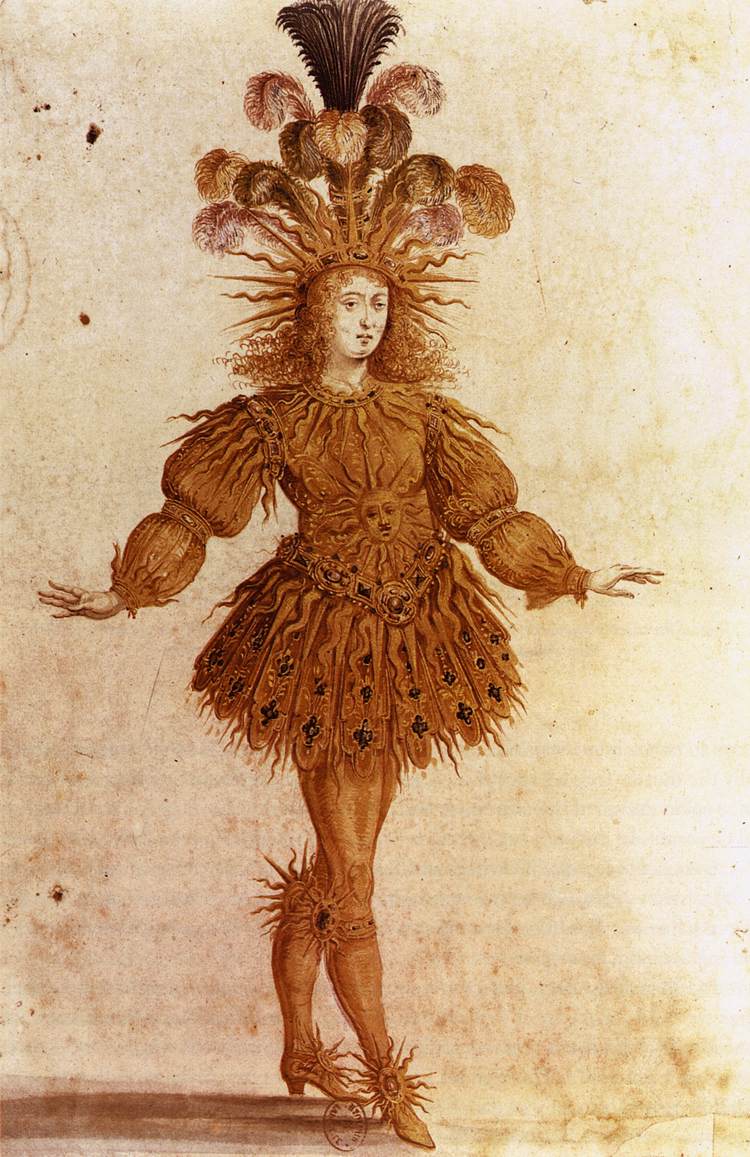
    The most powerful musician in France was Italian. Jean-Baptiste Lully rose from humble beginnings, born into a family of millers in Florence, to become Master of the King’s Music at the court of Versailles and a cherished friend of Louis XIV. In fact, he and the “Sun King” used to dance side by side in the court ballets Lully had written. Unfortunately, he was also a bit of a creep.

    Among his other quirks, Lully was very vain about his legs. It is ironic, then, that he would ultimately die as a result of an injury to his toe, sustained while pounding the floor with a heavy staff to mark time during a performance of his “Te Deum,” written to celebrate the king’s recovery from surgery. Vanity caused Lully to ignore advice to have the toe amputated, and he died of a gangrenous infection.

    On today’s Noontime Concert on The Classical Network, Jean-Féry Rebel’s memorial piece, “Tombeau de Monsieur de Lully,” will be among selected highlights from two concerts of French Baroque music that appeared on last season’s Midtown Concert Series, presented at St. Bartholomew’s Church in Midtown Manhattan, by Gotham Early Music Scene, or GEMS.

    The Italian Problem was more than simply one of personality. Lully’s influence sent shoots all over Europe. Equally, Arcangelo Corelli’s influence crept into France. François Couperin’s “Le Parnesse, ou L’Apothéose de Corelli” was one of his most ambitious attempts to reconcile the Italian and French styles.

    “Tombeau” and “Le Parnesse” will be performed by members of Voyage Sonique.

    The second half of the broadcast will feature ballet music by Jean Philippe Rameau, “La Lyre Enchantée.” The performance was taken from a separate concert presented by the BALAM Dance Theatre.

    GEMS is a non-profit corporation that supports and promotes artists and organizations in New York City devoted to early music – music of the Middle Ages, Renaissance, Baroque, and early Classical periods. Free lunchtime concerts are held at St. Bart’s every Thursday at 1:15 p.m. The Midtown Concerts series is on hiatus for the summer, but performances will resume in the fall. For more information and updates to GEMS’ events calendar, look online at gemsny.org.

    Tune in for French music from GEMS today at 12 p.m. Then stick around for Russian music, as I share some reminiscences of my weekend at the Bard Music Festival and “Rimsky-Korsakov and His World,” until 4 p.m. EDT, on WWFM – The Classical Network and wwfm.org.
Tag Cloud

Aaron Copland (93) Beethoven (95) Composer (114) Film Music (137) Film Score (143) Film Scores (255) Halloween (94) John Williams (195) KWAX (229) Leonard Bernstein (103) Marlboro Music Festival (125) Movie Music (152) Mozart (88) Opera (208) Philadelphia Orchestra (89) Picture Perfect (174) Princeton Symphony Orchestra (108) Radio (88) Ross Amico (244) Roy's Tie-Dye Sci-Fi Corner (290) The Classical Network (101) The Lost Chord (268) Vaughan Williams (103) WPRB (396) WWFM (881)

DON’T MISS A BEAT

Receive a weekly digest every Sunday at noon by signing up here


RECENT POSTS