Category: Daily Dispatch

  • Lully From Italy to France Sun King’s Creep

    Lully From Italy to France Sun King’s Creep

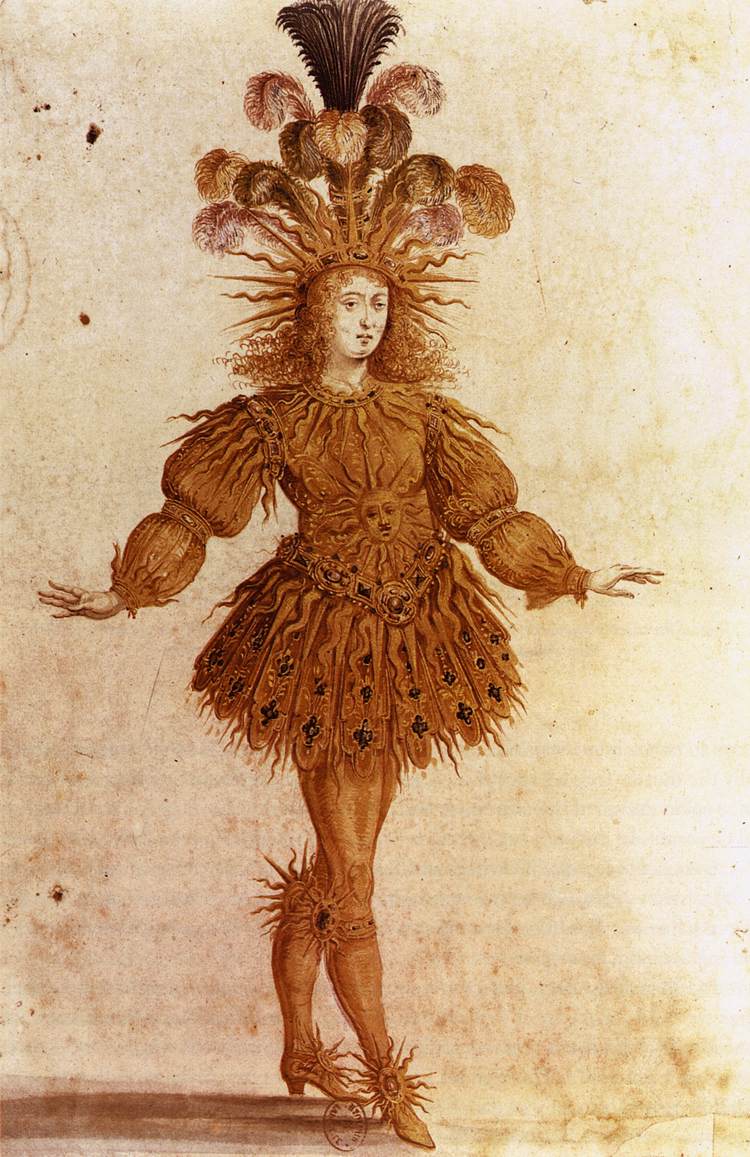
    The most powerful musician in France was Italian. Jean-Baptiste Lully rose from humble beginnings, born into a family of millers in Florence, to become Master of the King’s Music at the court of Versailles and a cherished friend of Louis XIV. In fact, he and the “Sun King” used to dance side by side in the court ballets Lully had written. Unfortunately, he was also a bit of a creep.

    Among his other quirks, Lully was very vain about his legs. It is ironic, then, that he would ultimately die as a result of an injury to his toe, sustained while pounding the floor with a heavy staff to mark time during a performance of his “Te Deum,” written to celebrate the king’s recovery from surgery. Vanity caused Lully to ignore advice to have the toe amputated, and he died of a gangrenous infection.

    On today’s Noontime Concert on The Classical Network, Jean-Féry Rebel’s memorial piece, “Tombeau de Monsieur de Lully,” will be among selected highlights from two concerts of French Baroque music that appeared on last season’s Midtown Concert Series, presented at St. Bartholomew’s Church in Midtown Manhattan, by Gotham Early Music Scene, or GEMS.

    The Italian Problem was more than simply one of personality. Lully’s influence sent shoots all over Europe. Equally, Arcangelo Corelli’s influence crept into France. François Couperin’s “Le Parnesse, ou L’Apothéose de Corelli” was one of his most ambitious attempts to reconcile the Italian and French styles.

    “Tombeau” and “Le Parnesse” will be performed by members of Voyage Sonique.

    The second half of the broadcast will feature ballet music by Jean Philippe Rameau, “La Lyre Enchantée.” The performance was taken from a separate concert presented by the BALAM Dance Theatre.

    GEMS is a non-profit corporation that supports and promotes artists and organizations in New York City devoted to early music – music of the Middle Ages, Renaissance, Baroque, and early Classical periods. Free lunchtime concerts are held at St. Bart’s every Thursday at 1:15 p.m. The Midtown Concerts series is on hiatus for the summer, but performances will resume in the fall. For more information and updates to GEMS’ events calendar, look online at gemsny.org.

    Tune in for French music from GEMS today at 12 p.m. Then stick around for Russian music, as I share some reminiscences of my weekend at the Bard Music Festival and “Rimsky-Korsakov and His World,” until 4 p.m. EDT, on WWFM – The Classical Network and wwfm.org.
  • John Ireland: English Enigma

    John Ireland: English Enigma

    John Ireland was no more Irish than (Finnish composer) Einar Englund was English. In fact, he was born in Bowdon, in Greater Manchester, into a family of Scottish descent. Ireland lost both parents in his mid-teens. Recollections of a melancholy childhood were said to have dogged him for the remainder of his days.

    He studied composition at the Royal College of Music under Sir Charles Villiers Stanford (who also taught Gustav Holst, Ralph Vaughan Williams, Frank Bridge, and Sir Arthur Bliss, among others). Ever self-effacing, Ireland preferred to live his life outside the limelight. You might say he was modest to a fault. Benjamin Britten, who was an Ireland pupil, described him as possessing “a strong personality but a weak character.”

    Even so, the premiere of Ireland’s Violin Sonata No. 2 in 1917 made the English musical establishment sit up and take notice. One can imagine the composer’s mixed emotions on the occasion. His awkwardness likely contributed to a very brief marriage, which is rumored to have been unconsummated. Ireland was 47; his bride was a 17 year-old pupil. Beyond that comparative moment of madness, the composer remained a bachelor for the rest of his life.

    Ireland’s other students included E.J. Moeran, Geoffrey Bush, and Richard Arnell. The composer attained enough of a degree of prominence that he was offered the award of Commander of the Order of the British Empire (which naturally he declined). His 70th birthday was celebrated with a special Prom concert, with a performance of his Piano Concerto as the centerpiece.

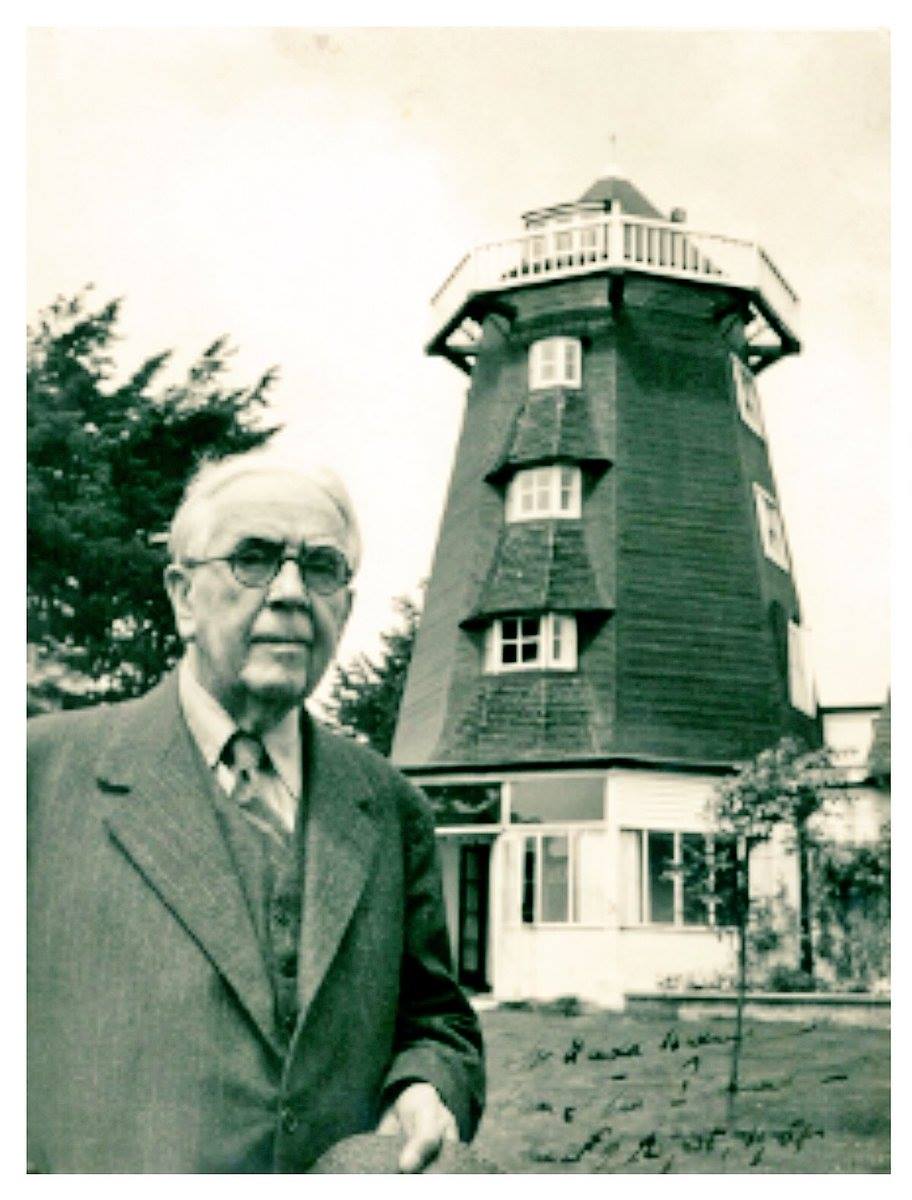
    Ireland frequently visited the Channel Islands and drew inspiration from the native landscape. In 1939, he actually moved to Guernsey. He was evacuated from the islands ahead of the imminent German invasion during World War II. In 1953, he retired to a converted windmill in the hamlet of Rock in Sussex. He died in 1962 at the age of 82.

    While there is plenty of wistfulness to be found in Ireland’s music – his is a fascinating alternative to the folk song-inflected style of many of his peers – there are also moments of pageantry that can stand toe-to-toe with the swaggering pomp of Elgar and Walton at their most imperial.

    I hope you’ll join me for music of John Ireland, among my featured highlights, between 4 and 7 p.m. EDT, on WWFM – The Classical Network and wwfm.org.

    Happy birthday, John Ireland!


    PHOTO: Ireland in retirement at his windmill

  • Hungarian Night Music Bela Lugosi’s Requiem

    Hungarian Night Music Bela Lugosi’s Requiem

    “Children of the night – what beautiful music they make!” So says Hungarian superstar Bela Lugosi in his signature role of Dracula. The observation (spoken in response to the howling of wolves) might equally be applied, under less chilling circumstances, to three of Lugosi’s composer-compatriots, whose nocturnal meditations we’ll enjoy this Sunday night on “The Lost Chord.”

    Miklós Rózsa, himself a figure with cinematic associations, wrote nearly 100 film scores and won three Academy Awards – for “Spellbound” (1945), “A Double Life” (1947), and “Ben-Hur” (1959). He was also an active concert composer, writing concertos for Jascha Heifetz, Leonard Pennario, Gregor Piatigorsky, and Pinchas Zukerman.

    In the summer of 1962, Rózsa composed “Hungarian Nocturne” on a commission from Edward B. Benjamin, a New Orleans millionaire with a fondness for quiet music. However, in order to maintain interest, the composer realized, there was no way he could remain quiet for the entire span of the piece. So the nocturne eventually builds to a climax before returning to the serene mood of its opening. His patron wasn’t entirely pleased, though he did draw enjoyment from the quieter parts. The piece was an attempt by the composer to recapture the rare beauty of nights on his estate in rural Hungary.

    Though Antal Doráti would ultimately become world famous as a conductor, he studied composition at the Franz Liszt Academy under Zoltán Kodály and Leó Weiner. He also studied piano with Béla Bartók. A fine Bartok interpreter, Doráti would later conduct the world premiere of his teacher’s Viola Concerto.

    Doráti’s own music has always been regarded as something of a sidelight. His “Night Music,” from 1970, is a collection of evocative miniatures for flute and orchestra. We’ll hear it performed by Alison Young, now the host of American Public Media’s “SymphonyCast.”

    Unlike Rózsa and Doráti, who were both natives of Budapest, Zoltán Kodály was born in a small town in Southern Hungary. He claimed that his first exposure to folk music was through the singing of servant girls in his own home. He went on to become one of the most important figures in Hungarian musical life, as composer, ethnomusicologist, and educator.

    Kodály will be represented by his orchestral idyll, “Summer Evening,” music originally composed in 1906, then revised in 1929, to fulfill a commission from Arturo Toscanini. Kodály himself will conduct, on a gorgeous recording with the Budapest Philharmonic.

    That’s “Children of the Night” – Hungarian composers take wing – this Sunday night at 10:00 EDT, on WWFM – The Classical Network and wwfm.org.
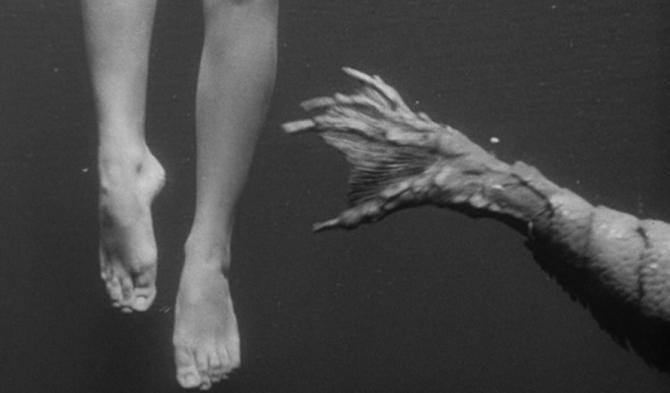

    IMAGE: “New Moon,” by Mihály Zeller

  • Aquatic Horror Movie Soundtracks

    Aquatic Horror Movie Soundtracks

    Just when you thought it was safe to go back in the water…

    This week on “Picture Perfect,” it’s an hour of summer bummers, as I play to your fears of what lurks below.

    “Beneath the 12-Mile Reef” (1953) stars Robert Wagner, Terry Moore, and Peter Graves in a Romeo and Juliet story about two families of competing fishermen along the Gulf coast of Florida, one working class and of Greek origin, and the other a family of privileged WASPs. Gilbert Roland is the Greek patriarch who runs afoul of an improbably large octopus. Bernard Herrmann wrote the music, which employs no less than nine harps (one for each arm, and a spare).

    A young Henry Mancini was one of three composers to work on “Creature from the Black Lagoon” (1954). Mancini, soon to be world famous for “Moon River,” “Baby Elephant Walk,” and “The Pink Panther,” was teamed with veteran film composer Hans J. Salter and Herman Stein. None of the three were credited on screen – typical of what was then considered just another low-budget B-movie.

    What can I say about John Williams’ masterful music for “Jaws” (1975)? It’s right up there with “Psycho” and “The Good, the Bad and the Ugly,” in terms of most recognized and most frequently parodied. Everyone remembers the primal shark theme, but what is sometimes overlooked is that “Jaws” is also one of the great adventure scores, the music effortlessly navigating the choppy waters of suspense, horror, and seafaring swashbuckler. The composer was recognized with a richly-deserved Academy Award (his second of five).

    The conflict in “The Swimmer” (1968) is not a giant octopus, nor a great white shark, nor a prehistoric gill man, but rather the progressive psychological breakdown of an upper middle class Connecticut man who believes he’s living the American Dream.

    Adapted from a short story by John Cheever, “The Swimmer” stars Burt Lancaster as the man, who acts on a quixotic impulse to travel all the way home, across county, by way of a network of suburban swimming pools. The adventure starts out well enough, with Lancaster and everyone he encounters full of optimism and fun; but the further he moves along his allegorical journey, the more the enterprise, the climate, and the people begin to grow cold.

    “The Swimmer” is a decidedly downbeat tale which could make the viewer as reluctant to dip a toe into a chlorinated in-ground swimming pool as the shark-infested waters of Peter Benchley’s Amity Beach. The score is by Marvin Hamlisch, of all people, and it suits the film brilliantly.

    Join me, if you dare, for an hour of aquatic traumas, on “Picture Perfect,” music for the movies, this Friday evening at 6:00 EDT, on WWFM – The Classical Network and wwfm.org.

Tag Cloud

Aaron Copland (93) Beethoven (95) Composer (114) Film Music (137) Film Score (143) Film Scores (255) Halloween (94) John Williams (195) KWAX (229) Leonard Bernstein (103) Marlboro Music Festival (125) Movie Music (152) Mozart (88) Opera (208) Philadelphia Orchestra (89) Picture Perfect (174) Princeton Symphony Orchestra (108) Radio (88) Ross Amico (244) Roy's Tie-Dye Sci-Fi Corner (290) The Classical Network (101) The Lost Chord (268) Vaughan Williams (103) WPRB (396) WWFM (881)

DON’T MISS A BEAT

Receive a weekly digest every Sunday at noon by signing up here


RECENT POSTS