Category: Daily Dispatch

  • Chernobog St John’s Eve Disney’s Fantasia

    Chernobog St John’s Eve Disney’s Fantasia

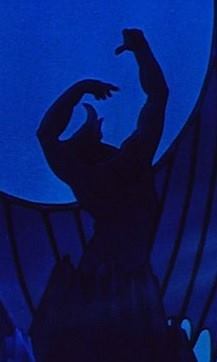
    When the sun sets this evening, June 23, you had better be prepared to deal with Chernobog! That’s right, it’s St. John’s Eve – the eve of the Feast Day of St. John the Baptist.

    “Dracula” fans might be interested to know that none other than Bela Lugosi struck demonic poses for Disney animators for several days as a model for the climactic sequence of “Fantasia.” He would ultimately be replaced by Wilfred Jackson. Still, how cool is that?

    Of course, Leopold Stokowski conducted the Philadelphia Orchestra on the film’s soundtrack. The master of ceremonies, Deems Taylor, sets the scene incorrectly, stating that it occurs on Walpurgis Night (April 30). Chernobog could care less about Walpurgis Night. He’s kickin’ it up for St. John!

    Watch the clip here, and relive your childhood anxiety:

    http://www.cornel1801.com/disney/Fantasia-1940/film8.html

  • Confidence Games & Movie Music

    Confidence Games & Movie Music

    This week on “Picture Perfect,” it’s the equivalent of a cinematic shell game. We’ll have musical selections from films about confidence games, charlatans and hucksters.

    In “The Magician” (1958), also known as “The Face,” Ingmar Bergman explores the idea of theatre as both confidence game and beautiful mystery. Max von Sydow stars as a traveling illusionist whose troupe of strolling entertainers, The Magnetic Healing Theatre, is put to test before being granted permission to perform at the royal court. The score, by Erik Nordgren, is sparse, made up of a dozen very short pieces for harp and two guitars, some movements for brass band, and in the main title, the addition of percussion.

    George C. Scott plays Mordecai Jones, a confidence man who defrauds the populace of the American South through various means, with a specialty in rigged punchboards, in “The Flim-Flam Man” (1967). The film, shot on location in Kentucky by director Irvin Kershner, features a gallery of colorful character actors, including Jack Albertson, Slim Pickens, Strother Martin and Harry Morgan. The happy-go-lucky score, by Jerry Goldsmith, makes use of harmonica, banjo, and freewheeling honky-tonk piano.

    Steven Spielberg’s “Catch Me If You Can” (2002) is based on the real-life exploits of the chameleonic Frank Abagnale, who, before his 19th birthday, managed to successfully pull a series of cons worth millions of dollars. Along the way, he posed convincingly as a lawyer, a doctor, and a pilot. Leonardo DiCaprio plays Abagnale, and Tom Hanks, the bank fraud agent who develops an unusual relationship with him, as the light-hearted cat-and-mouse thriller unfolds. John Williams wrote the intimate and jazzy score, a throw-back to the musical syntax of caper films of the 1960s, but also to the composer’s own jazz roots (when he still went by “Johnny Williams”).

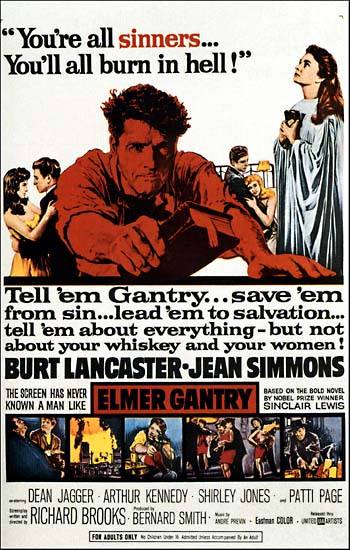
    Finally, we’ll hear music from that classic of religious hucksterism, “Elmer Gantry” (1960). Burt Lancaster plays the hard-drinking, fast-talking salesman-turned-revivalist, in one of the great movie performances. Lancaster was recognized with a much-deserved Academy Award for Best Actor. Shirley Jones, of “The Partridge Family” fame, won Best Supporting Actress for playing one of Gantry’s shady ladies. The film’s brilliant score was by none other than André Previn.

    You can listen with “confidence” to “Picture Perfect,” music for the movies, this Friday evening at 6:00 EDT, on WWFM – The Classical Network and wwfm.org.
  • First Day of Summer Longest Day Lou Harrison Solstice

    First Day of Summer Longest Day Lou Harrison Solstice

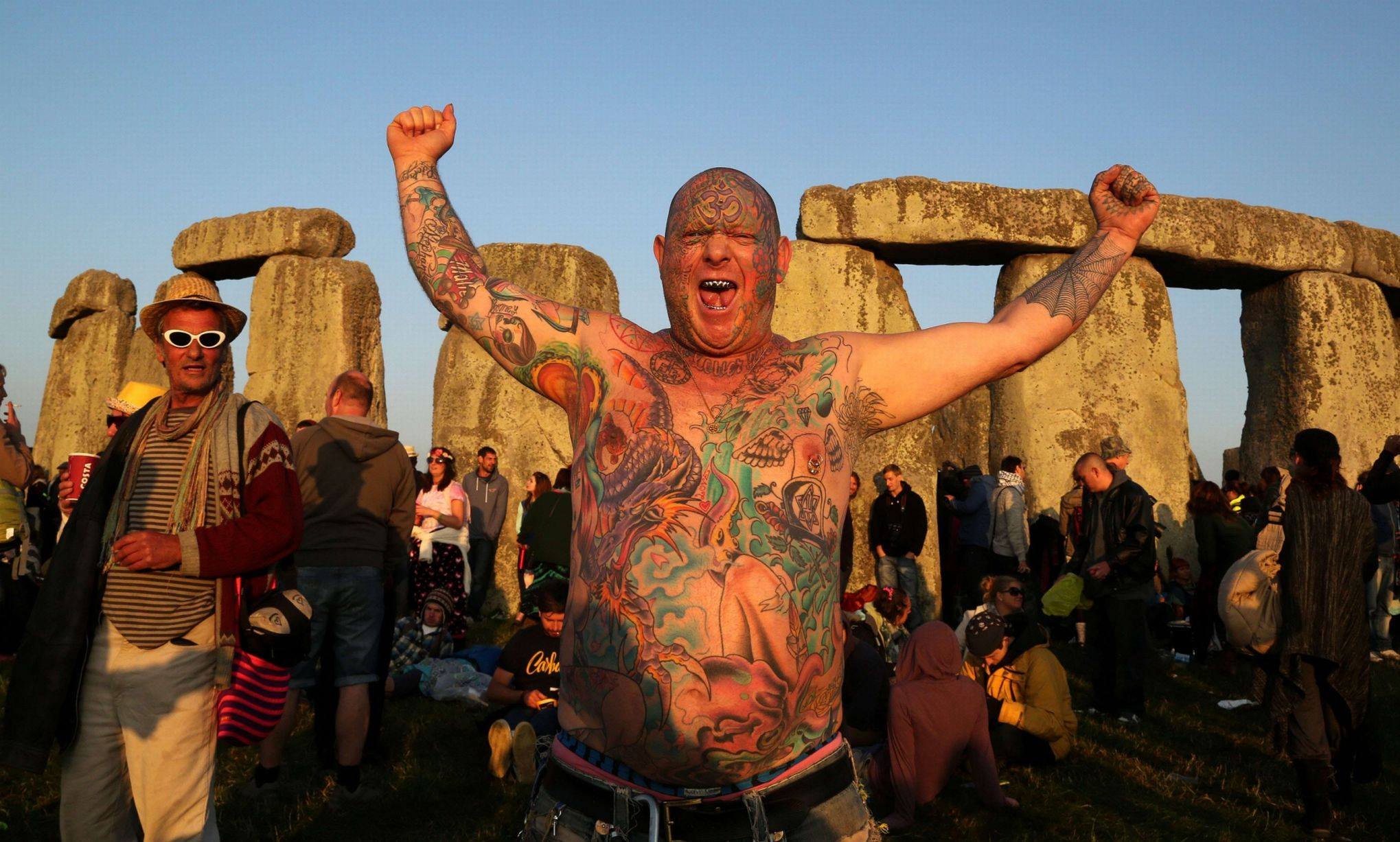
    The first day of summer. Only three months to go until autumn! That’s the good news. The bad news is that the sun won’t set now until 8:30 p.m. That’s an awful lot of sun.

    Hey, man! It’s Lou Harrison’s “Solstice!”

  • Schoenberg Mozart Decadence Regeneration Marlboro

    Schoenberg Mozart Decadence Regeneration Marlboro

    You might say that Arnold Schoenberg was a man of contradictions. In him, the radical and conservative existed in perpetual tension. He may have started out by preaching revolution, but he ended up insisting he was a traditionalist. He labeled Brahms a progressive, and claimed he owed very much to Mozart.

    On this week’s “Music from Marlboro,” a chamber symphony by one of music’s least charismatic figures will be heard side-by-side with one of the 18th century’s most congenial works.

    Mozart and Schoenberg, two seemingly disparate composers, pushed boundaries at the opposite ends of a grand tradition. Mozart conveyed his understanding of the complexities of human nature through the all-pervasive beauty of an artist formed during the Enlightenment. Schoenberg, divided from Mozart by more than a century, was the product of a world slipping into chaos. The Romantic Era raised music to the heights of ecstasy, even as it plunged it into the depths of highly subjective darkness. Tonality dissolved right alongside the decay of balance and moderation. Schoenberg’s development of a dodecaphonic or twelve-tone method in the early 1920s might be viewed as an aftershock of the First World War. More accurately, both – the music and the war – were likely symptoms of an overall downward trajectory.

    In Schoenberg’s Chamber Symphony No. 1 of 1906, harmony is pushed to the brink. We’ll hear Leon Kirchner direct an ensemble of fifteen players at the 1982 Marlboro Music Festival.

    Then we’ll unwind with Mozart’s gentle giant, the Clarinet Quintet in A major of 1789. The 1968 performance will feature clarinetist Harold Wright, violinists Alexander Schneider and Isadore Cohen, violist Samuel Rhodes, and cellist Leslie Parnas.

    I hope you’ll join me for music of decadence and regeneration, on the next “Music from Marlboro,” this Wednesday evening at 6:00 EDT, on WWFM – The Classical Network and wwfm.org.
    Marlboro School of Music and Festival: Official Page

  • Steamboat Springs Strings Festival on The Classical Network

    Steamboat Springs Strings Festival on The Classical Network

    You might say this afternoon will get off to a Rocky start. But that’s not necessarily a bad thing, when you consider we’re talking about the Rocky Mountains and the Strings Music Festival Steamboat Springs, CO.

    Today’s Noontime Concert on The Classical Network will be drawn from two separate programs from last year’s festival, including a Baroque celebration, with works by Handel (the Concerto Grosso in G major, Op. 6, No. 1) and Neruda (the Trumpet Concerto in E-flat Major), and a Czech chamber music concert, including works by Smetana (the Duo for Violin and Piano “From My Homeland”) and Martinu (the Trio in F major for Flute, Cello and Piano).

    Strings Music Festival presents music of the highest quality performed by some of the world’s finest musicians in stunning Northwest Colorado. This summer will mark Strings’ 31st season, which will include nearly 60 events, with 32 concerts and free community programs. The season will begin this weekend. The opening orchestra concert will take place on June 23. For more information and complete concert listings, look online at stringsmusicfestival.com.

    This Friday at 8 p.m., The Classical Network will present “Rhapsody in Blue, Live and On the Air: George Gershwin in Steamboat Springs,” a recreation of a radio broadcast concert of the 1930s, with the Strings Festival Orchestra led by Loras John Schissel and special guest host sportscaster Verne Lundquist. On the program will be music by Gershwin – including “Rhapsody in Blue” with soloist Wendy Chen – Jerome Kern, Vernon Duke, and Nikolai Rimsky-Korsakov.

    Following today’s concert broadcast, stay tuned for another tribute to conductor Gennady Rozhdestvensky, who died on Saturday at the age of 87. We’ll hear a complete performance of Tchaikovsky’s “The Sleeping Beauty,” presented live with the BBC Symphony Orchestra, from 1979.

    That’s a lot of Beauty. Join me for this embarrassment of riches, from 12 to 4 p.m. EDT, on WWFM – The Classical Network and wwfm.org.

Tag Cloud

Aaron Copland (93) Beethoven (95) Composer (114) Film Music (137) Film Score (143) Film Scores (255) Halloween (94) John Williams (195) KWAX (229) Leonard Bernstein (103) Marlboro Music Festival (125) Movie Music (152) Mozart (88) Opera (208) Philadelphia Orchestra (89) Picture Perfect (174) Princeton Symphony Orchestra (108) Radio (88) Ross Amico (244) Roy's Tie-Dye Sci-Fi Corner (290) The Classical Network (101) The Lost Chord (268) Vaughan Williams (103) WPRB (396) WWFM (881)

DON’T MISS A BEAT

Receive a weekly digest every Sunday at noon by signing up here


RECENT POSTS