When I woke this morning, I was wholly prepared to celebrate an interesting assortment of musical birthdays during my air shift this afternoon. Then I learned that conductor Gennady Rozhdestvensky died over the weekend. The legendary conductor was 87 years-old. I’m still processing the information, but I wouldn’t be the least bit surprised if a lot of the playlist will be devoted to his memory. Tune in from 4 to 7 p.m. EDT, to WWFM – The Classical Network or wwfm.org.
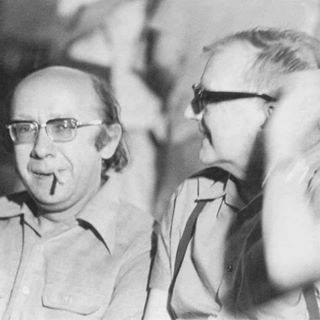
PHOTO: Rozhdestvensky living the healthy lifestyle with Dmitri Shostakovich
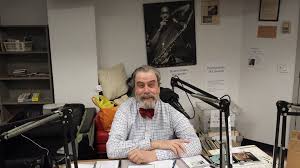
Radio personality Teri Noel Towe rises from the ashes like a bewhiskered phoenix. Tune in this morning to hear his third show of the summer, from 9:30 a.m. to 12 p.m. EDT on WKCR-FM New York, 89.9 FM and wkcr.org.
As related in the Gospel of Luke, a young wastrel burns through his family fortune, then returns home to the arms of his forgiving father. The son’s more responsible, elder brother is none too happy, but the father explains that since the younger son has repented and returned, as if from the dead – in essence, was lost, and is now found – there is cause for celebration.
This Sunday night on “The Lost Chord,” it’s an off-center Father’s Day tribute, as we listen to ballet music inspired by the Parable of the Prodigal Son.
We’ll hear a late, folk-inspired score by the Swedish composer Hugo Alfvén, staged in honor of his 85th birthday in 1957, and Sergei Prokofiev’s alternately pungent and transcendentally lyrical opus, written for the Ballets Russes in 1928. The latter was developed simultaneously with Prokofiev’s Symphony No. 4 and shares much of the same thematic material.
Father knows best. I hope you’ll join me for “Son Dance,” ballet music inspired by the Prodigal Son for Father’s Day, this Sunday night at 10:00 EDT, on WWFM – The Classical Network and wwfm.org.
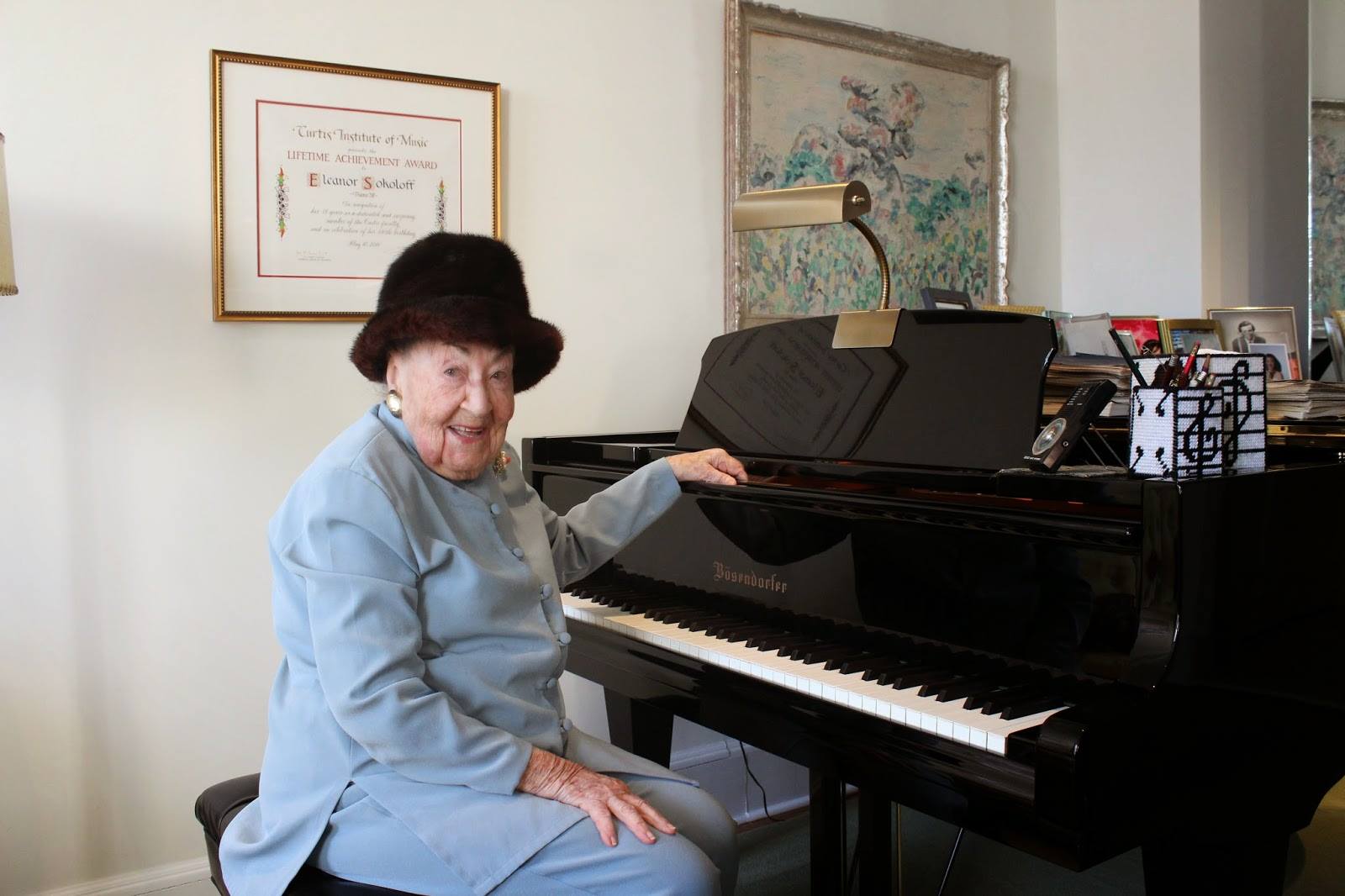
In very loose connection with an article I am writing about organist Gordon Turk, I happened to google yesterday Eleanor Sokoloff. Turk had studied piano with Sokoloff’s husband, Vladimir, at the Curtis Institute of Music in Philadelphia.
Eleanor too is a pianist and pedagogue at Curtis. She began teaching there in 1936. Among her countless pupils were Lambert Orkis, Susan Starr, Hugh Sung, Leon McCawley, and Keith Jarrett. Eleanor has nothing at all to do with the article. I was just curious to see if she is still around and what she is up to. Oh, she is still around, all right. Today, Eleanor turns 104.
I recollect attending concerts at Curtis’ Field Hall, back in the 1980s, and the Sokoloffs were seemingly always in attendance. Vladimir had also served as a pianist with the Philadelphia Orchestra. He died in 1997.
In 1995, I became Eleanor’s neighbor, when I opened a bookshop on 17th Street, below Latimer. My morning dog walks would take me past the Sokoloff residence, situated between the old Rittenhouse Medical Bookstore (since demolished) and I believe a former residence of Leopold Stokowski, which had been turned into an art gallery. Eleanor would frequently be standing at her front door, and she would always smile and give a friendly wave. When she wasn’t at the door, it meant she had a pupil, and music would flood the streets.
According to what I can find out about her on the internet, she continues to teach to this very day. Of course, in music there is really no involuntary “retirement,” and Curtis has a history of venerable pedagogues. The pianist Mieczyslaw Horszowski taught there until a few weeks before his death in 1993. But Sokoloff has Horszowski beat. He hadn’t even reached 101.
Happy birthday, Eleanor. Long may ye reign.
Here’s a mesmerizing two-part interview with Sokoloff, conducted by Hugh Sung, when she was 100:
Anyone out there know that Lee Van Cleef (a) was born in Somerville, NJ; and (b) began his career as an accountant? Would the IRS ever second-guess this guy?
He also chased submarines during WWII, only to chop off his finger while building his daughter a playhouse.
Van Cleef went from bit-part villain’s henchman in films like “High Noon” and “The Man Who Shot Liberty Valance” to international superstar thanks the Italian “spaghetti western” circuit. Enjoy music from Sergio Leone’s “Dollars” Trilogy (“A Fistful of Dollars,” “For a Few Dollars More,” and “The Good, the Bad and the Ugly”), composed by Ennio Morricone, and Gianfranco Parolini’s “Sabata” Trilogy (including “Sabata” and “Return of Sabata”), composed by Marcello Giombini. There will be plenty of spaghetti for everyone on “Picture Perfect,” this Friday evening at 6:00 EDT, on WWFM – The Classical Network and wwfm.org.