
Category: Daily Dispatch

  • Earworm Explained What It Is and How to Stop It

    Earworm Explained What It Is and How to Stop It

    What exactly is an earworm?

    In case you don’t know, in the parlance of the day, an earworm is a piece of music that gets stuck in your head, so that you “hear” it over and over and over again. It’s kind of a “stuck song” syndrome. This could be pleasurable for a short while, but can also be torturous as the melody becomes so embedded that it can literally haunt your dreams.

    As you may be aware by now, we are in the midst of “Play It Again,” a special membership drive at The Classical Network, for which we have solicited lists of favorite pieces from WWFM hosts, partners, and listeners. We have been using these to try to generate captivating playlists and, by extension, a sense of community, as we play off of our shared passions, in the hopes of converting recognition of those commonalities into revenue for the station. You have to admit, it’s certainly a lot more involving than your run-of-the-mill pledge drive.

    Nevertheless, we found ourselves fighting hard yesterday afternoon to try to engage our listeners. It was as we were gazing at the seemingly unattainable mini-goal of $10,000, which unaccountably continued to shimmer over the burning sands like a mirage, that David Osenberg and I got into a discussion about earworms. This was prompted by my playing of music from “Raiders of the Lost Ark,” which had turned up on the lists of a couple of our hosts. One listener emailed to thank us a lot (sarcasm noted), since now he would not be able to get “Raiders” out of his head for the rest of the day.

    It was then that I recollected an article I had read a couple of years ago about some scientific studies that had been done on the nuisance of the earworm. This I turned into a sales pitch – if we reached our goal of $10,000, I would reveal a surefire antidote for the earworm, and no one would ever again suffer through another restless night precipitated by John Williams.

    It turned out it worked. We met our goal, and I shared the knowledge that studies have found, for one reason or another, that singing “God Save the Queen” is the remedy. (Another listener, perhaps nervous that some could surrender to latent colonial tendencies, called in to point out one could also sing “My Country, ‘Tis of Thee.”)

    In case you missed it, you can read all about the study here (or google it):

    https://www.independent.co.uk/arts-entertainment/music/earworm-catchy-tune-song-nursery-rhymes-god-save-the-queen-a7395911.html

    In any case, we continue to delight in a sense of discovery as we fan through everyone’s favorites. This afternoon at 5:00 EDT, the Big Countdown of the greatest favorites – the pieces that turned up on the most lists – begins. This will continue throughout the day tomorrow.

    If you haven’t had a chance to contribute, consider the value of the information you have learned here today, and drop a few bucks in the jar, so that WWFM – The Classical Network can continue to share new discoveries, imperishable standards, and sound medical advice. We are caught in the inexorable pull of the end of our fiscal year. Toss us a rope at 1-888-232-1212 or at wwfm.org. Thank you for your support!
  • Dvořák Wagner & Marlboro Music Festival

    Dvořák Wagner & Marlboro Music Festival

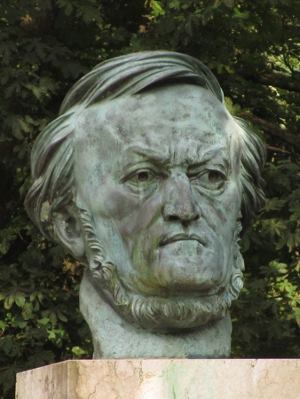
    In an interview granted in 1885, Bohemian composer Antonin Dvořák expressed his early admiration for Richard Wagner. Wagner visited Prague in 1863. Dvořák recalled, “I was perfectly crazy about him, and recollect following him as he walked along the streets to get a chance now and again of seeing the great little man’s face.” General opinion seems to be that the Czech master outgrew his infatuation by the 1870s – but perhaps not entirely.

    The two composers will be reunited in spirit on this week’s “Music from Marlboro.” Tying in with The Classical Network’s end-of-the-fiscal-year fundraiser, “Play It Again,” I’ve selected two works from the lists of favorites submitted last week by WWFM hosts and listeners. These will be performed, in their entirety, by musicians from the legendary Marlboro Music Festival.

    So as not to spoil the surprise(s), I won’t tell you what they are in advance, but I do hope you’ll tune in, and I hope you’ll support us with your financial contribution at 1-888-232-1212, or online at wwfm.org.

    We’re now in our second day of sharing YOUR playlists. You never know from one moment to the next what we’ll be playing. In the spirit of the occasion, I won’t know from one moment to the next what I’m doing – but you’re guaranteed I will execute it with such grace, beginning this afternoon at 4 p.m. EDT. “Music from Marlboro” starts at 6.

    Thank you for supporting WWFM – The Classical Network!

    Marlboro School of Music and Festival: Official Page

  • WWFM Listener Favorites Countdown Week

    WWFM Listener Favorites Countdown Week

    Mom always liked you best. Okay, so we really do play favorites on The Classical Network.

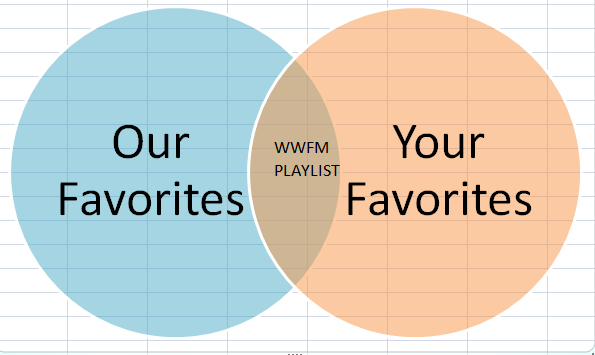
    For the remainder of this week, the bulk of our daytime programming will be drawn from “favorites” lists submitted by WWFM staff, guest programmers, and listeners just like you. This should provide a lot of fascinating Venn diagrams as, for instance, we learn what pieces David Osenberg, Glenn Smith, Alice Weiss, and Rachel Katz have in common, or how many listeners hold dear the same Korngold aria as Classic Ross Amico. On Friday, we’ll stack up the pieces with the most votes, and enjoy a classical music countdown.

    Remember, this is also the end of our fiscal year. We’re all going to try to have a lot of fun with this, but we will also be involved in the very serious business of trying to raise the money to keep your favorite classical music station in the black. Don’t think that your contribution won’t make a difference. Donate now at 1-888-232-1212, or online at wwfm.org.

    Thank you for your support. Mom always did like you best. Our “Play It Again” drive gets underway at 9 a.m. EDT. I’ll be along at noon to spin some of our favorites, on WWFM – The Classical Network and wwfm.org.

  • Memorial Day Music on The Classical Network

    Memorial Day Music on The Classical Network

    It looks like it’s turned out to be a gray picnic day in the Trenton-Princeton area. Nonetheless, I’ll be on hand this afternoon at The Classical Network to help lend a little color to your Memorial Day.

    I hope you’ll join me for music of reflection, sacrifice and hard-won victory, as we remember those who gave everything so that we could enjoy the leisure and security of days like today, on which we relax and share food with friends and family.

    Some of the selections will be Memorial Day specific, honoring our war dead; some will be classics composed during World War II; some will be works written for the U.S. military; and some will be more generalized nostalgic throwbacks to an idealized American past.

    Tune in, remember, and give thanks, this afternoon from 4 to 7 p.m. EDT, on WWFM – The Classical Network and wwfm.org.

  • Volcanic Eruptions in Classical Music

    Volcanic Eruptions in Classical Music

    When is cauliflower not good for you? When it turns out that it’s actually Mount St. Helens.

    Mount St. Helens blew on May 18, 1980, killing 57 people, reducing hundreds of square miles to wasteland, and causing over $1 billion in damage. It also happened to inspire a symphony by Alan Hovhaness.

    This Sunday night on “The Lost Chord,” with so much Hawaiian volcanic activity in the news of late, I thought it a good time to revisit Hovhaness’ “Mount St. Helens” Symphony, alongside two works by Icelandic genius Jon Leifs.

    Hovhaness was moved to write his Symphony No. 50 in the wake of Helens’ cataclysmic eruption, the deadliest in U.S. history. The composer always viewed mountains as symbols of man’s attempt to know God – symbolic meeting places between the mundane and spiritual worlds.

    The friction of the natural and the spiritual inform the progression of the symphony, from a sense of grandeur in the first movement, a prelude and fugue in praise of Helens; the placidity of Paradise Lake, the beauty of which disappeared forever; and the volcano itself, recalled in the third and final movement, most percussively rendered. The violence subsides, and the dawn hymn of the opening returns in triumph.

    Hovhaness’ volcano symphony is like a walk in the park alongside Leifs’ mad inspirations. Leifs’ “Hekla,” from 1961, is probably the closest you’ll ever want to get to a volcanic eruption. Requiring 19 percussionists banging away on anvils, stones, sirens, plate bells, chains, shotguns, cannons, and a large wooden stump, it has been called the loudest piece of classical music ever written. For their own well-being, the performers were instructed to wear earplugs.

    As a bonus, with what’s left of our hearing, we’ll also enjoy “Volcanic Eruption and Atonement” from Leifs’ ballet, “Baldr.”

    If there was a degree awarded for distinguished achievement in volcanic music, these composers would certainly have graduated “Magma Come Loudly.” Prepare to be blown away, this Sunday night at 10:00 EDT, on WWFM – The Classical Network and wwfm.org.


    PHOTO: That ain’t cauliflower: Mount St. Helens in 1980

Tag Cloud

Aaron Copland (93) Beethoven (95) Composer (114) Film Music (137) Film Score (143) Film Scores (255) Halloween (94) John Williams (195) KWAX (229) Leonard Bernstein (103) Marlboro Music Festival (125) Movie Music (152) Mozart (88) Opera (208) Philadelphia Orchestra (89) Picture Perfect (174) Princeton Symphony Orchestra (108) Radio (88) Ross Amico (244) Roy's Tie-Dye Sci-Fi Corner (290) The Classical Network (101) The Lost Chord (268) Vaughan Williams (103) WPRB (396) WWFM (881)

DON’T MISS A BEAT

Receive a weekly digest every Sunday at noon by signing up here


RECENT POSTS