Category: Daily Dispatch

  • Derby Day My Bet’s on Mendelssohn

    Derby Day My Bet’s on Mendelssohn

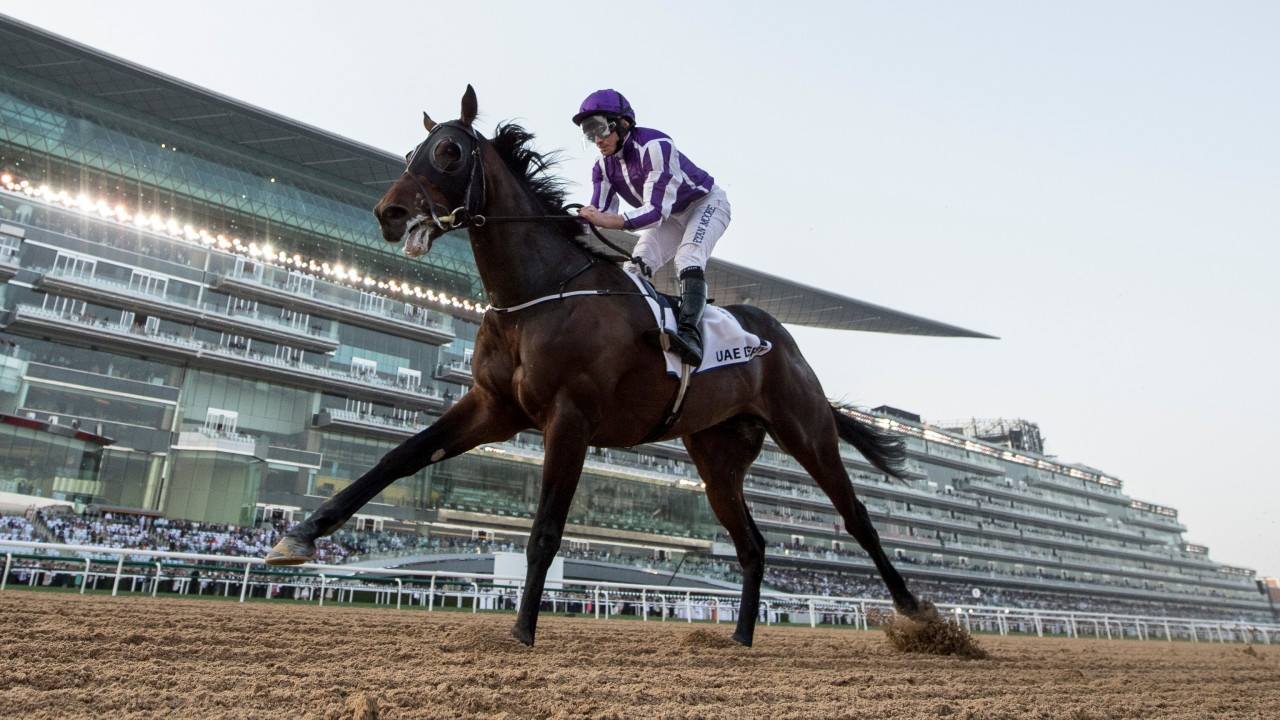
    May 5 = Derby Day. I have no idea who else is running, but my money is on Mendelssohn!

    https://www.nytimes.com/2018/05/03/sports/horse-racing/mendelssohn-kentucky-derby.html

    As every sportswriter in the land scrambles to explain the origin of his name… (“You know, the guy who wrote the Wedding March…”)

    Post time is at 6:34 EDT; the race begins at 6:46.

  • Moross’s Wild West Film Scores

    Moross’s Wild West Film Scores

    “[A]s we hit the Plains I got so excited,” recollected composer and pianist Jerome Moross. He was en route to Los Angeles to participate in the West Coast premiere of “Porgy Bess,” at George Gershwin’s invitation, in 1936, when he decided to step off the bus in Albuquerque. “…[T]he next day I got to the edge of town and then walked out onto the flat land with a marvelous feeling of being alone in the vastness, with the mountains cutting off the horizon. The whole thing was just too much for me… it was marvelous, and I just fell in love with it.”

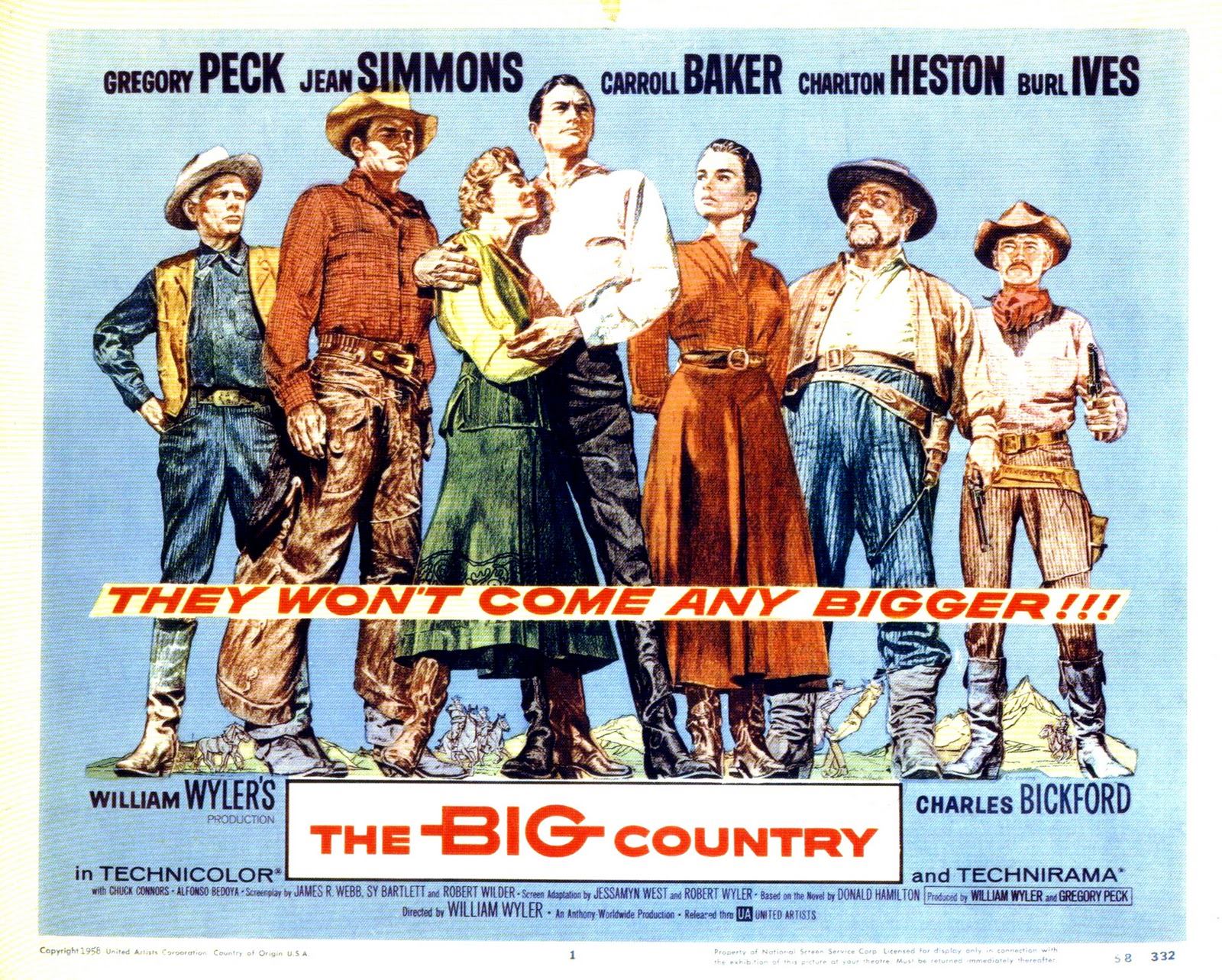
    His communion with the American West would inform his best-known music, the Academy Award-nominated score for “The Big Country” (1958). Indeed, the “western” sound would color his subsequent film and concert works, with the energetic syncopations of his native New York City bolstering an easy lyrical gift that could easily pass for genuine American folk music.

    This week on “Picture Perfect,” we’ll saddle up for selections from four of Moross’ big screen westerns. The success of “The Big Country” put Moross much in demand as a western composer. Before the trail went cold, he was enlisted for “The Proud Rebel” (1958). The film starred Alan Ladd, as a Civil War veteran with a troubled past, and Olivia De Havilland, as the ranch owner who takes responsibility for him. Tensions mount as a corrupt landowner and his sons attempt to drive the woman off her ranch.

    While “The Proud Rebel” tapped into predictable western archetypes, “The Valley of Gwangi” (1969) exploded all expectations. A cross-genre western that might best be described as “Annie Get Your Gun” meets “King Kong,” the film’s premise hinges on the discovery by an enterprising band of cowboys of an Allosaurus in a lost valley in Mexico, which of course they press into service at their Wild West show. What could possibly go wrong? In a time before starships and superheroes dominated the cinematic landscape, “Gwangi” must have been very heady stuff for six-year old boys everywhere.

    The project was conceived decades earlier by Willis O’Brien, the special effects legend who created Kong. It was left to his protégé, the great Ray Harryhausen, to bring the film to fruition. The result, while never scaling the operatic heights of “Kong,” is a fascinating mélange, a movie that is part cowboy, part creature runs amok.

    For those of a certain age, some of Moross’ most recognizable music is surely that written for the television series “Wagon Train,” which was soon discovered to bear a striking resemblance to a secondary theme in “The Jayhawkers” (1959). Fortunately for Moross, the competing studios were willing to let it go. “The Jayhawkers,” which starred Jeff Chandler and Fess Parker, is set in the days of Bleeding Kansas.

    We are borne west on music of great vitality. Breathe the open air with Jerome Moross, on “Picture Perfect,” music for the movies, this Friday evening at 6:00 EDT, on WWFM – The Classical Network and wwfm.org.

  • Kaye Sills & Merrill: Opera Meets Comedy

    Kaye Sills & Merrill: Opera Meets Comedy

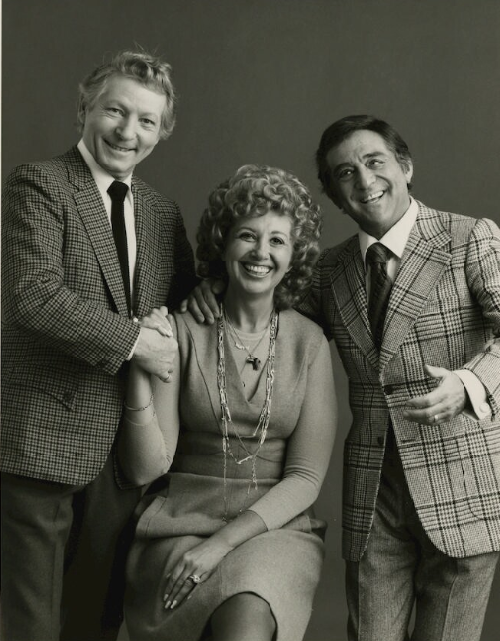
    When opera singers were still a part of the fabric of American popular culture – Beverly Sills with Danny Kaye. Does Bubbles really pay tribute to Jimmie Walker?

    Here’s the entire broadcast in color (with Turkish subtitles and intro!). The extracted Sills-Kaye routine begins around the 38 minute mark.


    Oh, Kaye! Kaye, Sills, and Robert Merrill

  • Mozart’s Gran Partita Marlboro Festival

    Mozart’s Gran Partita Marlboro Festival

    “This was no composition by a performing monkey. This was a music I’d never heard. Filled with such longing, such unfulfillable longing. It seemed to me that I was hearing the voice of God.”

    In Peter Schaffer’s “Amadeus,” it is the work that threw Antonio Salieri into ecstasies. “On the page it looked nothing – just a pulse, bassoons and basset-horns, like a rusty squeezebox. Then suddenly, high above it, an oboe, a single note, hanging there unwavering, until a clarinet took it over and sweetened it into a phrase of such delight!”

    Salieri (the character) had difficulty reconciling such sublime music with its composer’s vulgar personality. By extension, it’s easy to imagine Salieri smiling ruefully at the incongruity of a work of such sustained beauty being identified by the equivalent of an 18th century typo – the “Gran Partita.”

    Wolfgang Amadeus Mozart’s seven-movement tour de force will be featured on this week’s “Music from Marlboro.” We’ll hear it performed by an all-star cast of twelve wind players – and a double bassist – under the direction of Marcel Moyse, from the 1975 Marlboro Music Festival.

    Moyse was Marlboro royalty. Alongside Rudolf Serkin and Adolf Busch, the legendary flutist cofounded the Marlboro Music School and Festival in 1951. A veteran of Paris’ Opéra Comique, he would instruct his wind players to emulate the phrasings of the human voice in song. Learn more about this remarkable musician, who worked with some of the greatest artists of his time, in this generous biographical sketch by Marlboro Senior Administrator Frank Salomon:

    https://www.marlboromusic.org/from-the-archive/blog/archives-marcel-moyse/

    Then tune in and have a gran’ ol’ time with Mozart’s “Gran Partita,” on “Music from Marlboro,” this Wednesday evening at 6:00 EDT, on WWFM – The Classical Network and wwfm.org.

    Marlboro School of Music and Festival: Official Page

  • May Day German Lieder & Early Music NYC

    May Day German Lieder & Early Music NYC

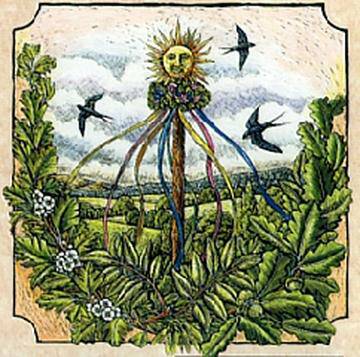
    Happy May Day!

    After a vigorous morning of dancing around the maypole, why not catch your breath and enjoy another Noontime Concert on The Classical Network – a recital of German lieder featuring Amy Bartram. Bartram is a soprano with local connections. She is currently pursuing her master’s degree in vocal pedagogy at Westminster Choir College. Bartram will perform works by Haydn, Mozart, and Schubert. At the fortepiano will be Dongsok Shin, a longtime member of Rebel: Ensemble for Baroque Music.

    The concert comes our way courtesy of Gotham Early Music Scene (GEMS). The program was presented on October 26, 2017 at St. Bartholomew’s Church, 50th Street and Park Avenue, in Midtown Manhattan, where free concerts are held every Thursday at 1:15 p.m. This Thursday, The Franklin Quartet will present “Northern Lights,” a program of rarely-heard music by Scandinavian composers, including Joseph Martin Kraus, sometimes referred to as “the Swedish Mozart,” and Johan Wikmanson, admired by Haydn. To see a complete schedule of lunchtime performances, look online at midtownconcerts.org.

    GEMS also hosts evening concerts. On Thursday at 8 p.m., the Choir of St. Luke in the Fields will perform “The Glorious Mysteries: Music of Biber and Lassus,” at the Church of St. Luke-in-the-Fields, 487 Hudson Street (just south of Christopher Street) in Manhattan. The Repast Baroque Ensemble will present “Bohemian Fantasy,” music by Bohemian virtuosi, including Biber and Schmelzer, on Friday at 8 p.m., at McKinney Chapel, First Unitarian Church, 116 Pierrepont Street in Brooklyn Heights, and on Saturday at 8 p.m, at Advent Lutheran Church, 2504 Broadway at 93rd Street in Manhattan. Amor Artis Chorus will perform Monteverdi’s “Vespers of 1610” at Holy Trinity Roman Catholic Church, West 82nd Street (between Broadway and Amsterdam Avenue) in Manhattan, on Saturday at 7:30 p.m. On Sunday at 4 p.m., Parthenia Viol Consort will explore “Purcell’s Roots: Jacobean Fantasies for Six Viols,” at the Church of St. Luke-in-the-Fields (at the address above).

    Gotham Early Music Scene is a non-profit corporation that supports and promotes artists and organizations in New York City devoted to early music – music of the Middle Ages, Renaissance, Baroque, and early Classical periods. For more information and GEMS’ events calendar, look online at gemsny.org.

    Then, after the concert, around 1 p.m., it’s back to celebrating the summer to come. Get ready for an afternoon of Morris Dancers, Jack in the Green, Hobby Horse, Jill-All-Alone, Robin and Marian, and Queen of the May. Now is the month of maying! We’ll be festooned in bells and ribbons, from 12 to 4 p.m. EDT on WWFM – The Classical Network and wwfm.org.
Tag Cloud

Aaron Copland (93) Beethoven (95) Composer (114) Film Music (137) Film Score (143) Film Scores (255) Halloween (94) John Williams (195) KWAX (229) Leonard Bernstein (103) Marlboro Music Festival (125) Movie Music (152) Mozart (88) Opera (208) Philadelphia Orchestra (89) Picture Perfect (174) Princeton Symphony Orchestra (108) Radio (88) Ross Amico (244) Roy's Tie-Dye Sci-Fi Corner (290) The Classical Network (101) The Lost Chord (268) Vaughan Williams (103) WPRB (396) WWFM (881)

DON’T MISS A BEAT

Receive a weekly digest every Sunday at noon by signing up here


RECENT POSTS