Category: Daily Dispatch

  • Golden Age Film Score Titans Steiner and Tiomkin

    Golden Age Film Score Titans Steiner and Tiomkin

    There are only so many days in a year, so it should come as little surprise that two giants in a particular field would share a birthday anniversary. Hence, we have Heifetz and Kreisler on February 2, Rachmaninoff and Busoni on April 1, and of course Brahms and Tchaikovsky on May 7. May 10 marks the birthdays of twinned titans of the Golden Age of film-scoring, Max Steiner and Dimitri Tiomkin.

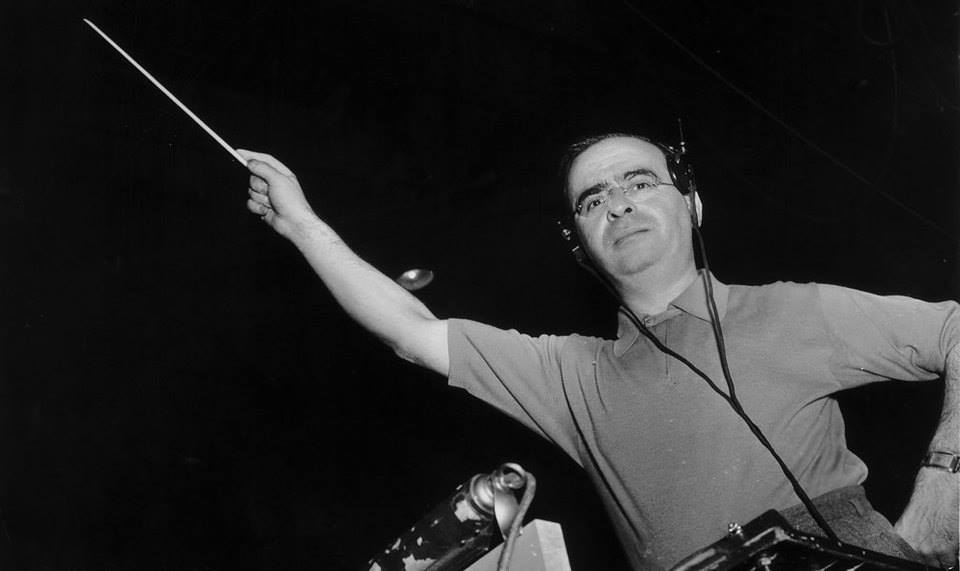
    Steiner (1888-1971), the literal godson of Richard Strauss, helped transplant the sound of fin de siècle Vienna to the realm of cinematic dreams. He composed over 300 film scores for RKO and Warner Brothers, earning 24 Academy Award nominations and winning three – for “The Informer,” “Now, Voyager” and “Since You Went Away” – though he is unquestionably better remembered today for his work on “King Kong,” “Gone with the Wind” and “Casablanca.”

    Tiomkin (1894-1979), a pupil of Alexander Glazunov, was born in Ukraine. He settled in the United States, where he composed music for films in all genres, though in the 1950s he enjoyed particular success writing for Westerns, including the Academy Award-winning “High Noon.” When asked why this would be the case, that a composer born half a world away would have such a command of this distinctly American idiom, Tiomkin replied, “A steppe is a steppe is a steppe.”

    Tiomkin was honored with four Academy Awards – three for Best Original Score (for “High Noon,” “The High and the Mighty” and “The Old Man and the Sea”) and one for Best Original Song (“The Ballad of High Noon”).

    Here’s a transcript of his acceptance speech, when winning the Oscar for “The High and the Mighty” in 1955:

    “Lady and gentlemen, because I working in this town for twenty-five years, I like to make some kind of appreciation to very important factor what make me successful to lots of my colleagues in this town. I’d like to thank Johannes Brahms, Johann Strauss, Richard Strauss, Beethoven, Mozart, George Gershwin, Jerome Kern, Wagner, Tchaikovsky, Rimsky-Korsakov. Thank you.”

    You can watch here:

    Steiner’s “Now, Voyager”:

    Tiomkin’s “Land of the Pharoahs”:


    PHOTOS: Steiner conducts (top); Tiomkin composes

  • Musicopia Inspires Young Musicians in Philly

    Musicopia Inspires Young Musicians in Philly

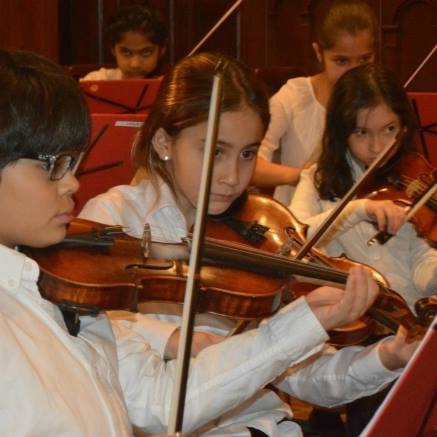
    Thanks very much to Denise Kinney for making the drive up from Philadelphia this afternoon to talk with us at WWFM – The Classical Network about Musicopia, an organization that creates opportunities for young people to experience, learn, perform, and appreciate music. Kinney is the organization’s executive director.

    As an added bonus, it was great to be able to enjoy a rare visit from, and conversation with, Maestro Mark Laycock, back in Princeton to help promote Musicopia and to tell us about his new composition written specifically for its young performers.

    Laycock’s “Musicopia! Suite for String Orchestra” will be given its world premiere as part of a free concert, which will take place this Saturday at 5 p.m. at The Church of the Holy Trinity, Rittenhouse Square, 1904 Walnut Street, in Philadelphia.

    Best wishes to Denise, Mark, and Musicopia!

  • Poulenc Beethoven Scherzo? Music from Marlboro

    Poulenc Beethoven Scherzo? Music from Marlboro

    Is it just me, or does Francis Poulenc playfully riff on the scherzo to Beethoven’s “Eroica” Symphony in the third movement of his Trio for Oboe, Bassoon and Piano? Maybe not, but I’m going to go with it, since the potential delusion serves as an excellent excuse for me to juxtapose music of Poulenc and Beethoven on this week’s “Music from Marlboro.”

    Poulenc’s Trio, composed in 1926, begins very somberly indeed, before taking off with irrepressible joie de vivre. The central movement is both elegant and wistful in a manner characteristic of this composer, and the cheeky finale is presented with an ironic smile. We’ll hear a 1972 performance featuring oboist Rudolph Vrbsky, bassoonist Alexander Heller, and pianist Seth Carlin.

    Then Pablo Casals will preside over a makeshift orchestra consisting of dozens of musicians at the 1969 Marlboro Music Festival for a warm traversal of Beethoven’s Symphony No. 4. (While Casals conducted a number of the Beethoven symphonies at Marlboro, he did not do the “Eroica.”) The legendary cellist was affiliated with the Marlboro festival for the last 13 years of his life, from 1960 to 1973.

    Robert Schumann once characterized the symphony as “a Greek maiden between two Norse giants” – certainly a provocative image. We’ll temper this very Teutonic utterance with a splash of Gallic insouciance, on “Music from Marlboro,” this Wednesday at 6 p.m. EDT, on WWFM – The Classical Network and wwfm.org.

    Marlboro School of Music and Festival: Official Page


    PHOTO: A caricature of Beethoven adorning a dinner plate designed by Jean Cocteau; decades earlier, Cocteau was responsible for promoting Poulenc and five of his composer-colleagues as the collective “Les six”

  • Laycock’s “Musicopia” Premieres in Philadelphia

    Laycock’s “Musicopia” Premieres in Philadelphia

    Sweet! Mark Laycock’s new work, “Musicopia! Suite for Orchestra” will receive its world premiere in Philadelphia this Saturday.

    Laycock should be a familiar name to music-lovers in Central Jersey. He was music director of the Princeton Symphony Orchestra for over two decades, and has returned to Philadelphia and Princeton in recent years to lead memorable concerts with the Buffalo Philharmonic, the English Chamber Orchestra, and the Philadelphia Orchestra. His performance of Beethoven’s Symphony No. 9, with the Vienna Chamber Orchestra and the Westminster Symphonic Choir, given in honor of the 100th birthday of humanitarian, philanthropist, and patron of the arts William H. Scheide, was filmed and broadcast nationally as part of PBS’ “Great Performances” series.

    Now living in Berlin, a base that allows easy access to the orchestras of Europe, Laycock has developed a quiet sideline as a composer. He has written a Flute Concerto, a Concerto for Saxophone Quartet, and the work he considers his magnum opus, “Via Dolorosa,” scored for vocal soloists, English horn, double chorus and orchestra.

    “Musicopia!” is named for the Philadelphia-based organization that provides opportunities for young people to experience, learn, perform, and appreciate music. Young performers will debut Laycock’s suite on this Saturday’s concert, which will take place at 5:00 at The Church of the Holy Trinity, Rittenhouse Square, 1904 Walnut Street.

    Learn more about the new piece and the organization’s worthy mission as I am joined by Laycock and Denise Kinney, executive director of Musicopia, this afternoon at 4:08 p.m. EDT, on WWFM – The Classical Network and wwfm.org.

  • Rutter’s Gloria with the Bach Choir

    Rutter’s Gloria with the Bach Choir

    Get your afternoon off to a glorious start with John Rutter’s “Gloria.” The “Gloria” will be the centerpiece of today’s Noontime Concert, featuring The Bach Choir of Bethlehem.

    Rutter’s “Gloria,” commissioned in 1974, is perhaps the composer’s most ambitious piece to have found permanent favor with audiences during the Christmas season. But of course the “Gloria” can be enjoyed at any time; it was given its world premiere in May. The work is a festive setting of the second part of the Latin Order of Mass, marked by fanfares aplenty. In fact, there would be no “Gloria” without the ceremonial precedent of William Walton. It’s only appropriate, then, that the concert open with Walton’s uplifting “Coronation Te Deum,” written for the 1953 coronation of Elizabeth II.

    In between will be more reflective music by American composer Morten Lauridsen – his 1980 cycle “Mid-Winter Songs,” after poetry of Robert Graves – and the choir’s namesake Johann Sebastian Bach – his Cantata 118 “O Jesu Christ, meins Lebens Licht” (“O Jesus Christ, light of my life”).

    The concert will be led by the ensemble’s long-time artistic director, Greg Funfgeld. The program was given twice – on March 17 at the State Theatre Center for the Arts in Easton, PA, and on March 18 at Bryn Mawr Presbyterian Church.

    The Bach Choir, which gave its first performance of Bach’s Mass in B minor all the way back in 1900, is America’s oldest Bach choir (established in 1898) and one of the crown jewels of the Lehigh Valley music scene. Its performances have attracted international acclaim.

    The ensemble will celebrate its 111th Annual Bach Festival in Bethlehem, PA, over the next two weekends, beginning on Friday. For tickets and a complete schedule, visit http://www.bach.org.

    Following today’s Noontime Concert, stick around for William Walton’s Symphony No. 1. Like the Graves poetry that forms the basis of Lauridsen’s “Mid-Winter Songs,” the genesis of Walton’s symphony was very much tied up with the complexities of its creator’s love-life.

    The glory of music prevails. Join me this Tuesday from 12 to 4 p.m. EDT, on WWFM – The Classical Network and wwfm.org.

Tag Cloud

Aaron Copland (93) Beethoven (95) Composer (114) Film Music (137) Film Score (143) Film Scores (255) Halloween (94) John Williams (195) KWAX (229) Leonard Bernstein (103) Marlboro Music Festival (125) Movie Music (152) Mozart (88) Opera (208) Philadelphia Orchestra (89) Picture Perfect (174) Princeton Symphony Orchestra (108) Radio (88) Ross Amico (244) Roy's Tie-Dye Sci-Fi Corner (290) The Classical Network (101) The Lost Chord (268) Vaughan Williams (103) WPRB (396) WWFM (881)

DON’T MISS A BEAT

Receive a weekly digest every Sunday at noon by signing up here


RECENT POSTS