Category: Daily Dispatch

  • Górecki’s Symphony No. 4: A Lost Chord Found

    Górecki’s Symphony No. 4: A Lost Chord Found

    A performance of his Symphony No. 3 sold over a million copies, making it one of the best-selling classical records of all time.

    This Sunday night on “The Lost Chord,” we’ll hear the last major work by Polish composer Henryk Górecki – his Symphony No. 4, subtitled “Tansman Episodes.” The piece was written in tribute to his compatriot, Alexandre Tansman, who lived most of his life in Paris. Górecki had been cajoled into writing the work by the organizer of an annual Tansman Festival, held in Łódź, the city of Tansman’s birth.

    The astounding success of his Symphony No. 3 was actually a source of consternation for Górecki. The celebrity and scrutiny thrust upon him had the effect of disrupting his routine and stirred up anguish about his future path. Remember, the Symphony No. 3 was composed in 1976. Most of the world had never even heard of Górecki before he skyrocketed to fame in 1992. That was the year that Nonesuch Records released its recording, which featured soprano Dawn Upshaw, and was conducted by David Zinman. However, in the 16 years or so between the work’s composition and its sudden, staggering popularity, Górecki had understandably moved on and continued to develop as an artist.

    The sudden recognition caused him, rather Sibelius-like, to agonize over his next symphony. The work wasn’t completed in short score until 2006. The composer died in 2010 without having orchestrated the piece. However, he did leave indications of his intentions and had played through the work at the piano for his son, Mikolaj Górecki, also a composer. It was Mikolaj who took up the task of fleshing it out into full score following his father’s death.

    The symphony was given its first performance on April 12, 2014, by the forces we’ll hear, the London Philharmonic Orchestra conducted by Andrey Boreyko, in its world premiere recording.

    Rather than reference any of Tansman’s actual music, Górecki decided to play on the letters of the composer’s name, devising a musical cipher made up of corresponding notes to act as a recurring theme. In the second movement, he also quotes Karol Szymanowski’s “Stabat Mater.” There are passing references to Stravinsky and John Adams in the work, as well, and an appearance by Wagner’s “Siegfried” theme toward the end. In general, he trades the mesmerizing lyricism of his Third Symphony for a more aggressive brand of minimalism in his Fourth.

    I thought we’d preface Górecki’s symphonic tribute with some music by Tansman himself. We’ll hear the “Partita for Cello and Piano,” written in 1954 and 1955 for the famed Spanish cellist Gaspar Cassadó. It will be performed by the Cracow Duo – Kalinowski & Szlezer, Jan Kalinowski, cello, and Marek Szlezer, piano.

    I hope you’ll join me for “Repeating Episodes” – Henryk Górecki’s Symphony No. 4 “Tansman Episodes” – this Sunday night at 10:00 EDT, on WWFM – The Classical Network and wwfm.org.


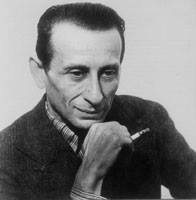
    POLE POSITIONS: Alexandre Tansman (left) and Henryk Górecki

  • Ross Amico’s Mother’s Day Radio Magic

    Ross Amico’s Mother’s Day Radio Magic

    Once upon a time (today), Classic Ross Amico beat the alarm on Mother’s Day. He drank some caffeine, took a quick shower, and double-checked his radio bag, just to be sure it was still full of music inspired by nursery rhymes and fairy tales and bedtime stories he recollected from childhood. So much nostalgia and security was contained in that bag that he had to try very hard to resist falling back to sleep.

    In fatigue and despair, he cried out to his fairy godmother, “O Fairy Godmother! Why must I get up so early on Sundays, when other, more sensible mortals get to sleep in on their days off?” Then he glanced in the bathroom mirror and noticed that he had been transformed into a raccoon.

    So he traded the family cow for some magic coffee beans at the House of Wawa and set off for Princeton University’s Bloomberg Hall. There he found the equipment left in disarray by DJ Bluebeard, who had evidently been cavorting with the Bridge Trolls. It was with some frustration and embarrassment that he began his carefully prepared air shift, since the condition of the studio directly impacted the playing of both underwriting and music, until he reconnected the machinery and located the station log, which is often the first quest of the morning. But when at last he played his first selection, the good people of New Jersey and Pennsylvania and more distant lands awoke delighted from their enchanted sleep, and were refreshed by the Raccoon-Man’s noble sacrifice.

    The Fairy Godmother smiled and waved her magic wand, and after spending the rest of Sunday in a fog, Classic Ross Amico awoke as if from an enchanted sleep to discover that it was Monday, and time to go back to work.

    Not all the nursing takes place in the nursery on Mother’s Day. I’ll call for my pipe, I’ll call for my bowl, and I’ll call for my fiddles three, from 7 to 10 EDT, on WPRB 103.3 FM and wprb.com. You’ll find me living still, if I am not yet dead, on Classic Ross Amico.

  • Nursery Rhyme Music for Mother’s Day

    Nursery Rhyme Music for Mother’s Day

    Three Blind Mice. Old King Cole. Peter, Peter, Pumpkin-Eater. A Frog He Went A-Courtin’. Favorite nursery rhymes recollected from childhood.

    Before heading out to brunch with Mom tomorrow, tune in for a musical trip down memory lane. We’ll enjoy a full playlist of works inspired by nursery songs, fairy tales, children’s books, and bedtime stories. Featured composers will include Havergal Brian, Daniel Dorff, Paul Hindemith, Libby Larsen, Robert McBride, Robert Moran, Ralph Vaughan Williams, and Grace Williams, among others

    It will be the mother of all Mother’s Day shows, this Sunday morning from 7 to 10 EDT, on WPRB 103.3 FM and wprb.com. We’ll remember Mama on Classic Ross Amico.

  • Philly Composers Gin & Dim Restaurant Lights

    Philly Composers Gin & Dim Restaurant Lights

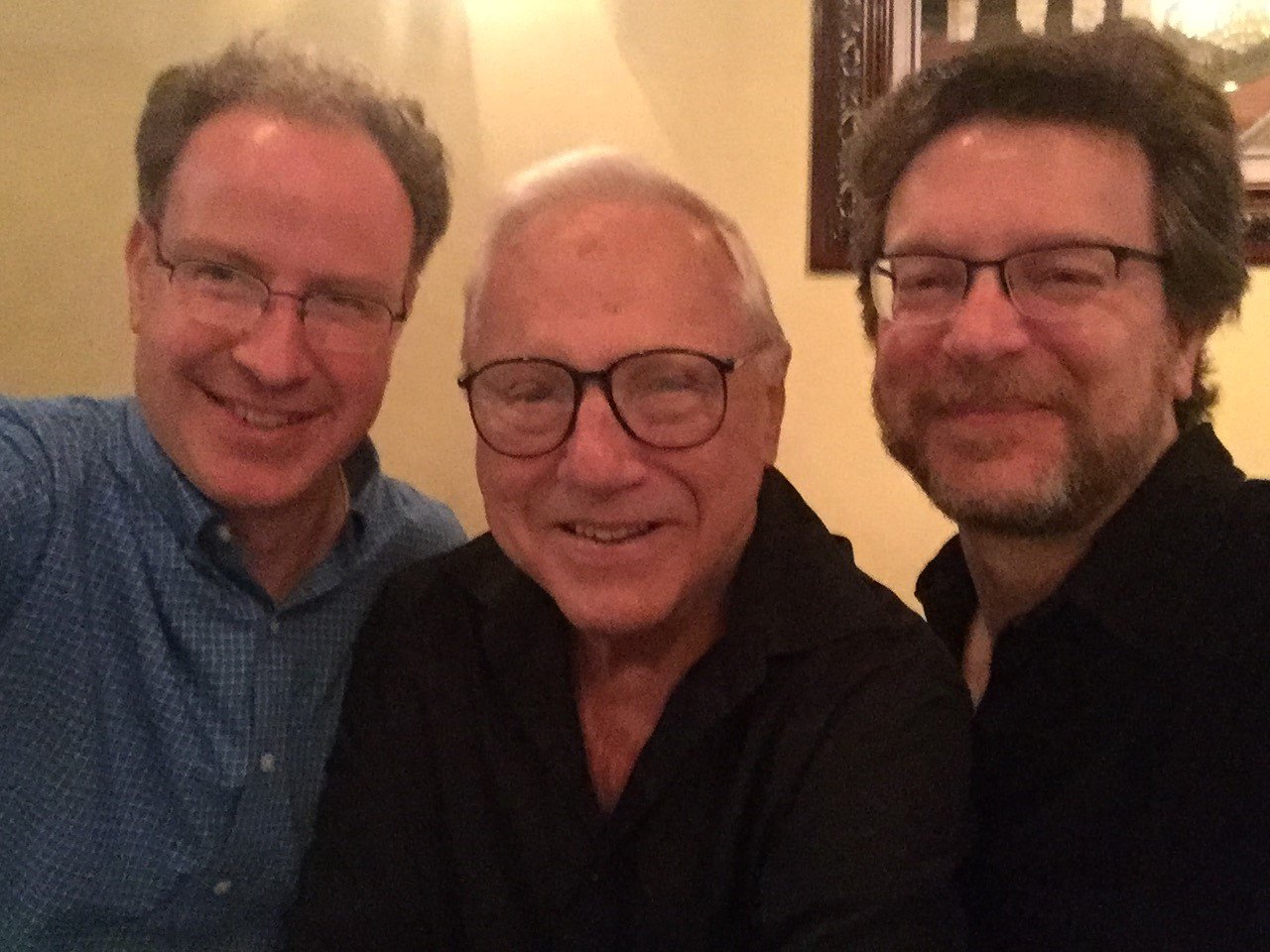
    Restaurant lighting flatters no one, but here I am at the wrong end of a gin-fueled evening with two estimable Philadelphia composers, Robert Moran and Kile Smith. Only one broken glass, and we may have over-tipped, but I think I can say with confidence that a good time was had by all.

  • Fairy Tale Film Scores for Mother’s Day

    Fairy Tale Film Scores for Mother’s Day

    With Mother’s Day right around the corner, we revisit familiar tales learned in childhood this week on “Picture Perfect.”

    George Pal’s “The Wonderful World of the Brothers Grimm” (1962) was filmed in Cinerama and features the producer-director’s trademark stop motion effects. Its all-star cast includes Laurence Harvey, Claire Bloom, Barbara Eden, Russ Tamblyn, and Buddy Hackett. The narrative incorporates a number of familiar Grimm tales, while dealing with the brothers’ real-life struggles.

    The music is by Leigh Harline. Harline was an integral part of the Disney team that scored an earlier fairy tale adaptation, “Snow White and the Seven Dwarfs.” He won two Academy Awards for his work on “Pinocchio,” including one for Best Original Song, for “When You Wish Upon a Star.”

    “The Company of Wolves” (1984), one of Neil Jordan’s earlier films, explores the psychological underpinnings of the tale of “Little Red Riding Hood,” which is presented as an allegory of adolescence and the loss of innocence. Angela Carter co-wrote the screenplay, based upon a selection of her original short stories. The film features Angela Lansbury, any number of werewolves, and Terence Stamp as the Devil. The music is by George Fenton.

    With the advent of computer animation, a snarkier, post-modern take on the fairy tale predominates, most notably with the “Shrek” series, beginning in 2001. The “Shrek” films were so successful, they led to a spin-off, centered on the character of “Puss in Boots” (2011).

    Voiced by Antonio Banderas, Puss provides ample opportunity to vamp on the actor’s swashbuckler image, especially as depicted in “The Mask of Zorro.” Likewise, the composer, Henry Jackman, chooses to rib James Horners’ “Zorro” score.

    Finally, we’ll hear selections from perhaps the finest fairy tale ever committed to film, Jean Cocteau’s “La Belle et la Bête” (“Beauty and the Beast”), from 1946. Moody, atmospheric, dreamy, clever, hypnotic, funny and romantic, sporting production design that looks like something Gustav Doré might have conceived while smoking Dutch Masters cigars, Cocteau’s masterpiece stars Jean Marais and Josette Day.

    The alternately mysterious and majestic score is by Georges Auric. Cocteau, you’ll recall, was the one-man publicity machine that propelled Auric and his composer-colleagues, Francis Poulenc, Darius Milhaud, Arthur Honegger, Germaine Tailleferre, and Louis Durey, to fame in Paris circa 1920, dubbing them “Les Six.”

    I hope you’ll join me for an hour of once-upon-a-time and happily-ever-after, on “Picture Perfect,” music for the movies, this Friday evening at 6:00 EDT, on WWFM – The Classical Network and wwfm.org.

Tag Cloud

Aaron Copland (93) Beethoven (95) Composer (114) Film Music (137) Film Score (143) Film Scores (255) Halloween (94) John Williams (195) KWAX (229) Leonard Bernstein (103) Marlboro Music Festival (125) Movie Music (152) Mozart (88) Opera (208) Philadelphia Orchestra (89) Picture Perfect (174) Princeton Symphony Orchestra (108) Radio (88) Ross Amico (244) Roy's Tie-Dye Sci-Fi Corner (290) The Classical Network (101) The Lost Chord (268) Vaughan Williams (103) WPRB (396) WWFM (881)

DON’T MISS A BEAT

Receive a weekly digest every Sunday at noon by signing up here


RECENT POSTS