We convene this Sunday morning on WPRB for much marvelous music inspired by our wondrous world, a collection of captivating classical creations calculated to corral our consciousness, pieces to prod our promise as protectors and preservationists as precursor to properly ‘ppreciating our precious planet.
Surf’s up for Earth Day, this Sunday morning from 7 to 10 EDT, on WPRB 103.3 FM and wprb.com. Attend the astral airwaves with Classic Ross Amico.
Alluding to the alliterative artistry of Stan “The Man” Lee, illuminatingly illustrated by the illustrious Jack “King” Kirby. Excelsior!
This Sunday morning on WPRB, I’ll be playing a lot of garbage. So what else is new? No, really. One of my featured works will be the “Garbage Concerto,” by Canadian composer Jan Järvlepp. The piece incorporates percussion instruments fashioned out of recyclable material. I thought it only appropriate, since tomorrow is Earth Day.
We’ll also hear two sizeable choral works in the form of the “Missa Gaia: Mass for the Earth,” by Libby Larsen, and “Hymn to the Earth,” by Edward Joseph Collins, in 1929 acting well ahead of the modern environmentalism curve.
Take a walk in the forest with a symphonic poem by Mikalojus Čiurlionis. View the earth from the International Space Station with a cello concerto by Osvaldo Golijov. Toot on a conch shell with Peter Sculthorpe.
Why on Earth would you want to miss it?
Every dog may have its day, but there’s only one Earth. Celebrate Earth Day, this Sunday morning from 7 to 10 EDT, on WPRB 103.3 FM and wprb.com. I’ll be nothing if not earthy, on Classic Ross Amico.
This week on “Picture Perfect,” a few days in advance of the surmised birthday of William Shakespeare (on April 23, 1564), it will be much ado about Patrick Doyle and his music composed for the films of Kenneth Branagh.
In 1987, Doyle joined Branagh’s Renaissance Theatre Company, for which he provided incidental music. Two years later, Branagh – and by extension, Doyle – made a leap to the big screen, where they achieved a remarkable feat, rethinking Shakespeare’s “Henry V.” Remember, this is the play that propelled Laurence Olivier to worldwide fame in 1944, both as a filmmaker and the Bard’s most celebrated interpreter, and William Walton’s score is regarded as one of the best of all time.
Branagh’s version is quite different. Though equally rousing, it doesn’t shy away from Henry’s more complicated nature and the grittier aspects of what it means to go to war. It was a bold gamble, but one that paid off. Not only did this revisionist “Henry” receive nearly universal acclaim, the film was a box office success, and Branagh would be nominated for two Academy Awards, like his predecessor, in the categories of Best Actor and Best Director. Certainly the film’s score deserved to be recognized – but in the year of “The Little Mermaid,” it failed even to secure an Academy Award nomination.
An interesting footnote: Doyle himself is the baritone who introduces “Non nobis Domine,” a prayer of thanksgiving, following the Battle of Agincourt.
In 2006, Branagh directed an adaptation of “As You Like It.” As has become his custom, he took a celebrity approach to its casting, although perhaps not so widely uneven as some of the cameos in his big screen “Hamlet.” Kevin Kline appears as Jacques; Alfred Molina is the fool, Touchstone; and Branagh regulars, Brian Blessed and Richard Briers appear, as well.
The most radical liberty taken with the play is that Branagh recasts the events to take place among English traders in 19th century Japan. The language remains firmly rooted in Shakespeare’s text, although there are striking cross-cultural elements, including ample kimonos, kabuki theatre, ninjas, and a sumo wrestler. Still, it’s a long way off from the astounding bomb that was Branagh’s American Songbook-interpolated “Love’s Labour’s Lost.”
While Olivier’s “Hamlet” won four Academy Awards in 1948, including those for Best Picture and Best Actor, Branagh’s 1996 version is cinema’s first adaptation of the complete text. It is, perhaps, an uneven interpretation, with some puzzling casting choices – including walk-ons by Jack Lemmon, Robin Williams and Gerard Depardieu – but there are enough merits, certainly, to make the four-hour trek worthwhile.
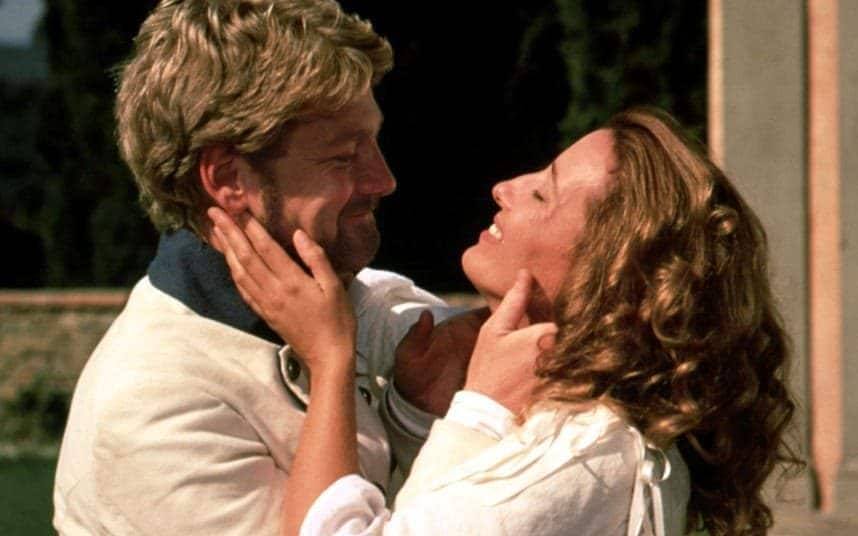
Finally, Branagh teamed with his then-wife, Emma Thompson, for a titanic battle of wits as Benedick and Beatrice in his 1993 adaptation of “Much Ado About Nothing.” Again, the film features an eclectic supporting cast of classically trained actors and pop Hollywood phenomena. Briers, Blessed, and Imelda Staunton share screen time with Denzel Washington, Michael Keaton and Keanu Reeves. Yet, somehow, despite the different nationalities, ethnicities, and accents, the entire enterprise works. There is an exuberance to the over-the-top opening sequence which sets up a momentum that carries through the rest of the film.
Sigh no more, but join me for the Shakespeare scores of Patrick Doyle on “Picture Perfect,” this Friday evening at 6:00 EDT, on WWFM – The Classical Network and wwfm.org.
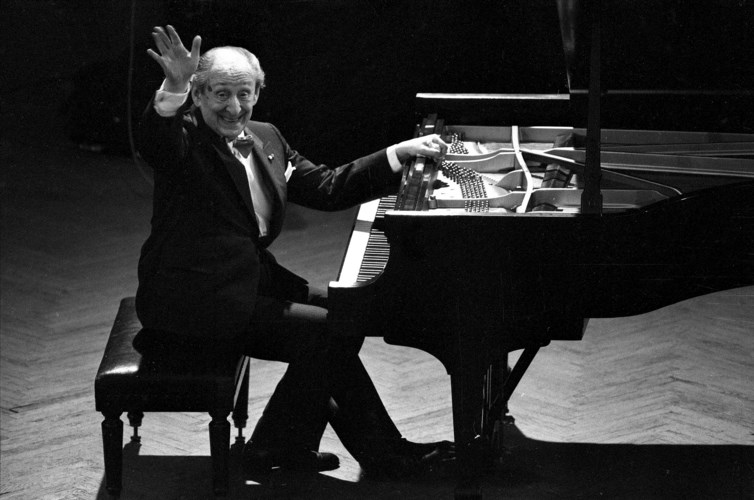
He shook hands with Mickey Mouse, married Gloria Vanderbilt, and signed a ten-year recording contract at the age of 90. Why, it’s LEOPOLD! Join me this afternoon at 4:00 on The Classical Network as we dip a toe into the recorded legacy of Leopold Stokowski, on his birthday.
It’s also the anniversary of the birth of famed film composer Miklós Rózsa. Rózsa titled his autobiography “A Double Life.” Following his lead, we’ll hear examples of both his film and concert music. And I suppose – Franz von Suppé also having been born on this date – we’ll toss in one of Suppé’s frothy overtures, as well. Like Stokowski, Suppé got a fair amount of mileage out of being parodied in cartoons, so we should all be thankful for the movies, for having granted wide exposure to all three of today’s birthday celebrants.
At 6:00, it’s another “Music from Marlboro.” This week, we’ll hear works by two composers of German origin, who travelled very different routes, Richard Strauss (1864-1949) and Paul Hindemith (1895-1963).
Both men found much notoriety as nerve-shattering iconoclasts – Strauss with his operas “Salome” and “Elektra” and Hindemith with his raucous works of the 1920s. Then they settled into respectability, Strauss ageing into the elder statesman of Romantic opulence, and Hindemith becoming an influential teacher at Yale. The two men chose different paths during the Nazi Regime. Hindemith, denounced as an “atonal noisemaker” by Goebels, left for America, by way of Switzerland and Turkey, while Strauss, in his 70s with the outbreak of war, remained at home, hoping to preserve and promote German music and to protect his Jewish daughter-in-law and grandchildren. While understanding Strauss’ importance as a propaganda tool, Goebels wasn’t too fond of his music, either, referring to him privately as a “decadent neurotic.”
But we’ll avoid all that, and instead listen to Strauss at the very beginning of his career, in 1883-84, and a Piano Quartet in C minor completed at the age of 20. Interestingly for this composer who became celebrated for the apotheosis of the lavish tone poem, Strauss here channels his admiration for Johannes Brahms, and in a genre not generally associated with a follower of the post-Wagnerian “New Music School.” Brahms was at the height of his fame while the young Strauss was living in Berlin. In fact, Strauss attended the premiere of Brahms’ Fourth Symphony. This performance of the Piano Quartet promises to be a very special one, with Walter Klien at the keyboard, heard at the 1972 Marlboro Music Festival, in his early 40s and at the peak of his powers.
Hindemith was evidently feeling his oats when he launched into his series of Kammermusiken, 20th century analogues to the Bach Brandenburg Concertos, but with a little bit of an ironic edge. Hindemith was about 26 when he wrote his exuberant Kammermusik No. 1, in 1922, the piece sounding like a post-modern mash-up of “Petrushka,” the Rondo-Burleske from Mahler’s Ninth Symphony, and hot jazz. Watch out for that siren! The performance, from 2016, will feature an ensemble of 12 Marlboro musicians under the direction of another great pianist, Leon Fleisher.
Two young composers show what they can do, one in reverence and the other evidently not, on “Music from Marlboro,” this Wednesday evening at 6:00 EDT, on WWFM – The Classical Network and wwfm.org.
Marlboro School of Music and Festival: Official Page