Category: Daily Dispatch

  • Tax Day Delay Wealth & Penury on WPRB

    Tax Day Delay Wealth & Penury on WPRB

    April 15th falls on a Sunday this year – which means we can procrastinate on filing income tax for an additional 48 hours! (Monday is Emancipation Day in Washington, DC, so nothing is due until Tuesday.)

    Even so, we’ll try to get a leg up, this Sunday morning on WPRB, as we’ll be scrolling paper into the adding machine and dreaming of a fat return to the accompaniment of music about wealth and penury, found and lost money, precious metals, careless spending, treasures sought, currency and coins, and good old fashioned tax protest.

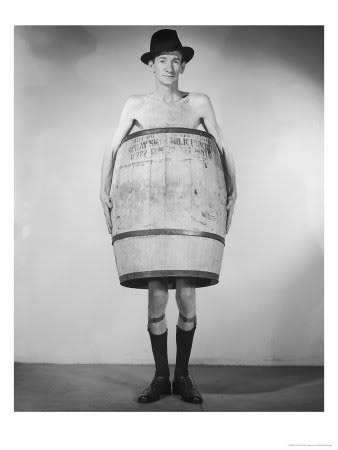
    Lady Godiva rode naked through the streets of Coventry in protest of exorbitant taxation. On the other side of the coin, when told that the people had no bread, Marie-Antoinette is alleged to have uttered, “Let them eat cake!” Both will be represented musically, with works by Vítězslav Novák and Franz Joseph Haydn.

    We’ll seek treasure with Franz Schreker. We’ll look with sardonic befuddlement upon “The Age of Gold” with Dmitri Shostakovich. Antonio Salieri will show us what it is like to be rich for a day. Beethoven will rage over a lost penny. Franz Lehár will shower us with gold and silver. We’ll gaze with envy upon Kurt Atterberg’s “Dollar” Symphony.

    Of course, there will be music from “The Threepenny Opera,” by Kurt Weill. We’ll also hear Weill sing his own song, “Very, Very, Very,” from “One Touch of Venus,” which begins, “One way to be very wealthy is to be very, very, very rich…” Sound advice, and very, very, very true.

    We’ll be dumping tea into the harbor and preparing the tar and feathers, this Sunday morning from 7 to 10 EDT, on WPRB 103.3 FM and wprb.com. There will be no tax on your patience, when listening to Classic Ross Amico.

  • Friday the 13th Big Cats on Film Music

    Friday the 13th Big Cats on Film Music

    Friday the 13th! Beware of ladders, broken mirrors, and… black cats?

    Unluckily, this week on “Picture Perfect, the focus will be on metaphorical big cats.

    Simone Simon’s barely repressed desires are made manifest in Val Lewton’s “Cat People” (1942). Lewton was a master of suggestion, with a majority of the horrors in his films imagined, rather than seen. Part of the approach was practical, the result of shoestring budgets imposed by RKO. Whatever the case, the insinuating weirdness undeniably produced psychological chills. In fact, it was only as a concession to the studio that a literal big cat was included at all. The music was by RKO workhorse Roy Webb.

    Sean Connery plays a Berber chieftain who faces off against Teddy Roosevelt in “The Wind and the Lion” (1975). In a letter to Roosevelt (played in the film by Brian Keith), Connery’s character writes, “I, like the lion, must stay in my place, while you, like the wind, will never know yours.” Jerry Goldsmith provided one of his best scores for the Moroccan adventure. In fact, he was fairly confident he finally had a lock on the Oscar. He experienced a harsh reality check when he went to see “Jaws.” (Goldsmith would win his only Academy Award the following year for his music to “The Omen.”)

    Luchino Visconti’s epic telling of Giuseppe Tomasi di Lampedusa’s “The Leopard” (1963) is a melancholy exploration of the fading Sicilian aristocracy. A bewhiskered Burt Lancaster plays Prince Fabrizio, who feels himself slipping into obsolescence. Nino Rota gives the film a full-blooded, operatic soundtrack, full of lyricism and pathos.

    Finally, Lyn Murray provides the breezy accompaniment for Alfred Hitchcock’s “To Catch a Thief” (1955), with Cary Grant a reformed burglar, known as The Cat, who attempts to clear himself of some “copycat” crimes while romancing Grace Kelly on the French Riviera.

    We throw salt over our left shoulder and caution to the winds, with an hour of music for metaphorical big cats, on “Picture Perfect,” this Friday the 13th at 6 p.m. EDT, on WWFM – The Classical Network and wwfm.org.

  • English Horn Tears Schindler’s List

    English Horn Tears Schindler’s List

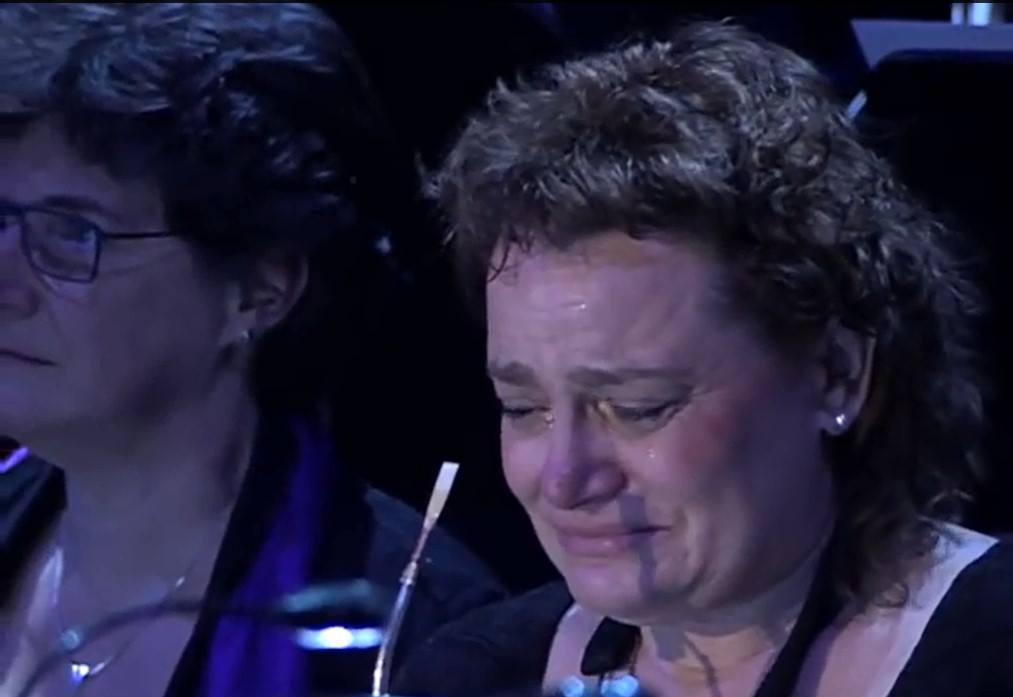
    An English hornist is moved to tears while performing music from “Schindler’s List.”

    Davida Scheffers suffers from an extremely painful muscular condition that disrupted a professional career. Here she is given another shot, with the Netherlands Symphony Orchestra. Jaap van Zweden, music director designate of the New York Philharmonic, was chief conductor of the ensemble from 1996 to 2005. The solo violinist is Simone Lamsma. That’s Scheffers’ daughter beaming, in the audience, on her 18th birthday.

  • Yom HaShoah Remembering Composers Lost to Auschwitz

    Yom HaShoah Remembering Composers Lost to Auschwitz

    I wrote about this several years ago, but it’s worth revisiting on this Yom HaShoah (Holocaust Memorial Day):

    On October 17, 1994, three of the most promising composers of their generation were snuffed out in the gas chambers at Auschwitz. Pavel Haas, Hans Krása and Viktor Ullmann were all transported from Theresienstadt (Terezin), the Nazi propaganda camp, three days after their final concert on October 14th. With them was the famed conductor Karel Ančerl, who had led the performances.

    Immediately upon arrival, Krása, Ullmann and Ančerl were marked for death by Josef Mengele, while Haas was selected to join the forced laborers. Then all at once Haas began to cough. Ančerl was passed over and Haas was sent to be gassed in his place.

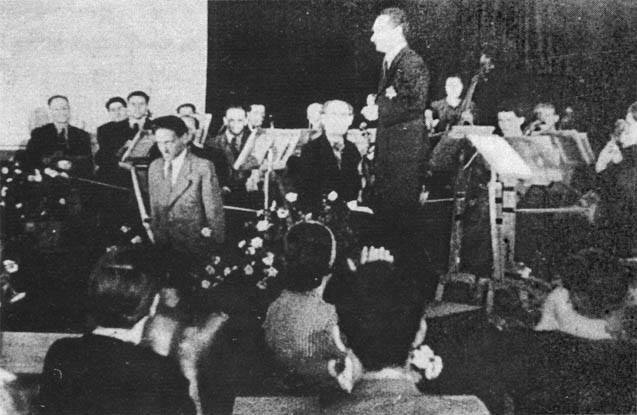
    In the propaganda film “Theresienstadt,” Haas is shown taking a bow after a performance in Terezin of his “Study for String Orchestra,” a work he had written in the camp. Ančerl can be seen on the podium.

    In the same film (subtitled “The Fuhrer Gives the Jews a City”), children sing a selection from Krása’s opera “Brundibár.” When filming wrapped, having served their purpose, 18,000 prisoners, Haas and the children included, were deported to Auschwitz. By a large margin, most did not survive.

    Haas had been despondent upon his arrival in Terezin. It was fellow composer Gideon Klein who urged him to continue to create. (Klein would die under unclear circumstances in 1945.) Haas wrote at least eight compositions during his internment. His “Study for String Orchestra,” rescued by Ančerl after the liberation of the camp, would become his best known music. Haas was at work on a large-scale symphony at the time of his deportation. The surviving turso of the piece was orchestrated by Zdeněk Zouhar in 1994.

    It was Ančerl himself who related the circumstances of Haas’ death to the composer’s brother after the war. Ančerl had lost his own family, his wife and a young son. He himself went on to a bright future. He became artistic director of the Czech Philharmonic in 1950, in which capacity he championed the great Czech composers and helped to foster a distinctly Czech sound in orchestral performance.

    After the Warsaw Pact invasion, he left Czechoslovakia for Toronto, Canada, where he served as music director of the Toronto Symphony Orchestra until his death in 1973. None of it would have happened, if not for a quirk of fate.

    Thirty years after his death, the music of Haas and his colleagues began to be performed with much more frequency. Much of it is now available in recordings. Listening to it, one can’t help but marvel at the will to create and to survive, even under the most horrific of circumstances, and lament at how history, musical and otherwise, might have been very different had those interned been allowed to live out their natural lives.

    Clips from “Theriesenstadt,” featuring a performance of “Brundibár,” particularly affecting when we realize that few of the children survived:

    Haas’ “Study for String Orchestra:”


    PHOTO: Pavel Haas, inadvertent savior of Karel Ančerl, takes his final bow

  • Vera’s Story Holocaust Remembrance on WWFM

    Vera’s Story Holocaust Remembrance on WWFM

    Have you heard Vera’s story?

    Vera Herman Goodkin was just shy of her 9th birthday when her hometown of Uzhorod, Czechoslovakia, was occupied by the Nazis. She spent the next four years in hiding, until she was finally rescued and taken to freedom under the protection of Swedish diplomat Raoul Wallenberg. “Vera’s Story: A Holocaust Remembrance” will be rebroadcast on WWFM The Classical Network today at 11 a.m. This riveting and award-winning program also includes music by composers who fled Europe or perished during the War, as well as works written in memory of the millions of victims of the Holocaust.

    Later, between 4 and 6 p.m., we’ll hear music by Gideon Klein and Pavel Haas, who lost their lives at Fürstengrube and Auschwitz, respectively, alongside performances by Holocaust survivors, including cellist Janos Starker, conductor Karel Ančerl, pianist Edith Kraus, harpsichordist Zuzana Růžičková, and violinist Henry Meyer, a founding member of the LaSalle Quartet. Růžičková died in September at the age of 90, and Kraus lived to be 100. Also featured will be Eric Zeisl’s uplifting “Requiem Ebraico,” written in memory of his father, and some of John Williams’ music for “Schindler’s List.”

    Then, at 6 p.m., it’s another “Music from Marlboro.” The hour will begin with a Divertissement for Oboe, Clarinet and Bassoon, by Erwin Schulhoff, a composer who was intercepted by the Nazis while in the process of fleeing Czechoslovakia for the Soviet Union. He died of tuberculosis in a concentration camp in Bavaria.

    The program will conclude on a happier note, with Rudolf Serkin and friends performing Antonin Dvořák’s Piano Quartet No. 1 in D major. Serkin had lived with violinist Adolf Busch and his family in Berlin in the 1920s, as he established himself as one of Europe’s outstanding young pianists. The musicians remained in Germany until 1933. Busch, who was not Jewish, vehemently opposed the National Socialists. With the rise of Adolf Hitler, Serkin and the Busches relocated to Switzerland. They arrived in the United States with the outbreak of war in 1938, and settled in Vermont in the 1940s. There, alongside flutist Marcel Moyse, they founded the Marlboro Music School and Festival in 1951, having successfully eluded the horrors that had claimed so many others to create something of lasting beauty – a chamber music retreat in what must have seemed like a bucolic paradise.

    The music continues to enrich. Tune in for “Vera’s Story,” on this Yom HaShoah eve – Holocaust Memorial Day begins at sunset – at 11 a.m. EDT, and then listen for more music of remembrance, from 4 to 7 p.m., on WWFM – The Classical Network and wwfm.org.

    Marlboro School of Music and Festival: Official Page

Tag Cloud

Aaron Copland (93) Beethoven (95) Composer (114) Film Music (137) Film Score (143) Film Scores (255) Halloween (94) John Williams (195) KWAX (229) Leonard Bernstein (103) Marlboro Music Festival (125) Movie Music (152) Mozart (88) Opera (208) Philadelphia Orchestra (89) Picture Perfect (174) Princeton Symphony Orchestra (108) Radio (88) Ross Amico (244) Roy's Tie-Dye Sci-Fi Corner (290) The Classical Network (101) The Lost Chord (268) Vaughan Williams (103) WPRB (396) WWFM (881)

DON’T MISS A BEAT

Receive a weekly digest every Sunday at noon by signing up here


RECENT POSTS