Category: Daily Dispatch

  • Juniper Tree Opera Review Wolf Trap on YouTube

    Juniper Tree Opera Review Wolf Trap on YouTube

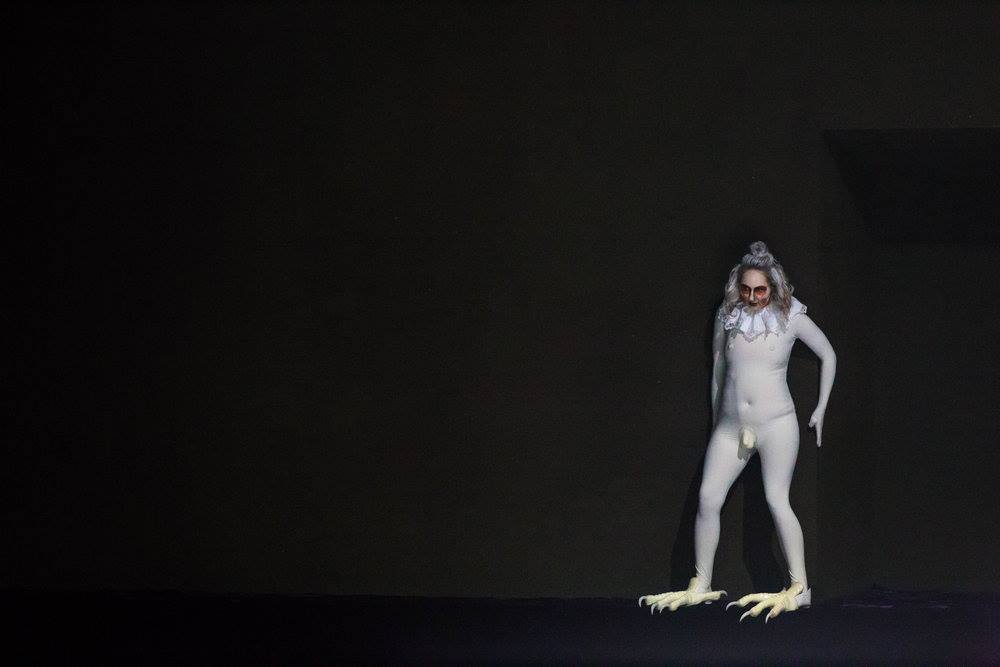
    Last year’s Wolf Trap production of Philip Glass & Robert Moran’s collaborative opera, “The Juniper Tree,” hit YouTube this week. While I found most of the singing and most of the costumes effective (the velour birds aside), I felt the direction skimped too much on the inherent black humor. The emphasis in this Brothers Grimm tale was definitely on the grim. Also, some of the most important details, such as the out-of-nowhere decapitation and, later, the moment of justice-by-millstone, were obscured in favor of something(s) admittedly even more disturbing in their lack of specificity. Not nearly as disturbing, however, as the anatomically correct spirit of the dead son. Are spirits anatomically correct? I’m elated that they bothered to program the opera at all, and the production was indeed first rate – I just don’t think it really was the opera. See what you think.

    Then check out this excerpt from a recording of the world premiere production, which definitely has more zing.

    It’s available for purchase here:

  • Cherry Blossom Music on WPRB This Sunday

    Cherry Blossom Music on WPRB This Sunday

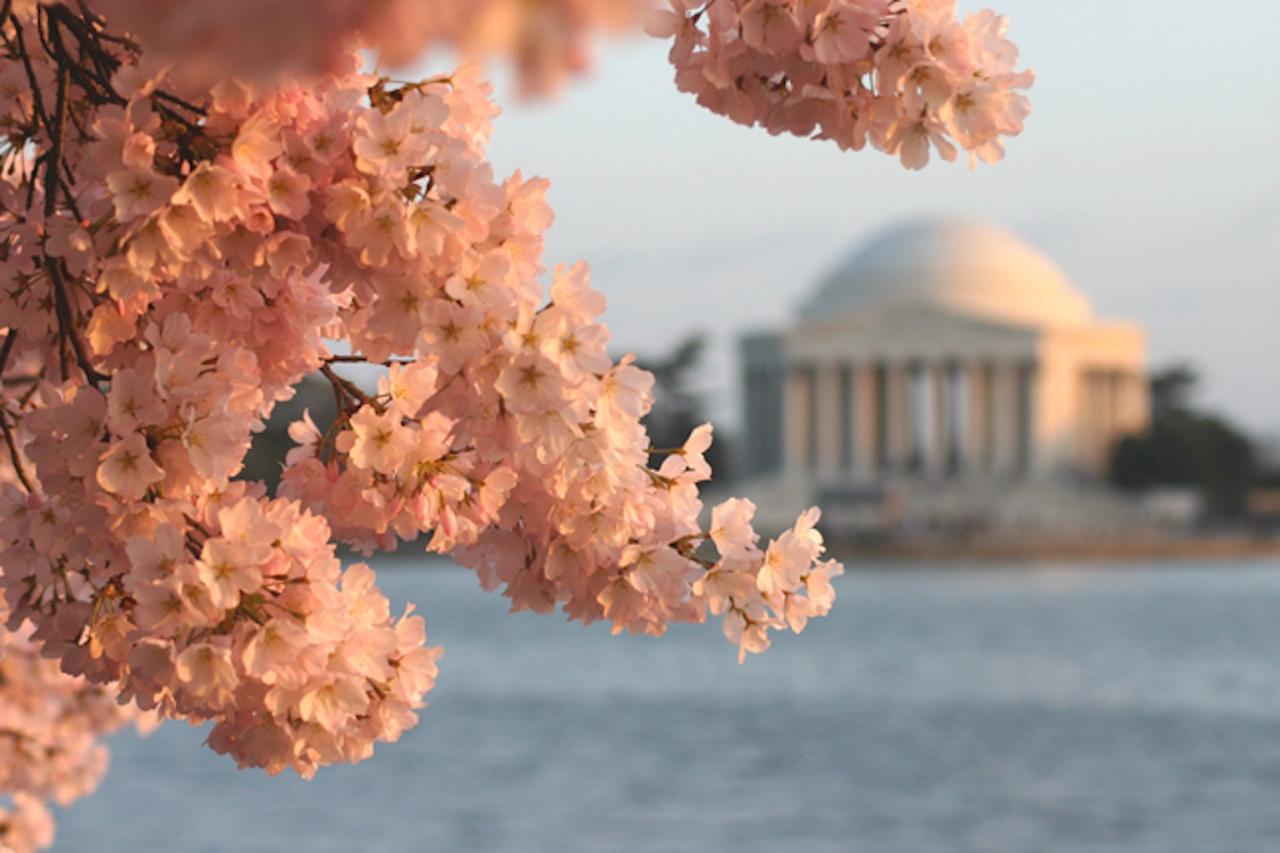
    The cherry blossoms are in bloom in Washington, D.C. This Sunday morning on WPRB, to coincide with the peak of this year’s National Cherry Blossom Festival, we’ll hear music inspired by Japan, alongside original works by Japanese composers.

    The “highlight” of the morning will be Sidney Jones’ seminal musical comedy, “The Geisha,” which opened in London’s West End in 1896. While this might seem a peculiar choice – some of the attitudes and vocabulary definitely come across as a mite insensitive in our more enlightened age (though none of it is mean-spirited, I wouldn’t expect a staged revival anytime soon) – Jones’ entertainment is a fascinating historical document not without merit. Over a century later, we might wonder what all the fuss was about, but “The Geisha” was a huge international hit. It ran for over seven months on Broadway. It stands as a missing link between the operettas of Gilbert and Sullivan (the influence of “The Mikado” looms large) and the emergence of modern musical theater. Interestingly, from our perspective in the 21st century, the work seems much closer to the classical music tradition, employing a standard orchestra in the pit and no hint of the popular influences to come.

    Still, if it all sounds a bit much for the faint of heart, consider tuning in early to find some balance with works by Japanese composers Komei Abe, Kiyoshige Koyama, Yoquijiro Yocoh, and Akira Ifukube (of “Godzilla” fame). We’ll also hear Gustav Holst’s “Japanese Suite” and, unavoidably, a selection or two from “The Mikado.” Be forewarned, if you switch off before the end, you will miss the inimitable Claudia Novikova’s infectious recording of “The Laughing Song,” an insert aria composed for “The Geisha,” which I guarantee will make your day.

    It’s music in honor of “the flowers that bloom in spring, tra la” – Japanese cherry blossoms, to be specific – this Sunday morning from 7 to 10 EDT, on WPRB 103.3 FM and wprb.com. Spring is in the air, or on the air, with Classic Ross Amico.

  • Escape Abroad with Movie Music on WWFM

    Escape Abroad with Movie Music on WWFM

    All aboard!

    “Picture Perfect” follows the English abroad this week, with music from “Enchanted April” (Richard Rodney Bennett), “A Passage to India” (Maurice Jarre), “The Best Exotic Marigold Hotel” (Thomas Newman) and “Around the World in 80 Days” (Victor Young).

    Bennett, quite the accomplished concert composer (and occasional torch song singer), provides a sensitive score for the 1991 Merchant/Ivory adaptation of Elizabeth von Arnim’s novel about four English ladies who spend an idyllic month at an Italian villa.

    Jarre received his third Academy Award for his music to David Lean’s final film, the 1984 adaptation of E.M. Forster’s novel of repression and racial tension in colonial India.

    Newman incorporates traditional Indian elements into his score for “The Best Exotic Marigold Hotel,” the 2012 surprise hit about English pensioners reinventing themselves in their retirement abroad.

    Young won his only Oscar (alas, posthumously bestowed) for “Around the World in 80 Days,” the star-studded, light-as-a-feather, though admittedly charming megawinner at the 1956 Academy Awards. It takes longer to watch the movie than it does to read Jules Verne’s novel – though it does provide a rare opportunity to see Ronald Colman in color.

    The weekend’s coming, so pack your valise and join me for “Picture Perfect,” this Friday evening at 6:00 EDT, on WWFM – The Classical Network and wwfm.org.

  • Wagner Migraines and My Headache

    Wagner Migraines and My Headache

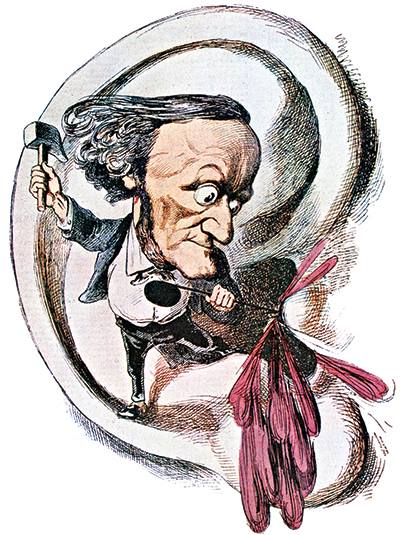
    I am not a chronic migraine sufferer, thank God, but for the past two days I have been oppressed by headaches, and this morning’s is worse than yesterday’s (which finally subsided last night). Suffice it to say, I am typing this on my laptop with the brightness turned way down.

    By coincidence, I happen to be reading Simon Callow’s compellingly-written “Being Wagner.” Callow, in addition to being a grandiloquent character actor (you may recollect him from “Amadeus,” “A Room with a View,” “Shakespeare in Love,” or “Four Weddings and a Funeral”), has portrayed some of the great artists (notably Charles Dickens) in one-man stage shows. He’s also written a comprehensive, three volume biography of Orson Welles.

    It was in the scripting of his Wagner play that he became consumed with this complex figure. So he decided to write a book. The subtitle, in its first printing, was “The Story of the Most Provocative Composer Who Ever Lived.” Apparently, it has since been amended to “Triumph of the Will.” Both would be equally valid.

    Wagner’s antisemitism was as pervasive as it was irrational. As a frequently struggling and misunderstood artist, he received nothing but support from his Jewish acquaintances – including Giacomo Meyerbeer, the most successful opera composer in Paris, who helped secure him his big break. Wagner rewarded Meyerbeer’s generosity by making him his bête noire. In fact, Wagner would often froth about the Jews, much to the discomfort of nearly everyone around him. His mania is chillingly prescient of the social corrosion that would allow Hitler’s rise to power. But yes, there is a double meaning in the latter subtitle in that Wagner, for all intents and purposes, willed himself to success.

    With all that I know about Wagner and his music, I suppose I shouldn’t have been surprised when I googled “classical music headache” and what popped up, but Little Richard himself. I had forgotten that Wagner, always very tightly wound, was a migraine sufferer.

    https://migraineagain.com/migraine-music-of-wagner/

  • Michael Tree: Guarneri Quartet’s Legacy at Marlboro

    Michael Tree: Guarneri Quartet’s Legacy at Marlboro

    A Tree grew at Marlboro. And so did everyone around him.

    Michael Tree, of course, was violist of the landmark Guarneri Quartet that did so much to foster a love of chamber music in generations of musicians and audiences. Tree died on March 31 at the age of 84. He was preceded in death by Guarneri founding cellist David Soyer in 2010.

    All the Guarneri personnel – including violinists Arnold Steinhardt and John Dalley – have ties to the Marlboro Music School and Festival. Indeed, the quartet got its start at Marlboro in 1964. The four young men (all, except Soyer, in their early 20s) had played together at the festival in various permutations for two summers, when they were convinced by Rudolf Serkin and Alexander Schneider to form a more permanent union. Soyer retired from the ensemble in 2001. He was replaced by pupil-made-good Peter Wiley, formerly of the Beaux Arts Trio. Wiley has been active at Marlboro since the 1970s.

    The quartet officially disbanded in 2009, after a 45 year run. Even so, its members would occasionally reunite to play with various ad hoc ensembles.

    Unfortunately the Guarneri Marlboro concerts were not formally recorded. The Marlboro recording studio was not set up until 1965. Some recordings surfaced many years later, but these have not been vetted for broadcast. How fascinating it would have been to hear the Guarneri in Hindemith’s String Quartet No. 3! Happily, most of the quartet’s early repertoire was later documented on commercial releases.

    What made this Tree especially great is that he nurtured the countless seedlings around him. He shared his invaluable insights and experience as a senior artist at Marlboro for 18 seasons. We’ll celebrate his legacy with performances of works by two very different composers. Tree will lend his violistic talents to Beethoven’s Serenade in D major, Op. 25, with flutist Christine Nield and violinist Young Uck Kim, at the 1980 Marlboro Music Festival, and Frank Bridge’s String Quartet No. 1 in E minor, with violinists Timothy Fain and Tien Hsin Cindy Wu and cellist Peter Myers, recorded in 2009.

    Michael Tree remembers his roots even as he branches out, on the next “Music from Marlboro,” this Wednesday evening at 6:00 EDT, on WWFM – The Classical Network and wwfm.org.

    Marlboro School of Music and Festival: Official Page
Tag Cloud

Aaron Copland (93) Beethoven (95) Composer (114) Film Music (137) Film Score (143) Film Scores (255) Halloween (94) John Williams (195) KWAX (229) Leonard Bernstein (103) Marlboro Music Festival (125) Movie Music (152) Mozart (88) Opera (208) Philadelphia Orchestra (89) Picture Perfect (174) Princeton Symphony Orchestra (108) Radio (88) Ross Amico (244) Roy's Tie-Dye Sci-Fi Corner (290) The Classical Network (101) The Lost Chord (268) Vaughan Williams (103) WPRB (396) WWFM (881)

DON’T MISS A BEAT

Receive a weekly digest every Sunday at noon by signing up here


RECENT POSTS