Category: Daily Dispatch

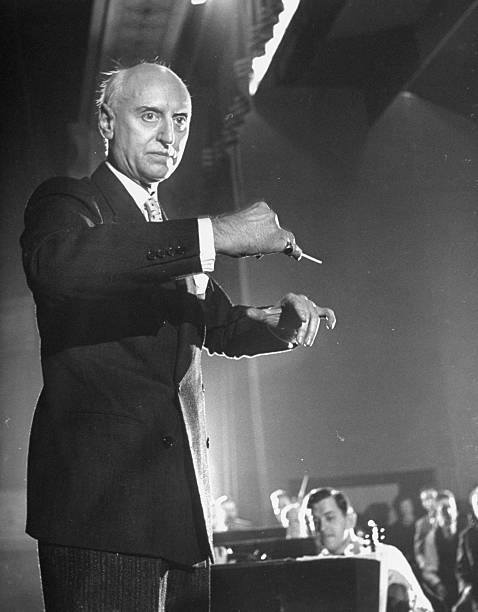
  • Victor de Sabata Forgotten Genius

    Victor de Sabata Forgotten Genius

    It is ironic that one of the great conductors of opera would be comparatively unsung.

    Victor de Sabata is remembered fondly by collectors largely for a single recording – a classic performance of “Tosca” with Maria Callas. The reasons for this have little to do with De Sabata’s merit. De Sabata was a creature of the theater, as opposed to the recording studio. Also, he happened to flourish at a time before the widespread adoption of stereo recording methods. His most cherished recordings were captured on the wing, which might be viewed as something of a mixed blessing. But while few of his performances were preserved under controlled circumstances, what we do have accurately reflects his volcanic temperament in all its terrible glory.

    How much awe did De Sabata inspire? Apparently enough that a young Sergiu Celibidache was moved to hide overnight in the Bayreuth bathroom facilities in order to eavesdrop on his rehearsals of “Tristan und Isolde.”

    For decades, De Sabata was principal conductor at La Scala. For a time, he was also its artistic director. One observer described his appearance while conducting as a cross between Julius Caesar and Satan. In 1953, a massive heart attack brought all that to an end. “Tosca” was to have been the first of a series of recordings for HMV which would have documented much of De Sabata’s operatic repertoire. In the event, he would return to conduct only twice more.

    We’ll have a chance to hear the results of one of these “comebacks” this afternoon, as we celebrate this firebrand of the podium on this, the anniversary of De Sabata’s birth, with a molten performance of Giuseppe Verdi’s “Messa da Requiem.” This classic 1954 recording features soprano Elisabeth Schwarzkopf, mezzo-soprano Oralia Dominguez, tenor Giuseppe di Stefano, and bass Cesare Siepi. It’s a strikingly broad reading that yet manages to roil and sear.

    Like that other titan of the podium, Wilhelm Furtwängler, De Sabata placed more importance on his activities as a composer than as a conductor, which might seem strange to us, given the nature of their legacies. As time allows, we’ll fill in around the edges with some of De Sabata’s original music.

    First, on today’s Noontime Concert, I hope you’ll join me for a recital by pianist Xuesha Hu, from a program presented at Merkin Concert Hall at Kaufman Music Center in New York City. She will perform Beethoven’s “Appassionata” Sonata, Liszt’s “Dante” Sonata, and Samuel Barber’s Piano Sonata.

    As something of a bridge, we’ll also hear a piano concerto by Barber’s longtime companion, Gian Carlo Menotti, yet another musician of Italian origin, who, like Verdi and De Sabata, contributed much to the vitality of the operatic stage.

    The music-making will all be heightened this afternoon, from 12 to 4 p.m. EDT, on WWFM – The Classical Network and wwfm.org.
  • July’s Musical Birthdays on WWFM

    July’s Musical Birthdays on WWFM

    July must be very sultry indeed. Take a gander at the overwhelming list of musical birthdays I’m now confronted with.

    Georg Matthias Monn (1717-1750)
    Theobald Boehm (1794-1881)
    Francesco Paolo Tosti (1846-1916)
    Florence Price (1887-1953)
    Paul Robeson (1898-1976)
    Efrem Zimbalist (1889-1985)
    Antal Doráti (1906-1988)
    Armin Jordan (1932-2006)
    Aulis Sallinen (1935- )
    Jerzy Maksymiuk (1936- )

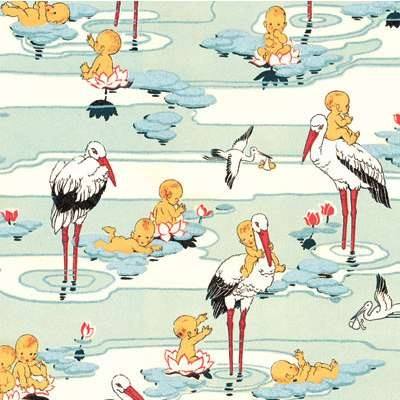
    I’ll be heating bottles and changing diapers from 4 to 7 p.m. EDT, on WWFM – The Classical Network and wwfm.org.
  • Tom Lehrer Turns 90 A Musical Genius Celebrated

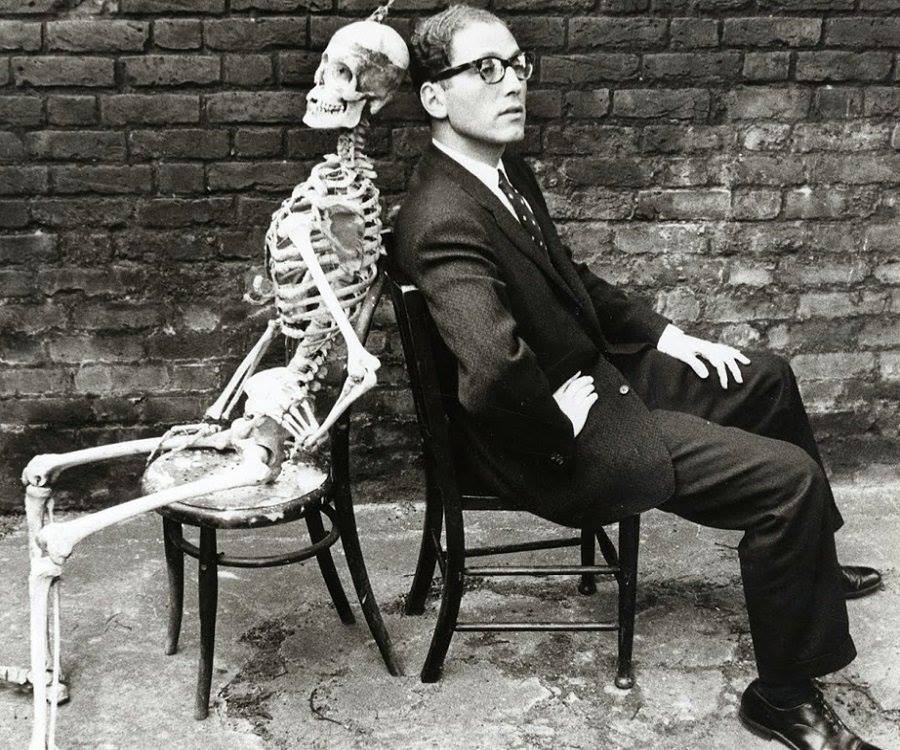
    Tom Lehrer Turns 90 A Musical Genius Celebrated

    Happy birthday, Tom Lehrer, 90 years-old today. Here he is in his brilliant prime.

  • Explore Persian Polyphonic Music

    Explore Persian Polyphonic Music

    “Persian polyphonic music” refers to music written for ensembles of western instruments by Persian (or Iranian) composers, based upon Persian folk and classical melodies. For whatever reason, we don’t hear very much of it in the West. We’ll try to remedy that, in our own small way, this Sunday night on “The Lost Chord.”

    What inspired this program was an album of works by Behzad Ranjbaran, issued in 1994, on the Delos label. I had heard Ranjbaran’s lyrical Piano Concerto at a concert of the Philadelphia Orchestra sometime ago, but it did not prepare me for the beauty and opulence of his “Persian Trilogy.”

    Ranjbaran, born in Tehran in 1955, is currently on the faculty of the Juilliard School. Many of his works are influenced by Persian culture and literature. His orchestral cycle, “The Persian Trilogy,” was inspired by the “Shahnameh,” the national epic of 11th century poet Ferdowski.

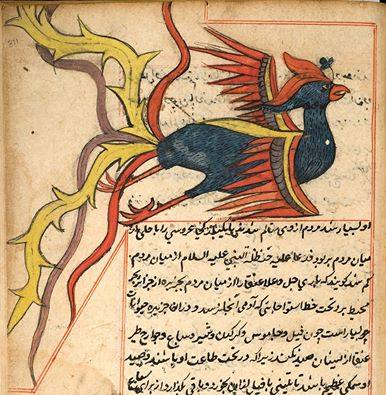
    We’ll hear two-thirds of the trilogy, including “Seven Passages” – about the hero Rostam, who undergoes seven trials along the path to rescue the Persian king, Kavus – and “Seemorgh” – about the mythical bird which raises the abandoned hero Zaal, who is able to summon her in times of crisis.

    Ranjbaran proves himself a master orchestrator. If you enjoy the music of Rimsky-Korsakov, Debussy, Paul Dukas or Ottorino Respighi, I think you’ll really enjoy his “Persian Trilogy.”

    We’ll also hear music by Reza Vali, born in Ghazvin in 1952. Vali, currently on the faculty of Carnegie Mellon University, has been called the “Iranian Bela Bartok” for his ability to successfully meld native folk elements with established western classical forms. His “Folk Song (Set No. 9)” is composed for the combination of flute and cello. The flutist switches between various instruments of the flute family, and the cellist plays tuned crystal glass and tom-toms. As you’ll hear, the musicians are also required at various points to sing and whistle.

    I hope you’ll join me for “Roses of Persia,” a bouquet of Persian polyphonic music, this Sunday night at 10:00 EDT, on WWFM – The Classical Network and wwfm.org.
  • Japanese Music & Cherry Blossoms on WPRB

    Japanese Music & Cherry Blossoms on WPRB

    The flowers that bloom in spring, tra la, breathe promise of merry sunshine. Words of hope from the pen of W.S. Gilbert, of Gilbert and Sullivan fame.

    We’ll begin this Sunday morning on WPRB with the overture to “The Mikado.” This will kick off three hours of music inspired by Japan, alongside original works by Japanese composers, a musical tie-in, of sorts, to the National Cherry Blossom Festival, now flowering in Washington, DC.

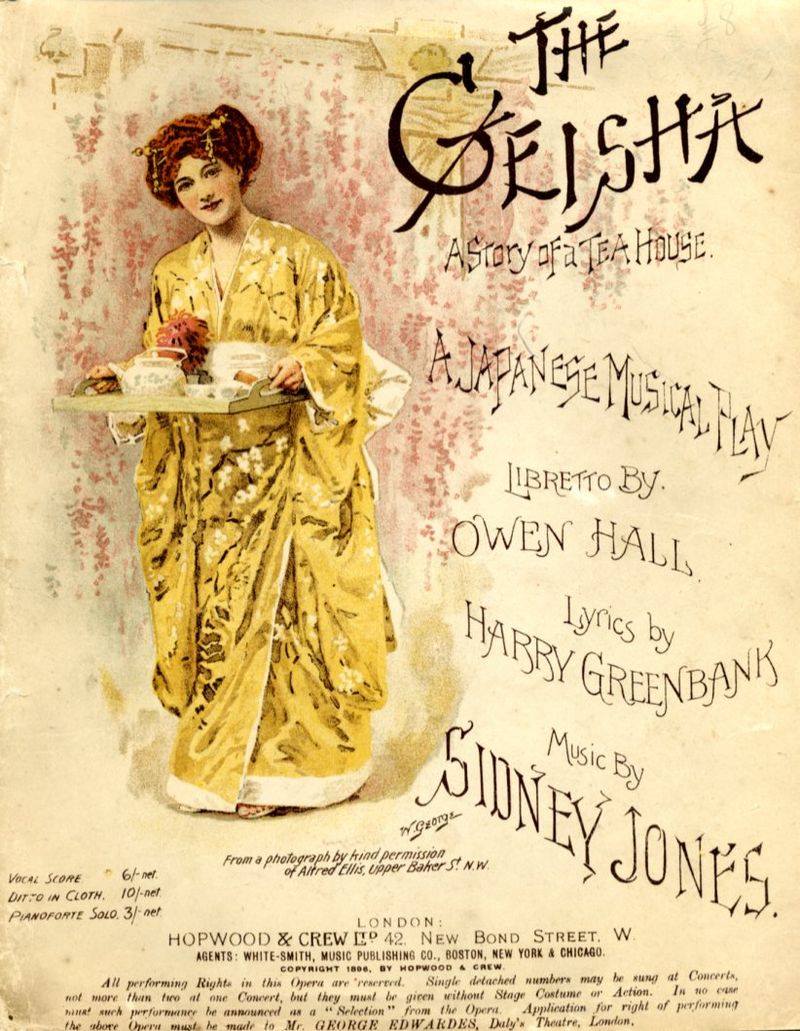
    The “highlight” of the morning will be Sidney Jones’ musical comedy, “The Geisha,” which opened in London’s West End in 1896. The work became an international sensation. “The Geisha” capitalizes on the orientalism craze that gripped Europe and the United States at the end of the end of the 19th century. Predating both Puccini’s “Madama Butterfly” and the story that inspired it by several years, the plot similarly is set in motion by a questionable relationship between a Western Navy man and a Japanese woman. The similarities end there, however, as matters rapidly plummet into farce, underscored by melodies and patter songs that owe more to Gilbert and Sullivan than Italian verismo. The work contains one memorable melody after another, and a happy ending is guaranteed.

    Though the piece may be hampered by its twee exoticism and unfortunate slang that mark it very much as a product of its time, heard from an historically-informed perspective, “The Giesha” still has much to offer the modern listener.

    If you prefer your Japanese culture undistilled, tune in early for music by Japanese composers Komei Abe, Kiyoshige Koyama, Yoquijiro Yocoh, and Akira Ifukube (of “Godzilla” fame). We’ll also hear Gustav Holst’s rarely-heard “Japanese Suite” and, unavoidably, a selection or two from “The Mikado.” Be forewarned, if you switch off before the end, you will miss the inimitable Claudia Novikova’s infectious recording of “The Laughing Song,” an insert aria composed for “The Geisha,” which I guarantee will make your day.

    The sun rises in the East, this Sunday morning from 7 to 10 EDT, on WPRB 103.3 FM and wprb.com. We’ll substitute tea for coffee, on Classic Ross Amico.

Tag Cloud

Aaron Copland (93) Beethoven (95) Composer (114) Film Music (137) Film Score (143) Film Scores (255) Halloween (94) John Williams (195) KWAX (229) Leonard Bernstein (103) Marlboro Music Festival (125) Movie Music (152) Mozart (88) Opera (208) Philadelphia Orchestra (89) Picture Perfect (174) Princeton Symphony Orchestra (108) Radio (88) Ross Amico (244) Roy's Tie-Dye Sci-Fi Corner (290) The Classical Network (101) The Lost Chord (268) Vaughan Williams (103) WPRB (396) WWFM (881)

DON’T MISS A BEAT

Receive a weekly digest every Sunday at noon by signing up here


RECENT POSTS