Category: Daily Dispatch

  • Telemann to Water Sprites via Henze

    Telemann to Water Sprites via Henze

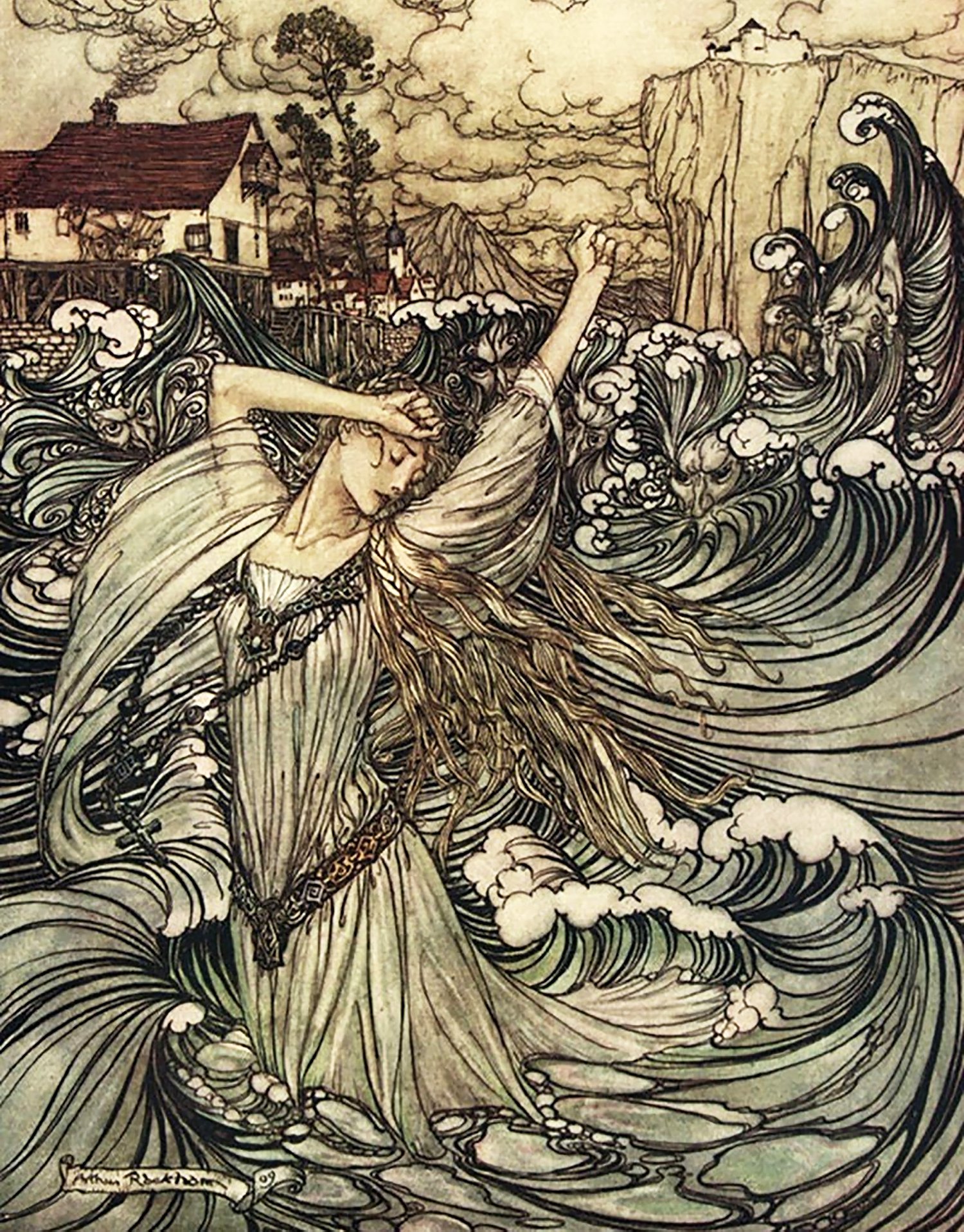
    How does one get from Telemann to water sprites? By way of Hans Werner Henze, of course! Anyone who knows me knows that I’ve got rusalkas and mermaids on the brain anyway. Join me this afternoon on The Classical Network for a complete performance of Henze’s ballet “Undine” (more about that below).

    First, on today’s Noontime Concert, we’ll have a lovely and engaging program of Telemann duos, courtesy of Gotham Early Music Scene (GEMS). Telemann was as energetic as he was long-lived, learning instruments, radiating music, and even publishing a magazine, “Der getreue Music-Meister” (“The Faithful Music-Master”), in which he would introduce new instrumental pieces. The magazine appeared every two weeks. Deborah Booth and Louise Schulman will present some of these works on a concert of sonatas for recorder or traverso (Booth) and viola (Schulman).

    The program was given at St. Bartholomew’s Church, 50th Street and Park Avenue, in Midtown Manhattan, where free concerts are held every Thursday at 1:15 p.m. This Thursday, Bourbon Baroque will perform Luigi Boccherini’s “Stabat Mater.” To find a complete schedule of lunchtime performances, look online at midtownconcerts.org.

    GEMS also presents evening concerts. The Clarion Choir and period brass players will perform Palestrina’s “Missa Papae Marcelli” at the Metropolitan Music of Art on Friday at 7 p.m. Also on Friday, Empire Viols will present “Strictly Continental,” with music by Sainte-Colombe, Marais, Vivaldi, Schenck, and Krebs, at 7:30 p.m., at the Church of the Transfiguration, One East 29th Street, in the NoMad neighborhood of Manhattan. On Satuday, Collectio Musicorum will perform a program of music from the Renaissance and beyond, at 7 p.m., at Eltingville Lutheran Church, 300 Genesee Avenue, in Staten Island.

    Gotham Early Music Scene is a non-profit corporation that supports and promotes artists and organizations in New York City devoted to early music – music of the Middle Ages, Renaissance, Baroque, and early Classical periods. For more information and GEMS’ events calendar, look online at gemsny.org.

    To fill out the noon hour, we’ll hear Henze’s “Telemanniana.” That should provide a nice segue to the aforementioned ballet. Henze wrote the score for “Undine” on a commission from Frederick Ashton in 1958. (Ashton originally presented the ballet under the title “Ondine.”) The subject is the Romantic and influential novella by Friedrich de la Motte Fouqué. The tale is remarkably similar to the one told by Hans Christian Andersen, in “The Little Mermaid,” and Dvořák, in the opera “Rusalka.” All three deal with the ill-fated love between a water sprite and a mortal.

    Because of a scheduling conflict, Ashton’s first choice of composer, Sir William Walton, turned down the offered commission. Walton recommended Henze in his place. Ondine became one of the signature roles of the Royal Ballet’s prima ballerina, Margot Fonteyn.

    I hope you’re a strong swimmer. It will be water sprites and spritely Telemann, from 12 to 4 p.m. EDT, on WWFM – The Classical Network and wwfm.org.

  • Musical Easter Monday Mix

    Musical Easter Monday Mix

    If you’re going to have a music birthday, today would be a very good day for it. There’s not a lot of competition!

    Franz Lachner, born on this date in 1803, was the most successful composer of Franz Schubert’s circle, his reputation extending far beyond the walls of Vienna. He was one of Schubert’s younger friends. Even so, it’s sobering to reflect that Lachner died in 1890. How much Schubert might have accomplished had he lived! Though his star has certainly faded over the years, Lachner remains something of a missing link between Schubert and Schumann. We’ll be able to sample of some of his music this afternoon.

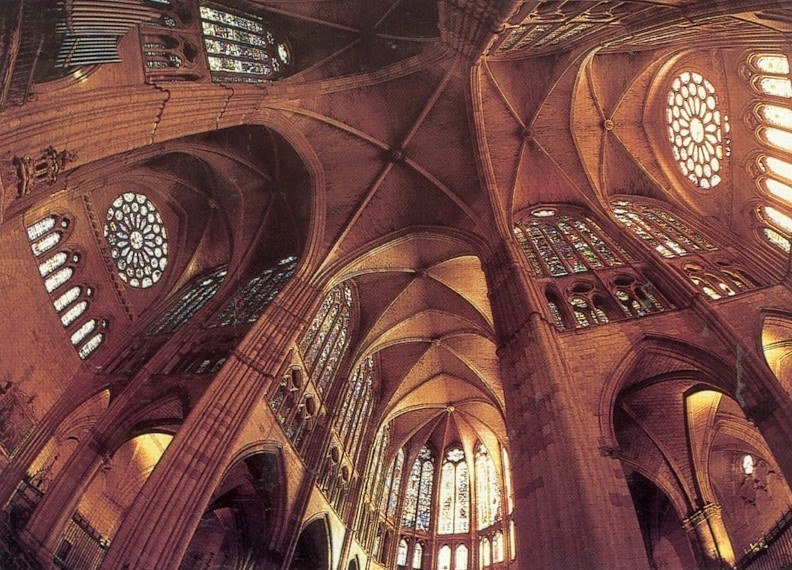
    We’ll also celebrate Easter Monday with a work inspired by the traditional White House “egg roll,” by John Philip Sousa, and assume an Easter Monday swagger, courtesy of Thomas Kerr. Maybe we’ll even have some music suggestive of some overworked hens.

    In addition, there will be a concerto by Stephen Dodgson – composer (a descendant of Lewis Carroll) and some music-making by his wife, Jane Clark Dodgson, in honor of her 90th birthday. We’ll also welcome April with John Foulds’ “April – England.” (April Foulds, a day late.)

    There will be “a bit of this and a bit of that,” as we get back to work on this Easter Monday. Enjoy some musical crocuses, from 4 to 7 p.m. EDT, on WWFM – The Classical Network and wwfm.org.
  • Cathedral Sounds on The Lost Chord

    Cathedral Sounds on The Lost Chord

    Happy Easter, everyone! I’ve been all tied up with Easter activities for most of the day, so I’m only just getting around to extending the invitation for you to cap off your Sunday by joining me on “The Lost Chord” for an hour of pieces inspired or influenced by cathedrals.

    We’ll hear Jennifer Higdon’s “blue cathedral” (all lower-case), from 1999, commissioned by the Curtis Institute of Music in honor of its 75th anniversary. The work is dedicated to the memory of Higdon’s younger brother, Andrew Blue. In the writing of the piece, she imagined a journey through a glass cathedral in the sky, with transparent walls and crystal pillars, through which clouds and endless expanses of blue would be visible.

    Guitarist-composer Agustin Barrios wrote “La Catedral” (“The Cathedral”) in 1921, after having heard music of Johann Sebastian Bach performed on the organ of the cathedral of San Juan Bautista de las Misiones in his native Paraguay.

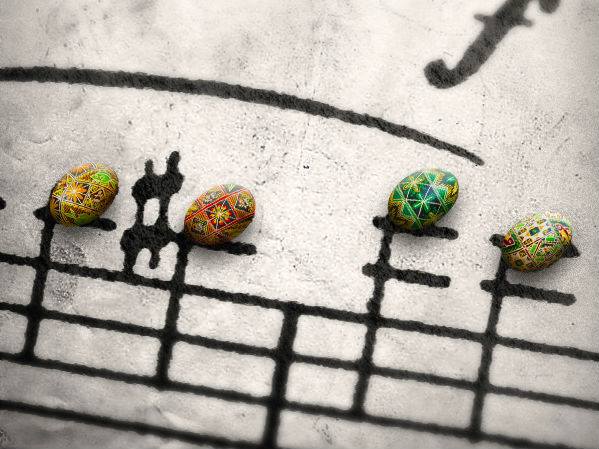
    Englishman Joby Talbot composed “Path of Miracles” in 2005. The work – dedicated to the memory of his father, Vincent – was written on a commission from the vocal chamber group Tenebrae. Its four movements reflect stops along the medieval pilgrimage route to Santiago. The third of these, an evocation of León Cathedral, is imagined as a kind of “Lux Aeterna,” the interior of the space bathed in light.

    Finally, American composer Adolphus Hailstork recollected his experiences as a child chorister at the Cathedral of All Saints in Albany, New York, when he came to write his “Sonata da Chiesa” (“Church Sonata”) in 1992. Hailstork, composer-in-residence at Old Dominion University in Norfolk, Virginia, conceived the work’s seven vibrant sections – “Exaltation,” “O Great Mystery,” “Adoration,” “Jubilation,” “O Lamb of God,” “Grant Us Thy Peace,” and “Exaltation” – for string orchestra, providing a joyous conclusion to the hour.

    I hope you’ll join me for “Master Builders” – architects of cathedrals in sound – this Sunday night at 10:00 EDT, on WWFM – The Classical Network and wwfm.org.

    PHOTO: The vaulted ceiling of León Cathedral

  • Easter Sunday Classical Music on WPRB

    Easter Sunday Classical Music on WPRB

    Tomorrow being the day of chocolate bunnies and Peeps, my colleague Bob Pollack has generously agreed to fill in for me on WPRB. Bob, host of “Morning Classical” (now heard on Monday mornings from 6 to 9), will introduce Mahler’s “Resurrection” Symphony, Bach’s Cantata No. 4 “Christ lag in Totesbanden,” Rachmaninoff’s “Vespers,” and some broader tributes to spring. Remember, it is Vinyl Week on WPRB, so it really depends on what’s on the shelves (Beethoven’s “Spring” Sonata, anyone?).

    Wake up and smell the daffodils, tomorrow morning, Easter Sunday, from 7 to 10 EDT, on WPRB 103.3 FM and wprb.com. Thanks, Bob, for your music of hope and renewal!

Tag Cloud

Aaron Copland (93) Beethoven (95) Composer (114) Film Music (137) Film Score (143) Film Scores (255) Halloween (94) John Williams (195) KWAX (229) Leonard Bernstein (103) Marlboro Music Festival (125) Movie Music (152) Mozart (88) Opera (208) Philadelphia Orchestra (89) Picture Perfect (174) Princeton Symphony Orchestra (108) Radio (88) Ross Amico (244) Roy's Tie-Dye Sci-Fi Corner (290) The Classical Network (101) The Lost Chord (268) Vaughan Williams (103) WPRB (396) WWFM (881)

DON’T MISS A BEAT

Receive a weekly digest every Sunday at noon by signing up here


RECENT POSTS