Category: Daily Dispatch

  • Happy Birthday Haydn Classical Music Legend

    Happy Birthday Haydn Classical Music Legend

    Happy birthday, Papa Haydn. Father of the Classical Symphony. Father of the String Quartet. You set the standards against which all subsequent composers have had to measure.

    Two years ago, our colleagues across the pond, Classic FM, commissioned one of its hapless employees to rank Haydn’s 104 numbered symphonies. Of course, this involved actually having to listen to them. Here are the assessments of his overworked ears:

    http://www.classicfm.com/composers/haydn/guides/definitive-ranking-haydn-symphonies/

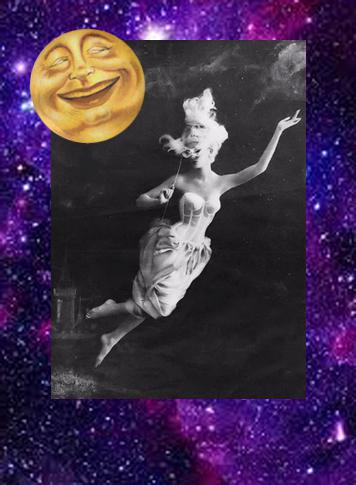
    Closer to home, tomorrow afternoon on The Classical Network, as a convenient antidote to everyone’s anxiety about falling space junk, Michael Kownacky will present Haydn’s comic opera “Il mondo della luna” (“The World on the Moon”), on this week’s “Sunday Opera.” Based on the play by Carlo Goldoni, the scenario pits the clever Ecclitico against the foolish Buonafede. Ecclitico wins both love and fortune, the results of a ruse involving an alleged trip to the moon. (It will be April Fool’s Day, after all.)

    The 1993 recording features Luigi Alva, Domenico Trimarchi, Edith Mathis, Arlene Auger, Frederica von Stade, and Anthony Rolfe Johnson. Listen in, this Sunday at 3 p.m. EDT, on WWFM – The Classical Network and wwfm.org.

    Thank you, Haydn, for your unflagging invention and reliable good humor. Even during Holy Week, your music lifts my spirits.


    Composite artwork to promote tomorrow’s broadcast of “Il mondo della luna” courtesy of Michael Kownacky
  • Epic Biblical Film Scores for Passover & Easter

    Epic Biblical Film Scores for Passover & Easter

    Passover begins tonight, and Sunday is Easter. Time to Bible-up!

    This week on “Picture Perfect,” religion takes a back seat to spectacle, with an hour of music from mid-century Hollywood epics, including “Samson and Delilah” (Victor Young), “Solomon and Sheba” (Mario Nascimbene), “Sodom and Gomorrah” (Miklós Rózsa) and “The Ten Commandments” (Elmer Bernstein).

    We begin and end with two Cecil B. DeMille productions. DeMille could always be counted on to give his audience a good show. Both “Samson” and “The Ten Commandments” feature sultry temptresses, violent, bare-chested men, and plenty of austere moralizing. The climactic special effects in both films are still sublime.

    Tyrone Power was originally cast as Solomon in King Vidor’s “Solomon and Sheba.” However, he died of a massive heart attack during shooting (at the age of 44), paving the way for Yul Brynner to assume the role of the wise king. Brynner, of course, would later become DeMille’s pharaoh Rameses. With Gina Lollobrigida as the Queen of Sheba, you know there has to be an orgiastic dance.

    Miklós Rózsa characterized “Sodom and Gomorrah” as “an intriguing subject which developed into a bad picture,” and most critics agreed. Any film that casts Stewart Granger as Lot should be taken with a pillar of salt. Rózsa determined not to score any more Biblical epics after “Sodom,” though his music is nothing to be ashamed of. It possesses that classic Rózsa epic sound, much beloved thanks to his work on “Quo Vadis,” “Ben-Hur” and “King of Kings.”

    Chariots! Tunics! Histrionic acting! The music will be epic, this Friday evening at 6:00 EDT, on WWFM – The Classical Network. (Please note: if the time happens to conflict with your Seder, the show will be posted next week as a webcast, at wwfm.org.)


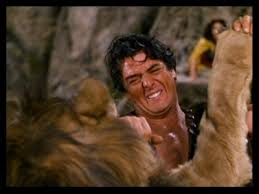
    PHOTOS: Victor Mature’s stuffed lion vs. Charlton Heston’s cotton candy beard

  • Maundy Thursday Meaning Music and Victor de Sabata

    Maundy Thursday Meaning Music and Victor de Sabata

    Is it Monday, or is it Thursday? Why, it’s Maundy Thursday!

    Of course Maundy has nothing to do with Monday. The word is most likely derived from the Latin “mandatum,” as in “Mandatum novum do vobis ut diligatis invicem sicut dilexi vos” (“A new commandment I give you, That ye love one another; as I have loved you”). Or it could come from the Middle English and Old French words “maund” and “mendier,” respectively, after the Latin “mendicare,” meaning to beg.

    In any case, we are now entering the holiest days of the Christian calendar. Maundy Thursday commemorates Jesus’ washing of the feet of his disciples, the Last Supper, and the betrayal and arrest of Christ in the garden of Gethsemane.

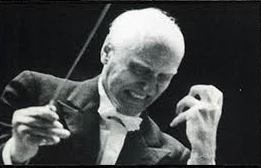
    I’m not on the air today, but if I were, I would most certainly play Victor de Sabata’s beautiful meditation for orchestra, “Gethsemani.” De Sabata is remembered primarily as a conductor, especially of opera, having led the classic recording of “Tosca” with Maria Callas. He got his start playing violin in an orchestra under Toscanini. Toscanini encouraged the young man to become a conductor, which was kind of like letting the genie out of the bottle. Their relationship status passed from mentor-disciple to friendship to bitter rivalry. For decades, De Sabata was principal conductor at La Scala. For a time, he was its artistic director. One observer described his appearance while conducting as a cross between Julius Caesar and Satan. The two volatile Italians (do I detect a redundancy?) eventually reconciled. Still, it’s never good practice to snub Toscanini or to entertain Mussolini. Aspiring time travelers, take heed!

    De Sabata was also a composer, who wrote his share of opulent music. Unfortunately, the only recording I can find of “Gethsemani” posted on YouTube is this piano version.

    It’s still lovely, of course, but you should definitely check out the orchestral version, easily obtained as part of this gorgeous album issued on the Hyperion Records label.

    https://www.hyperion-records.co.uk/c.asp?c=C1208

    I find De Sabata’s “Gethsemani” to be touching. There’s little maudlin in his Maundy.

  • Celebrating Serkin A Marlboro Music Birthday

    Celebrating Serkin A Marlboro Music Birthday

    This week on “Music from Marlboro,” we’ll serve up a great big musical cake for Rudolf Serkin’s birthday.

    Serkin, one of the indisputably great pianists of the 20th century, co-founded, with Adolf and Hermann Busch, and Marcel, Blanche, and Louis Moyse, the Marlboro Music School and Festival in 1951. Above and beyond his own artistic achievements, Serkin inspired countless young musicians, both as a pedagogue at – and then director of – the Curtis Institute of Music in Philadelphia and as artistic director of the Marlboro Music Festival for 40 years, until his death in 1991.

    We’ll supplement that cake with a little sherbet – better make that Schubert – and a special recording of the Piano Trio No. 2 in E-flat major, op. 100, set down in Brattleboro, VT, right at the very beginning, in October of 1951, with Serkin and the Brothers Busch. This is music-making between friends – and relatives – of the highest caliber.

    Then we’ll enjoy an additional treat in the form of Schubert’s “Auf dem Strom” (“On the River”). Serkin will join Philadelphia-based soprano Benita Valente and hornist Myron Bloom for a performance of this work that was composed in tribute to Beethoven. Ludwig Rellstab’s text was originally intended for the older master. The song was first performed on the only concert devoted exclusively to Schubert’s music during Schubert’s lifetime, which took place on the first anniversary of Beethoven’s death, March 26, 1828. The Marlboro performance dates from 1960.

    I hope you’ll join me in celebrating Rudolf Serkin, on the anniversary of his birth, with an all-Schubert program, this Wednesday evening at 6:00 EDT, on WWFM – The Classical Network and wwfm.org.

    Marlboro School of Music and Festival: Official Page


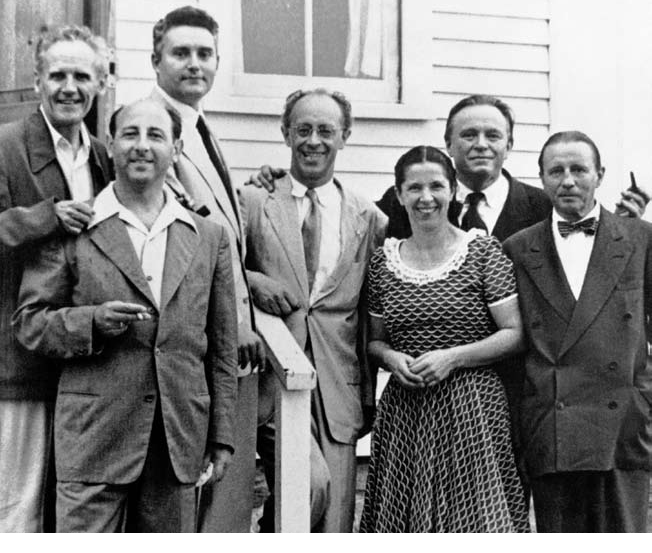
    PHOTO: Serkin (center) with his Marlboro family, co-founders Marcel Moyse, Louis Moyse, Blanche Moyse, Adolf Busch, and Hermann Busch (with cellist Nathan Chaikin second from left)

  • Haydn Strauss Brahms on WWFM Today

    Haydn Strauss Brahms on WWFM Today

    I don’t what it is, but for some reason I’ve really been on a Haydn kick recently. How fortuitous, then, that a Haydn string quartet would be at the heart of today’s Noontime Concert.

    Members of the Manhattan Chamber Players will perform music for various combinations of strings by Richard Strauss, Haydn, and Brahms.

    We’ll hear the Sextet from Strauss’ final opera, “Capriccio” (1942). The extended movement is not an arrangement, by rather an intimate introduction to an opera which poses the question: which is the greater art, poetry or music? In the opera, the composer Flamand rehearses his new composition at the chateau of Countess Madeleine, who is divided in her affections between Flamand and his rival, the poet Olivier.

    Haydn’s String Quartet No. 19 in C minor, Op. 17, No. 4 (c. 1770), mingles agitation with pathos. You can feel the composer teetering into his “sturm und drang” phase.

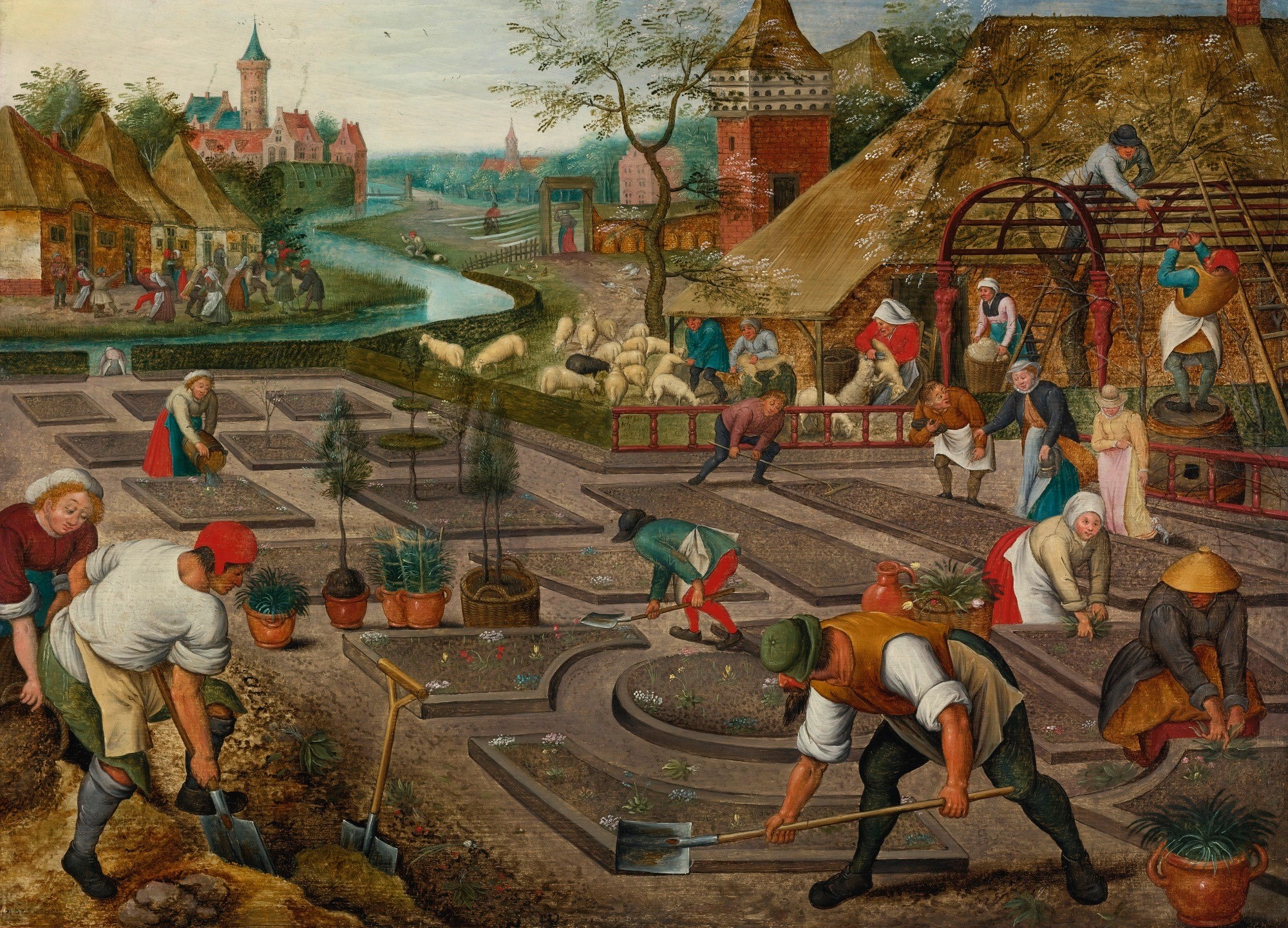
    On the other hand, Brahms’ String Quintet No. 1 in F Major, Op. 88 (1882), couldn’t be more different. Brahms doubles the violas for the piece, which he described to Clara Schumann as “one of my finest works.” He also intimated to his publisher, Simrock, “You have never heard such a beautiful work from me.” This was no idle boast. The work is occasionally referred to as the “Spring” Quintet. Brahms completed the piece at a spa in Upper Austria, and the work exudes warmth, contentment, and even joy.

    Then stick around – I will further indulge my Haydn fancy with his magnificent oratorio, “The Seasons,” in advance of the composer’s birthday, which is coming up this Saturday. This is music that truly never goes out of season.

    Strings are the thing on today’s Noontime Concert, and then soloists and chorus sing the praises of spring, courtesy of Haydn, from 12 to 4 p.m. EDT, on WWFM – The Classical Network and wwfm.org.

Tag Cloud

Aaron Copland (93) Beethoven (95) Composer (114) Film Music (137) Film Score (143) Film Scores (255) Halloween (94) John Williams (195) KWAX (229) Leonard Bernstein (103) Marlboro Music Festival (125) Movie Music (152) Mozart (88) Opera (208) Philadelphia Orchestra (89) Picture Perfect (174) Princeton Symphony Orchestra (108) Radio (88) Ross Amico (244) Roy's Tie-Dye Sci-Fi Corner (290) The Classical Network (101) The Lost Chord (268) Vaughan Williams (103) WPRB (396) WWFM (881)

DON’T MISS A BEAT

Receive a weekly digest every Sunday at noon by signing up here


RECENT POSTS