Category: Daily Dispatch

  • Rediscovering Glazunov: From Sheepishness to Serenity

    Rediscovering Glazunov: From Sheepishness to Serenity

    Alexander Glazunov was always one of those composers I felt kind of sheepish about liking. I remember sitting at a listening bar at a used record shop in Philadelphia and asking to preview a recording of Glazunov’s ballet music. “I know I’m not supposed to like this stuff,” I commented, almost apologetically.

    Admittedly, at the time, other than the Violin Concerto, I didn’t really know a lot of great recordings of his music. I found the Marco Polo releases I had heard, with the Hong Kong Philharmonic, to be underwhelming, and these prejudiced me against the composer for years. But Neeme Järvi’s performances on Chandos were a revelation. Then of course I eventually got my hands on the Melodiya issues with Gennadi Rozhdestvensky and Evgeny Svetlanov.

    Okay, so Glazunov isn’t Beethoven. Who is? But at his best, his music is well-crafted, attractive (to me, anyway), and marked by an abundance of memorable melodies that would make any honest composer jealous.

    Join me on this week’s “Music from Marlboro” in enjoying Glazunov’s String Quintet in A major (1891). The work is full of serene lyricism, generously melodic and beautiful. We’ll hear it performed at the Marlboro Music Festival in 1982 by violinists Sylvie Gazeau and Ernestine Schor, violist Toby Hoffman, and once-and-future cellists of the Guarneri Quartet, David Soyer and Peter Wiley.

    Above and beyond his own merits as a composer, Glazunov had an eye for developing young talent. In the capacity of director of the Petrograd Conservatory, Glazunov saw to it that a young Dmitri Shostakovich be allowed to bypass preparatory theoretical courses and enter directly into the conservatory’s composition program. In general, Shostakovich was lukewarm on his mentor’s music, but he had very kind words for the man and expressed admiration for his scherzos.

    We’ll preface Glazunov’s Quintet with Shostakovich’s String Quartet No. 4 in D major (1949). Shostakovich’s quartet grew out of a newfound confidence on the part of the composer as a result of Stalin personally selecting him as a cultural ambassador to the West. Shostakovich persuaded Stalin that if that were going to be the case, then perhaps it would be a good idea to lift the ban on Soviet performances of his music. Otherwise, it might look a little peculiar to outsiders.

    Papa Joe agreed, and Shostakovich promptly embarked on his new quartet, which he loaded up with Jewish folk songs and all sorts of things that had a history of angering the “wise leader and teacher.” Fortunately for Shostakovich, who had walked a very precarious line with the authorities, his friends persuaded him not to allow the work to be performed publicly, and the composer put it in a drawer for another day.

    That other day is now, and we’ll hear it played by violinists Sylvie Gazeau and Yuzuko Horigome, violist Philipp Naegele, and cellist Robie Brown Dan, at Marlboro in 1983.

    Sylvie Gazeau does double duty in music by Shostakovich and Glazunov, on this week’s “Music from Marlboro,” Wednesday evening at 6:00 EDT, on WWFM – The Classical Network and wwfm.org.

    Marlboro School of Music and Festival: Official Page


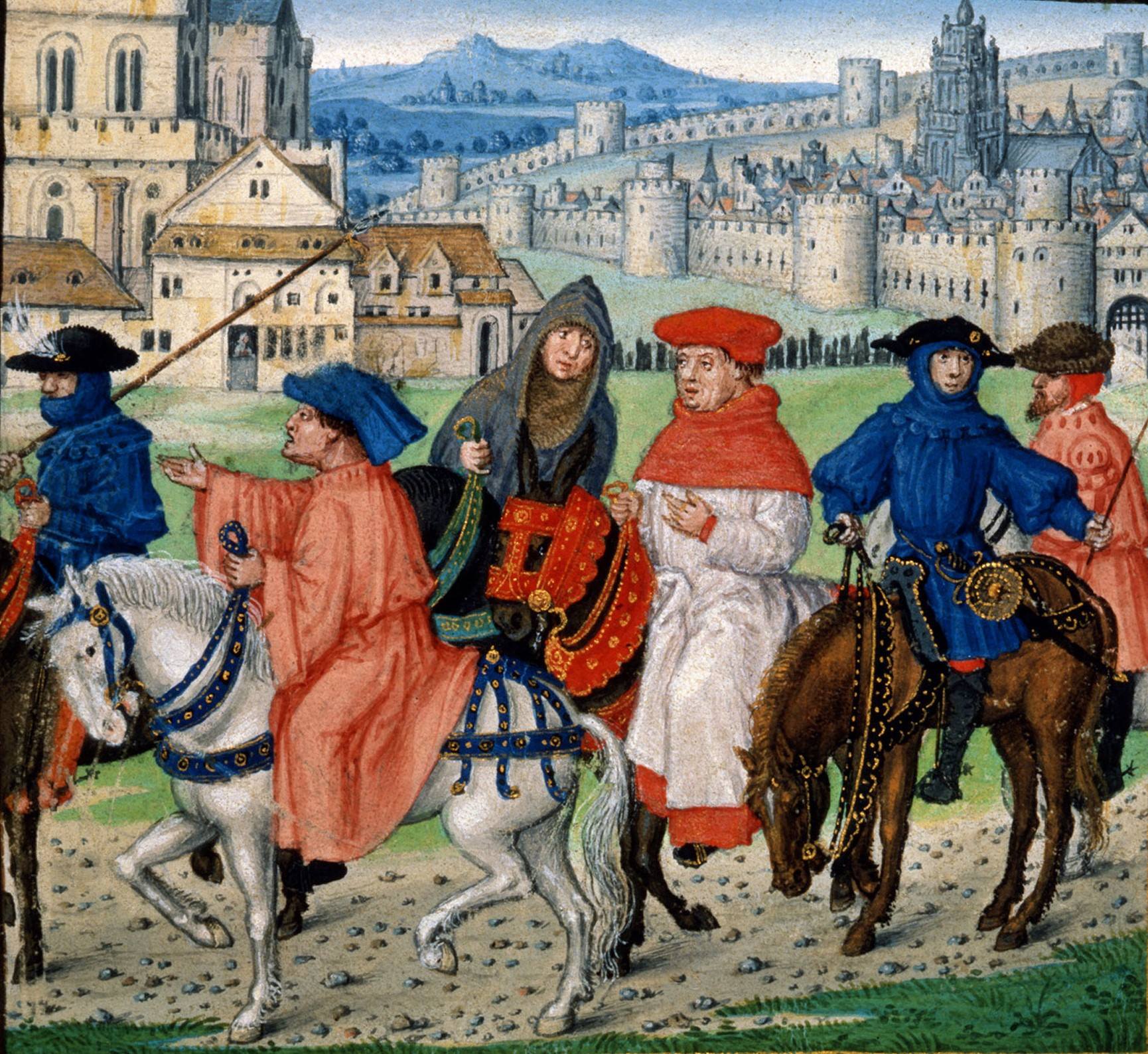
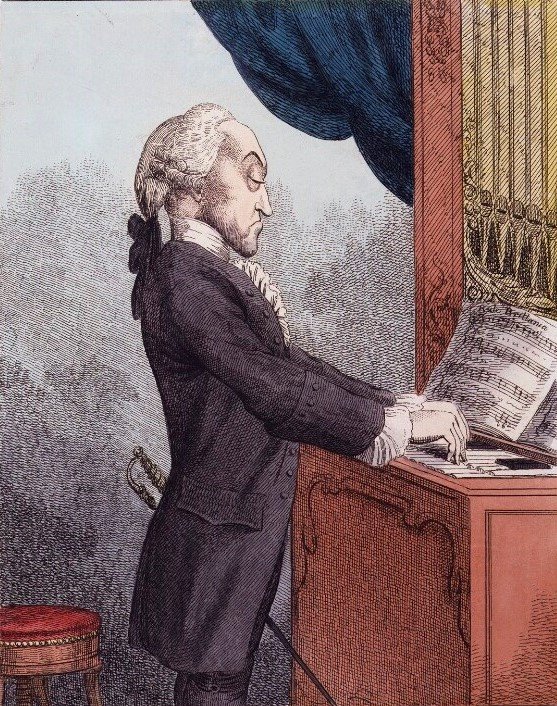
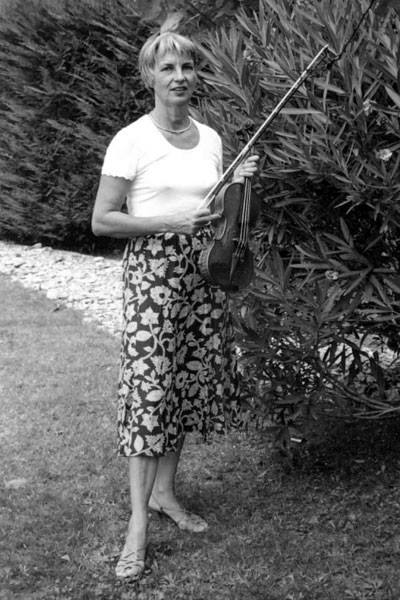
    PHOTOS (Clockwise from left): Gazeau, Glazunov, and Shostakovich
  • Hawking’s Pi Day & Einstein’s Violin

    Hawking’s Pi Day & Einstein’s Violin

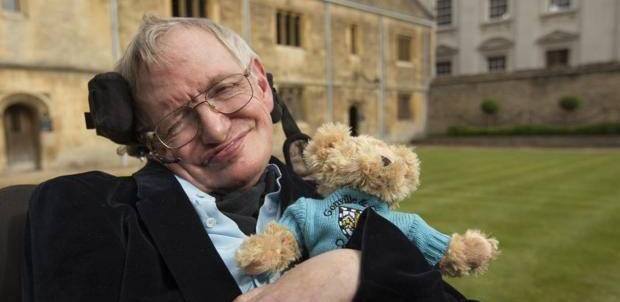
    Wow. Stephen Hawking died on Pi Day. What are the odds?

    But Hawking had a history of beating the odds, having lived with ALS for most of his life. When he was diagnosed with the disease at 21, the doctors projected that he would be dead within two years. Eventually, one of the most brilliant minds could communicate only through an adaptive word predictor that worked off of brain patterns and muscle movements.

    Hawking wasn’t always optimistic about the future of the earth or mankind. However, he loved classical music (all forms of music, he claimed). At the age of 15, he jerry-rigged his own stereo system. His first record purchase was Igor Stravinsky’s “Symphony of Psalms,” which he picked out of a discount record bin. Later, Hawking was a regular visitor to Covent Garden. A Hawking-like character would appear in the Philip Glass opera “The Voyage” in 1992.

    A little more about Hawking and classical music here:

    https://www.cam.ac.uk/news/stephen-hawking-unveils-his-top-three-tunes

    At the time of his death, Hawking was 76 years-old.

    On a tangentially related note, Albert Einstein’s violin sold at auction at Bonhams New York on Friday for $516,500 – five times the auction house’s estimate. The violin was made in 1933 by Oscar H. Steger, a member of the Harrisburg (PA) Symphony Orchestra. Einstein gave the violin to Lawrence Wilson Hibbs, the son of Princeton janitor Sylas Hibbs. It remained in the Hibbs family to the present day.

    https://www.bonhams.com/press_release/25709/

    “Life without playing music was inconceivable for me. I live my daydreams in music. I see my life in terms of music… I get most joy in life out of music.” – Albert Einstein

    Happy Pi Day!

  • Early Music Festival at Grounds For Sculpture

    Early Music Festival at Grounds For Sculpture

    The mad doctor with the co-hosts for today’s Noontime Concert – Patricia Hlafter and Judith Klotz of the Guild for Early Music.

    The annual Early Music Festival by the Guild for Early Music will be held at Grounds For Sculpture in Hamilton, NJ, this Sunday from 12:30 to 5:30 p.m. The festival is free with admission to the park. Enjoy lots of great music, performed on period instruments. Then take a break to stroll the sculpture gardens. Just watch out for those peacocks!

    John Burkhalter and Janet Palumbo of the Guild will be my guests for Friday’s noon concert. Tune in right now to enjoy George Dyson’s choral music masterpiece, “The Canterbury Pilgrims,” after Geoffrey Chaucer’s “The Canterbury Tales,” on WWFM – The Classical Network and wwfm.org.

  • Early Music Month Festival Broadcast

    Early Music Month Festival Broadcast

    March is Early Music Month. Join me this afternoon on The Classical Network for the first of two Noontime Concerts featuring highlights from the 2016 Guild for Early Music Festival.

    Each year, the festival is held at Grounds For Sculpture, the not-for-profit sculpture garden, museum, and arboretum, located in Hamilton, NJ. This year’s festival will take place on the two stages of the Seward Johnson Center for the Arts, with possible supplementary performances held outdoors by strolling musicians, weather permitting, this Sunday, March 18, from 12:30 to 5:30 p.m. To find out more about this year’s Early Music Festival by the Guild for Early Music, look online at guildforearlymusic.org.

    Or tune in: I’ll be joined today by Judy Klotz and Patricia Hlafter and on Friday by John Burkhalter and Janet Palumbo – all Guild musicians and board members – as co-hosts for music from the Medieval through Classical Periods. The fun begins today at noon.

    Following today’s broadcast concert, stick around for a complete performance of “The Canterbury Pilgrims,” George Dyson’s choral music masterwork inspired by Chaucer’s “The Canterbury Tales.” Take a pilgrimage back in time from noon to 4 p.m. EDT, on WWFM – The Classical Network and wwfm.org.

    Early Music America

  • Thomas Arne From Britannia to Elmer Fudd

    Thomas Arne From Britannia to Elmer Fudd

    I suppose it’s fairly common knowledge that Thomas Arne is the composer of the British national air “Rule, Britannia,” which was originally heard as part of his masque “Alfred” in 1740.

    What is perhaps less well known is that he also wrote the national air of Elmer Fudd, “A-Hunting We Will Go.” The maddening ear-worm was conceived for a production of John Gay’s “The Beggar’s Opera” in 1777. I am happy to report that no animals were harmed in the writing of this song.

    Ironically, it turns out that the singing of the British national anthem, “God Save the Queen,” has been identified as an expedient way to rid oneself of earworms, those insistently memorable melodies that continually repeat in our heads until it seems we will teeter over into madness.

    https://www.npr.org/2012/03/12/148460545/why-that-song-gets-stuck-in-your-head

    Join me for a keyboard concerto by Thomas Arne, on the anniversary of his birth, among my featured works today from 4 to 7 p.m. EDT, on WWFM – The Classical Network and wwfm.org.

Tag Cloud

Aaron Copland (93) Beethoven (95) Composer (114) Film Music (137) Film Score (143) Film Scores (255) Halloween (94) John Williams (195) KWAX (229) Leonard Bernstein (103) Marlboro Music Festival (125) Movie Music (152) Mozart (88) Opera (208) Philadelphia Orchestra (89) Picture Perfect (174) Princeton Symphony Orchestra (108) Radio (88) Ross Amico (244) Roy's Tie-Dye Sci-Fi Corner (290) The Classical Network (101) The Lost Chord (268) Vaughan Williams (103) WPRB (396) WWFM (881)

DON’T MISS A BEAT

Receive a weekly digest every Sunday at noon by signing up here


RECENT POSTS