Category: Daily Dispatch

  • Celebrating Kapralova and Smyth on WWFM

    Celebrating Kapralova and Smyth on WWFM

    In all likelihood you’ll be asleep by that time, thanks to the clock change, but in the event that you’ve overcompensated with too much caffeine, consider joining me tonight for “The Lost Chord,” when the focus will be on outstanding works by two extraordinary female composers.

    Vitězslava Kápralová (1915-1940) was one of the great hopes of Czech music, a figure who undoubtedly would be much better known had she not died of tuberculosis at the age of 25. As it stands, her reputation is only beginning to emerge from the shadow of her teacher and lover, Bohuslav Martinu.

    Kápralová’s String Quartet was written while she was yet a student at the Prague Conservatory, where her teachers included Vitězslav Novák and Václav Talich. (She studied with Martinu later in Paris.) The work was completed in 1936, when Kápralová was about 21 years-old.

    More about Kápralová here, in this article written to mark her centenary in 2015:

    https://www.telegraph.co.uk/culture/music/classicalmusic/11365848/The-tragedy-of-Europes-great-forgotten-female-composer.html

    Ethel Smyth (later DAME Ethel Smyth, 1858-1944) was one of the most vocal advocates of the women’s suffrage movement in England. She overcame early opposition to a career in music on the part of her father to receive the praise of George Bernard Shaw, who called her Mass “magnificent.”

    However, her works were often better-appreciated abroad. Her operas, in particular, were embraced in Germany. One of them, “Der Wald,” was the only opera by a woman composer mounted by New York’s Metropolitan opera for over a century!

    Smyth served time in prison for putting out the windows of politicians who opposed a woman’s right to vote. She also wrote for the cause “The March of the Women.” When Sir Thomas Beecham went to visit her in jail, he witnessed her conducting through the bars of her window with a toothbrush as her associates gathered for exercise in the courtyard.

    Smyth’s “Serenade in D” – a symphony in all but name – was her first orchestral score, composed in 1890, when she was about 32 years-old. In my opinion, it’s better than just about anything composed by her contemporary, Sir Hubert Parry, and much more compelling than the symphonies of Sir Charles Villiers Stanford.

    More about Smyth here, in this piece put together in connection with a revival of her opera, “The Wreckers,” by the great Leon Botstein:

    https://www.npr.org/sections/deceptivecadence/2015/07/23/410033088/one-feisty-victorian-womans-opera-revived

    I hope you’ll join me for music by these two extraordinary women – “A Woman’s Place is in the Concert Hall” – this Sunday night at 10:00 EDT, on WWFM – The Classical Network and wwfm.org.


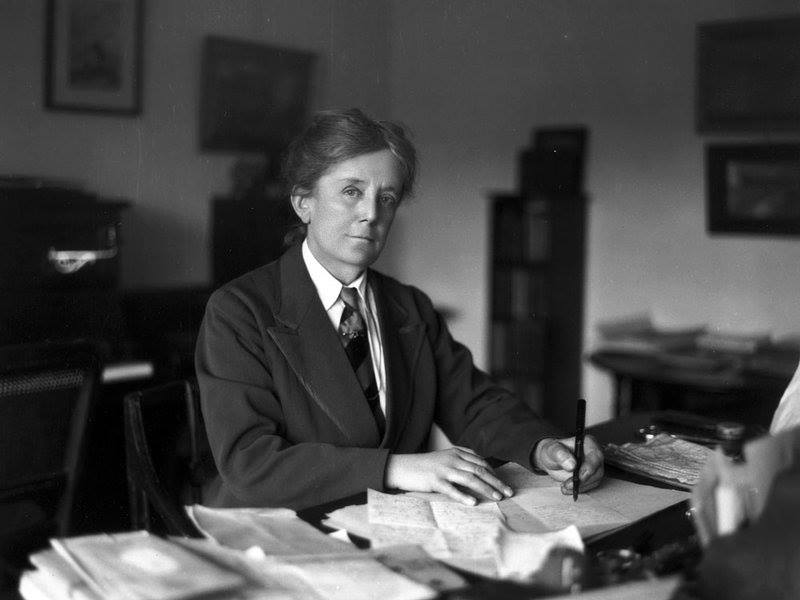
    PHOTOS: Ethel Smyth at her desk (top); Vitězslava Kápralová taking up the baton (she studied conducting in Prague with Václav Talich and in Paris with Charles Munch)

  • Daylight Saving Time Musical Commiseration

    Daylight Saving Time Musical Commiseration

    The possibility of stroke is elevated, even as productivity plummets. Sunday drives will become snarled in traffic accidents. Everyone will be moody and depressed.

    Sleepers, awake! Welcome to Daylight Saving Time!

    Brew yourself an extra strong pot of coffee, and join me on WPRB for a morning of musical commiseration.

    Among our featured highlights, Trenton’s own George Antheil will collaborate with George Balanchine on “Dreams.” A female somnambulist will dance across the rooftops with the Moon-Dandy in Erwin Schulhoff’s ballet “Moonstruck.” And Jean Francaix will puzzle over how to change his flower clock in “L’horloge de flore.”

    It’s all about lost sleep and syncopated clocks, this Sunday morning from 7 to 10 EDT, on WPRB 103.3 FM and wprb.com. I’m told we’ll get our hour back on November 4. Until then, enjoy the Circadian Apocalypse. If you’re on time, you’re already late, on Classic Ross Amico.

  • Daylight Saving Time Survival Guide

    Daylight Saving Time Survival Guide

    Get ready for the worst day of the year (after New Year’s and Valentine’s Day).

    Tomorrow morning, much of the United States will “spring forward” as we enact once again the hideous custom of Daylight Saving Time.

    All across the country bleary-eyed folk will adjust their clocks, only to wind up destroying things or injuring themselves because of disrupted sleep cycles. The risk of stroke always spikes the day after the time shift, and productivity plummets on Monday due to worker fatigue. But it’s all worth it, I suppose, just so that we can have a little extra light at the end of the day should we decide to take a walk in the evening.

    With this in mind, it may seem rather selfish to recommend that you join the most sleep-deprived of us all (me) this Sunday morning on WPRB, as I present three hours of music about clocks, time, sleep, dreams, sleeplessness, somnambulism, and morning come-too-soon.

    But present it I shall, for your consideration, this Sunday from 7 to 10 EDT on WPRB 103.3 FM and wprb.com. The evenings will be brighter, even as the circles around my eyes grow darker, on Classic Ross Amico.

  • Arthurian Movie Music Beyond Excalibur

    Arthurian Movie Music Beyond Excalibur

    The best movie about King Arthur is probably “Excalibur.” We will NOT be hearing music from that movie.

    The reason for this is that the soundtrack, while excellent, is made up mostly of pre-existing works by Wagner and Carl Orff. Granted, it is one of the better uses of classical music in film since “2001: A Space Odyssey.”

    Barring that, this week on “Picture Perfect,” we’ll hear original music from movies inspired by the legends of King Arthur.

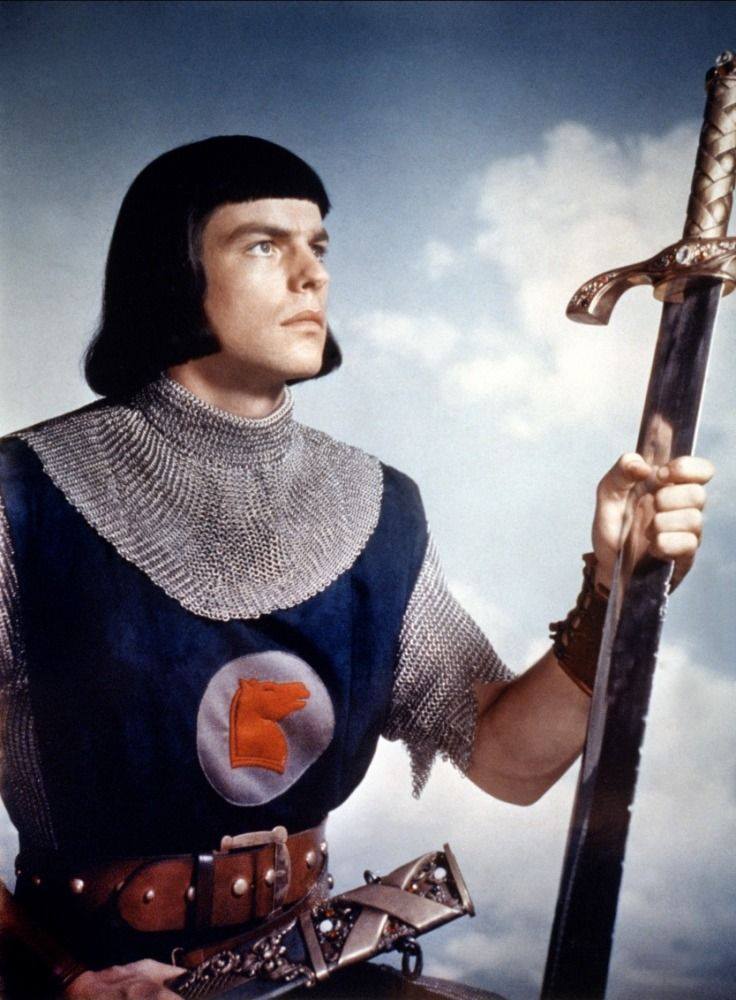
    The legends provide so much grist for “Prince Valiant” (1954), based on Hal Foster’s enduring comic strip, set in the days of Arthur, though Val himself is a Viking prince of the kingdom of Scandia. Janet Leigh plays Princess Aleta, James Mason the villainous Sir Brack, Victor McLaglen Val’s Viking pal Boltar, and Sterling Hayden a preposterous Gawain. For the title role, Robert Wagner dons the signature page-boy haircut. The score, by Franz Waxman, is every bit as vivid as the film’s Technicolor, and a clear prototype for the thrilling, leitmotif-driven music of John Williams.

    “The Mists of Avalon” (2001), adapted from Marion Zimmer Bradley’s novel, took the ingenious approach of retelling the Arthurian stories from the perspective of the often-marginalized female characters. The revisionist perspective breathed fresh life into the familiar tales, so that the book was greeted with critical and popular acclaim upon its release in 1983. A television miniseries, starring Julianna Margulies, Angelica Huston and Joan Allen, was produced for TNT, with music by Lee Holdridge.

    “First Knight” (1995) featured the unlikely cast of Sean Connery as Arthur, Richard Gere as Lancelot, and Julia Ormond as Guinevere. The film is unique, to my knowledge, in being based on the writings of medieval French poet Chrétien de Troyes, as opposed to the more frequent source, Sir Thomas Malory.

    The score was by Jerry Goldsmith. It was actually a bit of a rush job for Goldsmith, who stepped up at the very last minute to replace Maurice Jarre. Jarre had been approached to write music for what was originally a three-hour cut of the film. However, he only had four weeks to do so. Goldsmith, very well-known for his ability to write at white heat, was able to complete the score, and record the music in the allotted time.

    “Knights of the Round Table” (1953) is like “Excalibur” without the gravitas and grit, with Robert Taylor as Lancelot, Ava Gardner as Guinevere, and Mel Ferrer as Arthur. As envisioned by MGM, it’s far too glossy and pat, though it does sport some satisfying 1950s spectacle and a fine score by Miklós Rózsa.

    Join me, in the name of God, St. Michael and St. George, for music inspired by the legends of Arthur, on “Picture Perfect” – music for the movies – this Friday evening at 6:00 EST, on WWFM – The Classical Network and wwfm.org.

  • Samuel Barber Birthday Rare Video

    Samuel Barber Birthday Rare Video

    With thanks to documentarian Paul Moon, director of Samuel Barber: Absolute Beauty, here is a clip – new to me – of West Chester, PA’s favorite composer blowing out a candle on the occasion of his 67th birthday.

    Happy birthday, Samuel Barber, born on this date in 1910.

Tag Cloud

Aaron Copland (93) Beethoven (95) Composer (114) Film Music (137) Film Score (143) Film Scores (255) Halloween (94) John Williams (195) KWAX (229) Leonard Bernstein (103) Marlboro Music Festival (125) Movie Music (152) Mozart (88) Opera (208) Philadelphia Orchestra (89) Picture Perfect (174) Princeton Symphony Orchestra (108) Radio (88) Ross Amico (244) Roy's Tie-Dye Sci-Fi Corner (290) The Classical Network (101) The Lost Chord (268) Vaughan Williams (103) WPRB (396) WWFM (881)

DON’T MISS A BEAT

Receive a weekly digest every Sunday at noon by signing up here


RECENT POSTS