Category: Daily Dispatch

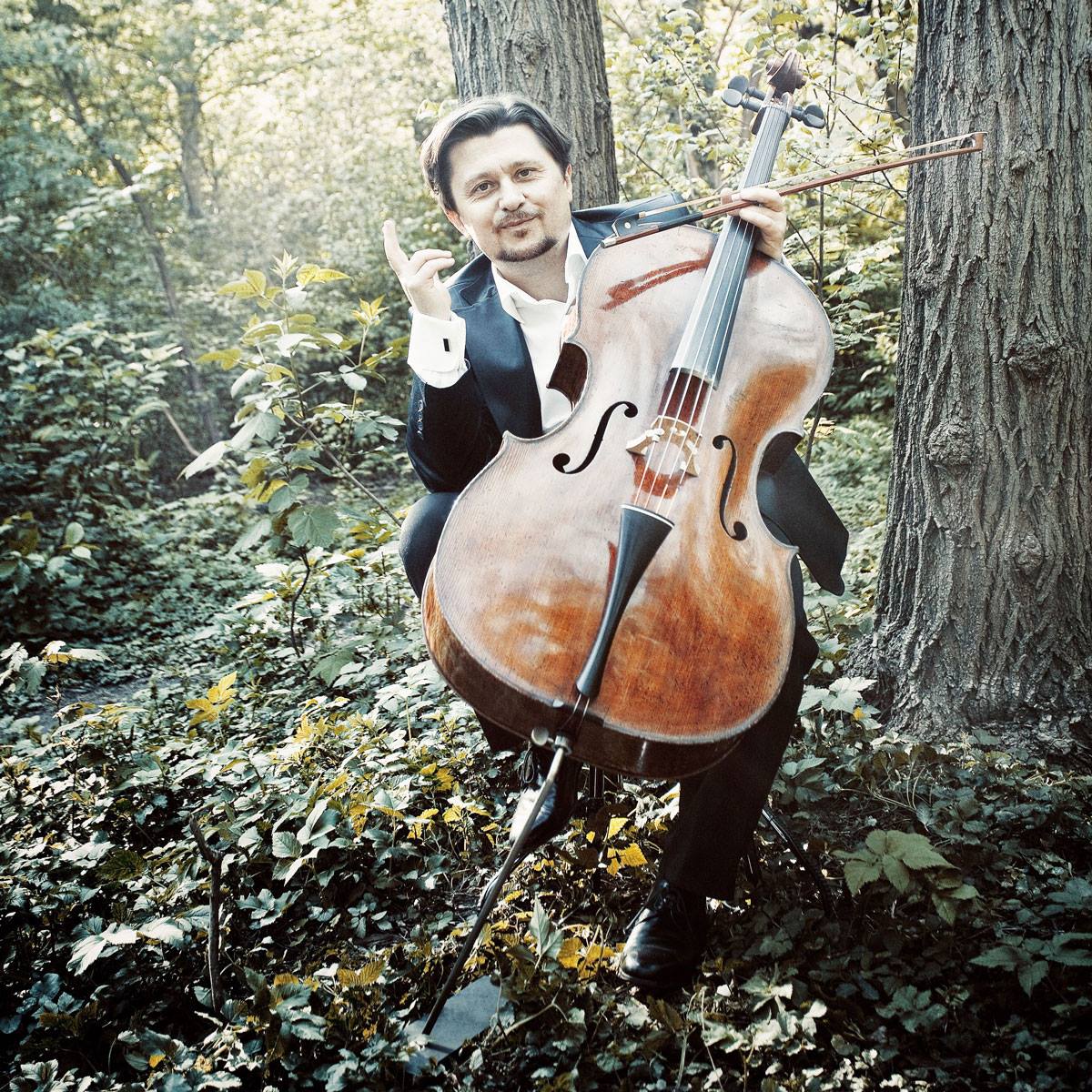
  • Cellist Friedrich Kleinhapl Interview

    Cellist Friedrich Kleinhapl Interview

    This afternoon on The Classical Network, I’ll be interviewing the remarkable cellist Friedrich Kleinhapl.

    Kleinhapl has been characterized by conductor Valery Gergiev as “one of the most promising talents of a new generation.” His performances have been described as “driven and unorthodox” (The Washington Post), undertaken with “abundant skills and unbridled passion” (The New York Times). His recordings of the Beethoven cello sonatas have been hailed as “among the most interesting in the catalogue” (The Strad).

    As a young man, Kleinhapl homeopathically recovered from a brain tumor, radically changing the way he thinks and feels about music. His 1743 Guadagnini cello has been outfitted with custom titanium parts. Its angled endpin allows the instrument to slant more horizontally, allowing gravity to gently assist the effect of his modern bow. With his duo partner, Andreas Woyke – pianist and composer, and his own wife, Kleinhapl founded “Get a Hearing,” an association in support of children with hearing impairment, in 2015.

    Kleinhapl and Woyke will appear on Tuesday at 7:30 p.m. at the Austrian Cultural Forum New York. On the program will be works by Beethoven, Shostakovich, Schnittke, and Gulda.

    I’ll chat with Kleinhapl by telephone, today at 5:00 p.m. EST. From 4 to 7, I’ll also salute Adolphe Sax and John Philip Sousa on their birthdays, among our featured offerings, on WWFM – The Classical Network and wwfm.org.

  • Autumnal Music with Bax & Lloyd on WWFM

    Autumnal Music with Bax & Lloyd on WWFM

    This Sunday night on “The Lost Chord,” we celebrate the eleventh month with music of an autumnal nature. We’ll open with Sir Arnold Bax’s ravishing tone poem, “November Woods,” of 1917. Then we’ll hear a symphony composed in 1981 by the criminally underrated George Lloyd.

    Lloyd’s music is invariably well-crafted, even infectious, yet stubbornly tonal. It can often seem a bit old-fashioned, yet compositional integrity and musical good taste never go out of style. He’s certainly a composer well worth getting to know.

    Lloyd’s Symphony No. 10, “November Journeys,” was commissioned by the BBC for the Northern Brass Ensemble. The commission coincided with the composer’s exploration by rail of a number of cathedrals. The sounds of the brass in the composer’s head paralleled his experience of taking in the magnificent buildings. At no point was he attempting to conjure an ecclesiastical air, yet he conceded that the second movement reminded him of a Christmas carol.

    We’ll have just a little bit of time at the end of the hour, so I’m tossing in Bax’s “Red Autumn,” for two pianos, for good measure. The piece was originally composed in 1912, and though he never orchestrated it, it’s thought that his original intention had been to do so. In any case, it is marked by Bax’s characteristic opulence.

    I hope you’ll join me for “Notions Eleven,” music for the eleventh month, this Sunday night at 10:00 EST – did you remember to change your clocks? – on WWFM – The Classical Network and wwfm.org.

  • Guy Fawkes Night William Byrd’s Secret Connection

    Guy Fawkes Night William Byrd’s Secret Connection

    Remember, remember, the Fifth of November – also, I hope you remembered to turn your clocks back so that you’re well-rested for Guy Fawkes Night!

    https://en.wikipedia.org/wiki/Guy_Fawkes_Night

    William Byrd, a “Gentleman of the Chapel Royal,” was one of the best loved and certainly one of the most powerful musicians in England. In 1575, Queen Elizabeth granted him and Thomas Tallis – who had been a “Gentleman” from the time of Henry VIII – a 21 year monopoly on polyphonic music and a patent to print and publish music.

    Despite Byrd’s favored status within the Anglican Church, he converted to Catholicism, and even rubbed shoulders with Robert Catesby, who formulated the Gunpowder Plot to blow up Parliament in 1605, during the reign of James I, for which Guy Fawkes gained his undying notoriety.

    Though Byrd was never subject to imprisonment for his religion, he was involved in numerous lawsuits and subjected to heavy fines. Elizabeth interceded on his behalf at least once. He participated in illegal services, and the texts he chose to set to music could, at times, have a subversive edge. In particular, as a Catholic in a Protestant country, he became fond of texts related to persecution. Comparatively speaking, he went unmolested, because of his record of allegiance to the crown.

    Learn more about Byrd here:
    https://en.wikipedia.org/wiki/William_Byrd

    The secret life of William Byrd:
    http://www.telegraph.co.uk/news/religion/10323301/The-secret-life-of-William-Byrd.html

    Byrd’s motet, “Ne irascaris Domine” (“Do not be angry, Lord”), from his “Cantiones sacrae”:


    PICTURED: Gunpowder Plot conspirators

  • Saturn Gives Back! Fall Back Time Change 2024

    Saturn Gives Back! Fall Back Time Change 2024

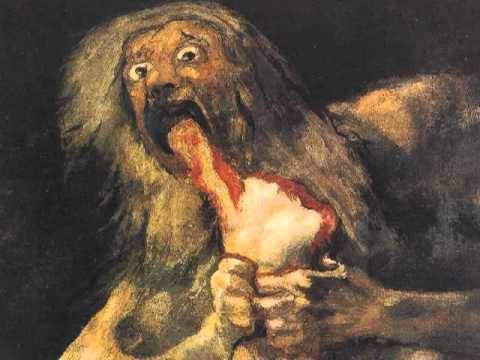
    Saturn, the Bringer of Old Age, reminds you to turn your clocks tonight. Actually, Saturn will give you back an hour. Thank you, Saturn.

    Detail: “Saturn Devouring His Son,” Francisco Goya (c. 1819-1823)

  • Friendly Aliens in Film Scores Close Encounters ET

    Friendly Aliens in Film Scores Close Encounters ET

    People of Earth! We come in peace!

    This week on “Picture Perfect,” in honor of the 40th anniversary of the release of “Close Encounters of the Third Kind” (November 16, 1977) and the 35th anniversary of “E.T. The Extra-Terrestrial” (June 11, 1982), we listen to music from films about benevolent visitors from other worlds.

    Friendly E.T.’s have been out of fashion now for quite some time. We seem to be mired in some neo-‘50s zeitgeist, as far as paranoia and invaders are concerned. But that certainly wasn’t the case back in 1982, when Steven Spielberg’s “E.T. The Extra-Terrestrial” almost singlehandedly turned everything on its head.

    No more invaders from Mars. Spielberg would get to that a couple of decades later, when he remade H.G. Wells’ “The War of the Worlds.” No, during the Reagan Era, with the Cold War winding down and terrorism not yet so much in the news, cinematic E.T.’s were benevolent at best, or at worst, just trying to do their thing. They were there to be misunderstood and even imperiled by man until the warm, fuzzy, often poignant finale.

    Spielberg had already explored the concept of the benevolent visitor from space, of course, with 1977’s “Close Encounters of the Third Kind.” But there was an ambiguity for much of the film as to what exactly the aliens’ intentions were. In fact, there is at least one sequence that would have given a child nightmares. Whatever tension is generated dissolves in the euphoric finale, centered on the communicative power of music. Like so many films back then and so few now, “Close Encounters” doesn’t so much exhaust the viewer as leave him or her with a feeling of hope.

    John Williams wrote the music for both “Close Encounters” and “E.T.,” and the two scores couldn’t be more different. For “CE3K,” the avant garde syntax of the early, eerier sequences dissolves into unabashed lyricism for the transcendent finale. “E.T” takes a much more intimate approach. The moving story of a friendship between a boy and a stranded space botanist is rendered in music that is by turns tender, buoyant, and touching. The score earned Williams a much-deserved fourth Academy Award. “E.T.” may very well be Williams’ masterpiece, and Spielberg’s too.

    The “friendly” alien of “The Day the Earth Stood Still” (1951), Klaatu, may come in peace, but it is a message delivered with tough love. If mankind refuses to abide, his giant robot, Gort, will destroy the planet. At a time when Martians invariably meant trouble, this was actually progressive. Bernard Herrmann’s score is one of his best, and certainly one of his most interesting. Always an eccentric orchestrator, Herrmann’s concept of extra-terrestrial music incorporates violin, cello, electric bass, two theremins, two Hammond organs, a large studio electric organ, three vibraphones, two glockenspiels, two pianos, two harps, three trumpets, three trombones and four tubas. Overdubbing and tape-reversal techniques were also employed.

    Finally, Ron Howard’s “Cocoon” (1985) is one of the more worthwhile of the seemingly endless procession of extra-terrestrial films to be released in the wake of “E.T.” At least this one took a different approach by bringing alien forces into contact with a Florida retirement community with the unexpected result of rejuvenating its inhabitants. A modern take on the fabled Fountain of Youth, the film is a showcase for veteran actors Hume Cronyn, Jessica Tandy, Jack Gilford and Don Ameche (who won an Academy Award). James Horner’s score is much sought after by collectors.

    Klaatu barada nikto! Join me for the touchdown of friendly alien films, on “Picture Perfect” – music for the movies – this Friday evening at 6:00 EDT, on WWFM – The Classical Network and wwfm.org.

Tag Cloud

Aaron Copland (93) Beethoven (95) Composer (114) Film Music (139) Film Score (143) Film Scores (255) Halloween (94) John Williams (195) KWAX (229) Leonard Bernstein (103) Marlboro Music Festival (125) Movie Music (154) Mozart (88) Opera (208) Philadelphia Orchestra (89) Picture Perfect (174) Princeton Symphony Orchestra (108) Radio (88) Ross Amico (244) Roy's Tie-Dye Sci-Fi Corner (290) The Classical Network (101) The Lost Chord (268) Vaughan Williams (103) WPRB (396) WWFM (881)

DON’T MISS A BEAT

Receive a weekly digest every Sunday at noon by signing up here


RECENT POSTS