Category: Daily Dispatch

  • Montague Phillips British Light Music

    Montague Phillips British Light Music

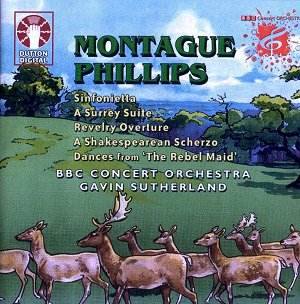
    Today marks the anniversary of the birth of Montague Phillips (1885-1969). Phillips composed in many different genres, but he is probably best known for the light music classics he wrote between the wars. They’re the perfect antidote to an arduous beginning of the work week. Enjoy some of it as part of an hour of British Light Music, this Monday evening at 6:00.

    We’ll also observe the birthdays of American composer George Whitefield Chadwick (1854-1931) and Finnish composer Joonas Kokkonen (1921-1996). We’ll sample from their music and much more this afternoon, beginning at 4:00 EST, on WWFM – The Classical Network and wwfm.org.


    Montague Phillips on Dutton Vocalion Records

  • Ukrainian Classical Music Cossacks and Gliere

    Ukrainian Classical Music Cossacks and Gliere

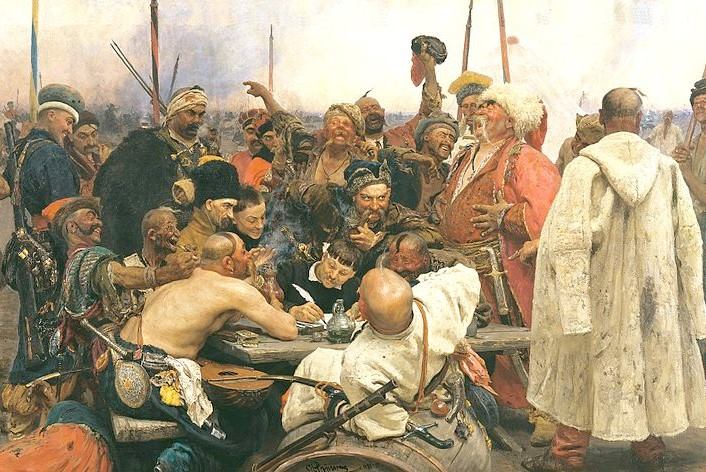
    This Sunday night on “The Lost Chord,” our ears will burn from the haughty and profane response of the Zaporozhy Cossacks to an ultimatum from Sultan Mehmad IV. The Sultan demanded the peaceful surrender of the Cossacks, after they had scored a glorious defeat against his Ottoman forces. To his giddy and inebriated foes, he was not exactly negotiating from a position of power.

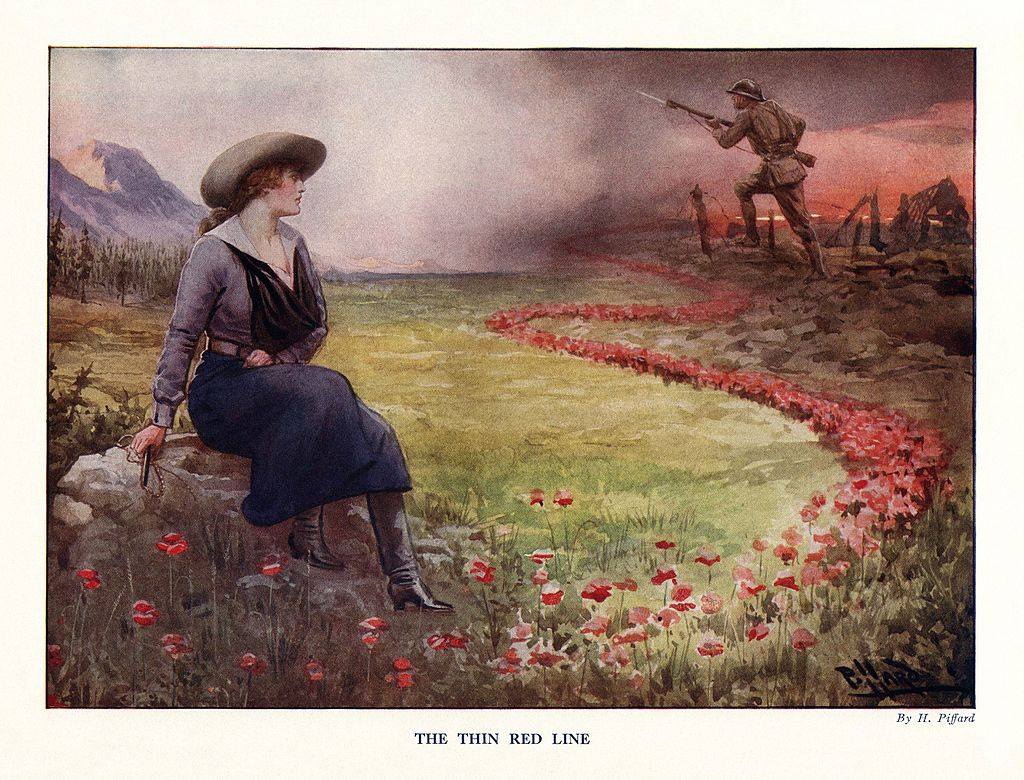
    Among Reinhold Glière’s works steeped specifically in Ukrainian lore is the symphonic poem/ballet “The Zaporozhy Cossacks,” based on the famous canvas by Ilya Repin. Glière, born in Kiev in 1875, is best known for his ballet “The Red Poppy,” with its ubiquitous “Russian Sailor’s Dance,” and perhaps for his Symphony No. 3, “Ilya Muromets.”

    In 1913, Glière attained an appointment to the school of music in Kiev, which was raised to the status of conservatory shortly thereafter. Glière served as director of the conservatory from 1914 to 1920.

    One of his pupils there was Boris Lyatoshinsky, who lived from 1895 to 1968. Lyatoshinsky was a student at the conservatory at the start. The first movement of his Symphony No. 1 was written as a graduation work. The other two movements followed in 1919.

    The first performance of the piece took place under Glière’s direction in 1923. If you get all sweaty listening to the orchestral works of Alexander Scriabin, you certainly won’t want to miss this, an opulent work by a young man determined to impress.

    I hope you’ll join me for “Steppe Lively” – classical music from Ukraine – this Sunday night at 10:00 EST, on WWFM – The Classical Network and wwfm.org.


    DETAIL: Ilya Repin’s “Reply of the Zaporozhian Cossacks” (1880-1891)

    If you aren’t too squeamish, you can read more about it, with a rough (and I do mean rough) translation of the Cossacks’ reply, here:

    https://en.wikipedia.org/wiki/Reply_of_the_Zaporozhian_Cossacks

  • A World Requiem Forgotten Memorial Day Music

    A World Requiem Forgotten Memorial Day Music

    For Veterans Day, here’s a piece of music that could serve double-duty, for both today and Memorial Day. Sadly, it is almost never performed at all.

    John Foulds composed his massive oratorio, “A World Requiem,” between 1919 and 1921 to honor the memory of all those – of whatever nation – who fell during WWI. The text, in English, was assembled by his wife, Maud MacCarthy, the work’s dedicatee, who compiled it from the Requiem Mass, sundry Biblical passages, selections from John Bunyan’s “The Pilgrim’s Progress,” a poem by Kabir, and her own original material.

    The oratorio falls into 20 movements (in two parts of ten each) for soloists, massed choirs (including children’s choirs), large orchestra, offstage instrumentalists, and organ. A progressive tonal framework is spiced with quarter tones, cluster chords and certain repetitive sequences.

    It was first performed on Armistice Night (now Veterans Day in the United States), November 11, 1923, in Royal Albert Hall, by up to 1,250 musicians. The work was embraced by the public, though critical reaction was mixed. Subsequent performances took place from 1924 to 1926 as part of a Festival of Remembrance. Then the work lay neglected for some 80 years until revived in 2007 by the forces in this recording, under the direction of the indefatigable Leon Botstein.

    Part I

    1 I Requiem – 8:44
    2 II Pronuntiatio – 4:05
    3 III Confessio – 5:46
    4 IV Jubilatio – 5:06
    5 V Audite – 7:04
    6 VI Pax – 3:53
    7 VII Consolatio – 5:08
    8 XIII Refutatio – 0:38
    9 IX Lux Veritatis – 1:19
    10 X Requiem 3:25

    45:08

    Part II

    1 XI Laudamus – 6:30
    2 XII Elysium – 6:24
    3 XIII In Pace – 3:17
    4 Hymn of the Redeemed – 4:37
    5 XIV Angeli – 3:27
    6 XV Vox Dei – 3:07
    7 XVI Adventus – 4:01
    8 XVII Vigilate – 2:03
    9 XVIII Promissio et Invocatio – 7:30
    10 XIX Benedictio – 1:41
    11 XX Consummatus 2:06

    44:50

    Thank you to those who served.

  • Elegies for the Old West: Revisionist Westerns

    Elegies for the Old West: Revisionist Westerns

    This week on “Picture Perfect,” it’s an elegy for the Old West.

    By the 1960s, the cinematic western was becoming a victim of its own success. The western had been a popular genre since the silent era, with dozens, of variable quality, released every year. Seemingly the genre hit its peak in the 1950s. One might say, the western suffered the fate of the actual American West, with its mythic resonance choked into clichés by too many settlers.

    Also, current events began to color filmmakers’ perceptions of the West, the turbulence surrounding the Vietnam War, the assassinations of both Kennedys and King, and increased suspicion of government making for violent, bloodier and more nihilistic visions of Manifest Destiny. The shift gave rise to the revisionist western, which embraced new realities of dirt, corruption, and moral ambiguity in the West. At the same time, there was a rise in more wistful, elegiac westerns, which seem to bid farewell to beloved western icons like Joel McRea, Kirk Douglas and John Wayne.

    Common characteristics include the obsolescence of the gunfighter; the free-ranging cowboy fenced off by barbed wire; the encroachment of corporations in the form of railroad and mining interests; horses replaced by automobiles; the six-shooter superseded by the Gatling gun – the land of limitless possibility and moral certitude, subdivided and spoiled by industrialization. Once-heroic figures ride slowly into the sunset, or are killed, their qualities unrecognized, perhaps even willfully rejected, by those who come after.

    We’ll hear selections from four elegiac westerns, including “Cheyenne Autumn” (1964), with music by Alex North; “The Shootist” (1976), with music by Elmer Bernstein; “The Wild Bunch” (1969), with music by Jerry Fielding; and “Monte Walsh” (1970), with music by John Barry.

    Autumn comes to the Old West, on “Picture Perfect,” this Friday evening at 6:00 EST, on WWFM – The Classical Network and wwfm.org.


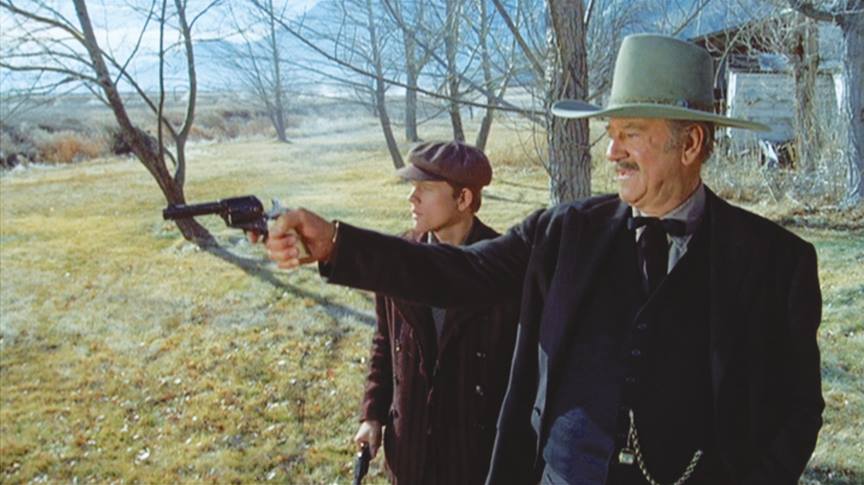
    PHOTO: John Wayne and Ron Howard take aim in “The Shootist”
  • Feather Our Nest Support Independent Radio!

    Feather Our Nest Support Independent Radio!

    Emily Dickinson wrote, “Hope is the thing with feathers.” That said, it’s always good to have cash.

    As we enjoy this program of music inspired by birds this morning, on Classic Ross Amico, consider making a contribution to the radio station that makes it possible. Sure, I bring all my own music, and I’m the one that staggers out of bed at 4:00 in the morning to trot through the cold to bring you a world of entertainment (some of it unintentional, I’m sure). But I couldn’t do it without the medium of radio. And not every radio station would allow me to do what I do on WPRB. Very few would, as a matter of fact.

    If you enjoy the mix of unusual and neglected repertoire, and you find the personalized stamp on the programming a positive contribution to your day; and if you enjoy the passion and commitment of my colleagues, who play all kinds of music (truthfully, you never know what you’re going to get here), please support us.

    WPRB is in the middle of its “silent drive.” That means we don’t clutter up the air waves with too many on-air pitches. We just put it out there once in a while and leave it to you to follow your conscience. WPRB is the radio station of Princeton University. However, we are independently owned and funded. That means we rely on the generosity of folks just like you.

    Many independent radio stations have gone south, and not just for the winter. So while you’re enjoying the bird music this morning until 11:00 EST, won’t you consider feathering our nest? Keep us fortified with your donation now at http://wprb.com/wprb-fundraising-drive-fall-2017/

    On behalf of WPRB 103.3 FM and wprb.com, I thank you!

Tag Cloud

Aaron Copland (93) Beethoven (95) Composer (114) Film Music (139) Film Score (143) Film Scores (255) Halloween (94) John Williams (195) KWAX (229) Leonard Bernstein (103) Marlboro Music Festival (125) Movie Music (154) Mozart (88) Opera (208) Philadelphia Orchestra (89) Picture Perfect (174) Princeton Symphony Orchestra (108) Radio (88) Ross Amico (244) Roy's Tie-Dye Sci-Fi Corner (290) The Classical Network (101) The Lost Chord (268) Vaughan Williams (103) WPRB (396) WWFM (881)

DON’T MISS A BEAT

Receive a weekly digest every Sunday at noon by signing up here


RECENT POSTS