Category: Daily Dispatch

  • Caribbean Classical Music Cordero & Sierra

    Caribbean Classical Music Cordero & Sierra

    Just keep thinking about rum and plantains. This Sunday night on “The Lost Chord,” we recollect sunnier times in the Caribbean.

    We’ll have music by two composers with Puerto Rican connections: Ernesto Cordero (b. 1946), though born in New York, was raised there; Roberto Sierra (b. 1953) was born there and now teaches at Cornell.

    Cordero studied at the Conservatory of Music in Puerto Rico and the Royal Conservatory of Music in Madrid. He did post graduate work in composition in Rome and New York (with Julián Orbón). He also studied guitar under the legendary Regino Sáinz de la Maza (who gave the premiere of Rodrigo’s “Concierto de Aranjuez”) and Alirio Díaz.

    Cordero’s music is distinguished by its Caribbean flavor. He has written at least eight concertos to date. We’ll be listening to his “Concierto Festivo” (2003), dedicated to Pepe Romero.

    Sierra studied composition in Hamburg with György Ligeti. In 1986, his opera, “El mensajero de plata” (“The Silver Messenger”), was given its premiere at the Interamerican Festival in San Juan. In 1985, Zdenek Macal conducted the first performance of Sierra’s first major orchestral composition, “Jubilo,” with the Puerto Rico Symphony Orchestra. Macal took the work to Carnegie Hall in 1987, with the Milwaukee Symphony Orchestra, effectively kickstarting Sierra’s international career.

    Sierra spent three seasons as Milwaukee’s composer-in-residence, from 1989 to 1992. The culmination of his residency was the world premiere of “Tropicalia” (1991). The work falls into three movements: “Foliage” is evocative of a rainforest; “Nocturne” conjures childhood memories of fireflies and “coqui,” Puerto Rican tree frogs; and “Celebration” is full of upbeat, indigenous rhythms.

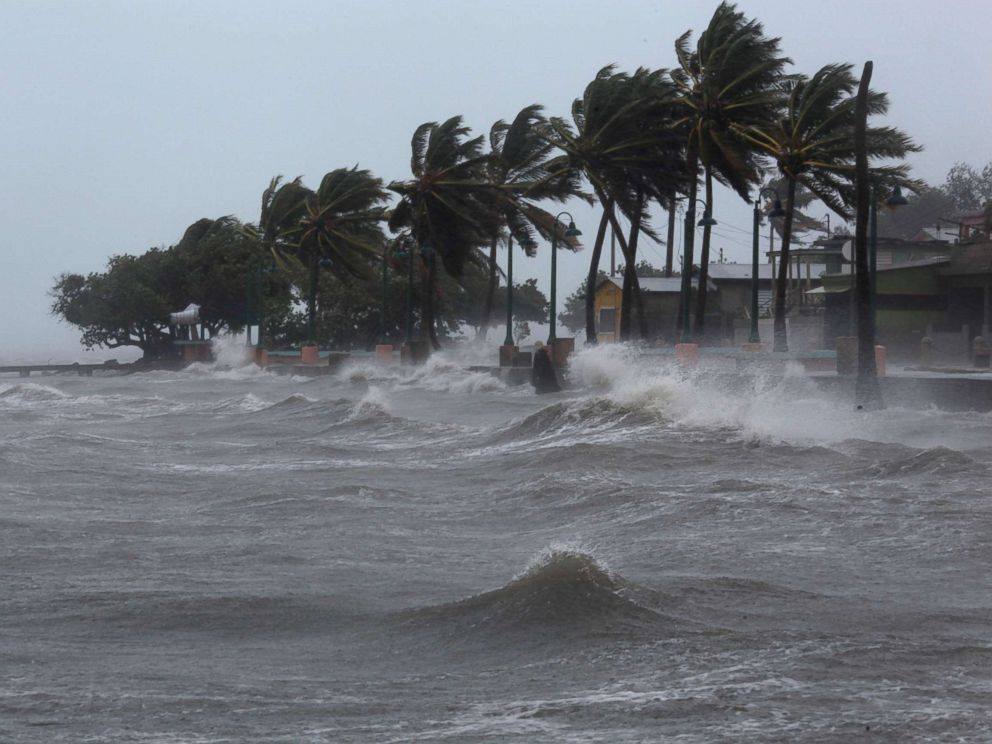
    Put aside thoughts of catastrophic weather. Join me for “Port of Riches,” this Sunday night at 10:00 EDT, on WWFM – The Classical Network and wwfm.org.
  • Richard Arnell Rediscovered British Symphony Gem

    Richard Arnell Rediscovered British Symphony Gem

    In an 80th birthday tribute, BBC Radio 3’s David Wright described him as the “greatest living British symphonist.” Irish composer Gerard Victory said of the Symphonies 3 and 5, “I wish I had written them!” Conductor Bryden Thomson called the 5th “a work to fall in love with.” Yet at the time of these remarks, none of his symphonies had been commercially recorded.

    Richard Anthony Sayer Arnell (1917-2009), known to his intimates simply as “Tony,” was a composer of lush, romantic, big-hearted music, full of noble aspirations and transcendent melody. Stranded in the United States for eight years, with the outbreak of World War II as he was visiting the 1939 World’s Fair, he cultivated important friendships with Bernard Herrmann, Virgil Thomson, and Sir Thomas Beecham. His concert works were championed by Beecham, Sir John Barbirolli and Leopold Stokowski. He wrote film music for Robert J. Flaherty and ballets for George Balanchine and Frederick Ashton.

    His ballet “Punch and the Child” was recorded by Beecham; the composer himself recorded selections from “The Great Detective.” The symphonies, on the other hand, had to wait until 2005 to receive their first recordings. In light of all the attention lavished on English composers over the years by labels such as EMI, Lyrita and Chandos, this is tantamount to a crime against music.

    Though most of the symphonies had been heard in concert (you’ll find some live performances on YouTube), it fell to Martin Yates, one of Arnell’s composition students at Trinity College, and Warren Cohen, the music director of MusicaNova Orchestra in Phoenix, Arizona, to get the ball rolling on a revival of this fascinating and worthwhile body of work (documented on Dutton Vocalion Records and Con Brio Recordings, respectively). But by then the composer was already in his late 80s.

    I hope you’ll join me this week on WPRB, as I do my own small part in redressing this unjust neglect with a special program in honor of Arnell’s 100th birthday. We’ll enjoy five hours of Arnell’s orchestral, chamber and instrumental works, with a special visit by Cohen, who will talk a little bit about his experiences with the composer and his output. The celebration will take place this Thursday – the eve of Arnell’s centenary – from 6 to 11 a.m. EDT, on WPRB 103.3 FM and wprb.com.

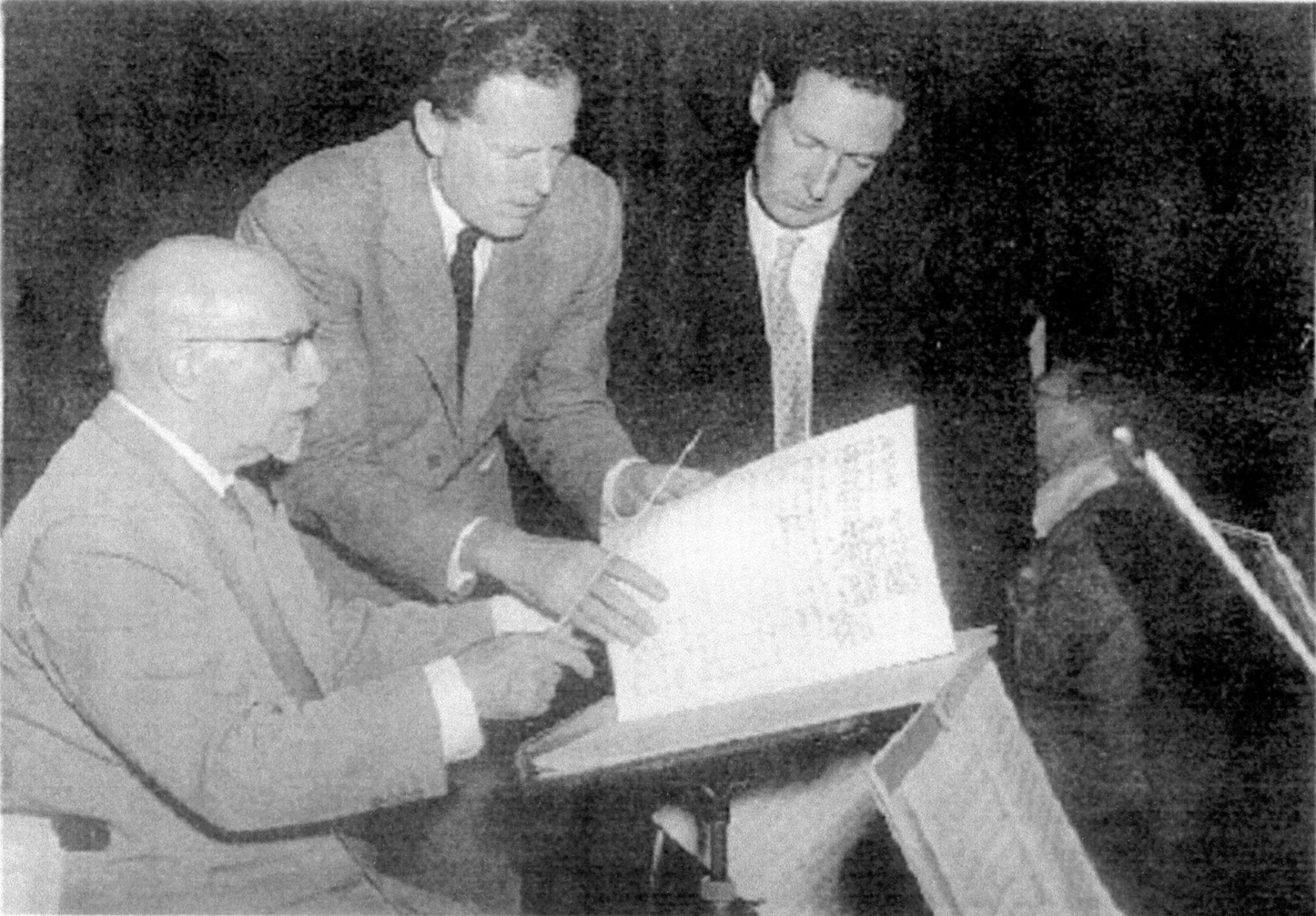
    Special thanks to Patrick Jonathan, who shares this photo of Beecham, Arnell and pianist Denis Vaughan, taken at a rehearsal of Arnell’s “Landscapes and Figures” in preparation for a concert at the 1956 Edinburgh Festival. “I love this photo,” Patrick writes. “Tony took it wherever he went to live and put it up on the wall. I bugged him till he got it scanned and gave me a copy!”

  • Richard Arnell Rediscovered Centenary Special

    Richard Arnell Rediscovered Centenary Special

    They say forewarned is forearmed.

    I don’t ordinarily tease shows this far in advance, but I wanted to direct your attention to a very special program I’ll be presenting on WPRB this coming Thursday in honor of the neglected English composer Richard Arnell.

    Friday would have been Arnell’s 100th birthday. Best known for his ballets “Punch and the Child” and “The Great Detective,” he died in 2009 at the age of 91. Puzzlingly, for a composer that was championed by Bernard Herrmann, Virgil Thomson and Sir Thomson Beecham, Arnell remains a marginal figure, a status not at all commensurate with the level of his artistry. Beecham went so far as to characterize him as one of the greatest orchestrators since Berlioz. His soaring melodies and playful syncopations are certainly easy to warm up to, and his symphonies convey real depth.

    Thankfully, he lived long enough to witness a recorded revival of his orchestral works, spearheaded by the Dutton Vocalion Records label, with Martin Yates conducting the Royal Scottish National Orchestra and the BBC Philharmonic. This occurred toward the very end of his life, and the performances are top-notch.

    Interestingly, however, the Dutton team was pipped at the post by the Arizona-based MusicaNova Orchestra, which set down its own recordings of the Symphonies Nos. 4 & 5 in August of 2005. These performances have been issued commercially on the Con Brio Recordings label. The orchestra has performed all of the Arnell symphonies, along with the “Sinfonia quasi Variazioni” and “Ode to the West Wind.”

    Music director Warren Cohen, who founded MusicaNova in 2003, is a champion of unusual and neglected repertoire. What other orchestra in the United States, especially one so young, can brag about having presented works by Hans Gál, Harald Genzmer, John Ireland, Othmar Schoeck, and Boris Tchaikovsky – and all in one season?

    As luck would have it, Cohen divides his time between Phoenix and New Jersey, and his schedule is such that he is able to join me on-air to talk a little bit about his enterprising orchestra, his programming and recording plans, and most especially his experiences with Richard Arnell, both the man and his music. The broadcast will include exclusive concert recordings of Arnell’s Symphony No. 5 and an elegy arranged for string orchestra by Cohen from Arnell’s String Quartet No. 3.

    In the coming days, I will also be sharing personal anecdotes on this page, supplied by composer Patrick Jonathan, now living in Malaysia. Jonathan became very close to Arnell late in life, when a master-disciple dynamic quickly deepened into a true friendship.

    I hope you’ll continue to check in all this week, as we look forward to the Arnell centenary on September 15, to learn more about this skilled and charismatic composer, and that you’ll listen on Thursday, September 14, from 6 to 11 a.m. EDT, to enjoy a special Arnell marathon on WPRB 103.3 FM and wprb.com.

  • Music Movies Fellini Corigliano Korngold

    Music Movies Fellini Corigliano Korngold

    Get ready for an exercise in postmodern self-reflexivity, this week on “Picture Perfect,” as we take a look at movies about music and musicians.

    Federico Fellini’s “Orchestra Rehearsal” (1978) is a mock-documentary that presents the symphony orchestra as a metaphor for the human condition. Full of political overtones, the film explores the joys, sorrows, frustrations and triumphs of the musicians, who struggle with the concepts of individual liberty, tyranny and the collective good. The project would mark the final collaboration between Fellini and Nino Rota. The two artists first came together in 1952 on Fellini’s “The White Sheik.” They would go on to create such classics as “La Strada,” “Nights of Cabiria,” “La dolce vita” and “8 ½.”

    We’ll also hear music from the Canadian art house hit “The Red Violin” (1998). The film traces the history of the fictional title instrument from its creation in 17th century Cremona to the present day. The violin passes through the hands of a child prodigy, into those of a romantic virtuoso in the Paganini mold; then to China during the Cultural Revolution; and finally to a Canadian auction house. John Corigliano wrote the Academy Award-winning music, which is performed on the soundtrack by violinist Joshua Bell.

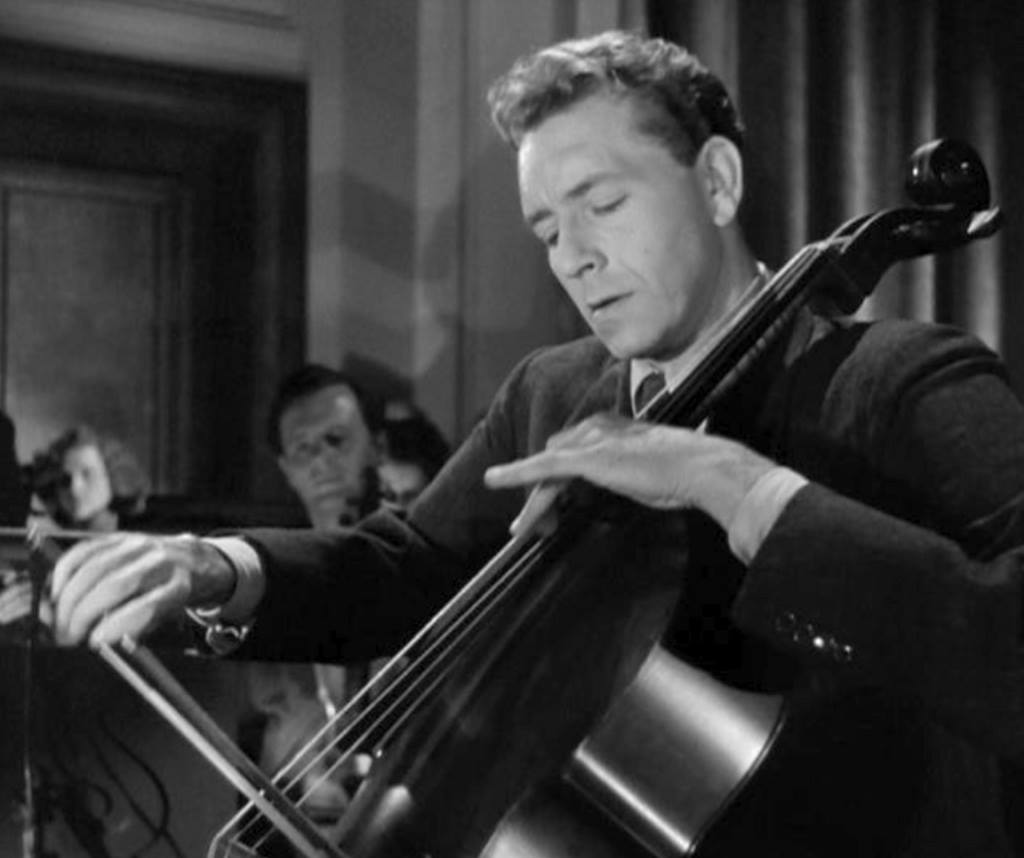
    Finally, we’ll turn to a classical music film noir from Hollywood’s Golden Age. “Deception” (1946) tells the tale of a dangerous love triangle between Bette Davis, Paul Henreid and Claude Rains. Much of the plot hinges on the premiere of a new cello concerto by a celebrated-though-fictional composer, played by Rains, who puts a fragile cellist, his rival in love, played by Henreid, through the psychological ringer. The music, which serves as both underscore and crux of the story, is by Erich Wolfgang Korngold. The composer subsequently published the “fictional” concerto as his Op. 37.

    All aboard the musical ouroboros! Join me for music from movies about music and musicians, this Friday evening at 6:00 EDT, on WWFM – The Classical Network and wwfm.org.

    The overheated trailer for “Deception:”

    PHOTO: Henreid wore a special jacket to accommodate the arms of two professional cellists who stood behind him as he emoted. On the film’s soundtrack the concerto was performed by Eleanor Aller Slatkin, the mother of Leonard Slatkin.

  • Academic Music on WPRB Radio

    Academic Music on WPRB Radio

    Okay, BMOC. How much do you really know about “academic” music? Time to hit the books on WPRB.

    We’ll have selections to put you in the mindset of school and study this morning, including symphonies inspired by Cambridge (Sir Charles Hubert Hastings Parry), Texas Christian University (Don Gillis), Charterhouse (Ralph Vaughan Williams), and a finger-wagging schoolmaster (Franz Joseph Haydn). There will also be a march for the Yale-Princeton Football Game by Charles Ives and episodes of inappropriate hard drinking at graduation with Johannes Brahms and Hugo Alfven.

    For extra credit, tune in for test pieces written for student musicians, music performed by university ensembles, and possibly even a few etudes (literally “studies”).

    Remember, there will be plenty of time to sleep in class, so join me this Thursday morning from 6 to 11 EDT, on WPRB 103.3 FM and wprb.com. It’s a perpetual school of hard knocks, on Classic Ross Amico.

Tag Cloud

Aaron Copland (93) Beethoven (95) Composer (114) Film Music (139) Film Score (143) Film Scores (255) Halloween (94) John Williams (195) KWAX (229) Leonard Bernstein (103) Marlboro Music Festival (125) Movie Music (154) Mozart (88) Opera (208) Philadelphia Orchestra (89) Picture Perfect (174) Princeton Symphony Orchestra (108) Radio (88) Ross Amico (244) Roy's Tie-Dye Sci-Fi Corner (290) The Classical Network (101) The Lost Chord (268) Vaughan Williams (103) WPRB (396) WWFM (881)

DON’T MISS A BEAT

Receive a weekly digest every Sunday at noon by signing up here


RECENT POSTS