Category: Daily Dispatch

  • Atlanta Symphony Celebrates Labor Day

    Atlanta Symphony Celebrates Labor Day

    On this eve of Labor Day, it’s an hour of American music courtesy of the Atlanta Symphony Orchestra.

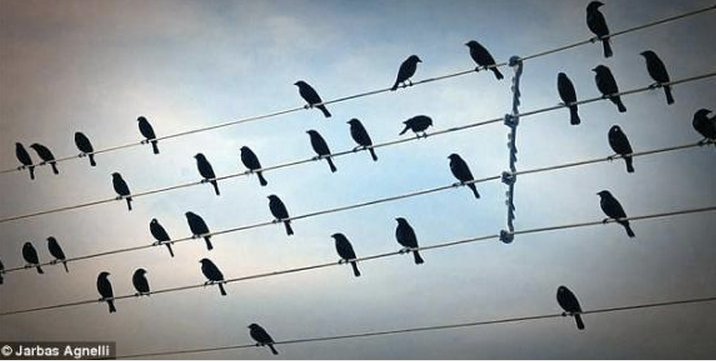
    The Philadelphia-based Pultizer Prize winner Jennifer Higdon composed “On a Wire” for the new music sextet known as Eighth Blackbird. A concerto grosso of sorts for six soloists, the piece begins with the musicians gathered around an open-lidded piano, most of them bowing the strings. The composer asks the listener to imagine six blackbirds sitting on a wire.

    We’ll follow that with “Q.E.D.: Engaging Richard Feynman,” by Michael Gandolfi. Feynman, the noted physicist and Nobel laureate, was as renowned for his wit as for his inquisitive mind. Gandolfi’s piece does not focus on scientific inquiry. Rather it takes as its starting point two anecdotes shared by the physicist in interviews with the BBC, which the composer discovered on YouTube. In performance, the video clips were shown to the audience preceding the work’s two sections. Understandably, these have been omitted from the recording.

    The sections themselves are settings of texts by various poets illustrating a specific theme. The first concerns a challenge put by an artist friend of Feynman suggesting that as a scientist he cannot truly appreciate the beauty of a flower. Feynman counters that scientific knowledge, a greater understanding of the flower, only adds to its beauty, rather than detracts.

    The second grows out of an anecdote concerning Feynman’s boyhood ignorance of the name of a certain kind of bird, a brown-throated thrush, and his realization that a name tells one nothing about the bird, but rather something about the people of various cultures who named the bird. He concludes, “Now, let’s look at the bird.”

    Part One is titled “On Waking,” and includes settings of Gertrude Stein, Emily Dickinson and the Irish Republican poet Joseph Campbell. Part II, “Song of the Universal,” includes settings of Walt Whitman, Ralph Waldo Emerson and Siegfried Sassoon.

    The sung texts are mostly incomprehensible. However, it sure is nice to listen to.

    Join me for an hour of Georgia peaches, with the Atlanta Symphony Orchestra, this Sunday night at 10:00 EDT, on WWFM – The Classical Network and wwfm.org.
  • Close Encounters Returns to Theaters

    Close Encounters Returns to Theaters

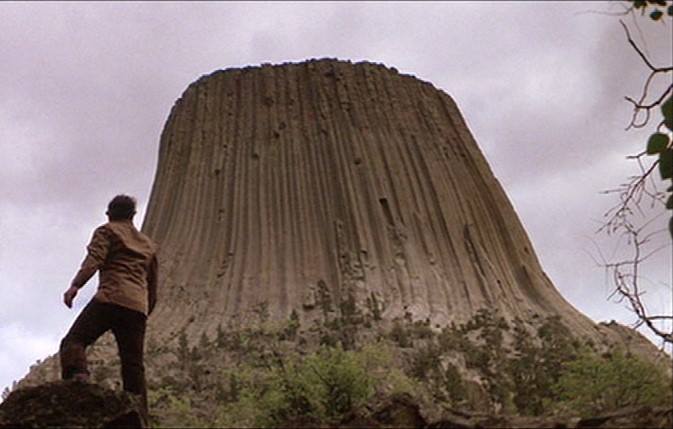
    “Close Encounters of the Third Kind” is back in theaters this weekend in a new, digital restoration. In anticipation of the 40th anniversary of the film’s release on November 16th, a unique screening will take place tonight at the base of Devils Tower, the national monument that plays such an important part in the Steven Spielberg classic. Watching “Close Encounters” for the first time was a watershed moment in my movie-going experience. If you’ve only seen it on TV, you have not really seen it. This is a film that definitely deserves to be experienced in a theater. Say what you will about Richard Dreyfuss’ sideburns, for me this will always be one of Spielberg’s best films, with a transcendent score by John Williams. Do yourself a favor, and check your local listings.

  • Copland’s Hollywood Ice Cream Social

    Copland’s Hollywood Ice Cream Social

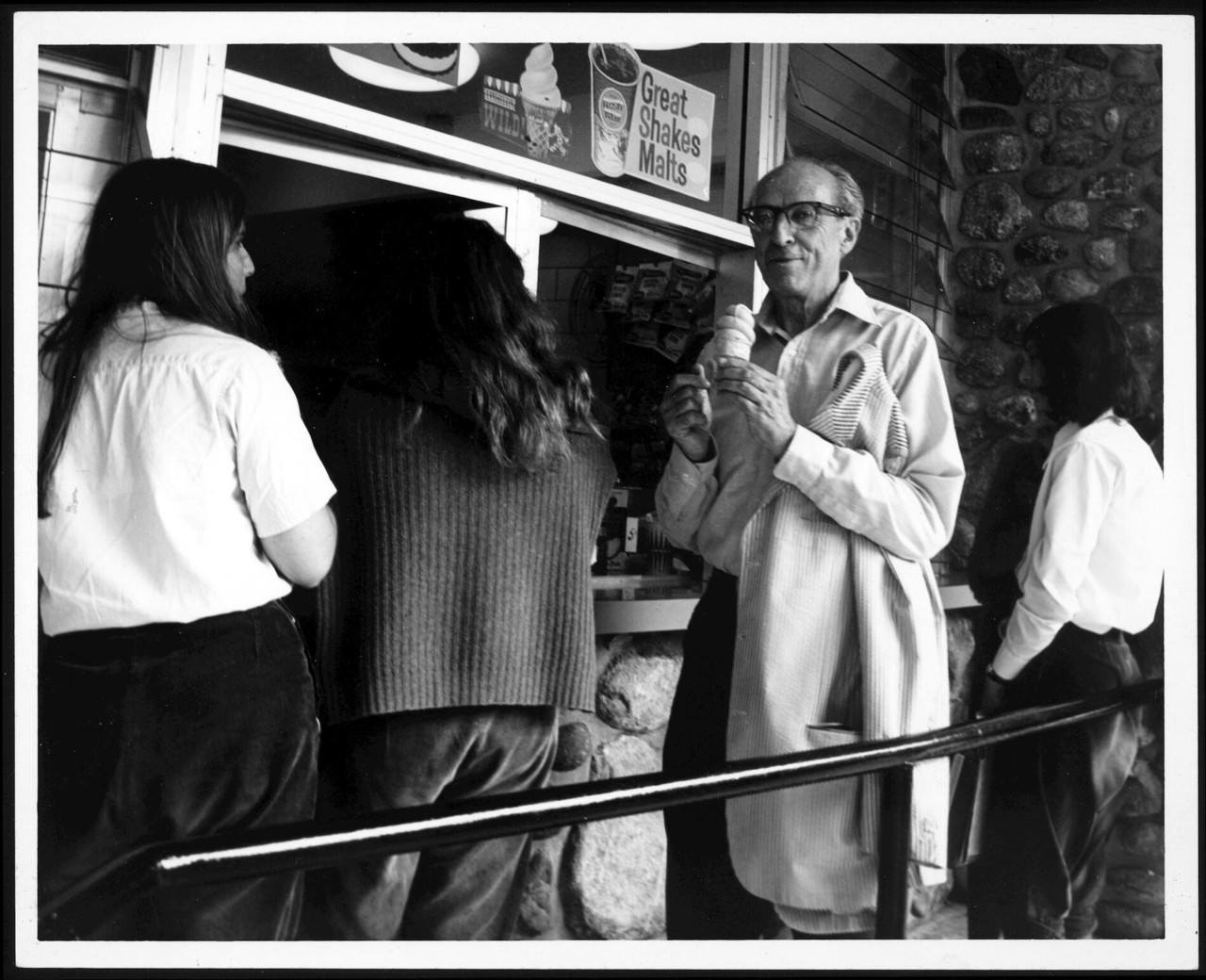
    Life isn’t so bad when there’s ice cream.

    Perhaps that was what was going through Aaron Copland’s head, decades after getting jerked around by Hollywood. After all, if you want to work in the film industry, you’ve got to expect that once in a while somebody’s going to mess with your things – even if you’re a Pulitzer Prize winner, lauded as the “Dean of American composers.”

    Copland was not very happy when his music for “The Heiress” was chopped to ribbons, dialed down and rescored without his approval. William Wyler (“Wuthering Heights,” “Friendly Persuasion,” “The Big Country,” “Ben-Hur”) was a brilliant director, but he had a tin ear. His films consistently sported the best scores of their era, and yet he mostly underappreciated, if not outright disliked, the music.

    “The Heiress” was made fresh off Wyler’s runaway success with “The Best Years of Our Lives.” The film, based on Henry James’ “Washington Square,” was nominated for eight Academy Awards, winning four, including Oscars for Olivia De Havilland and for Copland’s score, which is so strong it manages to maintain its integrity despite all of the studio tinkering.

    Wyler insisted Copland work the song “Plaisir d’Amour” into the fabric of his music, which he artfully did in three cues. But that wasn’t good enough. Without Copland’s knowledge, the main title was replaced with a garish arrangement of “Plaisir,” which was also looped in for some of the love music. André Previn, in 1949 already one of Hollywood’s bright young talents, likened the return of Copland’s original thoughts following these interpolations to “suddenly finding a diamond in a can of Heinz beans.”

    When Copland’s contribution was recognized by the Academy, it was the only instance up to that time of a score being honored after being shorn of its main title, the part of a score that generally makes the biggest impression. Copland never bothered to collect his award. “The Heiress” would be the last time he would work in Hollywood.

    He did compose one more film score, however, for the 1961 independent film, “Something Wild,” which contains some of his most insistently non-commercial music. Occasionally brutal and often thrilling, its character is worlds away from the pastoral tranquility of “Appalachian Spring.” It’s a brilliant piece of work, yet it did not receive a commercial release until 2003.

    This week on “Picture Perfect,” we’ll sample music from “The Heiress” and “Something Wild,” as well as from the controversial pro-Soviet film “The North Star.” We’ll even hear a little bit from the 1939 World’s Fair documentary “The City.”

    Get your Labor Day weekend off to a good start with a cold cone of Aaron Copland classics, this Friday evening at 6:00 EDT, on WWFM – The Classical Network and wwfm.org.

  • Labor Day American Music Celebration

    Labor Day American Music Celebration

    Labor Day is many things to many people. Officially, it is a federal holiday, a celebration of the worker. Unofficially, it holds connotations of the end of summer, a last chance to hit the road and enjoy the beach, have family and friends over for a picnic, or simply kick back for three days and deny the impending, precipitous dash through the autumn and winter holidays. For us, it’s an excuse to flood the air waves with American music.

    Join me this Thursday morning on WPRB, as we celebrate the American landscape, with music about natural and man-made wonders. We’ll conjure up the dungareed laborer, with the sounds of rivets and factory whistles. We’ll take a last dance around the firehouse and the gazebo. We’ll even enjoy some musical picnic foods. Plenty of the music will be wondrous in itself.

    Put aside thoughts about punching the clock or punching your supervisor, this Thursday morning from 6 to 11 EDT, on WPRB 103.3 FM and wprb.com. Hard times come again no more, on Classic Ross Amico.

  • Labor Day Weekend: American Music on WPRB

    Labor Day Weekend: American Music on WPRB

    As we approach the Labor Day weekend, get ready for a real labor of love, this Thursday morning on WPRB. It will be an all-American program. Man-made and natural wonders will punctuate the show, with works like Tobias Picker’s “Keys to the City” (written to mark the 100th anniversary of the Brooklyn Bridge), Samuel Jones’ Symphony No. 3 (a musical response to Texas’ Palo Duro Canyon), and Joan Tower’s “Made in America.”

    In addition, there will be lighter pieces about picnic foods and gazebo dances. I’ll also play a little musical ketchup – I mean catch-up – as I finally get around to airing at least two works promised on earlier shows that were bumped due to time constraints: Elie Siegmeister’s “Sunday in Brooklyn,” with its celebratory final movement inspired by Coney Island, and Ned Rorem’s Symphony No. 3, in a recording of its world premiere, with Leonard Bernstein and the New York Philharmonic.

    As if all that weren’t enough, we’ll enjoy a recent recording of the Sonata for Piano by Jack Gallagher (composer), newly released by Centaur Records, Inc.

    Put away your hard hat and lunch pail and join me for one final helping of baked beans and corn-on-the-cob, this Thursday morning from 6 to 11 EDT, on WPRB 103.3 FM and wprb.com. Next week it will be back to the mines with you, on Classic Ross Amico.

Tag Cloud

Aaron Copland (93) Beethoven (95) Composer (114) Film Music (139) Film Score (143) Film Scores (255) Halloween (94) John Williams (195) KWAX (229) Leonard Bernstein (103) Marlboro Music Festival (125) Movie Music (154) Mozart (88) Opera (208) Philadelphia Orchestra (89) Picture Perfect (174) Princeton Symphony Orchestra (108) Radio (88) Ross Amico (244) Roy's Tie-Dye Sci-Fi Corner (290) The Classical Network (101) The Lost Chord (268) Vaughan Williams (103) WPRB (396) WWFM (881)

DON’T MISS A BEAT

Receive a weekly digest every Sunday at noon by signing up here


RECENT POSTS