
With projected heat index values of 103, we’ll attempt to keep our cool today with soothing thoughts of summer and summery diversions. We’ll have vacation music, music inspired by leisurely pursuits, water music, images of fountains, and aural evocations of perfumed breezes wafting through gently swaying greenery. Join me on this lazy afternoon for some languid classics, from 12 to 4 p.m. EDT, on WWFM – The Classical Network and wwfm.org.
Category: Daily Dispatch
-

Solar Eclipse Classical Music Playlist
If anything, once we’ve all damaged our retinas trying to view today’s solar eclipse, we’ll have developed a heightened appreciation for our remaining, unimpaired sense of hearing. Bask in the warm afterglow of today’s syzygy by joining me on The Classical Network for a playlist curated from a wide repertoire of works inspired by the sun, the moon, and the heavens.
Highlights will include “Hymn to the Sun” from Pietro Mascagni’s opera “Iris,” ballet music from Jacques Offenbach’s operetta “Voyage to the Moon,” Kenneth Fuchs’ horn concerto, “Canticle to the Sun,” reflective of St. Francis of Assisi’s appreciation of Brother Sun and Sister Moon, and George Frideric Handel’s “Total Eclipse” from the oratorio “Samson.” There will also be musical responses to the mythological figures of Apollo (the sun god), Helios (the personification of the sun), and Phaeton (Helios’ son, ill-equipped to handle his father’s blazing chariot).
Make us the bright spot of your day, as we celebrate the eclipse, from 4 to 7 pm EDT, on WWFM – The Classical Network and wwfm.org.
-
Cosmic Classical Music for the Eclipse
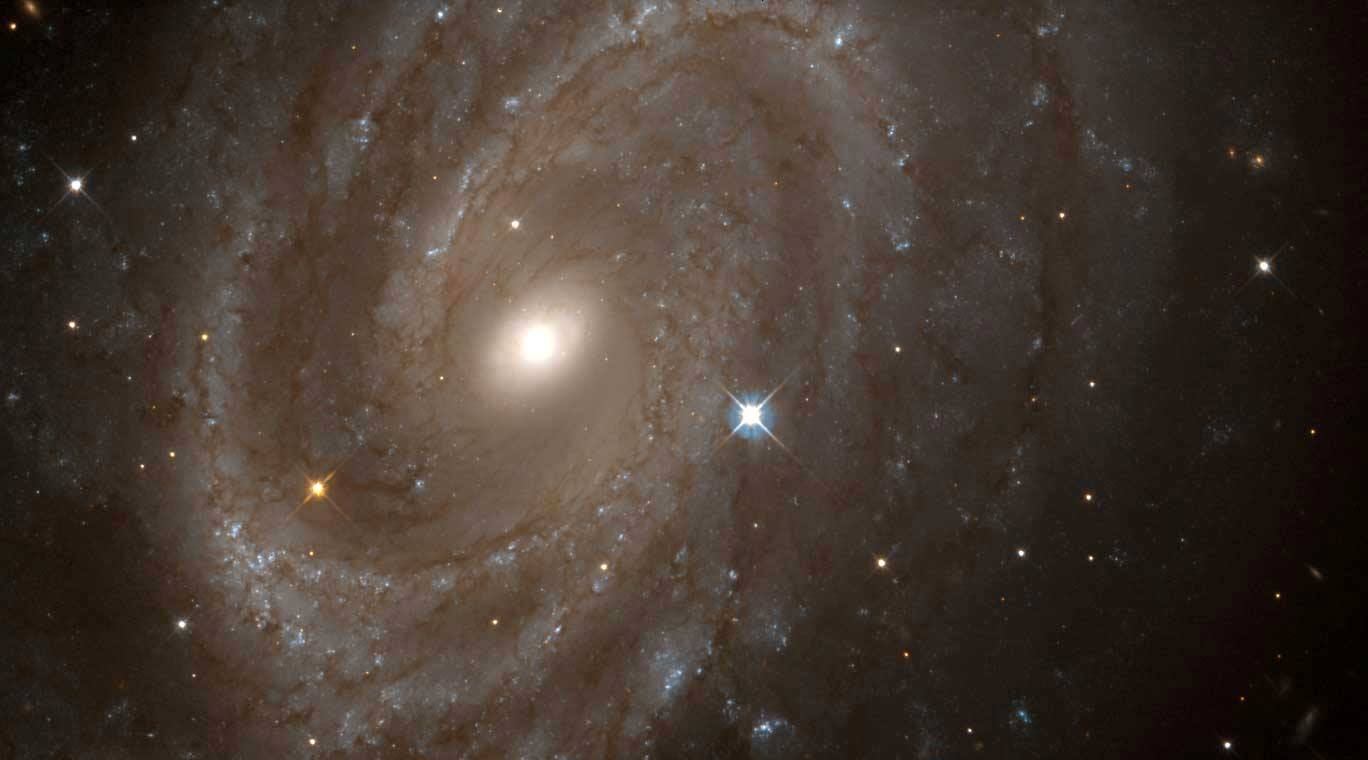
Tonight on “The Lost Chord,” in anticipation of Monday’s solar eclipse, we look to the heavens, with three works inspired by the cosmos: Joaquin Rodrigo’s “In Search of the Beyond” (dedicated to NASA), Enrique Granados’ “Song of the Stars,” and Kaija Saariaho’s “Orion.” That’s “Creating Space,” this Sunday night at 10:00 EDT, on WWFM – The Classical Network and wwfm.org.
-

William Henry Fry Birthday Fry Day?
When is Saturday “Fry Day?” Why, when it’s the birthday of William Henry Fry, of course!
Fry was born in Philadelphia in 1813. A pioneering figure in American music, he was the first native-born composer to write on a large scale. He composed orchestral works and the first opera by an American to be performed publicly in his lifetime (“Leonora,” in 1845). He was an outspoken advocate of American music – that is, music composed by Americans – at a time when German imports ruled the roost. It would be decades before American music would gain a toehold in the concert halls, which makes Fry an even more remarkable figure.
He studied music with a former bandleader in Napoleon Bonaparte’s army, who went on to become the head of Philadelphia’s Musical Fund Society. Fry himself would become the society’s secretary.
Fry was also a journalist, a writer on music, and the first music critic to write for a major American newspaper. He was a foreign correspondent for the Philadelphia Public Ledger and acted as music critic for the New York Herald Tribune.
He composed seven symphonies, all of them of a descriptive nature. His “Santa Claus Symphony,” after Clement Moore, is more of a Straussian tone poem. My personal favorite is the “Niagara Symphony,” written for P.T. Barnum, conceived for enormous forces augmented by a mindblowing eleven timpani.
Fry died of tuberculosis, “accelerated by exhaustion,” in Santa Cruz (Saint Croix) in the Virgin Islands in 1864, at the age of 51.
There is some discrepancy regarding the date of his birth, with some sources giving August 10, and others August 19. So maybe it’s not Fry Day, after all.
Happy birthday (perhaps belatedly), William Henry Fry.
The “Niagara Symphony” (it begins quietly):
-
Salieri Beyond the Mozart Myth Debunked
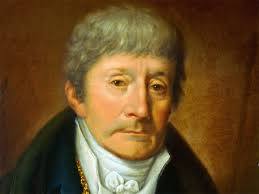
Poor, maligned Antonio Salieri. He was a second-rate hack. He murdered Mozart. Yadda yadda yadda.
While it’s true there’s no such thing as bad publicity, it would be nice if the man could transcend his notoriety to be recognized for his achievements. Especially since none of the charges against him happen to be true.
I like “Amadeus” very much, and while I am happy it has served to keep Salieri’s name alive and perhaps lend a greater degree of commercial viability to subsequent recordings of his music, it is worthwhile to examine the historical facts.
In reality, Salieri was a generous teacher, who fostered Beethoven, Schubert, Liszt and even Franz Xaver Mozart, the composer’s son, who was born a little more than four months before his father’s death.
Salieri was also a prolific and successful composer. He wrote 37 operas, in addition to orchestral works, concertos, chamber music and sacred pieces. While he was no Mozart – who was? – his music is finely crafted and often quite enjoyable, certainly no worse than that of a majority of his contemporaries.
Yes, Mozart believed Salieri and the Italian faction ensconced at the Viennese court (including future Mozart librettist Lorenzo Da Ponte) were against him, and there may have been something to it at first. However, beyond a rivalry over certain specific jobs, Mozart and Salieri appear to have been often better than cordial acquaintances. The two even collaborated on a cantata, “Per la ricuperata salute di Ophelia,” a venture which was apparently entered into voluntarily (as opposed to an earlier juxtaposition of one-act operas composed for the edification of the emperor). Here it is, only recently rediscovered:
When Salieri was appointed Kapellmeister in 1788, his first act was to revive “The Marriage of Figaro.” He was responsible for arranging first performances of Mozart’s Piano Concerto No. 22, K. 482, the Clarinet Quintet and the Symphony No. 40. He was full of praise for “The Magic Flute.” And as I said, he took it upon himself to educate Mozart’s son.
Sadly, Salieri’s enormous compositional output gradually faded from memory already during the latter years of his life. Ironically, it is the scandalmongers who kept his name alive.
Rumors of Salieri’s involvement in Mozart’s death were codified by Alexander Pushkin in 1831, a few years after Salieri himself had passed, in the tragedy “Mozart and Salieri.” This was later set as an opera, in 1898, by Nikolai Rimsky-Korsakov.
Peter Schaffer picked up the thread in 1979, when he wrote the play “Amadeus,” which of course was adapted into the Academy Award-winning film in 1984.
As the compact disc era advanced, more and more of Salieri’s repertoire became available for first-hand assessment – and guess what? A lot of it is quite good!
Join me Friday afternoon to sample some of it, among my featured selections, from 4 to 6 EDT, on WWFM – The Classical Network and wwfm.org. Then stick around, as I host “Picture Perfect,” music for the movies, at 6. I’ll have more about that in just a bit.
Tag Cloud
Aaron Copland (93) Beethoven (95) Composer (114) Film Music (139) Film Score (143) Film Scores (255) Halloween (94) John Williams (195) KWAX (229) Leonard Bernstein (103) Marlboro Music Festival (125) Movie Music (154) Mozart (88) Opera (208) Philadelphia Orchestra (89) Picture Perfect (174) Princeton Symphony Orchestra (108) Radio (88) Ross Amico (244) Roy's Tie-Dye Sci-Fi Corner (290) The Classical Network (101) The Lost Chord (268) Vaughan Williams (103) WPRB (396) WWFM (881)