The Municipality of Princeton has used eminent domain to take over the Westminster Choir College campus. Seems like a positive development, though I don’t pretend to know the finer points. The damage to the institution itself is done. However, if these nonprofit arts organizations can continue to operate on the campus, I suppose it’s something. Hopefully we won’t see any more apartment buildings cropping up like the abominations around Princeton Shopping Center (among other locations).
Category: Daily Dispatch
-

Schumann’s Spring Symphony Rediscovered Gem
When I received this 3-CD set from a friend, sent to me some time ago as a discard from WCLV, Cleveland’s classical music station, what really piqued my interest was the bonus material, which includes some rarely-heard overtures, most especially the world premiere recording of a work for chorus and orchestra called “Festive Overture on ‘Rheinweinlied’” – “Song of the Rhine Wine.”
What I didn’t expect was to be knocked back on my heels by a stunning performance of Robert Schumann’s Symphony No. 1 (a.k.a. the “Spring Symphony”). It’s by a lesser-known orchestra – the Klassische Philharmonie Düsseldorf – and a student one at that, but it’s a real corker! The timpanist sounds as if he should be auditioning for “The Rite of Spring” and at climaxes the brass sing with the vigor of youth.
The effect is heightened, no doubt, by conductor Florian Merz’s interpretative decisions. The orchestra, playing on modern instruments, employs historically-informed practices, emulating the dimensions of Schumann’s orchestra when he was actually conductor in Dusseldorf. I must say, it really brings out the quirk, which brings the listener closer to the Schumann I imagine. The rest of the set doesn’t quite achieve this seismic resonance (though the Symphony No. 2 is also pretty damn impressive), yet it’s all undeniably well-played, with a natural feel for rubato.
Merz, who founded the group at the age of 15 (making him about 26 at the time of the recordings), knows what he wants, and he gets it. This is not the butterfly-and-lady-bug spring of May/June, but rather the stormy, sacrifice-to-the-old-gods spring of March/April, mercurial and electric. It’s a spring before modern conveniences, with all its danger and rough edges intact. It is the spring of actual experience.
I will never part with this set. The “Spring Symphony” is tops!
-

Funny Men Play Serious Rachmaninoff
As April Fool’s Day and Rachmaninoff’s birthday elide, here are two funny men in recordings that take the composer rather seriously.
Oscar Levant rode his neuroses and mordant wit to fame as a popular panelist on radio and television, the disheveled, chain-smoking second banana in motion pictures, and author of books with titles such as “A Smattering of Ignorance,” “The Memoirs of an Amnesiac,” and “The Unimportance of Being Oscar.” But he was also one of the most respected champions of the music of George Gershwin, a composer who studied with Arnold Schoenberg, and a serious pianist who performed and recorded the standard concerto repertoire with the New York Philharmonic and the Philadelphia Orchestra.
Here, Oscar plays it straight, with Rachmaninoff’s Prelude in G major, Op. 32, No. 5.
The pianist Victor Borge also displayed a genius for comedic improv, early in his career segueing from standard concert recitals to his signature cocktails of music and humor. His Broadway hit, “Comedy in Music,” entered the Guinness Book for the longest run of a one-person show (849 performances, from 1953 to 1956). In the 1960s, Borge was one of the highest-paid entertainers in the world.
Like Levant, he had his personal demons, but their source would appear to have been circumstantial rather than psychological. He attained early popularity in Scandinavia (Borge was born in Denmark), but as his extensive touring took him all over Europe, a Jew getting laughs with anti-Nazi jokes didn’t exactly endear him to Adolf Hitler. When German forces occupied Denmark, Borge hopped a U.S. Army transport out of Finland – though he would return, not long after, disguised as a sailor, to visit his dying mother.
He arrived in the United States in 1940, with 20 dollars in his pocket and no understanding of English. But he was a fast learner, and he taught himself the language by going to American movies.
Here, all jokes aside, Borge plays Rachmaninoff’s arrangement of Fritz Kreisler’s “Liebesleid” (“Love’s Sorrow”).
Kreisler was one of the world’s great violinists. A famous anecdote relates that he and Rachmaninoff were giving a concert in New York. In the middle of a performance, Kreisler suffered a memory lapse, and as he noodled around on his violin, trying to find his way back, he inched closer to his pianist and whispered, “Where are we?” To which Rachmaninoff replied, “Carnegie Hall.”
Rachmaninoff gets the last laugh on April Fool’s Day, as he performs Kreisler’s “Liebesfreud” (“Love’s Joy”).
-

Haydn Symphonies Tower Records and Discovery
I got to know Franz Joseph Haydn through his symphonies. Although his oratorios aired on the radio occasionally, I was still too young to appreciate their excellence. It wasn’t until after I won Christopher Hogwood’s recording of “The Creation” in a drawing at one of Tower Records’ epic Presidents Day sales that I began to grasp their genius.
The location was the late, lamented Tower Classical Annex, at 6th & South Streets in Philadelphia. On Presidents Day, the doors would be propped open in an attempt to mitigate the heat generated by teeming shoppers crazed at the prospect of rare deals on labels that never went on sale. This was before the proliferation of internet outlets destroyed the industry and quashed the thrill of the chase.
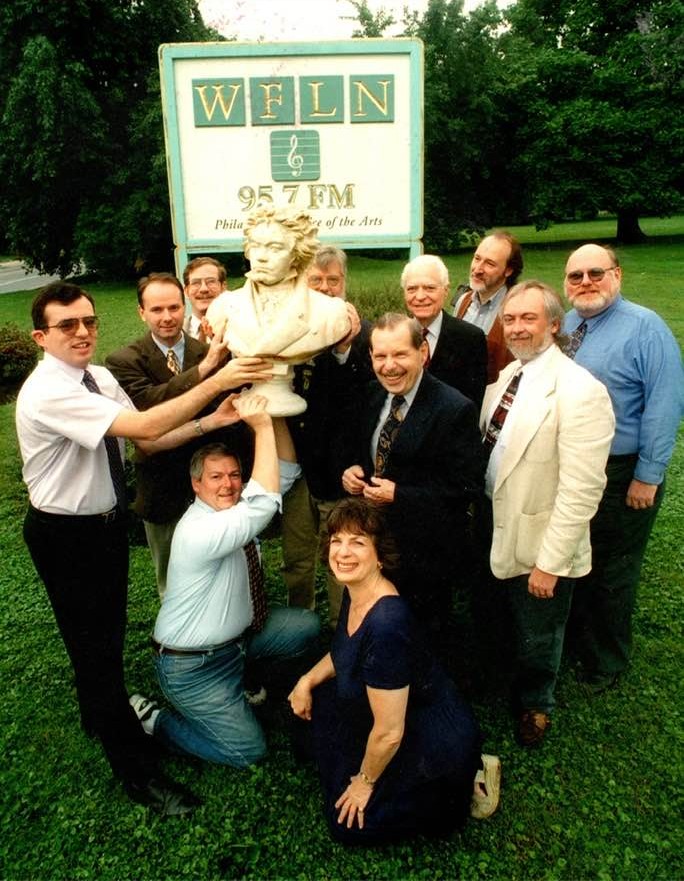
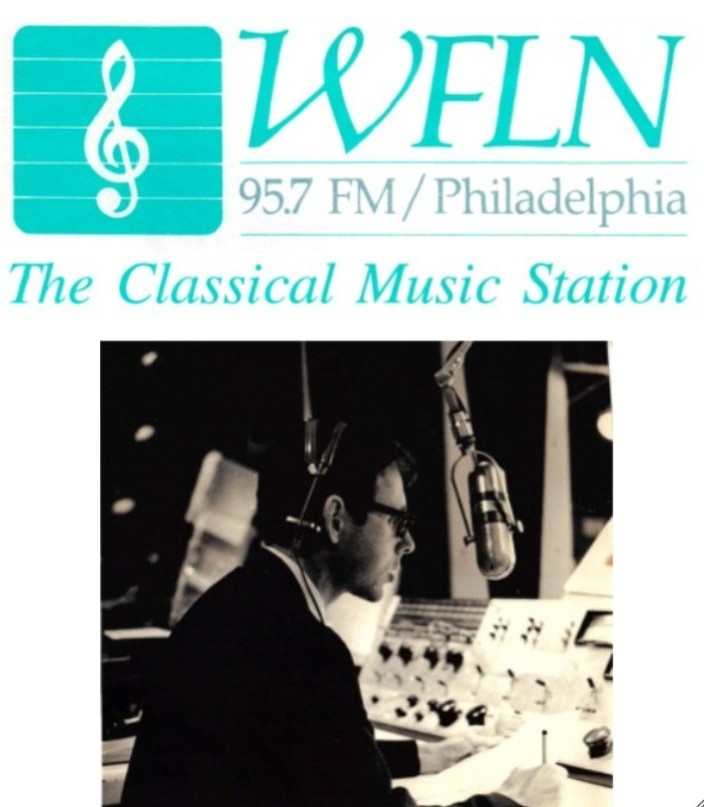
The event was simulcast over Philadelphia’s classical music station of nearly 50 years, WFLN (now defunct). I quickly deduced that the time to cram the submissions box was whenever announcer Henry Varlack began to weave his way across the sales floor to retrieve a handful of slips. I won many treasures over the years (a friend of mine, who doesn’t even really listen to classical music, followed my example and won some audio equipment), but none more cherished than Hogwood’s “The Creation.” I saw the light with the chorus’ resounding “Let there be light!”
The L’Oiseau-Lyre release features Emma Kirkby, Anthony Rolfe Johnson, and Michael George, in their respective prime(s), at a time when historically-informed period instrument recordings were still gaining traction in the mainstream. It’s a set I enjoy to this day.
I can’t find the complete recording posted as a single file on YouTube, but here’s a contemporaneous concert performance, artfully illustrated by footage of our miraculous world and the wondrous creatures that inhabit it.
Happy birthday, Franz Joseph Haydn!
-

Enrique Bátiz obituary: Latin American Music Icon
Another figure from the glory days of classical radio has died. When the classical record scene was still strong and the major labels were in good hands, Enrique Bátiz was one of those conductors whose name and artistry were encountered quite frequently. He made many fine records for EMI and later ASV. In particular, I cherish his album of works by Joaquín Turina (including the “Danzas fantásticas” and “Sinfonia sevillana”), Falla’s “Nights in the Gardens of Spain” with pianist Aldo Ciccolini, a lovely Villa-Lobos program with Barbara Hendricks, the Manuel Ponce Violin Concerto with Henryk Szeryng (the work’s dedicatee), and the indispensable 4-disc “Rodrigo Edition,” released on EMI (a label whose catalogue has since been devoured by Warner).
He continued to promote his country’s music with missionary zeal through ASV’s “Musica Mexicana” series. I also turn frequently to a fun album he made for Naxos, “Latin American Classics,” released in 1994. It’s a veritable banquet of brief, delectable tracks easily assimilated into my radio shows. Before the proliferation of high-quality independent labels, readier access to imports, and of course the internet, Bátiz’s records of Spanish and Latin American music were like El Dorado gold.
In all, he made some 145 recordings. I confess with a degree of guilt that I am not really all that familiar with most of those that document repertoire outside Latin America and the Iberian Peninsula. He was justly celebrated as an ambassador for Latin music, but he also recorded his share of the standard repertoire, including a Beethoven cycle. I am unqualified to weigh in on most of it, though I do remember being surprised by the interpretative quality of his Rimsky-Korsakov. Mexico is an awfully long way from Russia (or so Leon Trotsky thought), but why not? Bátiz was every bit as capable as his U.S., British, and Continental brethren, who were less likely to be a pigeon-holed because of their nationalities.
Bátiz died yesterday at the age of 82. Gracias, Maestro. Que descanse en paz.
Turina, “Sinfonia sevillana”
Rodrigo, “Concierto Serenata” for harp and orchestra
Ponce, Violin Concerto
Villa-Lobos
Buxtehude (arranged by Carlos Chávez), Chaconne in E minor
Tag Cloud
Aaron Copland (93) Beethoven (95) Composer (114) Film Music (124) Film Score (143) Film Scores (255) Halloween (94) John Williams (188) KWAX (229) Leonard Bernstein (101) Marlboro Music Festival (125) Movie Music (139) Opera (202) Philadelphia Orchestra (89) Picture Perfect (174) Princeton Symphony Orchestra (106) Radio (87) Ralph Vaughan Williams (85) Ross Amico (244) Roy's Tie-Dye Sci-Fi Corner (290) The Classical Network (101) The Lost Chord (268) Vaughan Williams (103) WPRB (396) WWFM (881)