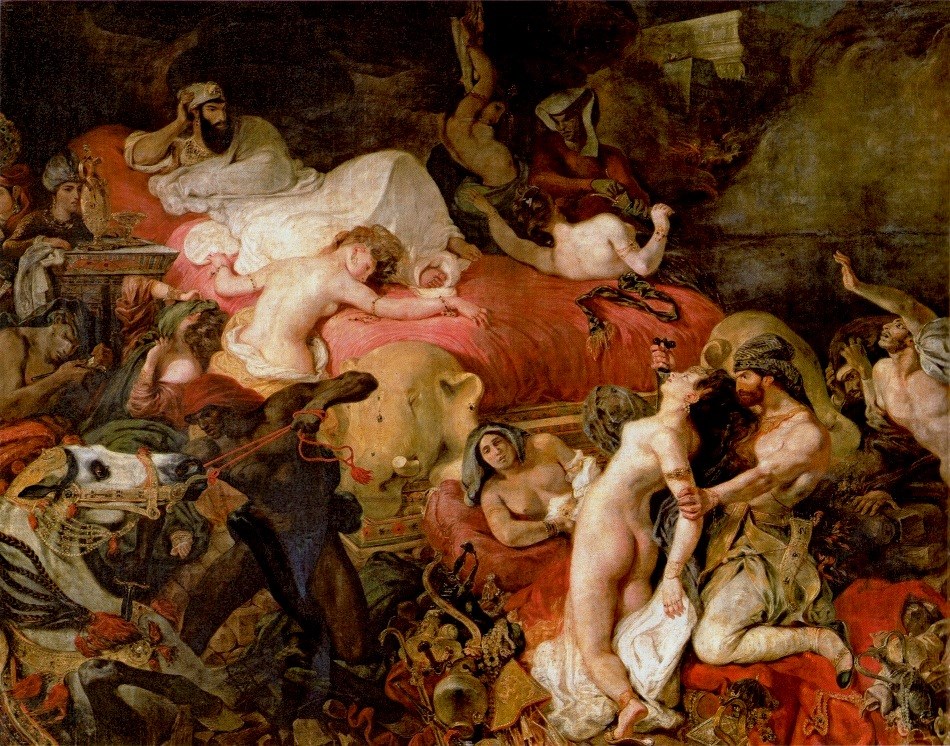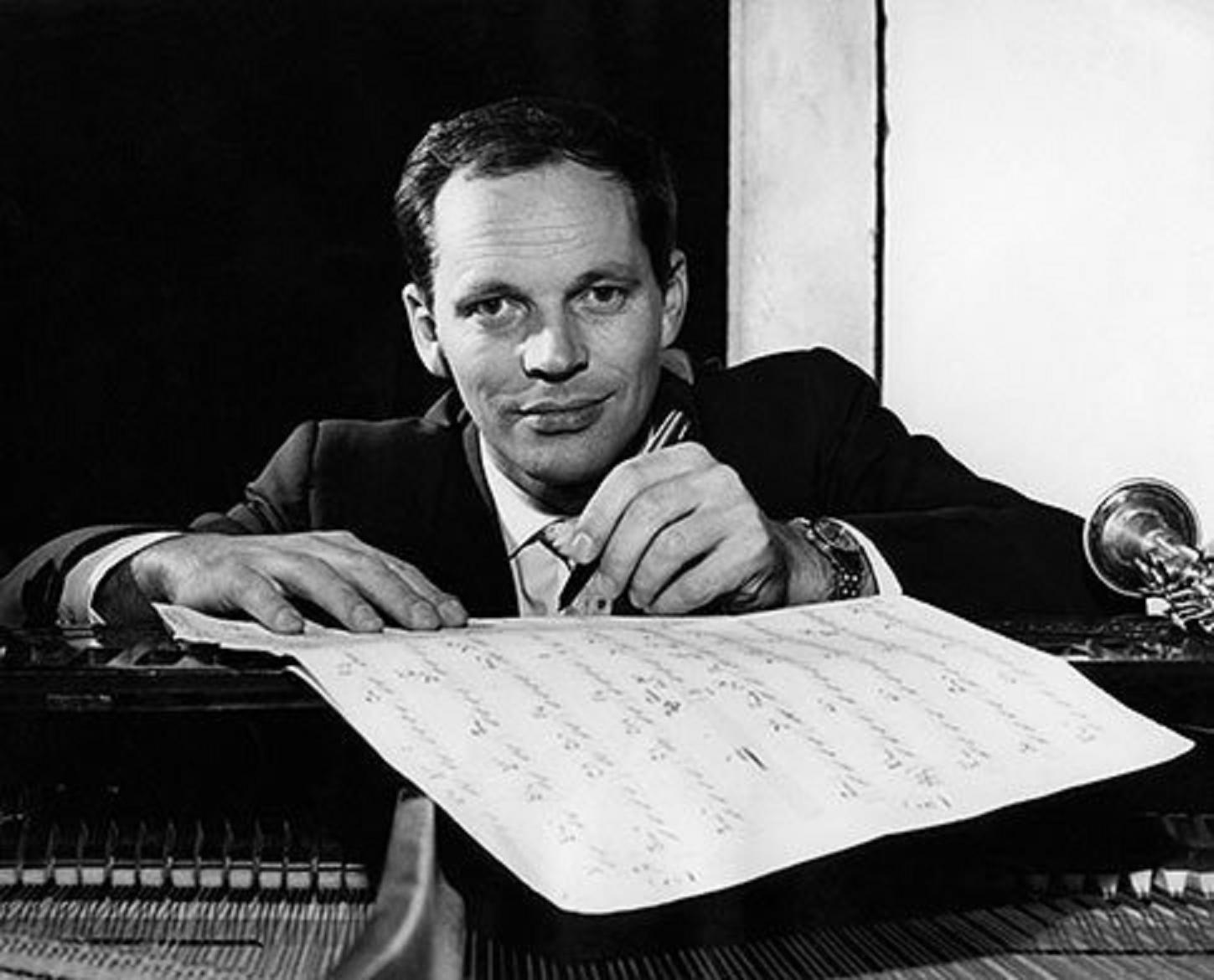
Trolling Timothée Chalamet for his blithe dismissal of opera and ballet as no longer relevant is so last month. But the media is not done with it. This morning a friend texted me a link to an article from the BBC in which Sir Alex Beard, chief executive of the Royal Ballet and Opera, thanks Chalamet for actually boosting ticket sales. Of course he did! Because this tempest in a teapot actually put opera and ballet in the news. And there’s no such thing as bad publicity.
In case, like most of the world, you’ve already moved on, Chalamet’s misstep occurred during an exchange with Matthew McConaughey about the preservation of cinema, which took place at the University of Texas before a live audience. “I don’t want to be working in ballet or opera, or you know, things where it’s like, ‘Hey, keep this thing alive,” Chalamet let drop, presumably to underline the comparative vitality and relevance of film. Carried away by his own eloquence, he continued, “‘… even though, like, no one cares about this anymore.’”
In all likelihood immediately sensing the remark was a little extreme (his own family includes three generations of ballet dancers), he quickly added, “All respect to the ballet and opera people out there.” Then he actually made it worse with an aside: “I just lost 14 cents in viewership.” Ouch.
Not the end of the world, of course, but in the age of social media, where sharpened knives are no further away than a cell phone or a computer keyboard and everyone is looking for a chance to be offended, Chalamet’s attempts to come across as a regular, relatable dude were received as fightin’ words.
It’s not hard to understand why they would get a rise out of anyone in the arts – who wants to be told that their life’s passion is meaningless? – but the wider backlash irrupted into a dogpile. Yeah, he’s an ignorant jackass, but so what? That’s democracy.
Widespread indignation, naturally, brings out the vultures, carpetbaggers, and trolls, so that following the initial salvo of outrage came all the reactionary posts, articles, and cartoons lampooning everyone for pearl-clutching by asking the rhetorical question, when was the last time any of you have been to an opera or a ballet?
For myself, I can say truthfully that I’ve been to more performing arts events in the past few years than I ever have. But I realize I am not widely representative of John Q. Public.
Actually, some of the arts organizations themselves did some of the best trolling. I’m not sure that any of them outdid Seattle Opera, which immediately responded with a 14-percent discount on tickets when using the promotional code TIMOTHEE. That was savage
.
From a certain point of view, perhaps counterintuitively, the Chalamet kerfuffle is proof that the arts are still powerful. The problem is not relevance, as art will always be relevant; it’s lack of exposure.
Time was when kids were exposed to the arts at school. At home, they encountered Arthur Fiedler, Yo-Yo Ma, and the Metropolitan Opera on PBS. Pavarotti and Virgil Fox were on talk shows. Rudolf Firkušný and Manuel Barrueco did television commercials. Samuel Ramey was on “Sesame Street,” singing about the letter “L.” Bugs Bunny cross-dressed to Wagner. Danny Kaye, in front of an orchestra, and Victor Borge, at the piano, made our parents laugh, and us too. Classical music was still a part of the conversation.
But somewhere along the way, some fat cats in a boardroom somewhere began to wonder why in the world the media was wasting valuable resources on all this long-hair stuff, when it could be maximizing profits by dumbing down and squeezing juice from the wallets of the lowest common denominator.
In the meantime, there was a longstanding tradition among populist entertainers of mocking the arts. So you have The Three Stooges flipping grapes and bananas into opera singers’ mouths. Not that I don’t love that stuff. Anything with staid traditions and certain protocols is easy to ridicule. Comedy mocks the establishment. It punches up, seldom down. To really enjoy music, you have to sit still and pay attention and actually listen to it. That’s just the way music and theater work. But I admit, it can seem ridiculous to an outsider, especially to one with no experience of it.
That said, the arts are no more “elitist” than rock concerts or sporting events, and they are often a lot less expensive. What’s more, they lend just as much to the economy, as people who attend concerts have to park, they have to eat, they like to shop, and since concerts frequently take place in cities, ticket-holders often come to town early and take in other attractions. A lot of businesses benefit. Also, nobody drinks too much and there’s comparatively little property damage afterward.
I find, once the novelty wears off, that the average sporting event has stretches more boring than anything I’ve ever endured in an opera house. Presumably the fans hang in there for the high points – the adrenaline rush of a touchdown or a homerun, the thrill of a close contest as the clock runs down, the euphoria of victory, the camaraderie of a roaring crowd.
We experience similar sensations in the performing arts: the emotional impact of an acrobatic aria, the grace and physicality of ballet, the spinetingling climax of a grand romantic symphony. Just like with a ballgame, not every experience is a world-beater, but when it’s at its best, there are moments you will carry with you for the rest of your life.
Moreover, it reminds us of the necessity of beauty and keeps us in touch with our shared humanity. That somebody born 150 years ago and lived their life in a foreign land without what we take for modern conveniences can continue to communicate with us, and even move us, in a language that transcends discernible words is miraculous.
If an orchestra plays and no one is there to hear it, does it still make music? Whether or not Chalamet really meant what he said, the performing arts endure for those of us who will have them. The public just needs to be reminded that they’re there. So yes, thank you, Timothée Chalamet.
-
Timothée Chalamet and the Performing Arts: No Such Thing as Bad Publicity?

by
-
Weber Operas: 200 Years of “Oberon;” “Der Freischütz” in Concert

by
3 responses
In this year of Carl Maria von Weber anniversaries – the influential German composer died 200 years ago (on June 25, 1826, to be exact) – it’s worthwhile to note the bicentennial of his final opera, actually a singspiel (an opera with spoken dialogue), “Oberon,” which was first performed on this date at Covent Garden, a little more than two months before his passing.
Oberon, of course, is king of the fairies, as we all know from “A Midsummer Night’s Dream.” Weber also imports Puck and Titania. But from there James Robinson Planché’s libretto (which George Grove, of Grove Dictionary fame, described as “unmitigated awfulness”) goes its own way. The story combines elements of Christoph Martin Wieland’s German poem “Oberon” and the 13th century French romance “Huon de Bordeaux.”
In Shakespeare, the fairy royals quarrel over the guardianship of an Indian prince (and accusations of infidelity). Here, Oberon refuses to reconcile with his queen until a faithful human couple is found. Puck directs his attention to Huon, a knight of Charlemagne, charged with assassinating the Caliph’s “right-hand man,” who is engaged to marry the Caliph’s daughter, Reiza. In the meantime, Huon and Reiza both have visions that draw them to one another. A number of trials ensue, including shipwreck, abduction by pirates, and enslavement. The plot thickens, though ultimately a happy ending is achieved, thanks to some blasts on Oberon’s magic horn.
Weber’s “Oberon” overture still appears regularly on orchestra programs and of course on classical radio. The delicacy of some of the music anticipates Mendelssohn’s more famous treatment of the fairies. Mendelssohn pays more overt tribute to his predecessor by actually quoting a theme from the Act II finale, “Hark, the mermaids,” in his own “A Midsummer Night’s Dream” overture.
Weber was not enthusiastic about the London production, but the opera was a great success. The first performance elicited many encores. Sadly, the composer died before he could set to work on a revision. Undoubtedly, he would have overseen the translation of text and dialogue to his native tongue (work which would be undertaken posthumously by other hands).
“Oberon” was first performed in the United States later that year – it would be performed at the Metropolitan Opera between 1918 and 1921 – but if it’s encountered at all now, it’s often as a concert performance, bypassing the requirements of elaborate staging or scenery.
Here’s a performance of the overture from an electric concert given in Tokyo by George Szell and the Cleveland Orchestra in 1970. Szell was fatally ill with cancer (it was his final concert), but you would never know it from what he was able to draw from his players. Their performance of Sibelius’ Symphony No. 2, on the same program, was especially stunning.
https://www.youtube.com/watch?v=PFE0tcRDtm8
Here it is, given the Franz Liszt treatment.
https://www.youtube.com/watch?v=OyWGTWuBZww
And as an arrangement for guitar quartet by Anthony Burgess (author of “A Clockwork Orange”), who was something of a composer himself.
https://www.youtube.com/watch?v=yYetHoiCv9M
Johann Nepomuk Hummel’s “Fantasy on Oberon’s Magic Horn”
https://www.youtube.com/watch?v=-aKwy4BLekwAct II Mermaids’ chorus, transcribed by Charles-Valentin Alkan
https://www.youtube.com/watch?v=HAbgs0osOac
A complete recording of the opera
https://www.youtube.com/watch?v=rht8LHy2C4Q
A staged production (which I have yet to watch)
https://www.youtube.com/watch?v=ImXedOZXqhw
Weber’s most influential opera, of course, was “Der Freischütz” (“The Free-Shooter”), of 1821. With its pact with the devil, magic bullets, and lurid Wolf’s Glen sequence, replete with thunder and lightning, withered trees, skulls, and apparitions, it set the prototype for a more extreme branch of German Romantic opera. The work was a great favorite of Hector Berlioz.
Interestingly, Berlioz’s sympathetic arrangement of “Der Freischütz,” undertaken to meet the requirements for Parisian performance – including adaptation of spoken dialogue to recitative and orchestration of Weber’s piano piece “Invitation to the Dance” for use as a ballet (de rigueur in Paris) – will be presented in concert at Carnegie Hall this Thursday by vocal soloists and the American Symphony Orchestra conducted by Leon Botstein. I’ve already got my ticket – and I didn’t have to barter my soul to Samiel!
https://americansymphony.org/2025-2026/der-freischutz/
More about Weber, at the very least on June 25, for the bicentennial of his passing…
——-
PAINTING: “Oberon and the Mermaid” (1883), by Sir Joseph Noel Paton
-
Japanese Composers in Bloom on “The Lost Chord”

by
2 responses
This week on “The Lost Chord,” nothing attracts samurai and radiation-induced thunder-lizards like cherry blossoms.
We’ll enjoy concert music by two Japanese composers – both close friends – best recognized for their work in film. Akira Ifukube studied with Alexander Tcherepnin. Though his “Japanese Rhapsody” of 1935 won first prize in an international contest judged by Albert Roussel, Jacques Ibert, and Arthur Honegger, among others, financial considerations led him to write 250 film scores. Undoubtedly, he is best known for his music for Godzilla.
Humiwo Hayasaka was Akira Kurosawa’s composer of choice, writing music for classic films such as “Rashomon” and “Seven Samurai.” He wrote over 100 film scores in all, before his early death from tuberculosis at the age of 41. Prominent Japanese composer Toru Takemitsu (who later scored Kurosawa’s “Dodes’kaden”) claimed Hayasaka as a formative influence. We’ll hear Hayasaka’s Piano Concerto, composed in 1948. The first movement is a massive elegy for the composer’s brother and all the dead of the Second World War; and the second, a contrasting movement of conspicuous playfulness.
Incidentally, Ifukube was also responsible for creating Godzilla’s trademark roar, which was produced by running a resin-covered leather glove along the loosened strings of a double bass. Experience this distinctive call as a sort of intermezzo, between works by the composer of “Godzilla” and that of “Seven Samurai” on “The Lost Chord,” now in syndication on KWAX Classical Oregon!
——–
Clip and save the start times for all three of my recorded shows:
PICTURE PERFECT, the movie music show – Friday at 8:00 PM EDT/5:00 PM PDT
SWEETNESS AND LIGHT, the light music program – Saturday at 11:00 AM EDT/8:00 AM PDT
THE LOST CHORD, unusual and neglected rep – Saturday at 7:00 PM EDT/4:00 PM PDT
Stream them, wherever you are, at the link!
https://kwax.uoregon.edu
-
April in Paris on “Sweetness and Light”

by
7 responses
This Saturday morning on “Sweetness and Light,” it’s April in Paris.
We’ll hear April-and-Paris themed songs by Charles Trenet (“En avril, à Paris”), Georges Bizet (“Chanson d’avril”) and, of course, Vernon Duke (“April in Paris”), alongside a symphony for wind instruments by Charles Gounod (first performed in Paris in April 1885), a love song by Erik Satie, a suite (“Paris”) by British light music master Haydn Wood, and a work by Darius Milhaud as good as spring itself.
It will be an hour of cafés and croissants, blossoms and bisous, on “Sweetness and Light,” this Saturday morning at 11:00 EDT/8:00 PST, exclusively on KWAX Classical Oregon!
Stream it, wherever you are, at the link:
https://kwax.uoregon.edu/
Tag Cloud
Aaron Copland (93) Beethoven (95) Composer (114) Film Music (125) Film Score (143) Film Scores (255) Halloween (94) John Williams (189) KWAX (229) Leonard Bernstein (101) Marlboro Music Festival (125) Movie Music (140) Opera (202) Philadelphia Orchestra (89) Picture Perfect (174) Princeton Symphony Orchestra (106) Radio (87) Ralph Vaughan Williams (85) Ross Amico (244) Roy's Tie-Dye Sci-Fi Corner (290) The Classical Network (101) The Lost Chord (268) Vaughan Williams (103) WPRB (396) WWFM (881)

12 responses