• George Antheil Bad Boy of Music on WWFM

    George Antheil Bad Boy of Music on WWFM

    by 

    in
    4 responses

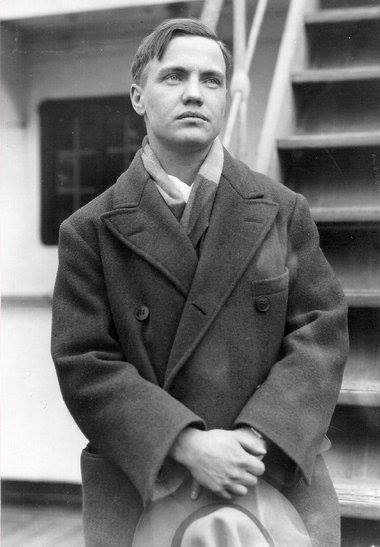
    We’ll be breaking bad on today’s Noontime Concert on The Classical Network. I hope you’ll join me for music by Trenton’s own George Antheil.

    Antheil, the self-proclaimed “Bad Boy of Music,” was born in Trenton, NJ, in 1900. His “Ballet mécanique,” for synchronized player pianos, siren, electronic bells, xylophones and airplane propellers, caused a riot at its Paris premiere in 1926.

    We’ll hear a live concert performance of Antheil’s magnum opus, arranged for solo piano and eight loudspeakers, by Guy Livingston. Livingston, who makes his home in Paris, is one of the foremost authorities on Antheil and his music, having recorded the composer’s Piano Concerto No. 2, for New World Records, and an album of “The Lost Piano Sonatas,” for the Wergo label, from which we will also be sampling. In 2003, Livingston was artistic director of a George Antheil festival in Trenton.

    This performance took place at Tufts University in March, as part of a two-day festival, “The Film Music of George Antheil: The ‘Bad Boy’ in Paris and Hollywood.” The festival included the first American screening of a restored print of the experimental film “Ballet mécanique” by Fernand Léger and Dudley Murphy.

    At the time of the composer’s greatest success, Antheil and his wife lived in a one-bedroom apartment above Sylvia Beach’s Shakespeare & Company bookshop, a favorite haunt of Ezra Pound, Ernest Hemingway and James Joyce. Relishing his notoriety, Antheil carried a pistol, in a silk holster sewn into his jacket, which he would ostentatiously place on the piano prior to commencing a recital.

    Later, he was co-holder of a patent with actress Hedy Lamarr for a communications system based on frequency-hopping, as applied to radio-controlled torpedoes. Though the idea of spread spectrum became the basis for modern cell phone technology, neither Antheil nor Lamarr ever saw a dime for their invention.

    In his spare time, Antheil wrote a column of advice to the lovelorn for Esquire magazine, a couple of murder mysteries and a book on criminal endocrinology.

    It will be all-Antheil in the noon hour today. Then stick around for Ottorino Respighi’s rarely-heard lyric poem for soloists, chorus and orchestra, “La Primavera,” and Dame Ethyl Smyth’s “Serenade in D major,” among our featured works, from 12 to 4 p.m. EDT, on WWFM – The Classical Network and wwfm.org.

  • Spring Music on WWFM

    Spring Music on WWFM

    by 

    in
    6 responses

    After a cold and tempestuous weekend, we teeter on the brink of full-on summer temperatures. Join me, then, on this rare spring afternoon for pastoral music by Lars-Erik Larsson, love madrigals by Claudio Monteverdi, some adorable musical menageries courtesy of John Lanchbery and Leos Janacek, and a nod to “The Bohemian Girl” by Michael Balfe. The music will be as good as spring itself, from 4 to 7 p.m. EDT, on WWFM – The Classical Network and wwfm.org.

  • Lou Harrison Maverick Composer at 100

    Lou Harrison Maverick Composer at 100

    by 

    in
    5 responses

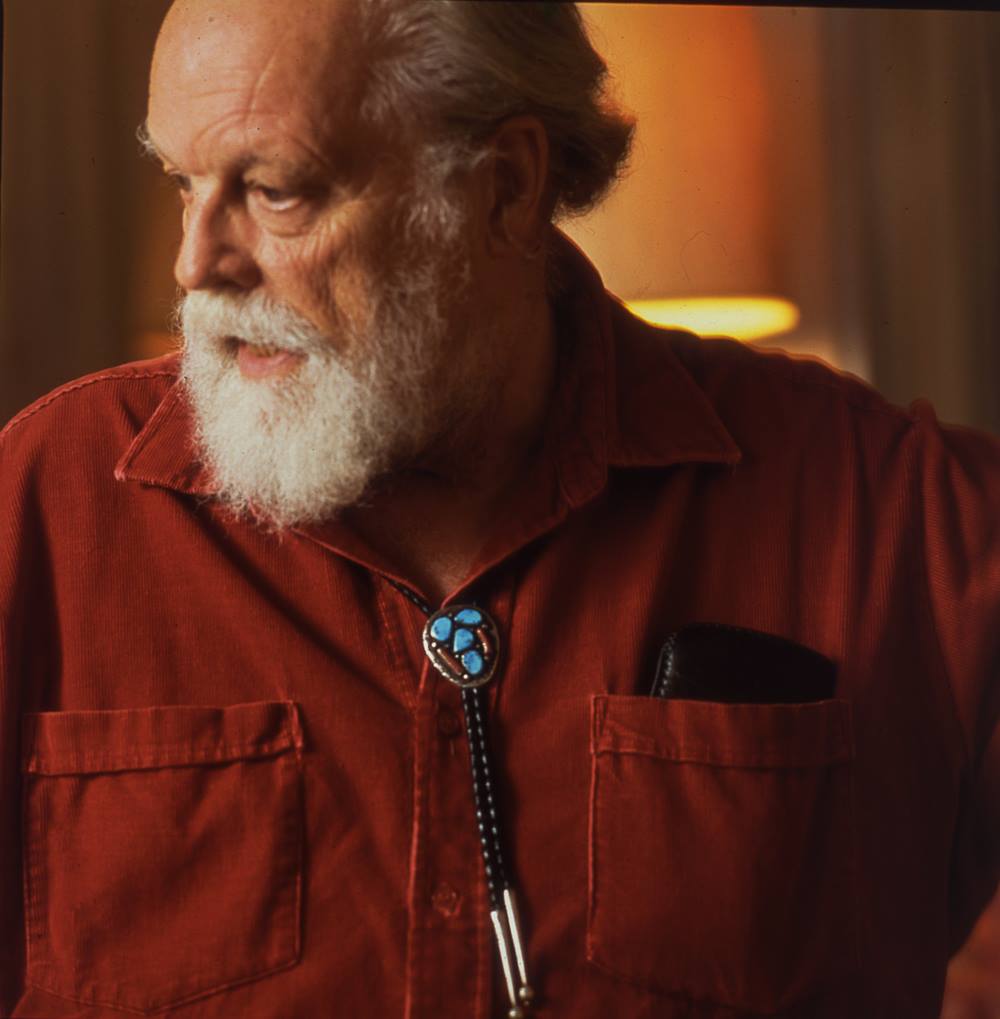
    Today is the 100th anniversary of the birth of composer Lou Harrison. Frequently described as an “American maverick,” Harrison was a pioneer of assimilating what is now termed “world music,” blending Eastern and Western elements. In this way, he navigated his own route to postmodernism, and his influence has been as keenly felt as that of any 20th century composer.

    Typically, Harrison discards the sense of willfulness and the projection of self that make many of our 20th century classics undeniably great. But in the process, he uncovers something else, a kind of musical equivalent to Zen that can be as entrancing as it is immediately accessible in its elegant simplicity. Funny to consider that among his teachers was Arnold Schoenberg. But then Harrison found joy in all kinds of music. He was mentored by Henry Cowell and Virgil Thomson. He was a friend of John Cage. He was an early champion of composers Edgard Varèse, Carl Ruggles and Alan Hovhaness.

    Among his great contributions on behalf of others: Harrison conducted the world premiere of Charles Ives’ Symphony No. 3, “The Camp Meeting,” at Carnegie Hall in 1946. The piece had lain unperformed, in Ives’ possession, since its creation 40 years earlier. The symphony went on to win the Pulitzer Prize for Music, and it remains one of the few works to have been so honored to have entered the standard repertoire.

    A lifelong pacifist, Harrison lived an openly gay lifestyle since the 1930s. To help make ends meet, he took side jobs as a record salesman, a florist, an animal nurse, and a forestry firefighter. He died at the age of 85 from a heart attack while traveling to a festival of his own music at Ohio State University in 2003. Not a bad way to go.

    Happy birthday, Lou Harrison. You’ve touched many, many more than those who know your name.

    http://www.npr.org/sections/deceptivecadence/2017/05/13/525919082/lou-harrison-the-maverick-composer-with-asia-in-his-ears


  • Godzilla Kurosawa Mother’s Day Music

    Godzilla Kurosawa Mother’s Day Music

    by 

    in
    One response

    Nothing says Mother’s Day like samurai warriors and radiation-induced thunder-lizards.

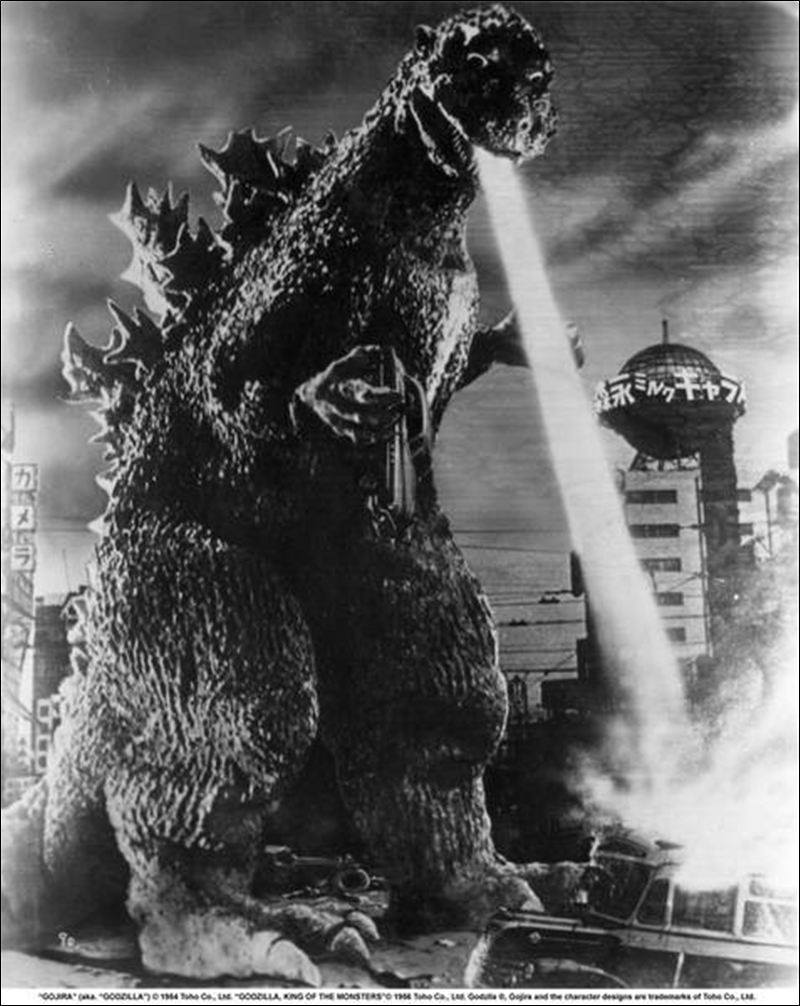
    This Sunday night on “The Lost Chord,” we’ll hear concert music by two Japanese composers – both close friends – who were best recognized internationally for their work in film. Akira Ifukube studied with Alexander Tcherepnin. Though his “Japanese Rhapsody” of 1935 won first prize in an international contest judged by Albert Roussel, Jacques Ibert, and Arthur Honegger, among others, financial considerations led him to write 250 film scores. Undoubtedly, he is best known for his music for Godzilla.

    Humiwo Hayasaka was Akira Kurosawa’s composer of choice, writing music for classic films such as “Rashomon” and “The Seven Samurai.” He wrote over 100 film scores in all, before his early death from tuberculosis at the age of 41. Prominent Japanese composer Toru Takemitsu (who later scored Kurosawa’s “Dodes’kaden”) claimed Hayasaka as a formative influence. We’ll hear Hayasaka’s Piano Concerto, composed in 1948. The first movement is a massive elegy for the composer’s brother and all the dead of the Second World War; and the second, a contrasting movement of conspicuous playfulness.

    Incidentally, Ifukube was also responsible for creating Godzilla’s trademark roar, which was produced by running a resin-covered leather glove along the loosened strings of a double bass. He emulated Godzilla’s footsteps by striking an amplifier box. Hear his distinctive roar tonight, as part of “Godzilla vs. Kurosawa,” Sunday at 10:00 EDT, on WWFM – The Classical Network and wwfm.org.


  • Happy Birthday Sir Arthur Sullivan!

    Happy Birthday Sir Arthur Sullivan!

    by 

    in
    5 responses

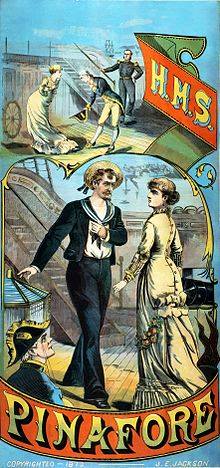
    All right, Savoyards, it’s Sir Arthur Sullivan’s birthday. Let’s see those “likes.”

    Here’s the great John Reed. Why is this collection not on CD, in the form it was originally issued? Granted, all the numbers are drawn from complete recordings:

    Seasonal Sullivan:

    Sullivan without Gilbert – his “Irish Symphony” (though I still prefer Sir Charles Groves’ recording):

    https://www.youtube.com/watch?v=X9irmDpqDSs


Tag Cloud

Aaron Copland (93) Beethoven (95) Composer (114) Film Music (144) Film Score (143) Film Scores (255) Halloween (94) John Williams (195) KWAX (229) Leonard Bernstein (104) Marlboro Music Festival (125) Movie Music (159) Mozart (91) Opera (213) Philadelphia Orchestra (89) Picture Perfect (174) Princeton Symphony Orchestra (109) Radio (88) Ross Amico (244) Roy's Tie-Dye Sci-Fi Corner (290) The Classical Network (101) The Lost Chord (269) Vaughan Williams (105) WPRB (397) WWFM (881)

DON’T MISS A BEAT

Receive a weekly digest every Sunday at noon by signing up here


RECENT POSTS