• Holy Week Music on WPRB

    Holy Week Music on WPRB

    by 

    in
    3 responses

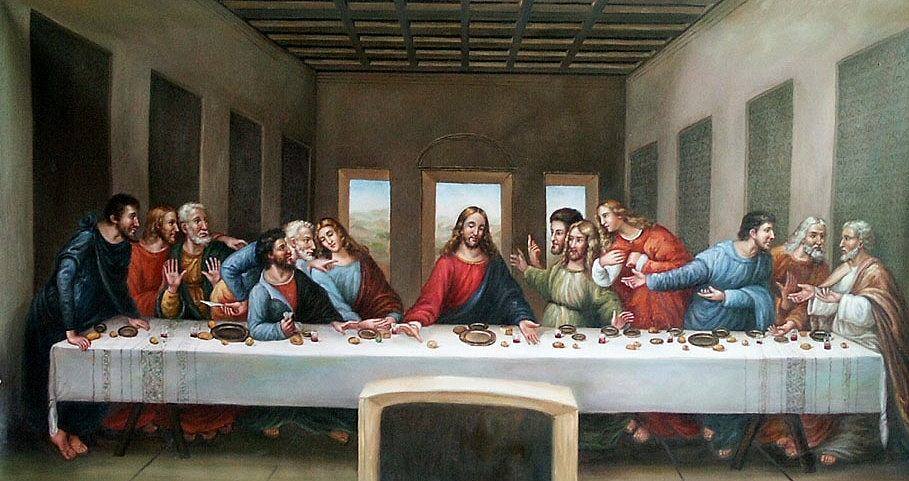
    Have you got a passion for Passions? Do you think Stabat Maters matter? Tune in to WPRB this Thursday morning for music for Holy Week. That’s right, it’s wholly music for Passiontide.

    Well, not wholly. We’ll have some selections of a broadly mystical nature (William Alwyn’s harp concerto, “Lyra Angelica,” for instance), works of a meditative bent (for example, John Tavener’s “Song of the Angel”), and perhaps a couple of pieces concerning hope and renewal (such as Edmund Rubbra’s “Resurgam Overture”).

    Otherwise, it will be music inspired by the Passion story, ranging roughly from Palm Sunday through, possibly, the observance of Russian Easter. Some of it will be purely orchestral (Victor de Sabata’s “Gethsemani”) and some will include vocal soloists and chorus (Osvaldo Golijov’s Latin-inflected “La Pasión según San Marcos”).

    In addition, a certain listener has been requesting Eugene Ormandy’s recording of Respighi’s “Church Windows” since June, probably. Now seems as good a time as any to blast that out. For my own edification, I have to play Vaughan Williams’ “Five Mystical Songs,” with the great John Shirley-Quirk. It just isn’t Easter for me without the “Five Mystical Songs.”

    At 9:00, we’ll take a break from Holy Week for a special visit from Douglas Martin, artistic director of American Repertory Ballet, and Marc Uys, executive director of the Princeton Symphony Orchestra. They’ll drop by to talk about Martin’s new ballet, “Pride and Prejudice,” which sets the classic novel by Jane Austen to music by Ignaz Pleyel. The PSO will provide live musical accompaniment for the dancers, at McCarter Theatre Center on April 21 & 22.

    This is a radio show, not a church service, so nobody freak out if an “Alleluia” or a “Gloria” slip into the mix, okay? We’re here to celebrate the music, not to scrupulously observe the minutiae of tradition. I’ll be lining the CD cases with Easter grass, tomorrow morning from 6 to 11 EDT, on WPRB 103.3 FM and at wprb.com, and wishing you peace, hope, and happiness, on Classic Ross Amico.
  • Mozart’s “Miserere” Saved From Silence

    Mozart’s “Miserere” Saved From Silence

    by 

    in
    5 responses

    You can thank Mozart for what we are about to receive.

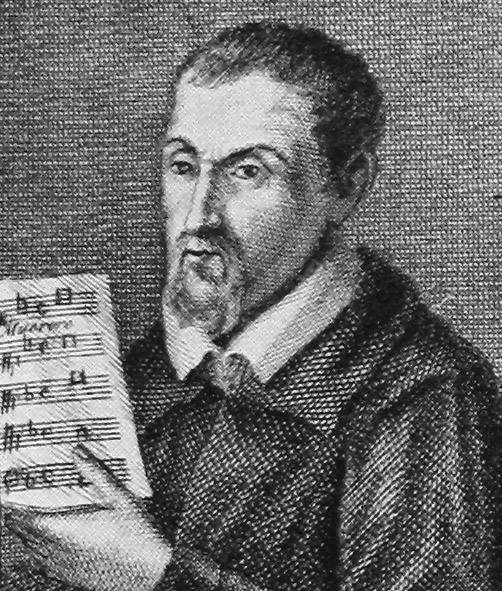
    Gregorio Allegri composed his setting of Psalm 51 (50), “Miserere mei, Deus” – or “Miserere,” for short – in the 1630s. The piece was designed for exclusive performance in the Sistine Chapel, as part of the Tenebrae service of Holy Wednesday and Good Friday.

    The work is conceived for two choirs, one intoning a simple chant, and the other, spatially separated, providing ornamentation. The effect of a stratospheric top C makes the “Miserere” one of the most haunting works in the choral literature of the late Renaissance.

    The Vatican, realizing it had a good thing, forbade performance of the piece or copies of the score outside its walls, under threat of excommunication. It was the 14 year-old Mozart who in effect liberated the piece, copying it down from memory and handing it off to author and music historian Charles Burney, who published it without delay.

    Mozart was summoned before the Pope, and rather than being excommunicated, he was showered with praise for his feat of musical genius. The ban on the “Miserere” was lifted.

    Hear it today, alongside a concerto for two pianos, a bell song, and some zarzuela romanzas, of all things, from 4 to 7 p.m. EDT, on WWFM – The Classical Network and wwfm.org.


  • Passover Oratorio on The Classical Network

    Passover Oratorio on The Classical Network

    by 

    in
    6 responses

    Chag Sameach!

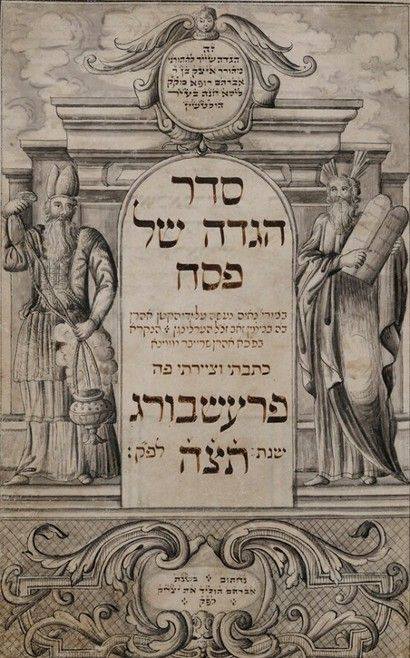
    Join me today on The Classical Network, following the noontime concert (which will conclude around 1:40), to enjoy a complete recording of the Passover oratorio “Haggadah shel Pesach,” by German-Jewish composer Paul Dessau.

    Dessau was a successful theatrical musician, who worked both in opera, as an assistant to Otto Klemperer and Bruno Walter, and with cinema orchestras. However, in 1933, with the appointment of Adolf Hitler as chancellor of Germany, living conditions became intolerable for Dessau, who fled to Paris, and then the United States. He settled in Hollywood in 1943. Later, in 1948, he returned to East Berlin, where he taught at the Staatliche Schauspielschule (Public Drama School) and became vice president of the Academy of Arts.

    While in exile in Paris, Dessau composed “Haggadah del Pesach,” on a libretto by Max Brod. Brod is probably best known as the friend and biographer of Franz Kafka. Since neither Dessau nor Brod were fluent in Hebrew, they enlisted the help of Rabbi Mordecai Langer to assist with translation.

    Read at the Passover Seder, the Haggadah relates the story of Exodus and explains the Passover rituals. Brod interpolates additional texts from the Torah, Talmud, and Midrash. The oratorio describes “The Feast of Passover,” “Moses Slays the Egyptian,” “The Girls by the Well,” “The Saving of the Girls,” “Chorus,” “The Entrance of Pharoah,” “The Plagues,” “The Slaying of the First-Born,” “Midnight Hymn,” and “Israel’s Departure from Bondage to Freedom.”

    Between Parts I & II of “Haggadah shel Pesach” (around 2:30), we’ll chat with Joe Miller, director of choral activities at Westminster Choir College. He’ll drop by to tell us a bit about two performances by the Westminster Choir and New York’s Bang on a Can All-Stars of Julia Wolfe’s Pulitzer Prize winning “Anthracite Fields.” The concerts will take place on April 21 & 22 at Roebling Wire Works in Trenton. This is shaping up to be the event of the season, so I hope you’ll listen in for my conversation with Joe.

    Of perhaps related interest, the noontime concerts today and Thursday will comprise a retrospective of Victoria Bond’s Cutting Edge Concerts New Music Festival from Symphony Space, now in its 20th year. Tune in today to hear music by Pauline Oliveros, Brian Ferneyhough, Harold Meltzer, Kyle Gann, Joan Tower, and Bond herself.

    Whether your taste runs to maror or charoset, there will be something for everyone, I hope, from 12 to 4 p.m. EDT, on WWFM – The Classical Network and wwfm.org.


    UPDATE: I just received notification that Joe Miller is unable to make it for the interview today, so I’ll be starting the oratorio at 2 p.m.


  • Passover Celebration on WWFM Today

    Passover Celebration on WWFM Today

    by 

    in
    6 responses

    Pesach Sameach! Passover begins at sunset.

    Join me this afternoon, when among our featured works will be Mario Castelnuovo-Tedesco’s Violin Concerto No. 2, subtitled “The Prophets,” ballet music from Rossini’s “Moses,” and Wojciech Kilar’s “Exodus.”*

    We’ll also celebrate the birthdays today of conductor and composer Victor de Sabata, cellist and composer Auguste Franchomme, and pianist and composer Eugen d’Albert.

    Join me for an afternoon of unleavened entertainment, from 4 to 7 p.m. EDT, on WWFM – The Classical Network, and at wwfm.org.


    For more Passover music, join me tomorrow, immediately following the noontime concert (probably around 1:40 p.m.), for Paul Dessau’s oratorio “Haggadah shel Pesach.”


  • Song of Songs Solomon’s Love in Music

    Song of Songs Solomon’s Love in Music

    by 

    in
    7 responses

    The Song of Songs. Attributed to King Solomon, this Biblical book contains some of the most ardent poetry ever written. Whether it represents the communion of man and woman, or, as some would have it, something of a more allegorical nature – telling of the relationship, depending upon one’s system of belief, between God and Israel, between God and the Church, or between Christ and the human soul – over the centuries it has inspired some meltingly lovely music.

    Since it is customary to read from the Song of Songs as part of the observance of Passover, we’ll devote “The Lost Chord” this week, on the eve of Pesach, to two settings: one by Sir Granville Bantock – selections from his massive, 2 ½ hour oratorio – and one by Lukas Foss – a more intimate song cycle, in which divine and romantic love unite in understated metaphor.

    What if I told you your temples behind your veil are like the halves of a pomegranate? If you fall for that, there’s plenty more where that came from, on “King Solomon’s Lines,” this Sunday night at 10:00 EDT, on WWFM – The Classical Network and at wwfm.org.


Tag Cloud

Aaron Copland (93) Beethoven (95) Composer (114) Film Music (144) Film Score (143) Film Scores (255) Halloween (94) John Williams (195) KWAX (229) Leonard Bernstein (104) Marlboro Music Festival (125) Movie Music (159) Mozart (91) Opera (213) Philadelphia Orchestra (89) Picture Perfect (174) Princeton Symphony Orchestra (109) Radio (88) Ross Amico (244) Roy's Tie-Dye Sci-Fi Corner (290) The Classical Network (101) The Lost Chord (269) Vaughan Williams (105) WPRB (397) WWFM (881)

DON’T MISS A BEAT

Receive a weekly digest every Sunday at noon by signing up here


RECENT POSTS