• Castelnuovo-Tedesco Rediscovered After Decades

    Castelnuovo-Tedesco Rediscovered After Decades

    by 

    in
    3 responses

    Earlier this week, I posted about the birthday of Mario Castelnuovo-Tedesco, the Jewish Italian composer who was fortunate to make it to America before he could be packed off to a concentration camp.

    Things had already been heating up at home for some time, with Castelnuovo-Tedesco being banned from radio and performances of his works being cancelled, well before the passage of Italian racial laws in 1938. He didn’t leave until 1939, when Arturo Toscanini (who was not Jewish, but had had enough of Mussolini by 1933) agreed to sponsor his immigration to the United States.

    I always wind up playing Castelnuovo-Tedesco’s Violin Concerto No. 2, subtitled “The Prophets,” during Passover. Written for Heifetz in 1931, its three movements are named for the Old Testament prophets Isaiah, Jeremiah, and Elijah. Of course, we hear his guitar pieces – many of them written for Segovia – all the time. But I always wondered what happened to his Cello Concerto.

    The Cello Concerto, written for Gregor Piatigorsky, was given its premiere under Toscanini’s direction in 1935. I have read about it, but I have never actually heard it. Now I learn that the reason is because Piatigorsky had exclusive performance rights to the piece during his lifetime, much as Paul Wittgenstein held exclusive performance rights to the works he commissioned (which is why, for instance, a major work by Paul Hindemith, “Klaviermusik mit Orchester,” went unheard until its revival in 2004 – Wittgenstein didn’t like the piece and locked it up in a trunk).

    Fascinatingly, the Castelnuovo-Tedesco concerto has reemerged in Texas, to be performed by the Houston Symphony over Easter weekend. Allegedly it will be the first time the work will have been heard since the 1930s. Hear excerpts, with lots of fascinating background, at the Houston Symphony’s website:

    http://www.houstonsymphony.org/tickets/production/detail?id=7346&utm_source=Facebook&utm_medium=social+media&utm_campaign=17CLS14&utm_content=17CLS14+FB+Ad+Brinton+Music+Clip+5

    How many more of these musical treasures await rediscovery, I wonder, having been jealously guarded by performers who opted not to promote them, or who were given better offers for yet another whirl through that well-worn crowd-pleaser by Dvořák?


  • TGIF Classical Music Weekend Starts Here

    TGIF Classical Music Weekend Starts Here

    by 

    in
    7 responses

    TGIF! Make the transition to the weekend with music by Joseph Ryelandt, Domenico Dragonetti, Harald Saeverud, and Percy Faith, on their birthdays. In addition, we’ll hear pianists/birthday celebrants Robert Casadesus and Leif Ove Andsnes play Chabrier and Grieg, respectively.

    That’s got to be at least two hours, right there.

    Then stick around for “Picture Perfect” and a definitive survey of Elmer Bernstein’s music for Cecil B. DeMille’s “The Ten Commandments.” We’ll be sampling from an exhaustive 6-CD set, released on the Intrada label, in honor of the film’s 60th anniversary.

    I’ll be there, enjoying the music right along with you, this Friday afternoon at 4:00 EDT. “Picture Perfect” begins at 6, on WWFM – The Classical Network and wwfm.org.


  • Ten Commandments Score 60th Anniversary

    Ten Commandments Score 60th Anniversary

    by 

    in
    6 responses

    For the 60th anniversary of Cecil B. DeMille’s “The Ten Commandments,” the Intrada label has handed down, like stone tablets from Mount Sinai, a definitive, 6-CD box set of music from the film. The collection includes the complete 2 ½ hour score, three commercial soundtrack releases, and bonus material intriguing enough to curl Charlton Heston’s beard.

    This week on “Picture Perfect,” we’ll share lovingly remastered selections from the 1960 Dot and 1966 United Artist soundtrack re-recordings, the Pillar of Fire and parting of the Red Sea sequence from the actual film, and rare demos, prepared for Mr. DeMille by the composer, Elmer Bernstein, who will introduce his themes from the piano.

    So let it be written, so let it be done! Join me for the definitive “The Ten Commandments,” on “Picture Perfect,” this Friday evening at 6 EDT, on WWFM – The Classical Network and at wwfm.org.


  • Bruch’s Odysseus Rediscovered

    Bruch’s Odysseus Rediscovered

    by 

    in
    5 responses

    It says something about how highly regarded was Max Bruch’s “Odysseus” that none other than Johannes Brahms selected it for his farewell performance in 1875 as Director of the Society of the Friends of Music in Vienna. Bruch’s oratorio racked up an impressive number of performances. Within two years of its premiere in 1873, it was given no less than 45 times. In fact, in Bruch’s heyday, the work was considered second in excellence only to his imperishable Violin Concerto No. 1 in G minor.

    Yet by the time of the composer’s death, in 1920, he was considered an artifact of a bygone era. “Odysseus” was a relic of the 19th century, and in the 19th century it would remain, until liberated by musicologist and conductor Leon Botstein in the late 1990s. Thanks to Botstein, we’ll get to enjoy the complete oratorio today on WPRB, as we listen to a full morning of music inspired by Homer.

    Bruch’s oratorio perhaps unforgivably omits the cathartic bloodletting at the tale’s climax, when Odysseus slays his wife’s unwanted suitors, who have overrun his home in his absence. But Benjamin Britten was not so squeamish. Britten embraced all the inherent drama and adventure of epic vengeance in his music for radio, “The Rescue of Penelope.” We’ll cap the morning with this full-blooded work, which will be narrated by Dame Janet Baker.

    Along the way, we’ll also have music by Gabriel Fauré, Marc-Antoine Charpentier, Ernst Boehe, Jean-Philippe Rameau, Jacques Offenbach, John Harbison, Hector Berlioz, and Jerome Moross, among others.

    There will be more wine for Polyphemus, from 6 to 11 EDT, on WPRB 103.3 FM and at wprb.com. We’re always trying hard to rock your world, on Classic Ross Amico.


  • The Odyssey on the Radio Classical Music Adventure

    The Odyssey on the Radio Classical Music Adventure

    by 

    in
    3 responses

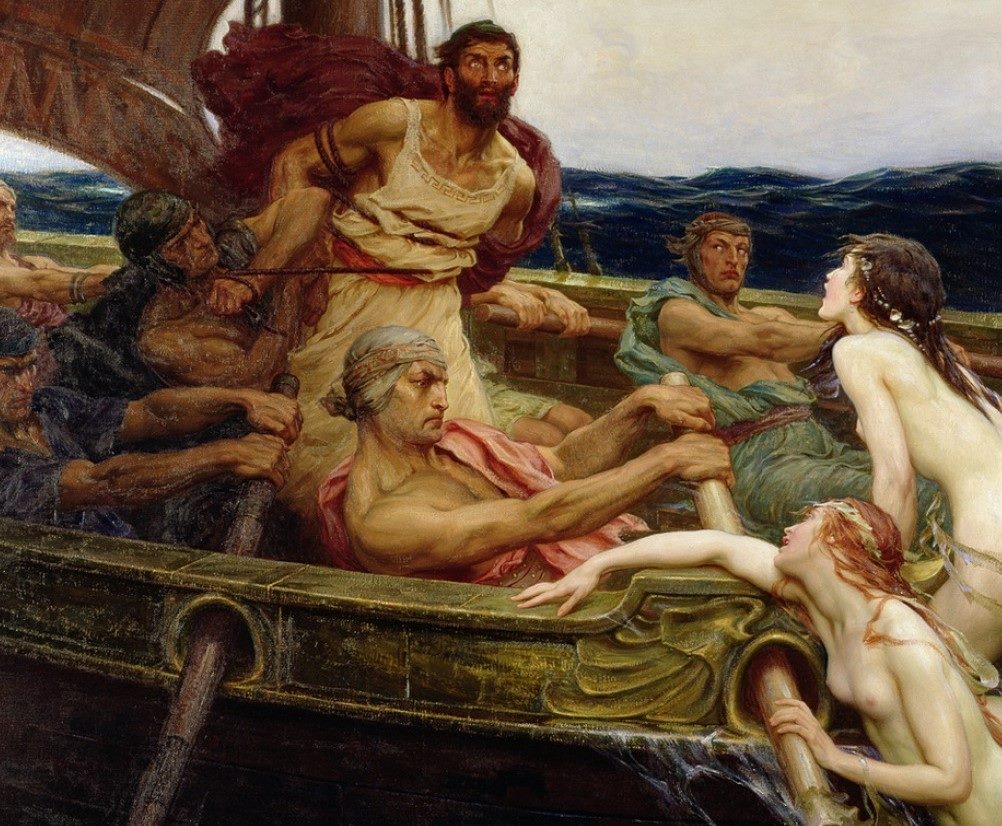
    There are times when curiosity drives us to have our crew lash us to the mast and then stuff their ears with wax. Tomorrow morning on WPRB may very well be one of those, as we follow in the steps of Odysseus, both at the Trojan War and on his long journey back to Ithaca.

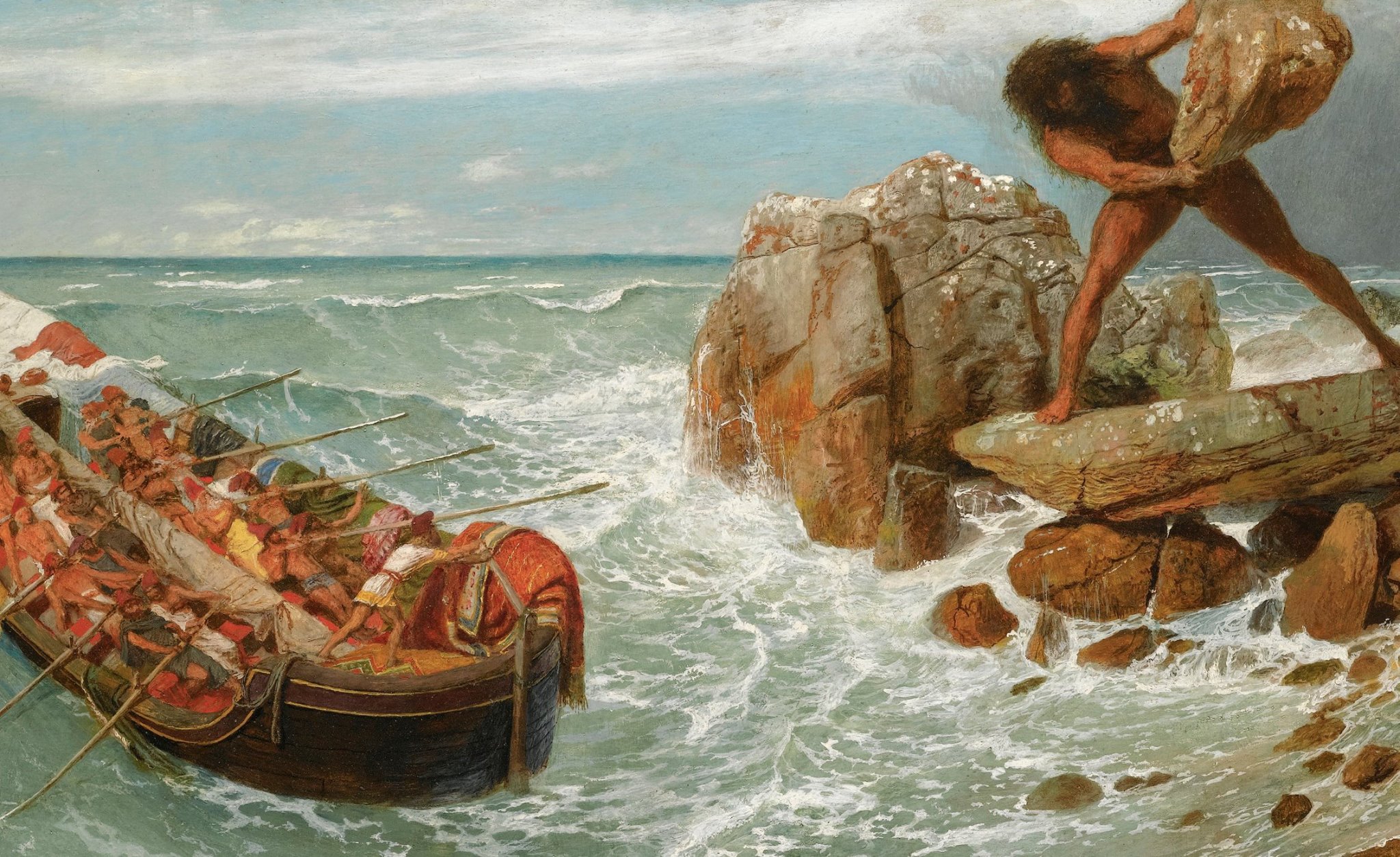
    We’ll have music inspired by Circe, the Cyclops, the Golden Apple, Helen of Troy, the Lotus Eaters, the Sirens, Ulysses’ bow, and the rescue of Penelope, from composers such as Hector Berlioz, Ernst Boehe, Benjamin Britten, Max Bruch, Gabriel Fauré, John Harbison, and Jerome Moross.

    I’ll be tied up from 6 to 11 EDT, on WPRB 103.3 FM and at wprb.com. We’ll find the odd in “The Odyssey” (and “The Iliad,” for that matter), on Classic Ross Amico.


Tag Cloud

Aaron Copland (93) Beethoven (95) Composer (114) Film Music (144) Film Score (143) Film Scores (255) Halloween (94) John Williams (195) KWAX (229) Leonard Bernstein (104) Marlboro Music Festival (125) Movie Music (159) Mozart (91) Opera (213) Philadelphia Orchestra (89) Picture Perfect (174) Princeton Symphony Orchestra (109) Radio (88) Ross Amico (244) Roy's Tie-Dye Sci-Fi Corner (290) The Classical Network (101) The Lost Chord (269) Vaughan Williams (105) WPRB (397) WWFM (881)

DON’T MISS A BEAT

Receive a weekly digest every Sunday at noon by signing up here


RECENT POSTS