• Josef Suk: Tragedy and Triumph

    Josef Suk: Tragedy and Triumph

    by 

    in
    2 responses

    If you think your life sucks, consider that of Josef Suk.

    Suk (1874-1935) was the pupil and eventual son-in-law of Antonin Dvořák. Though he experienced a degree of anxiety before breaking to his mentor the news of his love for Dvořák’s beautiful daughter Otilie – the struggle and romance of which he channeled into his fairy tale suite, “Pohádka” – Dvořák, who respected Suk mightily, joyfully consented to their union. So everyone lived happily ever after, right?

    Unfortunately, happily ever after didn’t last very long. Over a span of 14 months, when the composer was in his early 30s, he lost both his mentor and his wife. The double-blow led to a new intensity in Suk’s work, as exemplified by the dark exploration of his “Asrael Symphony” (Azrael is the Angel of Death). Suk’s idiom, which had been steeped in the Czech nationalism of his teacher, took on a new morbidity so that he came to be regarded as one of the leading composers of Czech modernism. Austrian composers Gustav Mahler and Alban Berg began to take notice of his work. We’ll content ourselves with some of his happier stuff.

    Suk was a founding member of the Czech Quartet. His grandson was the famous violinist who shared his name.

    I hope you’ll join me today, between 4 and 7 p.m. EST, as we celebrate the birthday anniversaries of Josef Suk and Giovanni Battista Pergolesi. We’ll try not to be too morbid about it, on WWFM – The Classical Network and at wwfm.org.


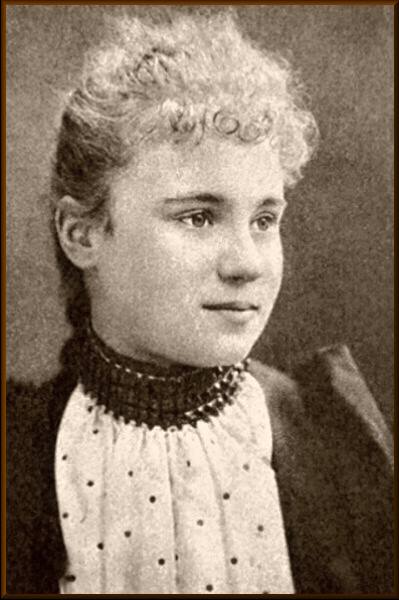
    PHOTOS: Life Suks (Otilie, left, and Josef Suk)


  • New Music & Winter Classics on WWFM Today

    New Music & Winter Classics on WWFM Today

    by 

    in
    7 responses

    I hope you’ll be able to join me for today’s noontime concert on WWFM, when the focus will be on new music for the new year. The program will feature works by young Jewish American composers, which were presented at the YIVO Institute for Jewish Research in NYC on November 2. Included will be “Fünf Kleine Klavierstücke,” by Princeton native Lainie Fefferman, and “Meditation,” by Alyssa Weinberg, who is currently pursuing her doctoral degree at Princeton University.

    Then stick around for Tchaikovsky’s Symphony No. 1, subtitled “Winter Daydreams,” and Sir Arnold Bax’s “Winter Legends,” written for his mistress, the alluring Jewish pianist Harriet Cohen.

    Lots of alluring music today, between 12 and 4 p.m. EST, on WWFM – The Classical Network and at wwfm.org.


    PHOTO: Harriet Cohen, who inspired and enticed a number of Britain’s greatest composers


  • Bach Christmas Oratorio Philadelphia Broadcast

    Bach Christmas Oratorio Philadelphia Broadcast

    by 

    in
    3 responses

    Here I am introducing a broadcast of Bach’s Christmas Oratorio in a New Year’s Eve performance by Choral Arts Philadelphia from Philadelphia Episcopal Cathedral. With me are, left to right, Clark Conner of John C. Baker Recordings, and WWFM colleagues Rachel Katz and Alice Weiss. It was a such a pleasure to attend the historically-informed performance and to meet CAP’s Inna Lobanova-Heasley, Matthew Glandorf, and James Reese.


  • New Year’s Music Tippett & Tomlinson

    New Year’s Music Tippett & Tomlinson

    by 

    in
    2 responses

    This Sunday night on “The Lost Chord,” we’ll have two works appropriate for the New Year, and both of them will be by English composers.

    Sir Michael Tippett’s “New Year” was the composer’s fifth and final opera. Set in Terror Town, an imaginary city, the location of which is described as “Somewhere Today,” the time is New Year’s Eve. The character personae features such unusual and diverse elements as a child psychiatrist, her Rastafarian foster brother, a shaman, and three time travelers from the future – or, as Tippett specifies, “Nowhere Tomorrow.”

    The suite opens and closes with the arrival and departure of a spaceship, which is represented electronically in the score. Other striking touches included the use of saxophones, and, at the work’s climax, a quotation of “Auld Lang Syne,” against a rather turbulent backdrop.

    The opera was first performed at the Houston Grand Opera in 1989, with the British premiere at Glyndebourne the following year. It was not well received. The wholly reimagined suite was commissioned by the San Francisco Symphony in 1990. Tippett noted that the primary metaphor of the opera is dance.

    The remainder of the hour will be devoted to works by a composer of a very different sensibility: master of British Light Music, Ernest Tomlinson. It is Tomlinson’s tongue-in-cheek assertion that the melody of “Auld Lang Syne” underlies most of the world’s greatest masterpieces. He goes on to support his thesis with no less than 152 examples in his dizzyingly clever “Fantasia on ‘Auld Lang Syne.’”

    In the few minutes left at the end of the show, I include a Tomlinson encore. It’s not a New Year’s piece, strictly speaking, though the subject of the work has to be home by the stroke of twelve.

    I hope you’ll join me for “T Time,” – music for the New Year by English composers whose surnames happen to begin with T – this Sunday night at 10 EST, on WWFM – The Classical Network and wwfm.org.


  • Welcome 2017 Happy New Year

    Welcome 2017 Happy New Year

    by 

    in
    10 responses

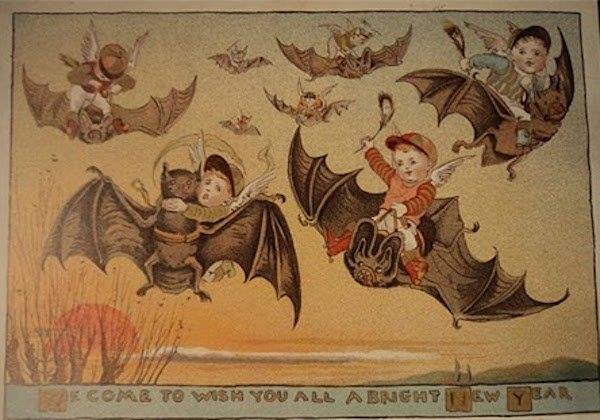
    The image says it all. Welcome, 2017!


Tag Cloud

Aaron Copland (93) Beethoven (95) Composer (114) Film Music (144) Film Score (143) Film Scores (255) Halloween (94) John Williams (195) KWAX (229) Leonard Bernstein (104) Marlboro Music Festival (125) Movie Music (159) Mozart (91) Opera (213) Philadelphia Orchestra (89) Picture Perfect (174) Princeton Symphony Orchestra (109) Radio (88) Ross Amico (244) Roy's Tie-Dye Sci-Fi Corner (290) The Classical Network (101) The Lost Chord (269) Vaughan Williams (105) WPRB (397) WWFM (881)

DON’T MISS A BEAT

Receive a weekly digest every Sunday at noon by signing up here


RECENT POSTS