• Stravinsky at Princeton A 50 Year Remembrance

    Stravinsky at Princeton A 50 Year Remembrance

    by 

    in
    3 responses

    When an artist like Igor Stravinsky comes to town, you’re not likely to forget – even 50 years later.

    Stravinsky was 84 years-old in 1966, and regarded as perhaps the greatest composer of his day, when he was commissioned by Princeton University and Stanley Seeger to write his “Requiem Canticles.” The work was written to the memory of Seeger’s mother, Helen Buchanan Seeger, a benefactor of the university and especially the university’s music department.

    Stravinsky described the piece as his “pocket requiem,” six movements spanning roughly 15 minutes. The work is sung in Latin and rendered in the composer’s later, twelve-tone idiom. It was given its debut at McCarter Theatre Center on October 8 of that year. It would be Stravinsky’s last major work. It was played at his own funeral in Venice in 1971.

    To mark the 50th anniversary of Stravinsky’s visit, the composer will be remembered, musically, on two programs to be performed at the university this weekend. Michael Pratt will conduct the Princeton University Orchestra in a suite from the composer’s ballet “The Firebird” on Friday at 7:30 p.m., and Gabriel Crouch will lead the Princeton University Glee Club in the choral masterpiece “Les Noces” on Sunday at 3 p.m. Both works will be presented at Richardson Auditorium.

    Find out more, and read first-hand accounts of the composer’s visit from Maida Pollock, then manager of the university’s concerts, and Bill Lockwood, then, as now, McCarter’s programming director, in my article in today’s Trenton Times:

    http://www.nj.com/times-entertainment/index.ssf/2016/12/classical_music_puo_pugc_so_pe.html


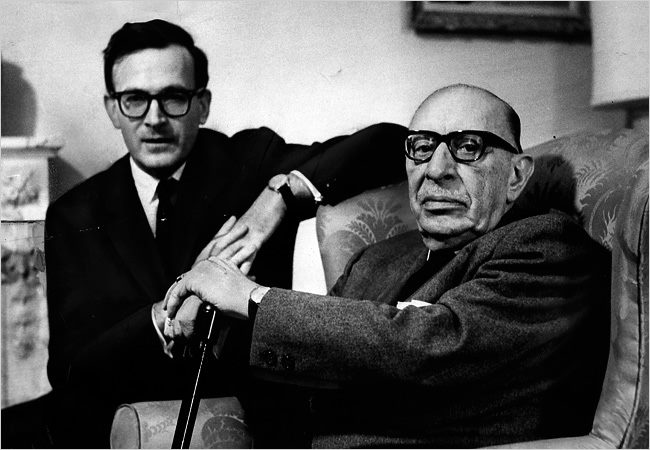
    PHOTO: Stravinsky (right) with his assistant, Robert Craft, in 1964

  • Kirk Douglas at 100: A Musical Tribute

    Kirk Douglas at 100: A Musical Tribute

    by 

    in
    5 responses

    Now that he’s 100, he may no longer be able to knock your block off, but many of films still can.

    This week on “Picture Perfect,” we will honor Kirk Douglas, who was born on December 9, 1916. We’ll hear music from four of his most memorable movies.

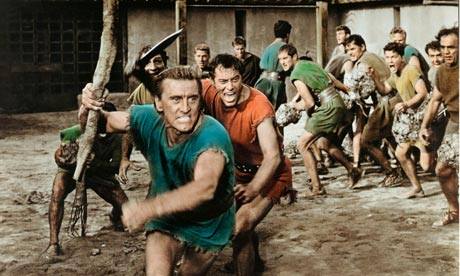
    We’ll begin with “Spartacus” (1960). Douglas plays the 1st century leader of a slave revolt. His co-stars include Laurence Olivier, Jean Simmons, and Tony Curtis. The music was by Alex North (born in Chester, PA, outside of Philadelphia). The love theme, one of North’s best-known melodies, lends a sense of human connection amidst the martial fanfares and gladiatorial violence.

    Douglas is often credited with having broken the back of the “Hollywood blacklist” by openly acknowledging Dalton Trumbo as the screenwriter on “Spartacus.” Trumbo had been forced underground as a ghostwriter for refusing to testify before the House Un-American Activities Committee. The film became the biggest money-maker in the history of Universal Studios, up to that time.

    Vincente Minnelli’s cynical exposé of behind-the-scenes Hollywood, “The Bad and the Beautiful” (1952), stars Douglas as a ruthless mogul, who uses and abuses everyone around him. It’s one of his great “bad boy” characterizations. The film, which also featured Lana Turner, Walter Pigeon, Dick Powell, and Gloria Graham, won a whole slew of Oscars. Graham was recognized as Best Supporting Actress.

    The music is by Philadelphia-born David Raksin, who is best-remembered for his theme to the all-time noir classic “Laura.” It doesn’t seem possible, but here he really surpasses himself. If you love the sound of Golden Age Hollywood, complete with haunting saxophone, then this one’s for you!

    Minnelli directed Douglas in another one of his standout roles, a much more sympathetic portrayal of the tortured artist Vincent Van Gogh, in “Lust for Life” (1956). Douglas turns in one of the great performances of his career. Furthermore, his physical resemblance to the painter is uncanny.

    Anthony Quinn won an Oscar for Best Supporting Actor as Van Gogh’s sometimes friend, the artist Paul Gaugin. The powerful score was by one of the all-time great film composers, Miklós Rózsa, who here marries his Hungarian-inflected signature sound to an evocative sort of French impressionism.

    Finally, when Kirk isn’t fighting giant squid, he’s singing “A Whale of Tale,” as Ned Land, in Walt Disney’s “20,000 Leagues Under the Sea” (1954). The otherwise moody score is a real showcase for Paul J. Smith, who had earlier provided incidental music for Disney’s animated features “Snow White and the Seven Dwarfs,” “Bambi,” and “Pinocchio.”

    As actor, director, producer, and author Douglas is a whale of a talent. He himself has included these four titles among the top ten of his films.

    Join me for a musical salute to Kirk Douglas, for his 100th birthday, on “Picture Perfect” – music for the movies – this Friday evening at 6 EST, on WWFM – The Classical Network and at wwfm.org.


    PHOTOS: Douglas in “Spartacus,” “The Bad and the Beautiful,” “Lust for Life,” and “20,000 Leagues”


  • Kalevala’s Music Sibelius & Finnish Epic

    Kalevala’s Music Sibelius & Finnish Epic

    by 

    in
    5 responses

    I realize Lemminkäinen and Väinämöinen are not easy names to get your mouth around at 6:00 in the morning. Don’t worry, I’ll handle the incantations if you agree to carry my broadsword.

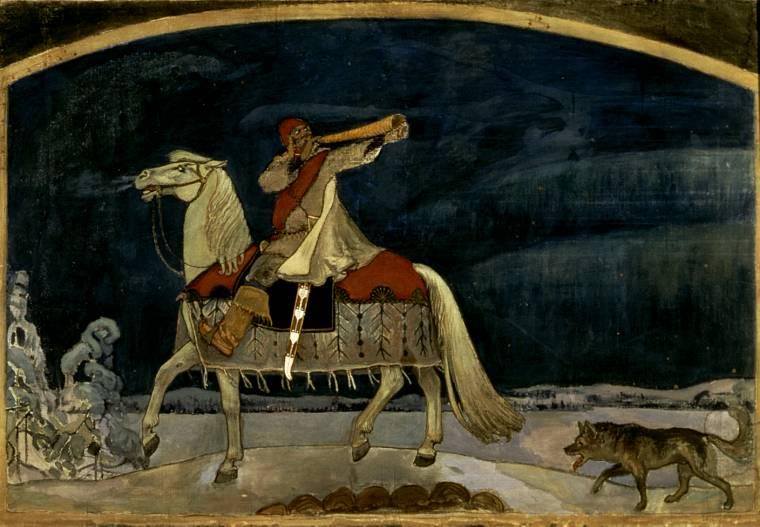
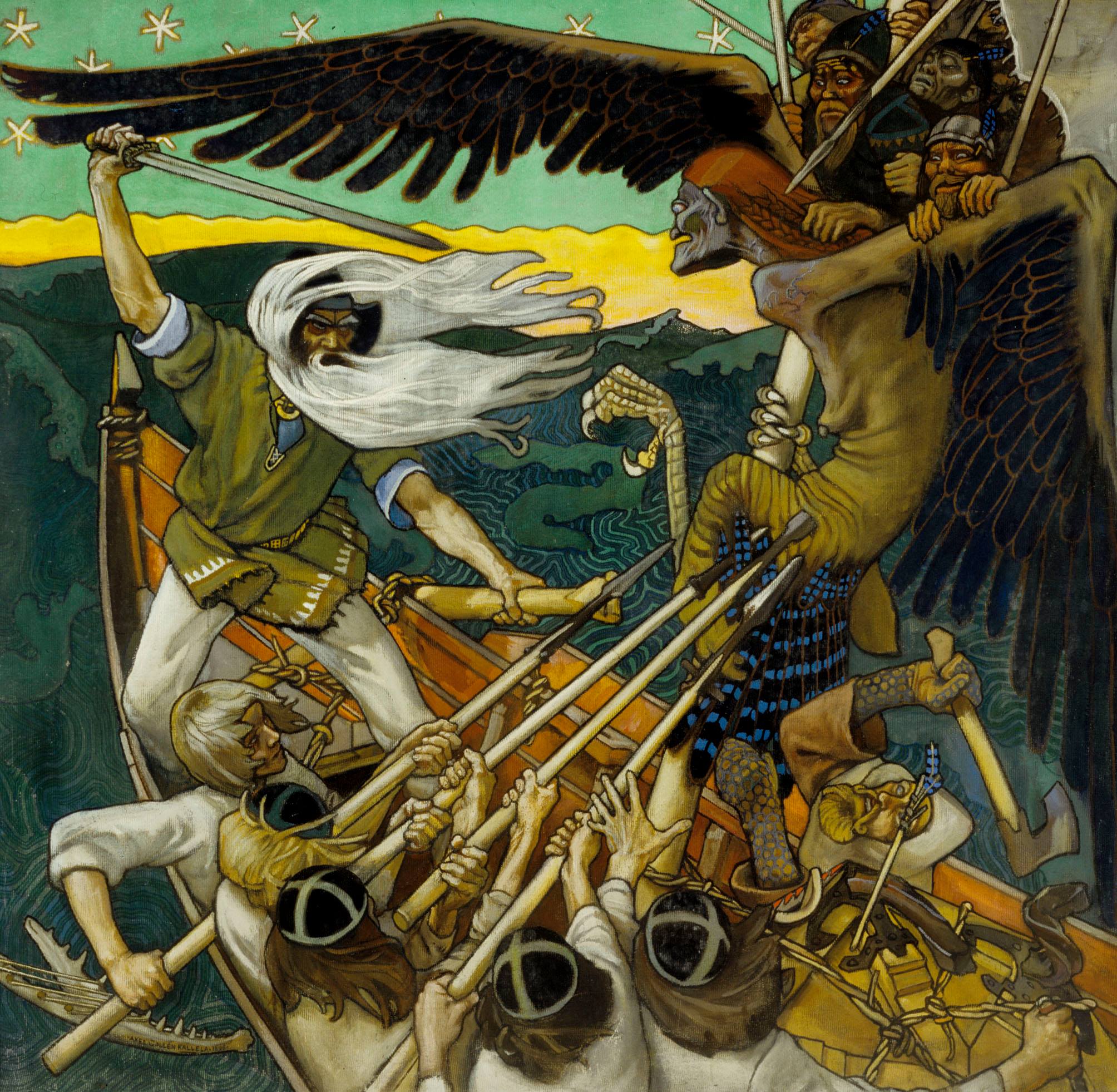
    This morning on WPRB, it’s a full playlist of music inspired by the Kalevala, the Finnish national epic. The fantastic and heroic tales inspired Jean Sibelius to compose some of his greatest works.

    But Sibelius was not alone in being influenced by this cultural juggernaut, which, like the mysterious and generative Sampo at the core of its rather wayward narrative, has had the effect of granting untold riches to its native land.

    We’ll hear Kalevala-inspired works by Väinö Haapalainen, Robert Kajanus, Uuno Klami, Leevi Madetoja, Aarre Merikanto, Einojuhani Rautavaara, and of course Sibelius himself.

    I hope you’ll join me, as we light 151 candles for Sibelius this morning, from 6 to 11 EST, on WPRB 103.3 FM and at wprb.com. We’re nothing if not polysyllabic, on Classic Ross Amico.


  • Kalevala Epic on WPRB for Sibelius’ Birthday

    Kalevala Epic on WPRB for Sibelius’ Birthday

    by 

    in
    7 responses

    Grab a sword and join us on our quest to retrieve the Sampo from the evil residents of North Farm. Tomorrow morning on WPRB, to coincide with the anniversary of the birth of Jean Sibelius (1865-1957), we’ll have a full morning of music inspired by the Kalevala.

    The Kalevala, a collection of fifty long narrative poems, is regarded as the Finnish national epic. Its fantastic and heroic tales informed the work of Finland’s greatest artists at a time when the country began to surge toward independence after 700 years of Swedish rule and an additional century as a duchy of the Russian Empire.

    We’ll hear music from a variety sources, although of course Sibelius, who throughout his career returned again and again to the Kalevala for inspiration, will feature most prominently. Less well known, perhaps, beyond the borders of Finland, will be works like Robert Kajanus’ “Aino Symphony,” Uuno Klami’s “Kalevala Suite” and Einojuhani Rautavaara’s “The Myth of Sampo.”

    We’ll have all of these and more tomorrow morning. It’s definitely going to be epic, from 6 to 11 EST, on WPRB 103.3 FM and at wprb.com. What we lack in polish, we’ll make up in Finnish, on Classic Ross Amico.


  • Pearl Harbor Remembrance 1941-2024

    Pearl Harbor Remembrance 1941-2024

    by 

    in
    8 responses

    December 7, 1941. A date that has lived in infamy.

    75 years ago today, the Imperial Japanese Navy launched a surprise military strike against the United States navy base at Pearl Harbor, awakening Yamamoto’s “sleeping giant” and precipitating the U.S. entry into World War II. Ultimately, that probably turned out to be a good thing, but tell that to the 2,403 Americans who were killed and the 1,178 who were wounded. Sailors, soldiers, airmen, marines and civilians were caught in the attack.

    In 1991, American composer John Duffy was commissioned by the U.S. government to mark the 50th anniversary of the strike. The result was “A Time for Remembrance: A Peace Cantata.” Duffy dedicated the work to the memory of the victims of Pearl Harbor. Among them were the composer’s sister, brother and cousin. The texts are taken from a poem by Rupert Brooke, a speech by Franklin Delano Roosevelt, an African American spiritual, and actual letters written by sailors aboard the USS Arizona.

    We remember this afternoon, and we’ll honor a few birthday anniversaries along the way, from 4 to 7:00 EST, on WWFM – The Classical Network and at wwfm.org.


Tag Cloud

Aaron Copland (93) Beethoven (95) Composer (114) Film Music (144) Film Score (143) Film Scores (255) Halloween (94) John Williams (195) KWAX (229) Leonard Bernstein (104) Marlboro Music Festival (125) Movie Music (159) Mozart (91) Opera (213) Philadelphia Orchestra (89) Picture Perfect (174) Princeton Symphony Orchestra (109) Radio (88) Ross Amico (244) Roy's Tie-Dye Sci-Fi Corner (290) The Classical Network (101) The Lost Chord (269) Vaughan Williams (105) WPRB (397) WWFM (881)

DON’T MISS A BEAT

Receive a weekly digest every Sunday at noon by signing up here


RECENT POSTS