• Saint Nicholas Day History Music and More

    Saint Nicholas Day History Music and More

    by 

    in
    3 responses

    December 6 is the Feast of Saint Nicholas.

    The historical and legendary Nicholas, fourth century Bishop of Myra, is the patron saint of sailors, merchants, travelers, brewers, prisoners, prostitutes, Russia, and of course children. THAT Nicholas is celebrated for his secret acts of charity, even if he could be rather short-tempered and a bit severe. Nicholas is said to have punched a few heretics, on occasion.

    One famous episode tells of Nicholas saving three daughters of a poor man from a life of prostitution by tossing bags of gold down their chimney, thereby providing them with proper dowries. The episode is reflected in the familiar pawnbrokers’ symbol of three gold spheres suspended from a bar (and also the practice of hanging stockings by the chimney with care).

    In another legend, three boys are slain by a butcher, chopped up and pickled in brine, with the goal of passing them off as ham. Nicholas restores the youths, and the butcher repents. The episode forms the basis of “Nicolas and the Pickled Boys,” from the cantata “Saint Nicolas,” by Benjamin Britten. I’ll be playing it this afternoon, sometime after our noon concert.

    We’ll also hear the musical equivalent of Clement Moore’s conception of St. Nick in the “Santa Claus Symphony,” by 19th century Philadelphia composer William Henry Fry.

    Today’s edition of “The Classical Network in Concert” will feature the Manhattan Choral Ensemble, in a program titled “Noel: Christmas in France.” It was recorded live last December at the Church of St. Jean Baptiste, East 76th Street and Lexington Avenue, in New York City. The ensemble’s next set of concerts, “A Russian Christmas,” will take place on December 9, at 8 p.m., and December 11, at 3 p.m., at St. Nicholas of Myra Orthodox Church, 288 East 10th Street, also in NYC. You can find out more at the choir’s website, http://www.mce.nyc.

    I hope you’ll join me for Christmas and more (or Moore, as the case may be), from 12 to 4:00 EST, on WWFM – The Classical Network and wwfm.org.


    IMAGES: The original “Bad Santa” (left); with Thomas Nast’s reinvention, after Clement Moore

  • Novák’s “Toman” on WWFM

    Novák’s “Toman” on WWFM

    by 

    in
    4 responses

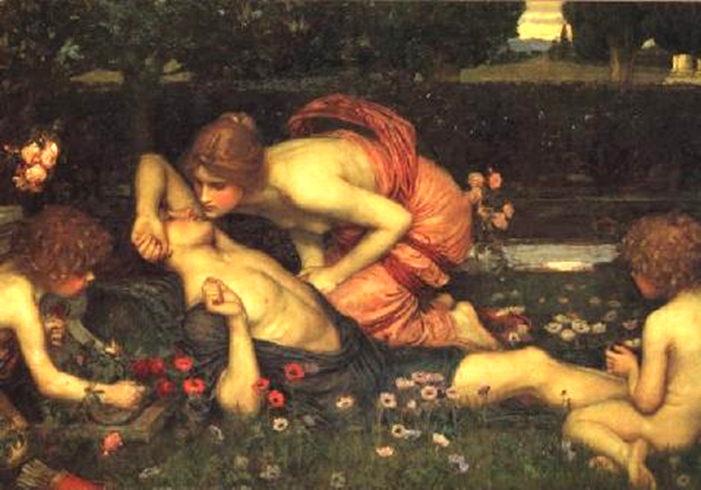
    A lovely autumn afternoon in the Trenton-Princeton area. In fact, a tempting day to wander off into the woods to die in the arms of an alluring nymph. That’s the subject of Vitězslav Novák’s tone poem, “Toman and the Wood Nymph.” Enjoy it this afternoon, as we celebrate the anniversary of the composer’s birth, along with that of Francesco Geminiani, the 70th birthday of José Carreras, and the 60th birthday of Krystian Zimerman, between 4 and 7 EST, on WWFM – The Classical Network and at wwfm.org.


  • Krampusnacht Creepy Christmas Traditions

    Krampusnacht Creepy Christmas Traditions

    by 

    in
    3 responses

    Get ready, kids! It’s December 5. Krampusnacht. Have you been good this year?

    The eve of St. Nicholas Day kicks off a season of creepy Christmas traditions. Long-time followers of this page know I have a weakness for the whacked-out pagan lore that still surges beneath the anodyne veneer of the holidays. Christmas isn’t just about buying things. It’s about scaring the bejeezus out of your kids.

    What exactly is Krampus? He’s St. Nicholas’ dark helper. Horned, hairy and horrendously long-tongued, Krampus emerges from his Alpine domain to dole out corporal punishment to the young and the wicked. For milder offenses, there is the sting of the switch; but for the especially ill-behaved, there are chains, a short ride in a wicker basket, and then drowning in a stream or immolation by hellfire. When a naughty child hears the dull clatter of approaching cow-bells, he knows it’s all over. He only wishes his stocking were full of coal.

    Last year, Krampus became the subject of a major motion picture. It’s ironic that this ultimate expression of anti-commercialism would himself become commercialized. Then again, Krampus cards were once widely circulated, not only on Christmas, but also on Valentine’s Day. I can think of no better way to catch a sweetheart.

    Happy holidays, everyone! Get ready for Black Pete, the Yule Lads, and the Gävle goat. Wait a minute. Better strike that last one. This year’s Gävle goat, apparently, didn’t even last 24 hours. You can read the full, moving account here:

    http://www.npr.org/sections/thetwo-way/2016/11/30/503881528/swedish-revelers-get-their-goat-again-as-holiday-tradition-meets-annual-arson


    “A Krampus Carol” (incorporating a stop motion Krampus!):

    Family-friendly segment on the Krampus Renaissance in Bavaria, produced by The New York Times:

    A real, old-fashioned Krampuslauf:

    Pretty good Krampus carol (full text when you click on “show more”):

    Here comes Krampus:

    Nicholas and Krampus play “good cop/bad cop” with Tobias:

    Small child cowers behind door at 1:25:

    Academy Award-winner Christoph Waltz explains Krampus to Jimmy Fallon:

    The commercialization of Krampus:


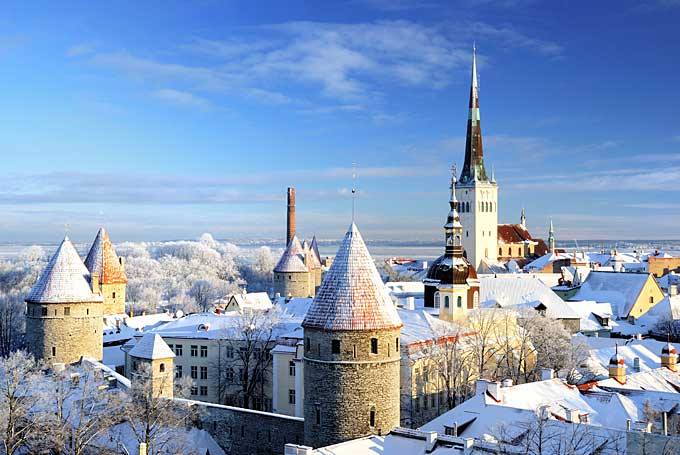
  • Estonian Composers Eller Kapp Sumera

    Estonian Composers Eller Kapp Sumera

    by 

    in
    3 responses

    This Sunday night on “The Lost Chord,” we’ll immerse ourselves in tones from Estonia.

    We’ll have music by the so-called father of Estonian music, Heino Eller. Eller, born in Tartu in 1887, studied violin at the St. Petersburg Conservatory. He also studied law. For 20 years, he was professor of music theory and composition at the Tartu Higher School for Music. In 1940, he became a professor of composition at the Tallinn Conservatory, where he taught until his death, in 1970.

    Eller composed many beautiful tone pictures. We’ll be listening to his violin concerto, in a performance taken from a concert given in celebration of the composer’s 80th birthday.

    Among Eller’s pupils were Eduard Tubin, Arvo Pärt, and Lepo Sumera. Sumera was born in Tallinn in 1950. In his teens, he studied with Veljo Tormis; then, beginning in 1968, with Eller, at what was then the Tallinn State Conservatory. He went on to compose six symphonies, as well as many chamber and choral works.

    In the 1980s, he became interested in electro-acoustic music. He founded the Electronic Music Studio at the Estonian Academy of Music in 1995. He served as its director until 1999. Sumera died of heart failure in the year 2000, at the age of 50.

    We’ll hear his Symphony No. 4, subtitled “Serena borealis,” composed in 1992. Western ears may detect the influence of minimalist techniques, but it’s worthwhile to note that the folk tradition of Estonian runo songs, handed down orally, relies equally on repetition. And the Estonian nationalists were nothing if not in tune with their musical past.

    Finally, we’ll hear from Artur Kapp, who lived from 1878 to 1952. Like Eller, Kapp studied at the St. Petersburg Conservatory, where Rimsky-Korsakov was among his teachers. He himself became a professor at the Tallinn Conservatory, where he taught many notable Estonian composers, his sons, Eugen and Villem, among them. Kapp is considered the head of the Tallinn school of composition, a counterbalance to Eller, who is considered the head of the Tartu school.

    We’ll be listening to the finale from one of Kapp’s most enduring works, the oratorio “Job,” in a recording sent to me by the very generous Neeme Järvi (also born in Tallinn), in response to an enthusiastic letter I had sent him while he was still music director of the New Jersey Symphony Orchestra.

    I’ll share the wealth, on this hour of musical discoveries from Estonia – “Tallinn’s Got Talent” – this Sunday night at 10:00 EST, on WWFM – The Classical Network and at wwfm.org.


  • Jean Cras’ “Polyphème” Opera on WPRB

    Jean Cras’ “Polyphème” Opera on WPRB

    by 

    in
    3 responses

    I’ve got my eye on you!

    Join me this morning for Jean Cras’ Cyclops opera, ““Polyphème.” It’s the featured work on Sunday Morning Opera with Sandy. I’ll be guest hosting from 7 to 10 EST, on WPRB 103.3 FM and at wprb.com.

    Cras, a career navy man, composed much of his music at sea. Tune in early (around 6:35) to enjoy his orchestral suite “Journal de bord” (“Ship’s Log”).


    “More wine for Polyphemus!”


Tag Cloud

Aaron Copland (93) Beethoven (95) Composer (114) Film Music (144) Film Score (143) Film Scores (255) Halloween (94) John Williams (195) KWAX (229) Leonard Bernstein (104) Marlboro Music Festival (125) Movie Music (159) Mozart (91) Opera (213) Philadelphia Orchestra (89) Picture Perfect (174) Princeton Symphony Orchestra (109) Radio (88) Ross Amico (244) Roy's Tie-Dye Sci-Fi Corner (290) The Classical Network (101) The Lost Chord (269) Vaughan Williams (105) WPRB (397) WWFM (881)

DON’T MISS A BEAT

Receive a weekly digest every Sunday at noon by signing up here


RECENT POSTS