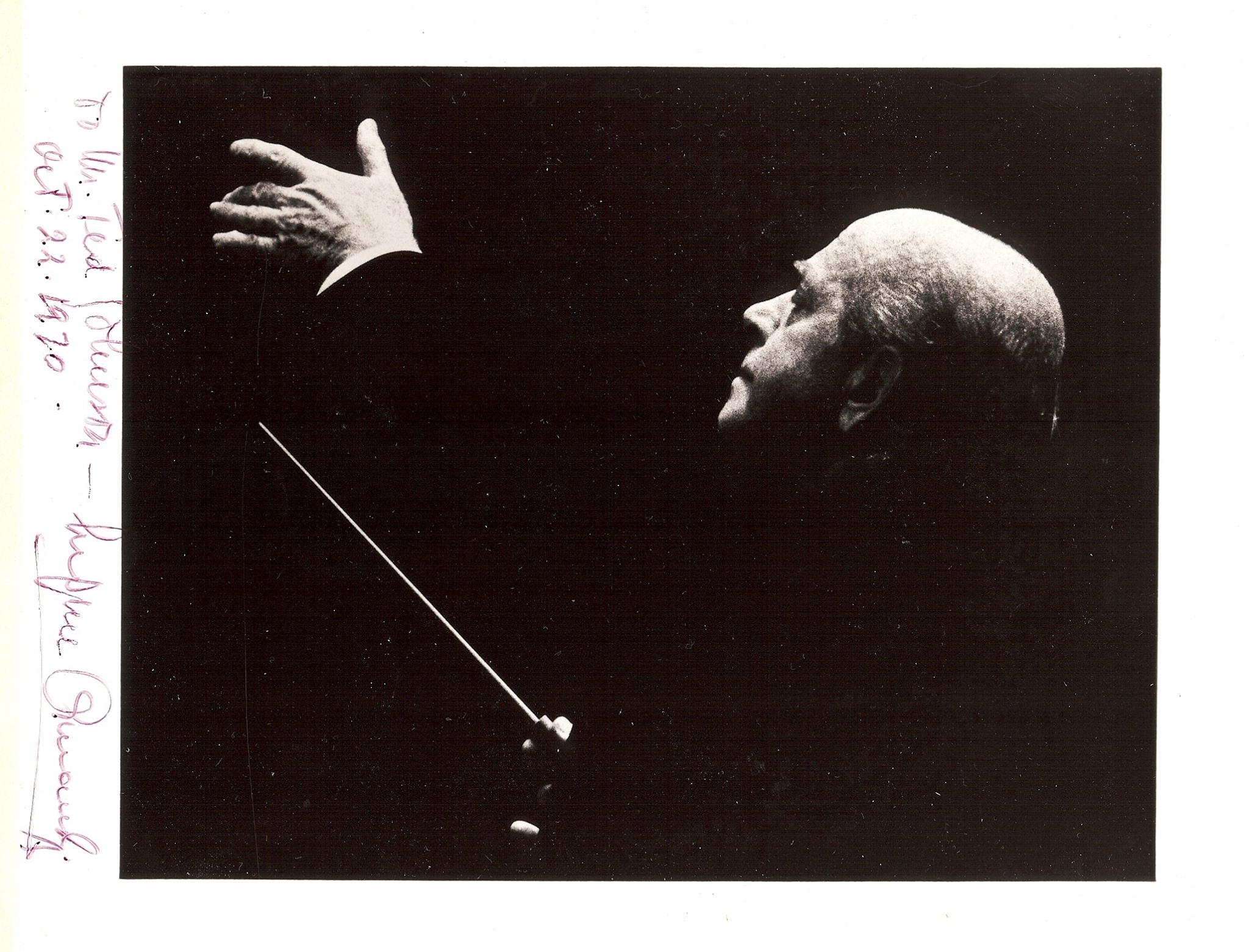
• Eugene Ormandy Underrated Maestro

    Eugene Ormandy Underrated Maestro

    by 

    What’s the big deal about this guy, Jenő Blau? Well, you probably know him better by his adopted name, Eugene Ormandy.

    Ormandy, a Hungarian-born violinist, who had studied with Jenő Hubay (for whom he was named), became a naturalized American citizen in 1927. He ultimately wound up directing the Philadelphia Orchestra for 44 years. In that capacity, he became one of the world’s most-recorded conductors.

    However, in some respects, he remains a vastly underrated one. Sure, he was a superb interpreter of 19th century and post-romantic classics, but he also championed much contemporary music and new works written by his adopted countrymen. Also, if there was a more sensitive accompanist in the concerto repertoire, I don’t know of him.

    Join me this afternoon, from 4 to 6 EST, as we honor Eugene Ormandy on the anniversary of his birth (in 1899), on WWFM – The Classical Network and at wwfm.org.

  • William Penn Opera Rare Broadcast

    William Penn Opera Rare Broadcast

    by 

    Trust me. If you are interested in American opera or local history, you won’t want to miss this one.

    Just in time for Thanksgiving, I’ll be sitting in for Sandy Steiglitz on WPRB’s Sunday Morning Opera with Sandy to host a rare broadcast of Romeo Cascarino’s “William Penn.”

    Cascarino, born in South Philadelphia in 1922, labored at this, his magnum opus, for 25 years, from 1950 to 1975. It was given its premiere at the Academy of Music in Philadelphia in 1982, to mark the 300th anniversary of the founding of the city. Metropolitan Opera singer bass-baritone John Cheek assumed the title role, and Christopher Macatsoris conducted the Philadelphia Singers and the Chamber Orchestra of Philadelphia.

    I will be joined in the studio by a very special guest: Dolores Cascarino, the composer’s widow, who created the role of Gulielma (as Dolores Ferraro), Penn’s wife. She will offer anecdotes about – and insights into – this beautiful and haunting opera.

    I’ve said it before, and I’ll say it again: if Cascarino had completed “William Penn” within a few years of starting it, in the 1950s, the opera would now be mentioned in the same breath as Carlisle Floyd’s “Susannah” and Robert Ward’s “The Crucible.” It’s that good.

    Join me for this one-of-a-kind broadcast of a first-rate, virtually unknown American opera, in a recording which is not commercially available, with valuable insights from the composer’s closest confidante, who sang in the work’s first performance.

    It all comes your way on this week’s “Sunday Morning Opera,” which will be heard from 7 to 10 a.m. EST, on WPRB 103.3 FM and at wprb.com.


  • Pilgrim’s Progress Thanksgiving on WPRB

    Pilgrim’s Progress Thanksgiving on WPRB

    by 

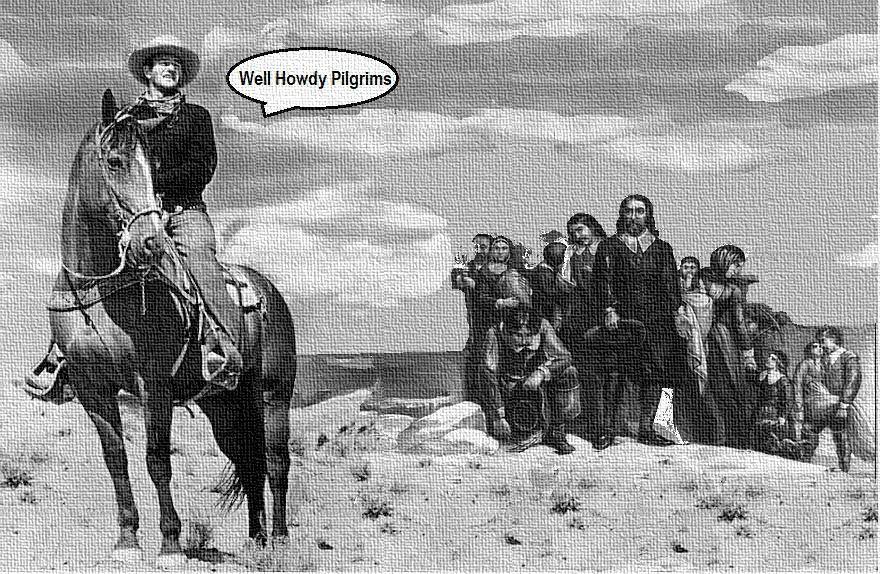
    In the words of the Duke, “Whoa, take ‘er easy there, Pilgrim.”

    It’s understandable that the Pilgrims would have been agitated. By the time the Mayflower left England, they had already been living on board ship for a month and a half. Then 300 miles out to sea, the Mayflower’s sister ship, the ironically named Speedwell, began to leak and they had to return to port. The now extremely overcrowded Mayflower embarked once more. It took 66 days to cross the Atlantic. By the time they finally landed, well north of their projected target of Northern Virginia (the territory then encompassing the Hudson Valley), they had long exhausted their supply of sandwiches and their collective blood sugar level was plummeting. Fortunately, the locals were kind enough to help them out, and Puritanism took root in America. And we’ve been paying for it ever since.

    Still, we, like the Pilgrims, have much to be thankful for, and this morning on WPRB we’ll celebrate our good fortune with music by American composers on the subjects of gratitude, flight from religious persecution, the torments of Puritanical repression, Native American themes, and New England, Southern and mountain folk music and hymn tunes.

    So go ahead and help yourself to a second slice. It will be more powerful than a tryptophan coma, from 6 to 11 EST, on WPRB 103.3 FM and at wprb.com. We’ll be loosening our belts in front of the football game, on Classic Ross Amico.


  • Thanksgiving Radio WPRB Americana Music

    Thanksgiving Radio WPRB Americana Music

    by 

    It’s never too early to be thankful. Therefore, I hope you’ll join me early tomorrow morning on WPRB, as we look ahead to Thanksgiving.

    We’ll enjoy Matthew Brown’s setting of “Table Grace” (on a text by Garrison Keillor) and Eric Whitacre’s “I thank you God for most this amazing day,” alongside Quincy Porter’s “New England Episodes” (evocative of the region’s Puritan past), John Adams’ “Shaker Loops,” and one of Alan Hovhaness’ most fascinating symphonies, the Symphony No. 60 “To the Appalachian Mountains,” informed by the composer’s study of shape notes, mountain music and folk poetry.

    It’s a cornucopia of Americana for Thanksgiving, tomorrow morning from 6 to 11 EST, on WPRB 103.3 FM and at wprb.com. To the tables and stuff yourselves, on Classic Ross Amico.


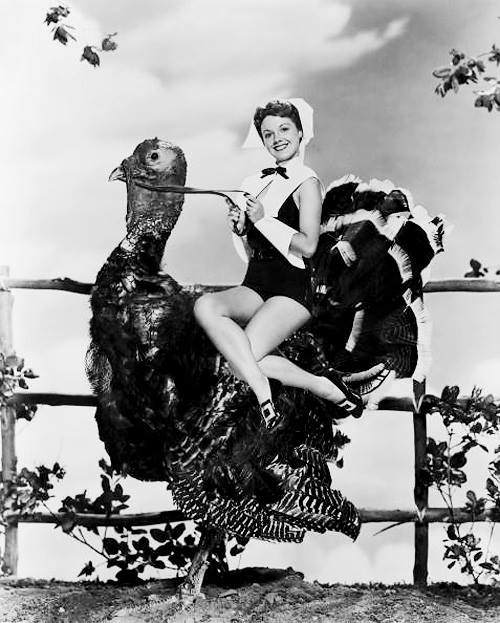
    PHOTO: Seldom has cheesecake sat so well atop turkey


  • Jules Eskin Boston Symphony Cellist Dies at 85

    Jules Eskin Boston Symphony Cellist Dies at 85

    by 

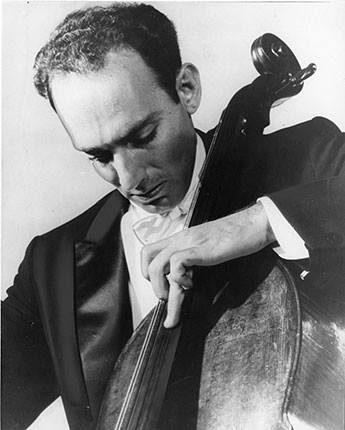
    The beloved cellist Jules Eskin has died. Eskin was principal cellist of the Boston Symphony Orchestra for 53 years. Eskin was living history. His association with the orchestra extended back to the days of Serge Koussevitzky.

    Born in Philadelphia in 1931, Eskin was picked up by the Dallas Symphony at the age of 16, where he performed under the direction of Antal Dorati. He studied with Janos Starker in Dallas, then with Gregor Piatigorsky and Leonard Rose at the Curtis Institute of Music. In 1948, he was a fellowship student at the Tanglewood Music Center, where he performed in the TMC Orchestra under Koussevitzky. He then spent three years as principal cello of the Cleveland Orchestra under George Szell and seven years with the New York City Opera. In addition, he participated in the Marlboro Music Festival and played in the Casals Festival Orchestra in Puerto Rico. He joined the BSO as principal cello in 1964, when Erich Leinsdorf was music director.

    Eskin died yesterday at his Brookline home. The cause of death was cancer. Earlier, he had withdrawn from the Boston Symphony for a season to undergo cancer treatments in 1981. He is survived by his wife, BSO violinist Aza Raykhtsaum. The couple celebrated their 30th wedding anniversary in January. Eskin announced his retirement from the orchestra only last month. He was 85 years-old.

    We’ll honor him with some of the recordings he made with the Boston Symphony Chamber Players, of which he was a founding member, this afternoon from 4 to 7:00 EST on WWFM – The Classical Network and at wwfm.org.

Tag Cloud

Aaron Copland (93) Beethoven (95) Composer (114) Film Music (144) Film Score (143) Film Scores (255) Halloween (94) John Williams (195) KWAX (229) Leonard Bernstein (104) Marlboro Music Festival (125) Movie Music (159) Mozart (91) Opera (213) Philadelphia Orchestra (89) Picture Perfect (174) Princeton Symphony Orchestra (109) Radio (88) Ross Amico (244) Roy's Tie-Dye Sci-Fi Corner (290) The Classical Network (101) The Lost Chord (269) Vaughan Williams (105) WPRB (397) WWFM (881)

DON’T MISS A BEAT

Receive a weekly digest every Sunday at noon by signing up here


RECENT POSTS