• Spooky Classical Halloween Soundtrack on WWFM

    Spooky Classical Halloween Soundtrack on WWFM

    by 

    in
    5 responses

    Happy Hallowe’en, everyone!

    As you prepare the little monsters for Trick-or-Treat, I hope you’ll make us your macabre and amusing soundtrack this afternoon, as I’ll be weaving a spooky and sometimes silly tapestry of music evocative of ghosts, vampires, demons and haunted landscapes.

    Sir John Gielgud will recite eerie poems of Aloysius Betrand as pianist Gina Bachauer performs Maurice Ravel’s “Gaspard de la Nuit.” Composer of British light music Frederic Curzon will give us the playful “Dance of an Ostracised Imp.” We’ll hear the original version of “Danse macabre,” conceived as a song by Camille Saint-Saens. We’ll also have the tongue-in-cheek “Dracula’s House-and-Court Music” by Kurt Schwertsik. In addition, we’ll enjoy selections from “Harry Potter and the Sorcerer’s Stone,” “Psycho,” and “The Bride of Frankenstein.”

    In short, we’ll be up to our elbows in French horns, gore, and candy corn, this All Hallows’ Eve from 4 to 7:00 EDT, on WWFM – The Classical Network and at wwfm.org.


    Cartoon (below) by Jeffrey Curnow, associate principal trumpet of the Philadelphia Orchestra


  • Opera Ashes Halt Met Performance

    Opera Ashes Halt Met Performance

    by 

    in
    3 responses

    I didn’t have a chance to post this yesterday, so you may very well have heard about it by now, but it seems an oddly appropriate story for Hallowe’en. In fact, it may be the craziest Metropolitan Opera news (from an audience standpoint) since an 82 year-old singing coach deliberately plunged to his death in 1988 during an intermission of a nationally broadcast performance of Verdi’s “Macbeth.”

    http://www.nytimes.com/2016/10/30/nyregion/metropolitan-opera-cancels-performance-white-substance.html

    http://nypost.com/2016/10/29/man-scattering-friends-ashes-during-opera-prompted-met-shutdown/

    The scattering of ashes into an orchestra pit is not unprecedented, by the way. Berlioz alleged, in the 1865 edition of his autobiography, that prior to a performance of his “Romeo and Juliet,” which he was about to conduct in Breslau in 1854, a lawyer poured the ashes of his wife into a tuba from a balcony.

    The latest incident comes a week after the Catholic Church banned the scattering of ashes, which it decried as “pantheistic or naturalistic or nihilistic.”

    Expect heightened security in the future. First we have to take off our shoes at the airport; now we’ll be cavity searched thanks to some nutbone (whom police name as Roger Kaiser, 52, a jeweler from Dallas), who thought he was honoring a friend and even bragged about it beforehand.

    The opera may have been “William Tell,” but nobody else did.


  • Karl Krueger American Music Pioneer

    Karl Krueger American Music Pioneer

    by 

    in
    4 responses

    Born in New York City to German immigrant parents, Karl Krueger’s sympathies were never far from the American heartland. He served as artistic director and principal conductor of the newly founded Kansas City Symphony from 1933 to 1943, and his greatest legacy lay in a series of pioneering recordings he set down for the Society for the Preservation of American Musical Heritage.

    His father wanted him to be lawyer, but the pull of music was too strong. Krueger studied in Vienna with Robert Fuchs and became the assistant of conductor Arthur Nikisch. Nikisch referred him to Franz Schalk, conductor of the Vienna State Opera. Krueger was appointed assistant conductor to the Opera and the Vienna Philharmonic. Schalk proclaimed, “I have no doubt that he will play an important role among the leading orchestral conductors of his time.”

    Though he served as principle conductor of the Seattle Symphony, from 1926 to 1932, as music director of the Detroit Symphony Orchestra, from 1943 to 1949, and was invited back to guest conduct the Vienna Philharmonic, Krueger’s name is largely unrecognized today, beyond the sphere of collectors.

    This Sunday night on “The Lost Chord,” we’ll listen to recordings Krueger made for the society he established in 1958. Its purpose was to document and promote works by neglected American composers, at the time little more than footnotes in our music history books. Significantly, the records were first distributed to libraries, rather than being made available for purchase through retailers. A number of the recordings have been reissued over the years by The Library of Congress. More recently, some have appeared on the Bridge Records, Inc. label.

    Leave it to Krueger to unearth the most interesting work by Horatio Parker. Parker, the hidebound teacher and aesthetic nemesis of Charles Ives, wrote two symphonic poems, both of which were recorded by Krueger. Wholly unexpected is Parker’s treatment of “Vathek,” the early gothic novel by William Beckford. The novel blends elements of the supernatural, excess, and immorality in an Oriental setting.

    Arthur Farwell, best remembered for his work inspired by Native American sources, wrote incidental music in 1916 for a play by Lord Dunsany, called “The Gods of the Mountain.” The work is another piece of Orientalism, in this case about a band of beggars who impersonate a city’s stone gods and partake of much sensual indulgence, until the real gods return and change the impostors to stone. In a final twist, the inhabitants of the city take the transformation of the beggars as verification of their status as genuine gods.

    Finally, we’ll hear music by Arthur Foote, who has fared better than some other American composers of his era. His rarely-heard work from 1900, “Four Character Pieces after the Rubaiyat of Omar Khayyam,” is drawn from a piano cycle he composed the previous year. It was given its first performance by the Chicago Symphony, under the direction of Frederick Stock.

    By the end of its run, Krueger’s Society had issued over 100 LPs of American music, with some of the repertoire dating as far back as the 18thcentury. Karl Krueger died in Illinois in 1979 at the age of 85.

    Join me for “Pioneer Spirit” – landmark recordings by Karl Krueger – this Sunday night at 10 EDT, on WWFM – The Classical Network and at wwfm.org.


  • Batman & Mefistofele A Halloween Opera Treat

    Batman & Mefistofele A Halloween Opera Treat

    by 

    in
    4 responses

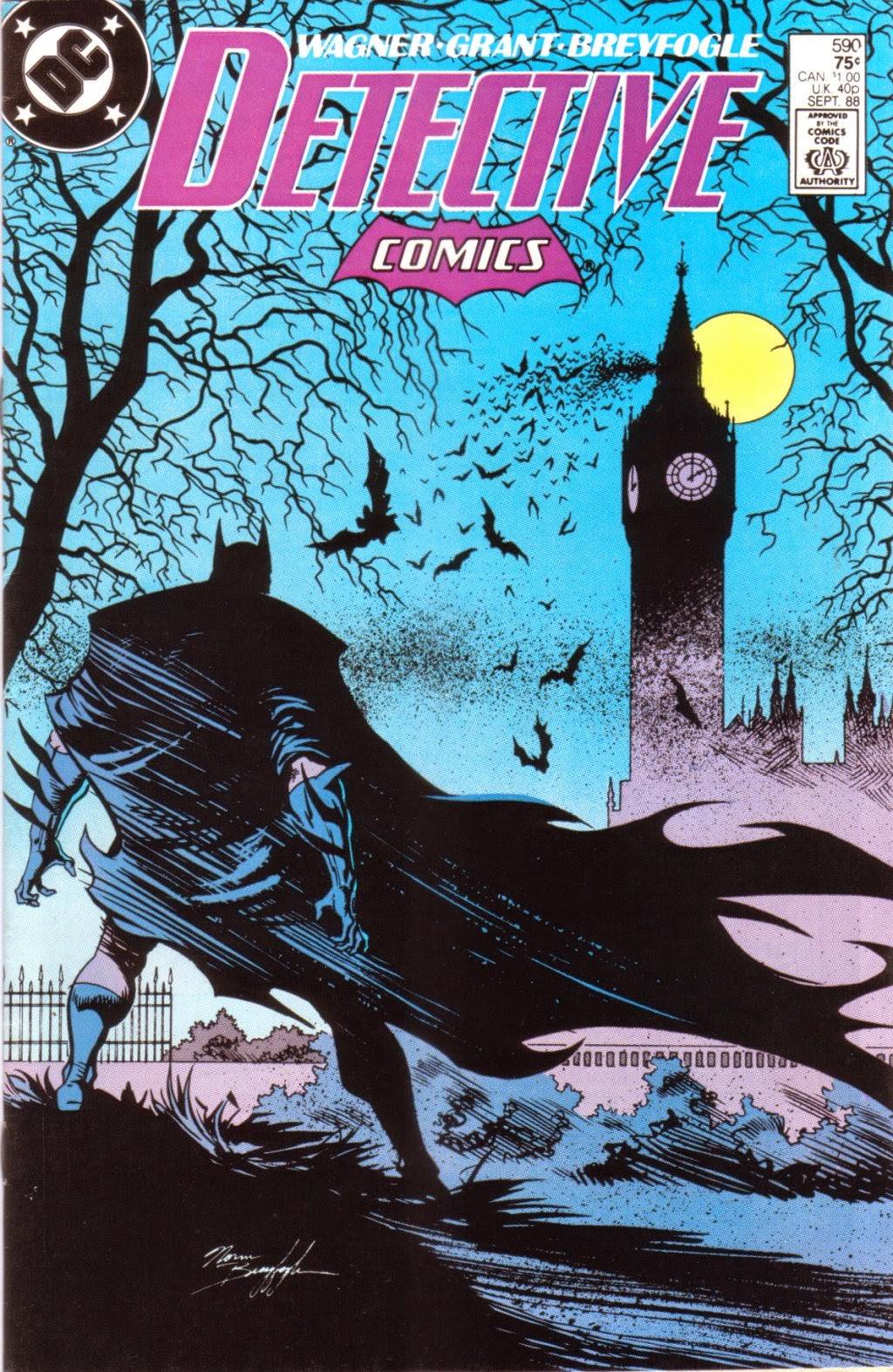
    Hallowe’en is coming. Anyone else remember when Batman went to hear “Mefistofele?”

    https://www.youtube.com/watch?v=5nGlM_gEcbQ

    I wasn’t so impressed with the movie, but I was impressed with the choice of the opera.

    On a related note, happy birthday, Neal Hefti (1922-2008).


    IMAGES: Norm Breyfogle’s Gothic realization of the Dark Knight (left) and Norman Treigle as Mefistofele

    Treigle sings! https://www.youtube.com/watch?v=MDPumGzQqhw


  • Theremin in Film Spooky Sounds for Halloween

    Theremin in Film Spooky Sounds for Halloween

    by 

    in
    3 responses

    You all know the sound. That crazy, trilled electronic whistle that dips into a whoop. Or it starts in a trough and shoots up into the super stratosphere. It’s the sound of UFOs and mad science. It’s the sound of the theremin.

    The electronic instrument, invented by Leon Theremin in 1928, is played without physical contact. The proximity of the hands to two antennae determines volume and pitch.

    This week on “Picture Perfect,” we’ll hear music from four films which feature the instrument’s distinctive, extraterrestrial timbre.

    “The Thing from Another World” was one of two seminal science fiction scores written in 1951. (The other was Bernard Herrmann’s “The Day the Earth Stood Still.”) On the soundtrack, the theremin acts as a musical counterpart to James Arness’ rampaging humanoid carrot. This was unquestionably composer Dimitri Tiomkin’s wildest hour; he never wrote anything like it again.

    “The Thing” and “The Day the Earth Stood Still” may have been the most influential, but “Rocketship X-M” was the first. The film was rushed into production in 1950 to beat George Pal’s “Destination Moon” to theaters. It was shot in just 18 days! The unlikely plot has the crew of a moon expedition blown off course to Mars. Interestingly, the composer was none other than Ferde Grofé – he of the “Grand Canyon Suite” fame.

    Far more reputable, but still not wholly comfortable with its science, is Alfred Hitchcock’s “Spellbound,” from 1945. Gregory Peck plays an amnesiac, who may or may not have committed murder, and Ingrid Bergman plays the psychoanalyst who falls in love with him. The film is of greatest interest for its production design, which features dream sequences conceived by Salvador Dali, and for its music, by Miklós Rózsa.

    Hitchcock disliked the score – he thought it got in the way of his direction – but the Academy disagreed, and the music earned Rózsa the first of his three Academy Awards.

    Closer to our own time, Howard Shore incorporated the theremin into his Mancini-esque score to “Ed Wood,” released in 1991, Tim Burton’s love letter to the grade-Z director of “Plan 9 from Outer Space,” which is widely regarded as the worst movie ever made (worse even than “Rocketship X-M”).

    Join me for an hour of theremins for Hallowe’en this week, on “Picture Perfect,” music for the movies – this Friday evening at 6 EDT, on WWFM – The Classical Network and at wwfm.org.
    FUN FACT: On three of the four movies from which scores we’ll be sampling (“Spellbound,” “Rocketship X-M,” and “The Thing”), the original thereminist was Samuel Hoffman. Hoffman played in dozens of Hollywood films in the 1940s and ‘50s. By day, he worked as a podiatrist!


    PHOTO: Hoffman (right) looks on as Cary Grant tries his hand at the theremin


Tag Cloud

Aaron Copland (93) Beethoven (95) Composer (114) Film Music (144) Film Score (143) Film Scores (255) Halloween (94) John Williams (195) KWAX (229) Leonard Bernstein (104) Marlboro Music Festival (125) Movie Music (159) Mozart (91) Opera (213) Philadelphia Orchestra (89) Picture Perfect (174) Princeton Symphony Orchestra (109) Radio (88) Ross Amico (244) Roy's Tie-Dye Sci-Fi Corner (290) The Classical Network (101) The Lost Chord (269) Vaughan Williams (105) WPRB (397) WWFM (881)

DON’T MISS A BEAT

Receive a weekly digest every Sunday at noon by signing up here


RECENT POSTS