• Superhero Movie Scores: Bland by Design?

    Superhero Movie Scores: Bland by Design?

    by 

    in
    6 responses

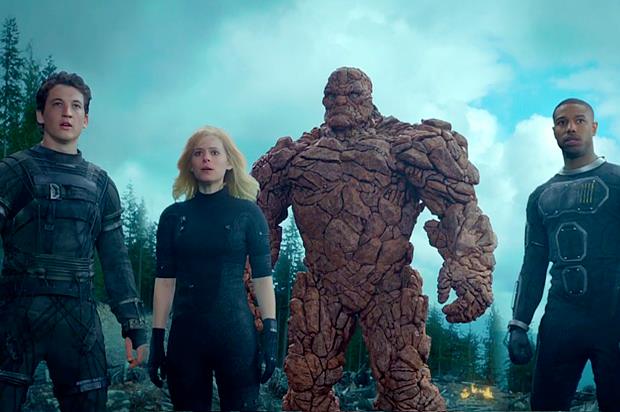
    So why are the film scores to blockbuster superhero films so undistinguished? You know something’s got to be wrong when Patrick Doyle, one of the screen’s great melodists (he wrote the music for “Henry V,” “Much Ado About Nothing,” and “Sense and Sensibility”), succumbs to a bludgeoning drum beat for “Thor.” One thing’s for certain, we are a long, long way from John Williams’ “Superman” (1978), which proved, even in its most intimate scenes, how indelible and uplifting a superhero score could be.

    To be fair, there isn’t a lot of room in contemporary superhero films for the music to breathe, the scores often swallowed up by hyperkinetic editing and ear-splitting sound effects. For a composer’s contribution to be heard, he needs to be pounding the biggest drum – even if it’s an electronic drum – in the room.

    If there is melody, it is either cranked out of a noodle press, someone running their fingers mindlessly across a keyboard with no concept of how a true melody is structured, or limited to a recurring motif (as in “The Avengers”), as if the composer is embarrassed to let his score “sing.” Alan Silvestri, composer for “The Avengers,” wrote the music for “Back to the Future,” for crying out loud! His scores since at least “Van Helsing” (2004) have been horrifying assaults. He was given the chance to write a good old-fashioned march for “Captain America,” but the film itself was a self-conscious throwback, directed by Lucas and Spielberg associate Joe Johnston.

    So who decided audiences were fed up with grand, post-romantic, orchestral scores? What film composer has sold more albums than John Williams? What composer is more represented in a list of top-grossing films of all time? Who doesn’t love “Star Wars” and “Raiders of the Lost Ark” and “E.T.” and “Jurassic Park” and “Harry Potter?” I’m not saying every score has to be like those, but the majority of scores these days sound as if they are churned out on a synthesizer – which may very well be the case. Sure, the composer, as the last in the post-production assembly line, has to deliver very quickly, but Jerry Goldsmith churned out plenty of memorable music at white heat.

    The sad fact of the matter is that the bean-counters have figured out that music no longer has to make much of an impression for a film to make a billion dollars worldwide. Also, if a composer no longer requires extensive training, then anyone can sit down and noodle something out on their computer – which is why so many rock musicians are now on the rise as film composers. Think back on the incredibly rich scores by Erich Wolfgang Korngold or Miklós Rózsa or Bernard Herrmann or Andre Previn, and measure their contributions against just about anything being written today. These guys were honest-to-goodness geniuses at their craft.

    Hans Zimmer, who, by his own admission doesn’t have the chops to write on Williams’ level, as far as orchestral scores are concerned, helped sow the seeds of destruction by demonstrating that synthesizers and electronic sampling by a team of composers would be perfectly acceptable to most audiences. When producers have the choice between hiring out to Zimmer’s studio or leasing the London Symphony Orchestra, who are they going to go with? It could take a composer, working with a trusted orchestrator, a good month or more to come up with a polished score. Using electronics, music can be cranked out like sausages, and today’s audiences are only too ready to gobble them down.

    Okay, that’s my rant. Here’s a related piece on how cannibalized temp tracks have helped keep Marvel movies at a level of musical mediocrity.

    http://www.theverge.com/2016/9/12/12893622/hollywood-temp-scores-every-frame-a-painting-film


  • Heroic Beethoven & Tchaikovsky in Plainsboro

    Heroic Beethoven & Tchaikovsky in Plainsboro

    by 

    in
    10 responses

    The Bravura Philharmonic Orchestra will begin its tenth season on a heroic note, when founding music director Chiu-Tze Lin raises her baton for Beethoven’s Symphony No. 3, “Eroica,” and Tchaikovsky’s “1812 Overture.”

    Interestingly, both works are tied to Napoleon. Tchaikovsky’s overture was written in 1880 to commemorate Russia’s successful weathering of Bonaparte’s invading troops in 1812.

    Beethoven famously dedicated his symphony to Napoleon, whom the composer had viewed idealistically as an advocate of democracy and egalitarianism; but when Bonaparte declared himself Emperor, the composer scratched out the dedication with such vehemence that he tore a hole in the page. The inscription was changed to read, “… to the memory of a great man.” The second movement of the work is a funeral march.

    Beethoven’s symphony stands as a monument to a fallen idol, but it remains heroic to its core, both in scope and content. Lin has selected these works to coincide with the 15th anniversary of the attacks of 9/11 and all the tragedy and triumph of the human spirit those events entailed.

    “We’ve titled the concert ‘Heroic Masterworks,’ to commemorate the heroism of our firefighters and police on 9/11,” Lin says. She cites the aforementioned funeral march and the overall uplifting spirit of both pieces as bases for her programming decisions.

    The concert will take place at Princeton Alliance Church in Plainsboro on Sunday night at 7 p.m. Also on the program, 16 year-old cellist Noah Lee will perform the Cello Concerto No. 1 by Dmitri Shostakovich.

    Find out more about this remarkable young artist in my article in today’s Trenton Times.

    http://www.nj.com/times-entertainment/index.ssf/2016/09/classical_music_bpo_performing.html


  • Remakes Magnificent Seven Horner’s Score

    Remakes Magnificent Seven Horner’s Score

    by 

    in
    5 responses

    2016 has been a bold year for remakes. Above and beyond a new “Ghostbusters,” which had so-called fanboys tied up in knots, Hollywood has brazenly taken on two beloved classics in “Ben-Hur” and “The Magnificent Seven.” Generally speaking, the originals excelled on all levels, which is why they are still fondly remembered, but the music for both has been especially indelible. In fact, I would argue “The Magnificent Seven” is as beloved as it is mostly because of Elmer Bernstein’s immortal score.

    This week on “Picture Perfect,” you’ll have a chance to sample music from the remakes, alongside selections from their classic predecessors.

    I’ve been listening to James Horner’s score for the new version of “The Magnificent Seven,” and while the result is not exactly top-shelf Horner – the composer was killed in a plane crash last year, not long after making some sketches after having merely read the script (an associate of his, Simon Franglen, who worked with the composer on “Titanic” and “Avatar,” was hired to flesh out the material) – it nonetheless serves as a painful reminder of exactly what’s been lost from the art of film-scoring.

    Horner’s trademark use of the shakuhachi is invoked, as are “Mask of Zorro”-style handclaps and the inclusion of the all-pervasive Horner “Danger Motif” (which echoes the opening of Rachmaninoff’s Symphony No. 1 and is in just about every genre score Horner composed since at least “Star Trek II” in 1982). But what is most pertinent, and most refreshing, are the snippets of bona fide melody – and some of that melody is actually stirring and uplifting. After all, Horner hit his stride in the early ‘80s, when music still had something meaningful to add to movies, beyond simply acting as a moody drone or pumped-up bass-line.

    Say what you will about Horner – he was a flawed artist who lifted freely from his own and others’ work – but he was always polished, professional and dramatically effective. I would go so far as to say he may very well have been the most naturally talented film composer of his generation. He was fatally limited by a lack of originality, but he always knew his way around an orchestra.

    Furthermore, he had the ability to uplift. It’s a quality not at all common in film music today, or in movies at all for that matter. Movies may retain the ability to thrill, but the thrills, I find, such as they are, are mostly adrenaline-driven. When was the last time you experienced awe at the movies, or left the theater feeling elevated or elated? More commonly, it’s the sensation of having been wrung-out, triumph experienced vicariously only insofar as having survived the latest computer-generated assault. Where is the joy in that? Where is the hope?

    Horner’s score in no way displaces Elmer Bernstein’s immortal music for the original “The Magnificent Seven.” Then again, how could it? But at least he doesn’t embarrass himself. The best I can say about Marco Beltrami, on the other hand, is that he is smart enough to know there is no way a new “Ben-Hur” is going to be able to top its predecessor. So instead, he tries for something completely different.

    Tune in at 6:00 EDT and hear for yourself. We’ll enjoy a little “7” and “7” with two sides of “Ben-Hur,” on WWFM – The Classical Network and at wwfm.org.


    Unfamiliar with Horner’s “Danger Motif?” These clips should give you an idea:

    You can also it hear it here, in the first movement of Rachmaninoff’s First Symphony:


  • Schubert Octet Live Stream Princeton Symphony

    Schubert Octet Live Stream Princeton Symphony

    by 

    in
    4 responses

    Would you like to hear Schubert’s Octet performed by visiting artist Daniel Rowland – violin and principal musicians of the Princeton Symphony Orchestra? Good luck getting seats! The audience for tonight’s concert at the Institute for Advanced Study’s Wolfensohn Hall is already at capacity. However, the PSO is offering live streaming of the event through its website. The performance begins at 7:30 EDT.

    http://princetonsymphony.org/#events/the-schubert-octet/


  • Maxfield Parrish Autumn Art & Inspiration

    Maxfield Parrish Autumn Art & Inspiration

    by 

    in
    8 responses

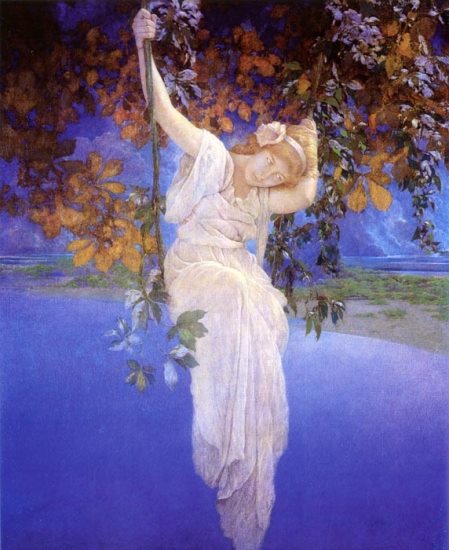
    Autumn at last! Is there an artist who captures the spirit of the season better than Maxfield Parrish?


Tag Cloud

Aaron Copland (93) Beethoven (95) Composer (114) Film Music (144) Film Score (143) Film Scores (255) Halloween (94) John Williams (195) KWAX (229) Leonard Bernstein (104) Marlboro Music Festival (125) Movie Music (159) Mozart (91) Opera (213) Philadelphia Orchestra (89) Picture Perfect (174) Princeton Symphony Orchestra (109) Radio (88) Ross Amico (244) Roy's Tie-Dye Sci-Fi Corner (290) The Classical Network (101) The Lost Chord (269) Vaughan Williams (105) WPRB (397) WWFM (881)

DON’T MISS A BEAT

Receive a weekly digest every Sunday at noon by signing up here


RECENT POSTS